



Update — August 6-7, 2026: OpenAI simplified ChatGPT's chat surface — GPT-5.6 Sol now handles both Instant and reasoning replies for Plus/Pro, and GPT-5.6 Luna became unlimited for text chat on Free/Go plans, with OpenAI citing 68% fewer factual errors vs GPT-5.5 Instant on its own high-stakes eval. Full breakdown →
Update — July 20, 2026: Viral X thread claimed ~1T Sonnet · ~5T Opus · ~10T Fable from an unnamed compute partner — UNVERIFIED; Musk's Grok 4.20 reply implies the same Sonnet/Opus ratios. Parameter count debate →. Same weekend: Codex and Fable refused exploit-adjacent security fixes citing cyber guardrails; Kimi K3 did not. Moonshot paused new K3 subscriptions. Cyber guardrails debate →. Math Twitter: Alpoge Fable 5 Jacobian conjecture claim — unverified, not peer-reviewed.
Update — July 13, 2026: Tibo denied Sol thinking-budget nerfs and added ~10% usage from inference savings — while Fable stays included through July 19. July 8: OpenAI audited SWE-Bench Pro — ~30% broken tasks, retracts Pro recommendation; treat Fable's 80.3% as directional, not procurement-grade. Jul 13 leak: Gemini 3.5 Pro reportedly beats Fable + GPT-5.6 internally — unverified, July 17 target.
July 9–10, 2026 is a stacked frontier day: @OpenAI posted that GPT-5.6 Sol, Terra, and Luna are rolling out now in ChatGPT, Codex, and the API — with fresh GA benchmarks on Agents' Last Exam and the Artificial Analysis Coding Agent Index. Same week: OpenAI $50K Bio Bounty; Thinking Machines human-centric manifesto; Grok 4.5 via SpaceXAI; Fable 5 live globally since July 1.
The comparison developers keep asking: does OpenAI's three-tier family beat Anthropic's Mythos-class public flagship? OpenAI's July 9 thread claims Sol leads ALE (53.6), AA Coding Agent Index (80.0), and Terminal-Bench (91.9% Ultra) — while Fable still owns SWE-Bench Pro (80.3%) on Anthropic's published data. Terra and Luna are the efficiency story: OpenAI says they beat Fable on ALE at ~1/16 the cost.
This is explainx.ai's tier-by-tier matrix: Sol vs Terra vs Luna vs Fable 5 on benchmarks, price, safety architecture, access, and when to route each.
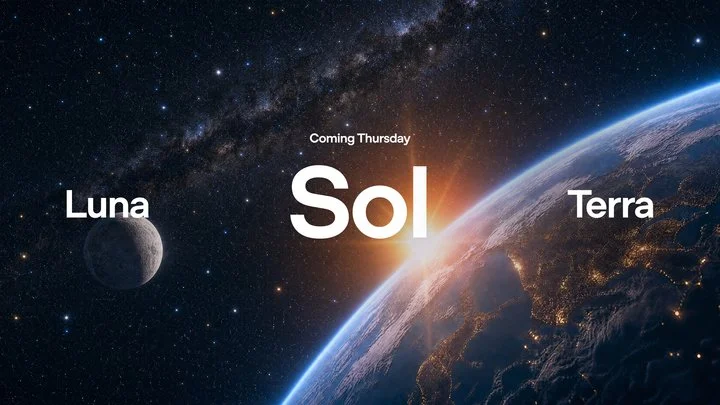 GPT-5.6 Sol, Terra, Luna — OpenAI July 9 launch
TL;DR — tier decision matrix
| Question | Answer |
|---|---|
| Best terminal/bash agent? | GPT-5.6 Sol Ultra (91.9% Terminal-Bench) |
| Best professional agent workflows (ALE)? | GPT-5.6 Sol (53.6 — +13.1 vs Fable adaptive) |
| Best AA Coding Agent Index? | GPT-5.6 Sol (80.0 — +2.8 vs Fable 5) |
| Best repo bug resolution? | Fable 5 (80.3% SWE-Bench Pro) |
| Cheapest Fable-class terminal score? | GPT-5.6 Luna (84.3% TB @ $1/$6) |
| Best daily production default? | GPT-5.6 Terra ($2.50/$15, GPT-5.5-competitive) |
| Best live-code generation? | Fable 5 (89.78% LiveCodeBench) |
| Best math/research frontier? | Fable 5 (59.0% HLE no tools) |
| Public access July 9? | GPT-5.6 rolling out in ChatGPT, Codex, API; Fable live since July 1 |
| Government-gated preview? | GPT-5.6 started vetted-partner only June 26 |
Route a few real jobs using the matrix above:
The two frontier philosophies
| Dimension | OpenAI GPT-5.6 | Anthropic Fable 5 |
|---|---|---|
| Product shape | Three tiers (Sol / Terra / Luna) | Single public Mythos-class tier |
| Safety model | Layered safeguards + phased release | External classifier layer, full capability |
| Launch path | U.S. vetted-partner preview → public GA | Export-control pause → July 1 global restore |
| Strength claim | Agentic terminal + cyber + biology | Autonomous coding + research reasoning |
| Pricing strategy | Route cheap tiers for volume | Premium frontier pricing ($10/$50) |
Fable 5 is Anthropic's answer to "how do we ship Mythos-class intelligence to the public safely?" — classifiers instead of capability cuts (redeploy guide). GPT-5.6 is OpenAI's answer to "how do we ship frontier capability with tiered economics?" — Sol for hard work, Terra/Luna for everything else (preview post).
Neither replaces Claude Code model vs effort tuning or Codex vs Claude Code harness choice — models and harnesses multiply.
Benchmark head-to-head — all published scores
Terminal-Bench 2.1 (command-line agent workflows)
| Model | Score | Vendor |
|---|---|---|
| GPT-5.6 Sol Ultra | 91.9% | OpenAI |
| GPT-5.6 Sol | 88.8% | OpenAI |
| GPT-5.5 | 88.0% | OpenAI |
| Claude Mythos 5 | 84.3% | Anthropic |
| GPT-5.6 Terra | 84.3% | OpenAI |
| GPT-5.6 Luna | 84.3% | OpenAI |
| Claude Fable 5 | 83.4% | Anthropic |
| Grok 4.5 | 83.3% | Cursor/xAI |
| Claude Opus 4.8 | 78.9% | Anthropic |
Read: On terminal agent work — bash, planning, tool loops — OpenAI's entire 5.6 family at Luna tier matches or beats Fable 5 on this chart. Sol Ultra at 91.9% is the widest gap. This is Codex's home turf.
Agents' Last Exam (professional real-world agent workflows)
| Model | Score | Notes |
|---|---|---|
| GPT-5.6 Sol | 53.6 | OpenAI GA claim, July 9 |
| Claude Fable 5 (adaptive) | ~40.5 | Implied: Sol +13.1 points |
| GPT-5.6 Terra / Luna | Beat Fable | OpenAI: ~1/16 estimated cost vs Fable |
Read: ALE tests long-horizon professional work — finance, law, manufacturing GUIs + CLI. OpenAI's 53.6 is a different axis than Terminal-Bench: GDP-relevant tasks, not bash-only. At medium reasoning, OpenAI claims Sol beats Fable by 11.4 points at ~¼ the cost.
Artificial Analysis Coding Agent Index
| Model | Score | Efficiency (OpenAI claim) |
|---|---|---|
| GPT-5.6 Sol | 80.0 | <½ output tokens · <½ time · ~⅓ cost vs Fable |
| Claude Fable 5 | ~77.2 | Implied: Sol −2.8 points |
Read: AA's Coding Agent Index aggregates agentic coding performance — closer to production Codex/Claude Code economics than single-shot SWE-Bench. If Sol's 80.0 holds in independent AA runs, OpenAI has a published coding-agent SOTA even before SWE-Bench Pro Sol scores land.
SWE-Bench Pro (autonomous GitHub issue resolution)
| Model | Score | Notes |
|---|---|---|
| Claude Fable 5 | 80.3% (max) | Anthropic leader |
| Claude Opus 4.8 | 69.2% (max) | Pre-Fable flagship |
| GPT-5.5 | 58.6% (xhigh) | OpenAI prior gen |
| Grok 4.5 | 64.7% (high) | July 2026 |
| GPT-5.6 Sol | not published at GA | OpenAI promised expanded suite |
Read: Fable's moat is repo work — but OpenAI's July 8 audit estimates ~30% of SWE-Bench Pro tasks broken (overly strict tests, underspecified prompts). The 21.7-point gap over GPT-5.5 is still the number to watch; pair with Senior SWE-Bench and private repo evals before procurement.
Other Fable-leading benchmarks (pre-July 2026 Anthropic data)
| Benchmark | Fable 5 | GPT-5.5 | Gap |
|---|---|---|---|
| LiveCodeBench | 89.78% | — | #1 overall |
| Humanity's Last Exam (no tools) | 59.0% | — | research reasoning |
| FrontierCode Diamond | 29.3% | 5.7% | 5×+ |
| DeepSWE 1.1 | 70% | 67% | real GitHub issues |
OpenAI's GA expanded evals may close gaps on some of these — but Fable's SWE-Bench Pro lead is the benchmark enterprises cite for "can the agent actually fix production code?"
Sol, Terra, Luna — tier guide vs Fable 5
GPT-5.6 Sol — flagship (vs Fable 5)
| Attribute | Detail |
|---|---|
| Price | $5 / $30 per M tokens |
| Role | Hardest agentic, cyber, biology, multi-hour Codex |
| Terminal-Bench | 88.8% base · 91.9% Ultra |
| New modes | max reasoning effort · Ultra subagents |
| vs Fable | Wins terminal, ALE, AA Coding Index (GA claims); SWE-Bench Pro pending |
| Cyber | Does not cross Cyber Critical threshold; ExploitBench competitive with Mythos Preview at ~⅓ tokens |
| Speed | Cerebras Sol up to 750 tps (select customers, July) |
Pick Sol over Fable when: Codex terminal sessions, cyber defense pipelines, biology/genomics (GeneBench v1 gains), or Ultra multi-agent orchestration (loop engineering at OpenAI stack).
GPT-5.6 Terra — balanced (vs Fable 5)
| Attribute | Detail |
|---|---|
| Price | $2.50 / $15 per M tokens |
| Role | Daily production — docs, analysis, moderate coding |
| Terminal-Bench | 84.3% — ties Mythos 5, beats Fable 5 (83.4%) |
| vs GPT-5.5 | Competitive at 2× lower cost |
| vs Fable | 4× cheaper input; comparable on Terminal-Bench only |
Pick Terra over Fable when: Budget-sensitive agent workflows where terminal-style tool use dominates and SWE-Bench-class patch quality is secondary. Terra is the "good enough agent, half the bill" tier.
GPT-5.6 Luna — volume (vs Fable 5)
| Attribute | Detail |
|---|---|
| Price | $1 / $6 per M tokens — OpenAI's lowest capable 5.6 tier |
| Role | Classification, bulk generation, high-QPS routing |
| Terminal-Bench | 84.3% — same as Terra on OpenAI's chart |
| vs Fable | 10× cheaper input, 8.3× cheaper output vs Fable list rates |
Pick Luna over Fable when: Volume tasks — triage, summarization, first-pass codegen review — where Fable's SWE-Bench edge does not justify $10/$50 pricing. Luna at 84.3% Terminal-Bench is the efficiency shock of the family.
Cost per task — when Terra beats Fable on economics
Illustrative SWE-Bench Pro–style task (using published token averages from Grok vs Opus analysis — Opus/Fable run verbose; OpenAI tiers vary):
| Model | Output $/M | Relative output tokens | Est. output cost index |
|---|---|---|---|
| Luna | $6 | lower (OpenAI efficiency claims) | 1× (baseline) |
| Terra | $15 | moderate | ~2–3× |
| Sol | $30 | higher (Ultra/subagents) | ~4–6× |
| Fable 5 | $50 | high (thorough agent loops) | ~6–10× |
On routine work where both models succeed, Terra/Luna + lower verbosity can beat Fable on total $/merged PR even when Fable scores higher per attempt. On hard multi-step work, Fable's fewer failed iterations can invert the math — same curve Anthropic drew in model vs effort: bigger model, fewer grinding loops.
Safety and access — different release politics
Fable 5
- July 1, 2026: Global restore after Commerce export-control lift
- Architecture: Mythos-class weights + external safety classifiers — capability not lobotomized
- Claude Code: Available with rate limits reset July 7
- Restricted variant: Claude Mythos 5 (no classifiers) for vetted cyber/biomedical only
GPT-5.6
- June 26: Vetted-partner preview (U.S. government-requested stagger)
- July 9: Rolling out in ChatGPT, Codex, API — Sol, Terra, Luna
- Safeguards: Layered stack — model refusals, real-time classifiers, account review, automated red-teaming (700K A100-equiv GPU hours)
- Cyber: Does not cross Cyber Critical; phased release despite capability jump
- International: GA timeline hub — preview expanded globally July 8; verify your region on launch day
Practical read: Fable fought export-control geography. GPT-5.6 fought Washington cyber gating. Both are available to builders in July 2026 — but check your jurisdiction and tier before committing production routing.
Routing playbook — which model when?
Task type?
├── Terminal/bash agent (Codex, CI bots)
│   ├── Hardest multi-step → GPT-5.6 Sol Ultra
│   ├── Production default → GPT-5.6 Terra
│   └── High volume → GPT-5.6 Luna
├── Autonomous repo patches (SWE-Bench class)
│   ├── Stretch bugs / architecture → Fable 5
│   └── Routine with precise spec → Sonnet 4.6 + default effort
├── Research / HLE / math
│   └── Fable 5 (until OpenAI publishes Sol GA scores)
├── Cost-sensitive Opus-class coding
│   └── Grok 4.5 ($2/$6) — see Opus comparison
└── Long-horizon Claude Code session
    └── Fable 5 + high effort + good CLAUDE.md
OpenAI three-tier routing maps cleanly to enterprise model routers: Sol = hard queue, Terra = default queue, Luna = bulk queue. Fable stays the quality ceiling for Anthropic-native stacks (Claude Code, skills, MCP).
What the July 9 rollout changes
Before July 9, this comparison was preview vs live — Fable accessible, GPT-5.6 limited. After OpenAI's rollout thread:
- Both vendors' frontier tiers are publicly reachable (region/tier-dependent)
- Sol leads on Terminal-Bench, ALE (53.6), and AA Coding Agent Index (80.0) per OpenAI's GA claims
- SWE-Bench Pro leadership still sits with Fable 5 (80.3%) until OpenAI publishes Sol scores there
- Terra/Luna are OpenAI's cost-optimized ALE answer — beat Fable at ~1/16 cost per the thread
- Ultra mode ships at launch — parallel multi-agent coordination for hardest tasks
- Same-week Matt Shumer voxel Manhattan — ~1 week autonomous Sol run on xhigh + subagent fan-out using the same bar-and-loop playbook as Fable
- Same-week Grok 4.5 adds a third vendor at $2/$6
Watch for independent AA verification and SWE-Bench Pro Sol scores — if Sol closes the repo gap, Fable's remaining moat narrows to Anthropic-native harnesses (Claude Code, skills). Until then: Sol for agent economics, Fable for SWE-Bench Pro, Terra/Luna for volume.
Related on explainx.ai
- GPT-5.6 Sol unifies ChatGPT chat, Luna goes unlimited for free users (Aug 6-7 update)
- OpenAI cuts GPT-5.6 Luna 80%, Terra 20% (Jul 30 update)
- Kimi K3 #1 nextjs.org/evals — surpasses Fable on web engineering (Jul 17)
- TryAI Music Video Arena — Fable vs Sol autonomous video (Jul 17)
- Kimi K3 API guide — open frontier cloud access
- Ploy GPT-5.6 production migration — harness before score
- Claude Code vs OpenCode token overhead — Systima
- Ghost Font — motion typography only humans read (Jul 11)
- Claude Opus 5 release speculation — Honeycomb EAP, Polymarket timelines
- Fable 5 extended to July 19 — Anthropic counter same weekend
- ChatGPT 5-hour limit removed — Tibo weekly reset
- Nadella Reverse Information Paradox — enterprise learning moat
- Fable 5 extension theory — Polymarket 25% vs GPT-5.6/Grok pressure
- AI cyber guardrails debate — Codex/Fable refusals vs Kimi K3 (July 2026)
- Kimi K3 subscription pause — GPU capacity (July 2026)
- Fable 5 goes usage-based — July 12 deadline superseded
- Why Anthropic and OpenAI reset limits the same week (July 9–12) — Fable vs Sol retention math; cliff now July 19
- Apple sues OpenAI — Tang Tan trade secrets (July 12) — same launch week legal pile-on
- Musk vs Altman scammer feud — full history — July 2026 blowup during GPT-5.6 surge
- Claude Code desktop in-app browser — Anthropic ships browsing as OpenAI reportedly shutters browser tool
- GPT-5.6 Sol, Terra, Luna preview — June 26 official breakdown
- Grok 4.5 vs Opus 4.7 and 4.8 — same launch week
- Fable 5 after relaunch — developer reactions
- Is Fable 5 back? — live status hub
- Claude Code model vs effort
- Fable 5 open-source alternatives
- GPT-5.6 government approval context
- AI benchmarks complete guide 2026
- Evans Nature study — AI boosts careers but flattens scientific discovery — 41.3M papers, Goodhart on citations, GPT-5.6 proof vs field clustering
- Stop the AI Race protest — hundreds march SF July 11 — conditional pause demand; Polymarket ~16% on federal safety bill
- Anthropic Hard Questions ad backlash — apocalyptic imagery, Polymarket ~15% (Jul 15)
- JPMorgan AI agents beat 60/40 in 20-year backtests — Salopek note, overfitting debate, OpenAI/Anthropic on Wall Street
- GPT-5.6 Sol in Claude Code — claudex setup guide — Tibo official alias, CLIProxyAPI, orange crab
Official sources: OpenAI — Previewing GPT-5.6 Sol · Anthropic — Redeploying Fable 5 · GPT-5.6 system card (preview)
Benchmarks, pricing, and availability as of July 10, 2026. OpenAI GA scores (ALE 53.6, AA Coding Agent Index 80.0, Terminal-Bench) are vendor-reported; SWE-Bench Pro Sol scores pending. Verify rollout in your ChatGPT picker and API model list.