



Update — July 16, 2026: Thinking Machines shipped Inkling — 975B open-weights MoE with Tinker fine-tuning and a self-finetuning OpenCode demo — the first model release behind this manifesto.
Update — August 22, 2026: A garbled "Thinky Machines" headline trending on aggregators is this same lab — see Inkling's free OpenRouter endpoint explained for the identity confirmation and what "free" actually means in the terms.
Update — September 15, 2026: Former OpenAI safety researcher and Transluce founding engineer Neil Chowdhury joined Thinking Machines Lab to work on safety for open and customizable models — a direct research commitment behind the manifesto's distributed-control thesis.
On July 10, 2026, Thinking Machines Lab published The Future Worth Building Is Human — a full manifesto from the lab Mira Murati and John Schulman built after leaving OpenAI, backed by a reported $2 billion seed round.
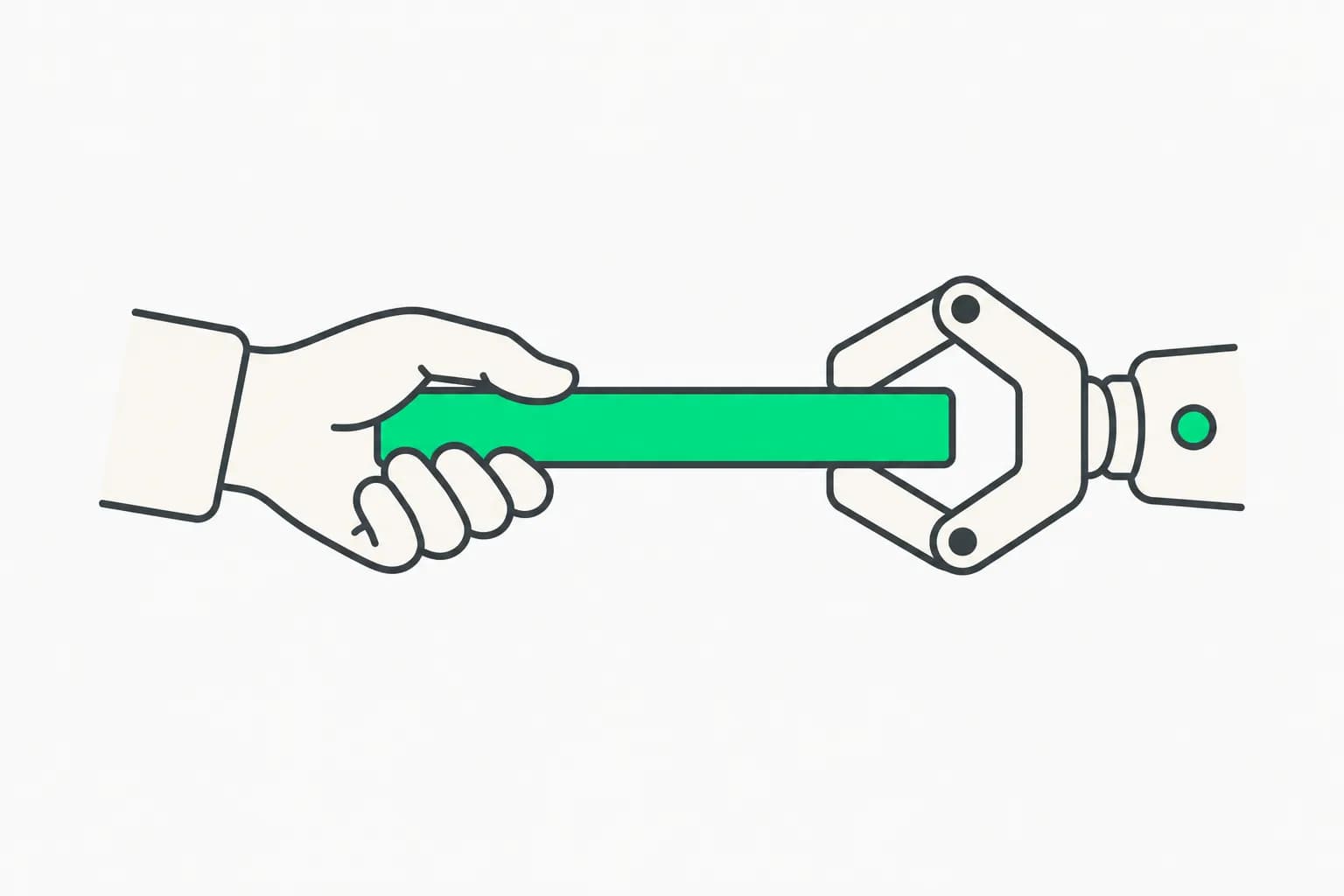
The thesis in one line: AI should extend human will and judgment — not freeze a snapshot of organizational knowledge and replace the people who generate it.
Same week as GPT-5.6 Sol rollout and OpenAI's $50K bio jailbreak bounty, Thinking Machines is arguing the industry's autonomy race measures the wrong thing.
TL;DR — manifesto at a glance
| Theme | Thinking Machines position |
|---|---|
| Mission | Extend human will and judgment |
| Anti-pattern | Frozen models trained in few places, not shaped by users |
| Pro-pattern | Distributed AI as diverse as the people it serves |
| Tools | Tinker — train open-weights with your knowledge |
| Interfaces | Interaction models — live multimodal collaboration in the model |
| Research | Connectionism publications — open science |
| Alignment | Decentralized — many AIs, not one spec |
| Benchmarks | Skeptical of METR-only autonomy horizons |
Bringing intelligence to knowledge
The essay opens with tacit, local knowledge — Polanyi and Hayek cited explicitly:
- A chef's recipe sense or shopkeeper's display judgment is not a static database row
- Central planning fails not from weak intelligence but from knowledge dispersion
- Chess and math are exceptions — static goals, no hidden local knowledge
- Real work (restaurants, shops, organizations) needs AI that cultivates knowledge through ongoing collaboration
Toyota callback: Mitsuru Kawai brought master craftsmen back to automated lines — "To be the master of the machine, you have to have the knowledge and the skills to teach the machine."
explainx.ai read: This is the philosophical counterweight to agents' last exam and METR time-horizon charts — those measure solo agent hours; Thinking Machines wants joint human-machine outcomes as the optimization target.
Four technical directions
From the manifesto:
- Train strong models — multimodal interaction, customizability; frontier competition matters so human judgment can shape sharp instruments
- Build tools — including training model weights (Tinker)
- Develop interfaces — broaden the human–machine channel beyond a text box and long wait
- Publish research — open science (Connectionism)
Murati's X thread (July 10) tied the year-one recap: interaction model previews, Tinker for anyone training open weights, Connectionism research drops.
Human participation is a technical challenge
Key claims:
| Problem | Thinking Machines answer |
|---|---|
| Narrow channel | Text box + latency can't carry rich intent → bet on native multimodal interaction in the model |
| Wrong metric | METR task-completion horizons track solo autonomy, not collaborative yield |
| Incentive mismatch | Single rented model benefits from absorbing user distinctiveness; customized AI benefits when customers own specialized advantages |
Parallel on explainx.ai: Fable advisor + Sonnet executor and Matt Shumer's goal/bar loops are practitioner versions of "don't optimize only for solo agent hours."
Decentralized alignment
The manifesto's sharpest policy section:
- Single alignment spec → single power locus → intelligence curse dynamics if AI needs little from people
- Parent-model-on-parent-model training loops → everyone gets the same character, generation after generation
- Prompt-only values change surface behavior while deep habits remain — Gwern on personalization vs safety cited
- Von Neumann 1955 — useful and harmful lie close; safety is ongoing judgment, not one-shot spec
Vision: An ecosystem of AIs — raised in different places, disagreeing like humans — vs one averaged morality from a handful of labs.
Contrast July 2026:
| Lab | Alignment shape |
|---|---|
| OpenAI | Central GPT-5.6 + bio bounty + government preview |
| Anthropic | Classifier-gated Fable 5 |
| Thinking Machines | Own weights + local shaping + diverse ecosystem |
What shipped before the manifesto
Murati's July 10 thread referenced work already public:
- Tinker — fine-tune open-weights with organizational knowledge
- Interaction models — multimodal collaboration previews
- Connectionism — research line on how models learn
The manifesto is the why behind those products — not a sudden pivot.
Who should care
Enterprise AI leads — manifesto articulates why renting one frontier model may erode proprietary know-how.
Open-weight builders — Tinker narrative aligns with Ollama funding and sovereign AI threads.
Policy readers — decentralized alignment as alternative to export-control theater and single-lab value lock-in.
Agent engineers — critique of METR-only success metrics; design for human-in-the-loop yield, not autonomous hours alone (human-in-the-loop guide).
What to watch next
- Tinker API — pricing, model bases, enterprise adoption
- Interaction model product — ship date beyond preview
- Schulman/Murati hiring — lab headcount vs $2B burn
- Benchmark proposals — do they publish collaborative evals to rival METR?
- Open weights release — manifesto promises strong models + customization; weights timeline?
Related on explainx.ai
- Inkling open weights — July 15, 2026 release
- Inkling-Small — 12B-active open weights (Jul 30)
- GPT-5.6 vs Fable 5 — centralized frontier week
- OpenAI Bio Bug Bounty $50K
- Agents' Last Exam — professional work benchmark
- Ollama $88M — open models momentum
- Human-in-the-loop — when to let agents run
- Yann LeCun — LLMs vs physical agents
- India sovereign AI status
Official: The Future Worth Building Is Human · @thinkymachines · @miramurati
Manifesto themes and product references reflect Thinking Machines Lab's July 10, 2026 publication. Funding figures and product timelines cited from public reporting and lab posts — verify on thinkingmachines.ai.