




Update — August 13, 2026 (Ultrafast mode preview): OpenAI formalized the Cerebras speed play teased below as Ultrafast mode — GPT-5.6 Sol at up to 750 tokens/sec (14x normal speed), API-only preview for select customers, no pricing disclosed yet.
Update — August 6-7, 2026 (ChatGPT chat update): OpenAI merged ChatGPT's Instant and reasoning models into one GPT-5.6 Sol experience for Plus/Pro, and made text chat unlimited on GPT-5.6 Luna for Free/Go users. Full breakdown: GPT-5.6 Sol Now Runs All of ChatGPT — Free Users Get Unlimited Chats.
Update — July 9, 2026 (OpenAI rollout): @OpenAI posted that Sol, Terra, and Luna are starting to roll out now in ChatGPT, Codex, and the API — with new GA benchmarks:
| Claim | Score / detail |
|---|---|
| Agents' Last Exam | Sol 53.6 — +13.1 vs Fable 5 (adaptive) |
| AA Coding Agent Index | Sol 80.0 — +2.8 vs Fable; <½ tokens, ~⅓ cost |
| Ultra mode | Parallel multi-agent setting ships at launch |
| Efficiency | Terra/Luna beat Fable on ALE at ~1/16 cost (OpenAI claim) |
Full Fable comparison → · ALE explainer → · Access timeline →
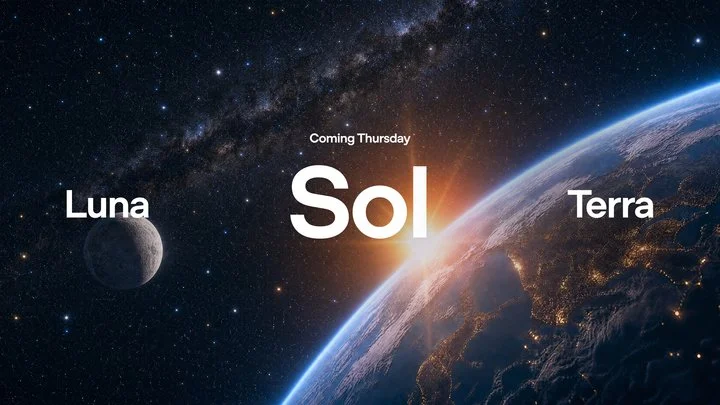 OpenAI GPT-5.6 launch — Sol, Terra, Luna Coming Thursday July 9
July 1, 2026: Fable 5 live globally (status hub). GPT-5.6 was limited preview until this July 9 rollout.
On June 26, 2026, OpenAI officially previewed the GPT-5.6 family — not a single model, but three tiers: Sol (flagship), Terra (balanced everyday work), and Luna (fast, affordable volume). The @OpenAI announcement landed the same week as government gating reporting and Anthropic's Economic Index — a snapshot of frontier AI where capability, cost, and Washington oversight move in the same news cycle.
This is the end of the leak era for GPT-5.6. We now have official benchmarks, API pricing, Ultra mode with subagents, and OpenAI's clearest statement yet on why most people cannot use it today.
TL;DR — GPT-5.6 at a glance
| Model | Role | vs GPT-5.5 | API price (in / out per 1M) |
|---|---|---|---|
| GPT-5.6 Sol | Flagship | Step-function better | $5 / $30 |
| GPT-5.6 Terra | Balanced daily work | Competitive at 2× lower cost | $2.50 / $15 |
| GPT-5.6 Luna | High-volume | Strong capability, lowest cost | $1 / $6 |
| Topic | Detail |
|---|---|
| Availability | Rolling out in ChatGPT, Codex, API (July 9, 2026) |
| GA benchmarks | ALE 53.6 · AA Coding Index 80.0 · TB 91.9% (Ultra) |
| Government | U.S. requested vetted-partner start; OpenAI opposes long-term default |
| Terminal-Bench 2.1 | Sol Ultra 91.9% · Sol 88.8% · Mythos 5 84.3% · Fable 5 83.4% |
| New modes | Max reasoning effort · Ultra mode (subagents beyond single agent) |
| Cyber | Does not cross Cyber Critical threshold; layered safeguard stack |
| Speed | Cerebras Sol up to 750 tps in July (select customers) |
| Caching | Explicit breakpoints · 30-min minimum cache life · writes 1.25× · reads 90% off |
Deep dive: When will GPT-5.6 be available to everyone? — GA timeline, no waitlist, mid-July best case, August outer bound.
Official source: Previewing GPT-5.6 Sol · System card (preview)
Sol, Terra, Luna — OpenAI's new naming system
OpenAI introduced a split that mirrors how enterprises already think about model routing:
- Generation number (5.6) — training generation and capability baseline
- Tier name (Sol / Terra / Luna) — durable product lanes that can advance independently
Sol is the new flagship — OpenAI calls it a step function better than GPT-5.5, not an incremental polish. Terra targets the economic middle: performance competitive with GPT-5.5 at half the token bill. Luna is the volume tier — strong capability at OpenAI's lowest cost in this family.
For developers already abstracting models behind routers, this is explicit permission to map hard agent tasks → Sol, production defaults → Terra, and classification / bulk → Luna without waiting for a new generation number every month.
Availability: rolling out July 9, 2026
OpenAI's July 9 thread superseded the June preview-only framing:
- Limited preview ran June 26 through early July for trusted API and Codex partners
- July 9 rollout — Sol, Terra, and Luna starting to appear in ChatGPT, Codex, and the API
- Tier waves — not every account sees all three models on day one; check your picker
- Government context — preview stagger was U.S.-requested; OpenAI opposes making that permanent
Practical read: If your account does not show GPT-5.6 yet, GPT-5.5 remains the fallback. International users: Will GPT-5.6 only be available in the USA? — rollout is global per OpenAI's thread, but verify your region.
Terminal-Bench 2.1 — where Sol leads the frontier
OpenAI's headline benchmark for coding agents is Terminal-Bench 2.1 — command-line workflows needing planning, iteration, and tool coordination (the same class of work Codex and terminal agents target).
| Model | Terminal-Bench 2.1 |
|---|---|
| GPT-5.6 Sol Ultra | 91.9% |
| GPT-5.6 Sol | 88.8% |
| GPT-5.5 | 88.0% |
| Claude Fable 5 | 83.4% |
| Claude Mythos 5 | 84.3% |
| GPT-5.6 Terra | 82.5% |
| GPT-5.6 Luna | 84.3% |
| Claude Opus 4.8 | 78.9% |
| Gemini 3.1 Pro Preview | 70.7% |
explainx.ai read: On this specific agentic terminal benchmark, GPT-5.6 Sol Ultra is the new state of the art — and base Sol (88.8%) still edges GPT-5.5 (88.0%) and Fable 5 (83.4%). That does not automatically mean Sol wins every coding leaderboard (SWE-Bench Pro gaps may persist on other harnesses), but it validates months of Codex log leaks pointing at agentic reliability gains.
Ultra mode — OpenAI's new configuration that uses subagents beyond a single agent — sits at the top at 91.9%. That connects directly to multi-agent orchestration themes in loop engineering and token economics: more agents, more tokens, more capability on long horizons.
OpenAI also added max reasoning effort on Sol — giving the model more time to reason deeply on hard tasks.
Biology and cybersecurity — beyond coding
GeneBench v1 (genomics / quant biology)
GPT-5.6 Sol shows broad improvements in long-horizon biology workflows. On GeneBench v1, OpenAI reports stronger results than GPT-5.5 while using fewer tokens — efficiency plus capability, not just brute-force compute.
Update — July 1, 2026: OpenAI shipped GeneBench-Pro — 129 harder synthetic computational biology problems. GPT-5.6 Sol hits 28.7% (31.5% Pro mode).
Update — July 11, 2026: OpenAI launched the $50K Bio Bounty Program the same day as GPT-5.6 GA — universal biology jailbreak testing on GPT-5.6 and GPT-5.5 (through July 27).
Cyber: capability up, safeguards up
OpenAI positions Sol as most capable yet for cybersecurity, shifting the performance-efficiency frontier on long-horizon security tasks including vulnerability research.
| Benchmark | Finding |
|---|---|
| ExploitBench² | Sol competitive with Mythos Preview at roughly ⅓ the output tokens |
| ExploitGym | Sol, Terra, and Luna all show strong cyber improvements as reasoning increases |
| Preparedness Framework | Sol does not cross Cyber Critical — no autonomous full-chain exploit in Chromium/Firefox tests under stated conditions |
OpenAI's framing: Sol is better at helping defenders find and fix vulnerabilities than at reliably executing end-to-end attacks. That mirrors Washington's Mythos-class concern while arguing for defender access with safeguards.
Safeguard stack (preview):
- Model-trained refusals for prohibited cyber assistance (including jailbreak attempts)
- Real-time cyber and biology misuse classifiers — generation can pause for larger-model review
- Account-level review across conversations for persistent abuse vs legitimate dual-use work
- 700,000+ A100-equivalent GPU hours on automated red teaming for universal jailbreaks
- Continued third-party human red teaming during preview
Expect blocks, refusals, and latency during preview — OpenAI says that friction is intentional while they tune false positives on legitimate security work.
Pricing and caching — Terra undercuts GPT-5.5 economics
Official API pricing per 1M tokens:
| Model | Input | Output |
|---|---|---|
| GPT-5.6 Sol | $5.00 | $30.00 |
| GPT-5.6 Terra | $2.50 | $15.00 |
| GPT-5.6 Luna | $1.00 | $6.00 |
Sol at GPT-5.5 list price is notable — flagship upgrade without a headline price hike on the top tier. Terra at half of GPT-5.5 is the enterprise story: route "good enough" workloads down a tier and cut spend without leaving the 5.6 generation.
Prompt caching (5.6+):
- Explicit cache breakpoints
- 30-minute minimum cache lifetime
- Cache writes billed at 1.25× uncached input rate
- Cache reads keep 90% discount
For agent loops that reuse system prompts and tool schemas, predictable caching matters as much as raw per-token rates — especially when Ultra mode multiplies subagent calls.
Cerebras: 750 tokens per second in July
OpenAI is launching GPT-5.6 Sol on Cerebras at up to 750 tokens per second in July 2026, initially for select customers as capacity expands. That is a latency play for interactive agents — separate from the benchmark story but relevant for production UX on Sol.
This effort now has a name: OpenAI's August 13 Ultrafast mode preview formalizes this same Cerebras partnership — same 750 TPS figure, framed as up to 14x Sol's normal speed, still API-only with no pricing published.
How this changes the Fable 5 comparison
Claude Fable 5 is live globally since July 1 (status). OpenAI's July 9 GA thread adds new comparison axes beyond Terminal-Bench:
| Benchmark | GPT-5.6 Sol | Fable 5 (implied) |
|---|---|---|
| Agents' Last Exam | 53.6 | ~40.5 (adaptive) |
| AA Coding Agent Index | 80.0 | ~77.2 |
| Terminal-Bench 2.1 (Ultra) | 91.9% | 83.4% |
Terra/Luna beat Fable on ALE at ~1/16 cost per OpenAI — the volume-tier economics story. SWE-Bench Pro may still favor Fable until OpenAI publishes Sol scores there.
Access beats benchmarks in 2026: Both frontier tiers are now reachable — route by task and harness, not vendor loyalty alone.
What people are asking on X
"Is GPT-5.6 out or not?"
Rolling out as of July 9, 2026 — ChatGPT, Codex, and API. Tier waves may lag; check your account.
"Did OpenAI confirm the government story?"
Yes — in their own blog. They previewed with the U.S. government, started limited at government's request, and explicitly said they do not want this to become permanent process.
"Is Sol worth it if Terra matches GPT-5.5 cheaper?"
Sol for hardest agentic work, Ultra/subagents, and max reasoning. Terra when GPT-5.5-class quality suffices at half the bill. Luna for high-volume pipelines where 84.3% Terminal-Bench-class behavior is enough.
"Does this mean Fable 5 is obsolete?"
On ALE, AA Coding Index, and Terminal-Bench, Sol leads per OpenAI's GA claims. Fable's SWE-Bench Pro lead is not fully refuted until OpenAI publishes Sol scores there — and Fable remains the default for Claude Code stacks.
"Will cyber safeguards block my red team?"
Maybe during preview. OpenAI warns of false positives on dual-use security work and asks for feedback to reduce unnecessary blocks before wider release.
What to do now
| If you are… | Action |
|---|---|
| On GPT-5.5 in production | Stay put until your account tier gets GA; benchmark Terra for cost routing |
| Building Codex agents | Watch partner preview reports; design for Sol / Terra / Luna routing now |
| Comparing to Fable 5 | Update Terminal-Bench assumptions; read full comparison post |
| Outside the U.S. | Assume delay; plan international alternatives |
| Following policy | Track cyber EO framework — OpenAI tied GA path to that process |
Related reading
- Ultrafast mode: GPT-5.6 Sol at 750 TPS on Cerebras (August 13 update) — formal preview, select API customers only, no pricing yet
- GPT-5.6 Sol unifies ChatGPT chat, Luna goes unlimited for free users (August 6-7 update) — Instant/reasoning merge, 68% fewer factual errors claim
- Castform + Neon: 4B open model matches Sol on retrieval at ~100x lower cost (August 5 update) — vendor-reported RL post-training case study
- OpenAI cuts Luna 80%, Terra 20% (July 30 update) — new pricing table + Artificial Analysis cost-per-task chart
- GPT-5.6 vs Claude Fable 5 — complete tier comparison (July 9 update) — Sol/Terra/Luna vs Fable benchmark matrix
- GPT-5.6 release guide — updated for official Sol/Terra/Luna specs
- Grok 4.5 public launch (July 9) — SpaceXAI ships same day as Sol
- Government approval breakdown — Lutnick, vetted partners, case-by-case access
- International access — who gets preview vs GA
- Fable 5 ban context — parallel June interventions
- Token economics — Ultra mode and subagent spend
Pricing and June 26 preview context retained. July 9 rollout benchmarks (ALE, AA Coding Index) are vendor-reported — verify availability on openai.com and your account tier.