



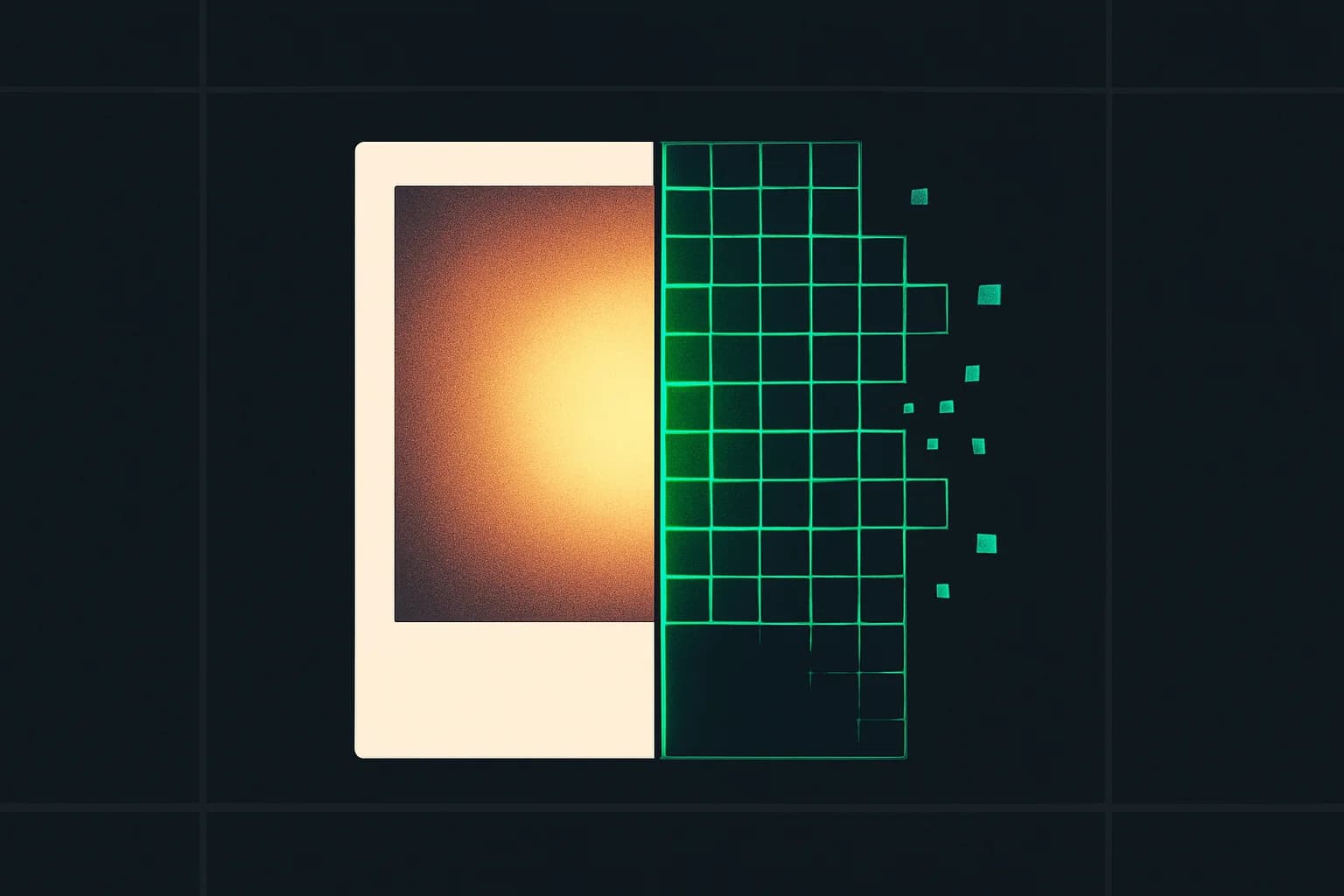
How do you film a memory that was never filmed? On September 11, 2026, Google DeepMind posted the answer the lab and its collaborators shipped for Love, Rendered — a Telluride-selected documentary short that reconstructs the day Burt and Ethelle Shatz first met at a student co-op in Cleveland, a moment that existed only in their minds as Burt's memory fades after more than 70 years of marriage.
The technical claim is specific: restored archival photos plus pose and performance control models that capture present-day mannerisms and micro-expressions, mapped onto younger likenesses. The creative claim is older — remiscence therapy, emotional continuity, human direction. For builders, the film is worth studying as a guided identity-preserving generation pipeline, not as magic that invents documentary truth from nothing.
Watch the full film (Telluride Film Festival 2026 Official Selection):
TL;DR
| Question | Answer |
|---|---|
| What is it? | Documentary short reconstructing Burt & Ethelle's unfilmed first meeting |
| Who made it? | Primordial Soup, Story Syndicate, Google DeepMind; dir. Liz Garbus |
| Tech lead? | Michael Chang (Google DeepMind) |
| Core method? | Archival photo restore + pose/performance control from living subjects |
| Human loop? | Ethelle corrects details (staircase curves, shoe heels) as co-creator |
| Festival? | Telluride Film Festival 2026 Official Selection |
| Where to watch? | YouTube (premiered ~Sep 8, 2026) |
| Consumer parallel? | Gemini app restore/colorize — not full scene reconstruction |
What the film is actually about
Per Google's September 9, 2026 Blog post by DeepMind engineer Michael Chang, and the YouTube description from Primordial Soup:
- Subjects: Burt and Ethelle Shatz, married 70+ years
- Crisis: Burt's cognitive decline; the day they met risks disappearing with him
- Gap: That day was never photographed or recorded
- Approach: Clinical and family context around reminiscence therapy — sensory cues that rekindle connection — extended with generative tools when no cue image of the event exists
- Credits: Directed by two-time Oscar-nominated Liz Garbus; produced with Oscar-winner Dan Cogan and Oscar-nominee Darren Aronofsky; Primordial Soup is Aronofsky's artist-led studio merging narrative and generative workflows
Chang writes that memory loss is personal to him — his grandfather's post-stroke confusion — and that he tested image restoration and video models on his own parents' photos before committing to the film's technical lead role. That framing matters: the project is positioned as therapy-adjacent storytelling with consent, not a generic "AI can invent your past" pitch.
The two-part DeepMind pipeline
Chang describes a two-part technical approach designed to "preserve emotional truth":
1. Image restoration (identity lock on stills)
Generative models restore black-and-white youth photos of Burt and Ethelle. The restored stills become the identity reference for later frames — analogous to the identity-lock first pattern explainx.ai documents for viral photo edits: lock the face before changing the world around it.
Without this step, animating "young Burt" from a text prompt alone would drift toward a generic 1950s face. The archive is the fidelity anchor.
2. Pose and performance control (mannerisms as motion)
Engineers used performance capture / pose control models to map present-day micro-mannerisms onto those younger likenesses. Chang names concrete cues:
- The specific tilt of Burt's head
- A brief hesitation in his speech pattern
- The subtle crinkle around his eyes
That is the film's real technical thesis: the body that exists now teaches the body that no longer exists on film how to move. Past appearance comes from archive; present identity-in-motion comes from living performance.
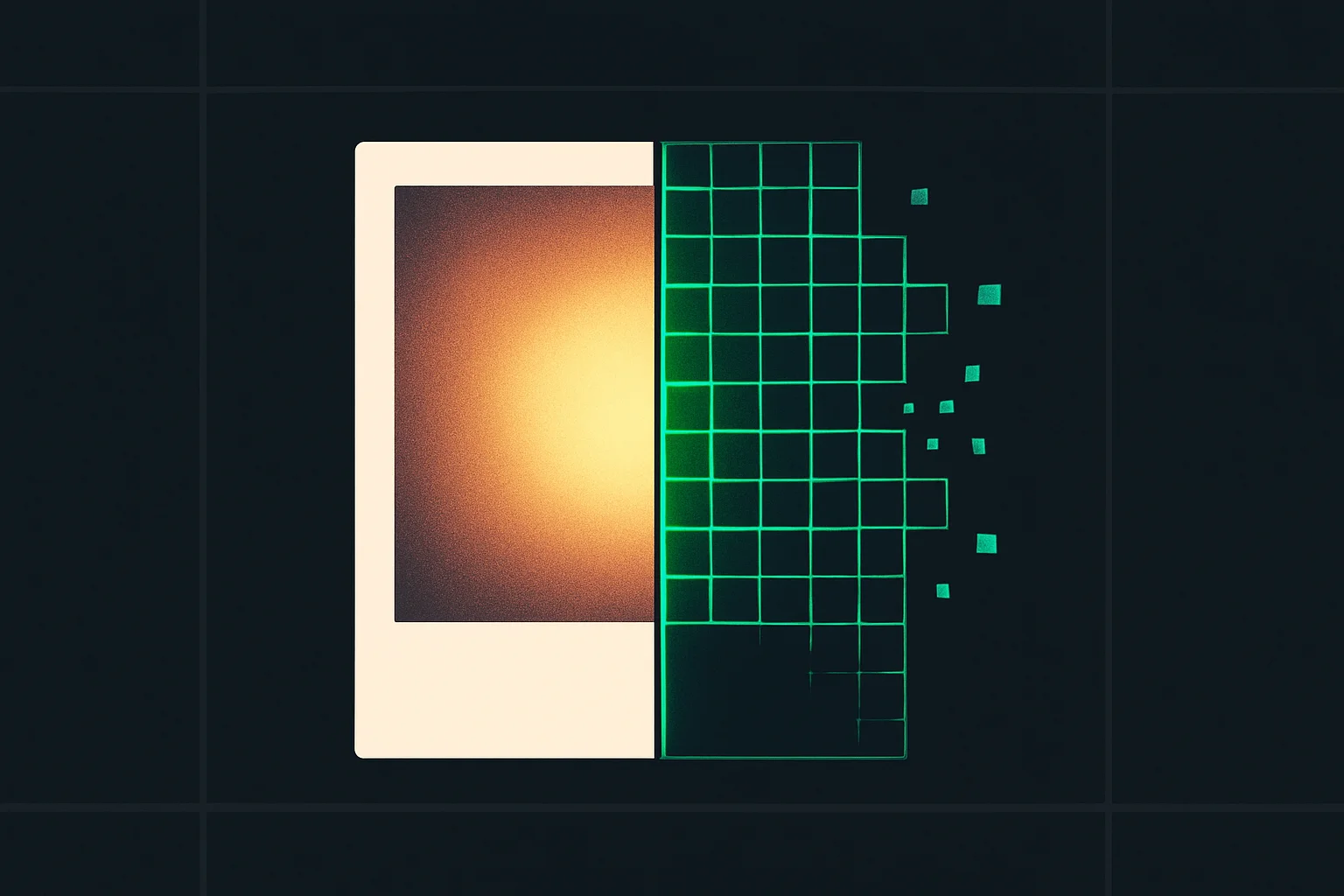 Archival photo restoration and generative animation conceptually bridging past stills and present performance — metaphor for Love, Rendered
Combining the two
Chang: combining restoration and performance control let the team "intertwine Burt and Ethelle's past and their present" and generate a "memory" the couple said felt authentic. Colleague Jess Gallegos walks the workflow in more detail in Google's accompanying materials.
Aronofsky's production note, quoted by Chang: a tool like a paintbrush does nothing until guided by human hands. Machine learning is the brush; Ethelle is a co-painter.
Human-in-the-loop is not optional marketing
Ethelle sat with the team correcting the curve of a staircase and the shape of a shoe heel. That is domain expertise — she is the only living witness with continuous memory of the setting. Builders should read this as a product requirement:
| Role | What they contribute |
|---|---|
| Archive photos | Appearance priors for young Burt/Ethelle |
| Living performance | Mannerisms, speech timing, micro-expressions |
| Surviving partner | Scene layout truth (architecture, clothing details) |
| Filmmakers / engineers | Model selection, framing, ethical boundaries |
| Clinical context | Reminiscence therapy framing (cues → conversation → connection) |
Unsupervised "generate their first date in 1950s Cleveland" would maximize plausible pixels and minimize evidentiary honesty. Love, Rendered's design rejects that shortcut.
Reminiscence therapy meets generative media
Garbus and Aronofsky came at the film through earlier encounters with memory's resilience — fMRI responses to familiar voices in Garbus's work on Coma, and footage of a former ballerina with Alzheimer's responding to Swan Lake. Reminiscence therapy uses songs, stories, and photographs as cues. Love, Rendered asks: what if the precious memory has no cue photograph of the event itself?
The generative stack fills a missing cue, then returns the result to the people whose emotional continuity is the point. That is closer to assisted autobiography than to historical reconstruction for a courtroom.
Provenance: emotional continuity vs evidentiary truth
Reactions to DeepMind's post immediately split along a useful axis. One reply celebrated a real use case — reconstructing the day they first met from photos alone. Another insisted a reconstructed memory needs two simultaneous truths: emotional continuity and evidentiary provenance — which pixels came from archive, which motion from performers, which details were inferred — so intimacy does not collapse into falsehood.
explainx.ai's position matches the second instinct for builders shipping tools:
- Disclose synthesis — YouTube already marks Love, Rendered as made with AI ("Sounds or visuals were altered or fully generated").
- Separate layers — archive restore ≠ invented background ≠ transferred mannerism.
- Prefer credentials — C2PA Content Credentials and watermark debates exist so synthetic media can carry machine-readable origin, not just a film festival Q&A.
- Don't confuse authenticity-of-feeling with authenticity-of-record — the couple's "felt authentic" is a clinical/emotional outcome; it is not a claim that the staircase curve is historically surveyed.
That distinction is the same one behind deepfake fraud verification and why watermarks/provenance matter: intimate use cases still benefit from honest labeling.
Not the same as a covert deepfake — but the stack overlaps
| Dimension | Covert deepfake | Love, Rendered |
|---|---|---|
| Consent | Often none | Subjects and family participate |
| Goal | Impersonation / deception | Assisted memory / documentary |
| Identity source | Scraped or stolen media | Family archive + living capture |
| Direction | Attacker or marketer | Surviving partner + filmmakers |
| Disclosure | Hidden | Festival circuit + AI label on YouTube |
| Success metric | Fool a third party | Feel true to the subjects |
Builders reusing pose-control and face-restore stacks for products should default to the right-hand column's process controls, even when shipping something less intimate than a documentary.
What you can try today in Gemini (narrower)
Google's consumer pointer is intentionally modest. In the Gemini app:
Upload an image of the photo and ask Gemini: "Can you restore and colorize this photo? Preserve the appearance, expression, and pose of the people."
That is still restoration, not full unfilmed-scene reconstruction. The film's pose-and-performance control stack is not a public API. Treat Gemini restore as the democratized first mile; treat Love, Rendered as the research/production ceiling.
Related consumer patterns: the 80s AI photo trend (identity lock + period styling) and Nano Banana identity preservation — same family of "keep this person, change the context."
Builder takeaways
| Lesson | Practice |
|---|---|
| Identity before motion | Restore or lock a still reference before animating |
| Performance from the living subject | Prefer capture of real mannerisms over text-prompted acting |
| Domain expert in the loop | Someone who was there should approve geometry and props |
| Name the inference | UI/docs should say what was restored vs invented |
| Label the output | Platform AI labels + optional C2PA |
| Don't overclaim history | Market emotional continuity carefully if you lack evidence |
For agentic video pipelines (ViMax, Seedance), the same discipline applies: multi-step generation without identity and provenance controls produces plausible fiction, not trustworthy memory media.
What people are asking
Is the full film free? Yes — Primordial Soup published it on YouTube after the Telluride selection.
Did DeepMind invent a new model just for this? Chang describes using emerging image restoration and performance capture / pose control models as an art medium with Primordial Soup — not a named consumer model launch. Treat it as a workflow demonstration, not a new SKU announcement.
Could this rewrite someone's past against their will? Only if you remove consent and disclosure. The production's ethics ride on participation and labeling; the underlying models do not enforce that.
Is this useful beyond one documentary? For product teams: yes, as a reference architecture for archive + live performance + human correction. For clinicians: the film gestures at reminiscence therapy but is not a medical study — do not treat it as evidence of clinical efficacy.
The bottom line
Love, Rendered is Google DeepMind's most human-facing proof yet that generative video can serve preservation, not only spectacle — if you bind it to archives, living performance, and a witness in the loop. Burt and Ethelle's first meeting still was not filmed in 1950s Cleveland. What exists now is a rendered reconstruction that they say feels like memory, disclosed as AI-assisted cinema.
Builders should copy the pipeline discipline, not the marketing poetry: lock identity, transfer real mannerisms, keep humans correcting the staircase — and keep provenance visible so emotional truth never pretends to be an unbroken historical record.
Primary sources: Google Blog — Recreating a 70-year love story (Michael Chang, Sep 9, 2026) · Love, Rendered on YouTube · Google DeepMind on X
Related on explainx.ai
- The Viral 80s AI Photo Trend: Identity Lock for ChatGPT and Gemini
- What Is C2PA Content Credentials, Explained
- Why AI Watermarks Are Good: The Case for Provenance
- Deepfake Fraud: $25M Video Call Scam Verification
- Google DeepMind Nano Banana 2.5 Image Model
- AI Watermark Removal: The Right and Wrong Way
- ViMax: Agentic Video Generation Guide
- Teach Kids to Spot AI Fakes
Details reflect Google's September 9, 2026 Blog post, the YouTube premiere description, and DeepMind's September 11, 2026 announcement. Model internals beyond Chang's published workflow were not disclosed.