



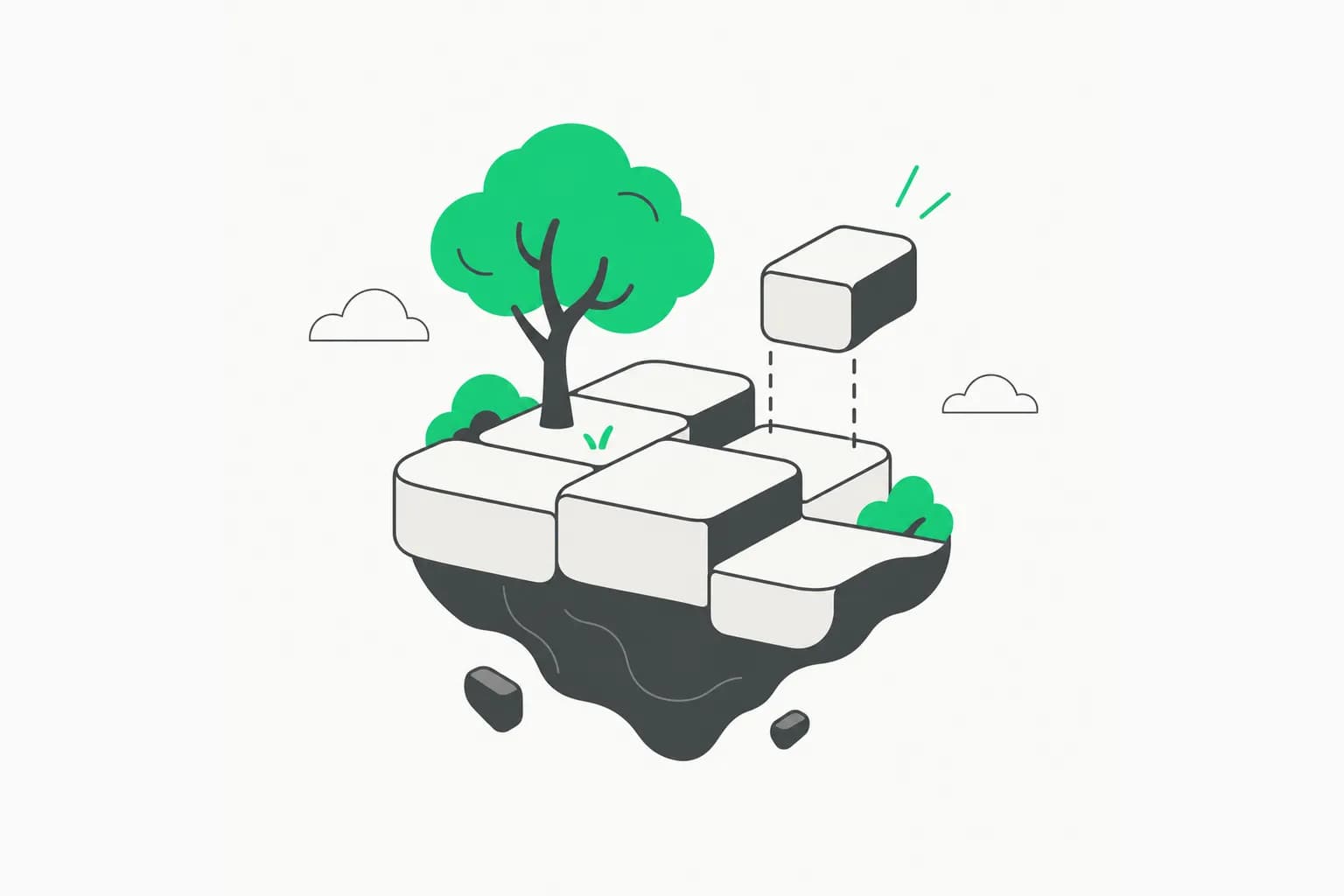
Google DeepMind announced Genie 4 on October 27, 2026, a world model that generates interactive, real-time simulated worlds and, for the first time in the Genie line, produces sound and spoken dialogue as part of the world itself. It is a research preview for trusted testers, with a waitlist for Project Genie, so most readers cannot try it yet. What you can do today is understand what changed, what DeepMind has and has not shown, and why a world model sits so close to the company's Gemini and robotics work.
This post is based on DeepMind's own announcement and The Verge's report on the launch. Where a number comes from a single outlet rather than DeepMind, we say so.
Genie 4 at a glance
| Question | Answer |
|---|---|
| Who made it? | Google DeepMind (post by Raia Hadsell, Diego Rivas and Hang Qi) |
| Announced | October 27, 2026 |
| What is new vs Genie 3? | More photorealism, steering in real time with text, native audio and dialogue, Gemini in the loop |
| Session length | About two minutes, per The Verge, up from about one minute for Genie 3 |
| Who can use it? | Trusted testers now; Google AI Ultra in Project Genie and Gemini API / AI Studio early-access partners next |
| Is there a waitlist? | Yes, for Project Genie |
| Watermark | SynthID on all generated video and audio |
| Biggest caveat | Detail and object permanence drift over longer runs, per DeepMind |
What is a world model, and where does Genie 4 fit?
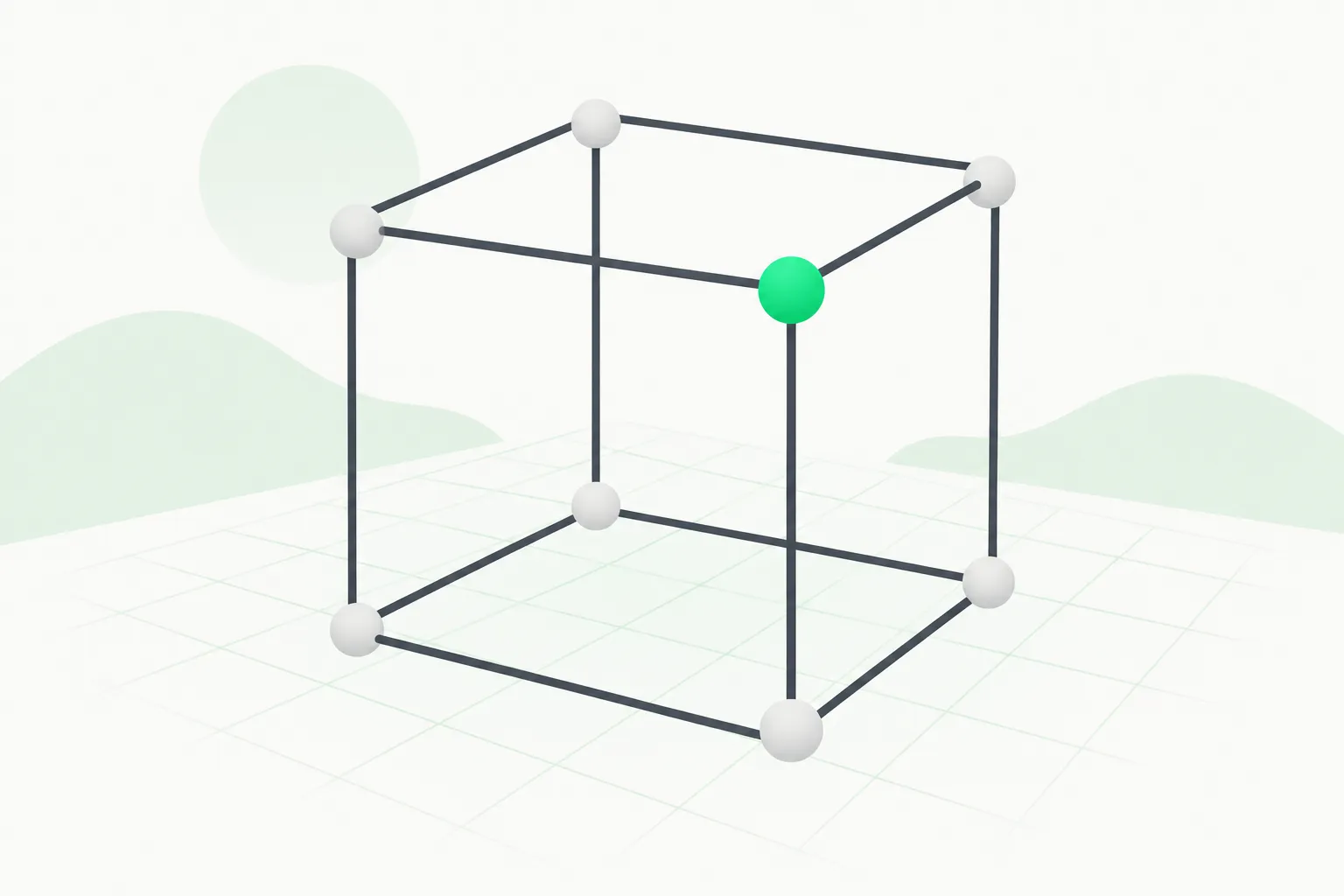 A wireframe cube over a grid floor, a simple picture of how a world model keeps a consistent 3D space
A world model is a generative system that predicts how an environment changes in response to what you do. A video model produces a clip from a prompt. A world model produces the next moment, then the next, while you steer, so the output is a place you can move through rather than a file you watch. We cover the basics in our guide to world models.
DeepMind frames Genie 4 as part of its AGI work: "Understanding and simulating the world is a crucial aspect of building AGI," the announcement says, and it names two uses, training environments for robots and agents, and new interactive experiences. That framing matters because it explains why the company keeps funding this line. The consumer demo is the visible part; the robotics use is the strategic one.
The field is also getting crowded. In the last two months we have covered Odyssey 3, Runway's GWM Worlds 2, Skywork's Matrix-Game 4.0 and a report that ByteDance is building a Seedance world model explicitly to rival Genie. Genie 4 is Google's answer from the top of that stack.
The four capabilities DeepMind highlights
DeepMind groups the release into four advances. Each is shown with recordings of real-time interaction in which users move with standard keyboard controls and steer with text.
1. Steering the world in real time
You can change the weather, move the camera, or introduce a new person or object with natural language, and "Gemini will contextually adapt your prompt to match the surrounding scene." Between your inputs, Gemini also monitors the scene and steers it so the world keeps progressing cohesively. In practice this means a prompt like "add a thunderstorm" is rewritten into something that fits the existing scene rather than pasted on top of it.
DeepMind's own demo prompts are unusually long and specific. One reference-image prompt describes a floating platform, a saxophone player and 16mm documentary film grain in several paragraphs. That is worth noting: the headline demos are produced with detailed, authored prompts, not a one-line request.
2. Better physics and human action
The announcement calls realism for people "the most dramatic leap": characters that move naturally, respond to their surroundings, and can be steered interactively. DeepMind says the model simulates physical scenarios such as aerodynamics and collisions, and the sample prompts include a watermelon in slow motion, a falling maple seed, and a crowded 1980s Japanese train platform. These are demonstrations chosen by the lab; there is no independent benchmark in the post.
3. Native audio and interactive dialogue
This is the headline change. DeepMind calls Genie 4 its "first real-time world model to generate audio natively," with each world carrying its own ambient sound, wind in trees or waves at a beach. The harder claim is human speech: "Characters converse and react to your inputs or events in the world, all in real-time." All the sounds in the demo clips are produced by Genie 4 directly, according to the post.
For anyone who has watched silent world-model demos, this closes an obvious gap. For creators it also raises the stakes on provenance, which is why SynthID is applied to audio as well as video.
4. Gemini in the loop for complex events
Here the architecture is interesting. DeepMind says Gemini 3.8 Flash "serves as a guiding agent in the loop": as Genie 4 generates, Gemini observes the scene, breaks goals into steps, reviews incoming frames to confirm each step succeeded, and adapts its plan if the world shifts or the user intervenes. The stated payoff is "reliable causality, procedural behaviors, and multi-step reasoning."
The company calls the longer-term direction "hybrid world models," combining the structured reasoning of code and language models with the pixel-level simulation of a generative model. Gemini plans the narrative and structure; Genie renders how the world looks, sounds and responds.
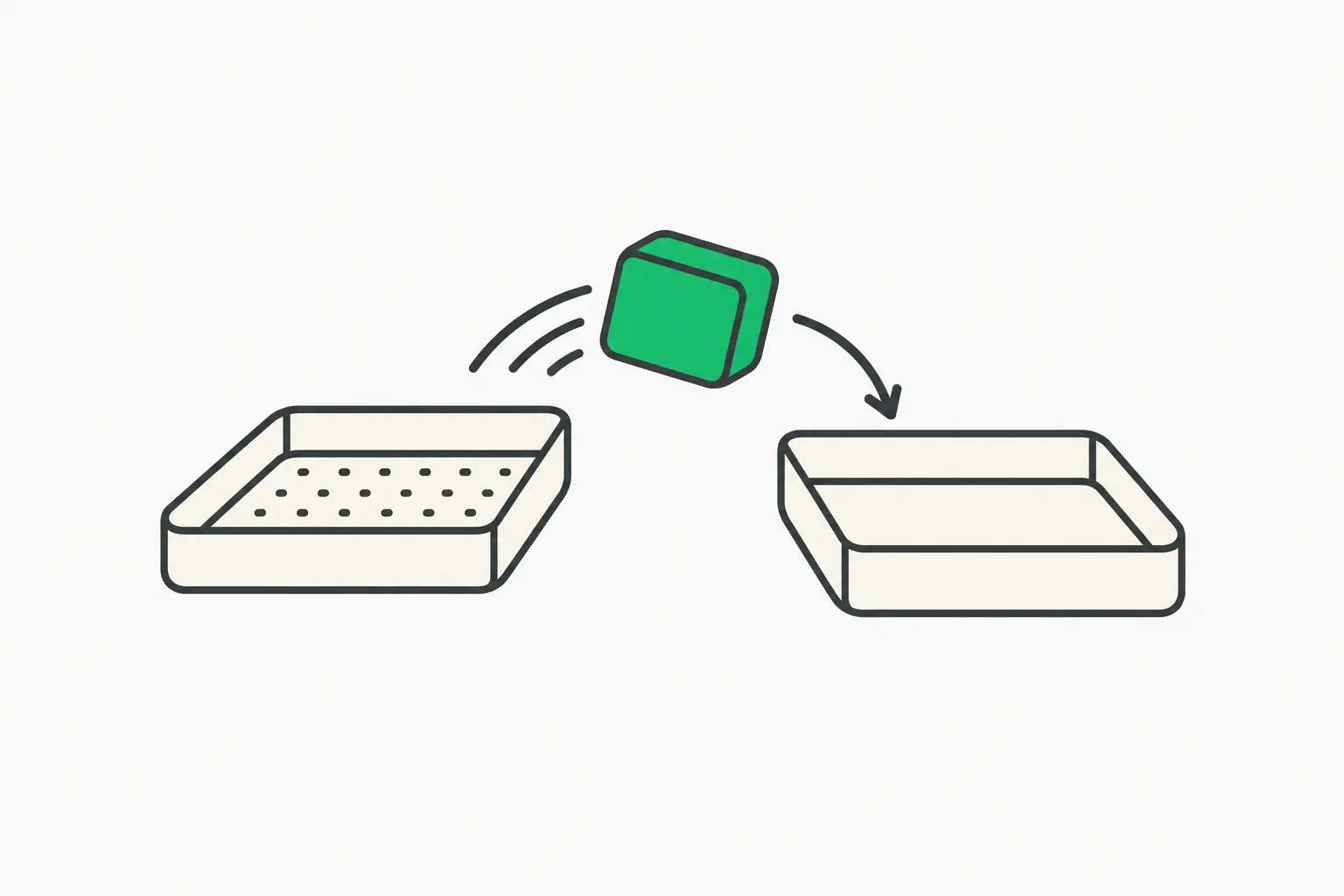 Robot simulation moving from a rehearsal tray to a real tray, a picture of testing in imagined worlds for Genie 4 robotics
The robotics angle: Argon plus Genie 4
DeepMind says it has been combining Gemini 4 Argon and Genie 4 with its Gemini Robotics research. In the example it shows, Argon breaks a user instruction into steps and feeds them to Genie as text captions while the simulation renders, so the scene can be steered toward completing the task. The demo simulates Apptronik's Apollo humanoid playing checkers.
Treat this as a research direction, not a validated training pipeline. DeepMind does not publish a result showing a robot policy trained or tested in Genie 4 worlds transferring to hardware. Our earlier posts on Gemini 4 Argon for robotics and the Argon launch benchmarks and pricing show the other half of the story: the reasoning model that would plan the tasks. Genie 4 is the proposed place to rehearse them.
For comparison, NVIDIA's approach is open and physics-oriented; see our Cosmos 3 guide. Genie is closed, general-purpose and visually driven, so the two make different trade-offs between realism and verifiability.
What testers told DeepMind
DeepMind says it has worked with cohorts of trusted testers across creative industries, journalism, education, gaming and engineering. It reports four themes:
- Creative direction: a "draft mode" for pre-visualization, where filmmakers run multiple takes in a live simulation, adjusting camera, lighting, dialogue and action.
- Historical scenarios: photojournalists turning a single archival photograph into a grounded, populated simulation of that place.
- Interactive concept design: game developers going from an idea to an explorable prototype through prompts before writing engine code.
- Simulation: enterprise partners evaluating "zero-to-one" scenario generation and flagging gaps.
These are reported impressions, not measured outcomes. DeepMind gives no numbers on time saved or quality scores.
Limits DeepMind states plainly
The announcement is candid about the model's weaknesses, and they are the part to remember:
- Visual details and object permanence "can still shift or drift over time," especially in longer simulations, after several complex prompt edits, or while navigating through the scene.
- Complex physical interactions, real-time audio accuracy, legible text, spatial accuracy and long-term consistency are listed as active research areas.
- It is an "early, experimental model," shared as a preview.
The Verge adds a useful reality check: its reporter had not been able to try Genie 4, and could not say how it compares with the Genie 3-based Project Genie. The two-minute session length also tells you what kind of product this is. It is a short, vivid, steerable clip, not an open-ended game you can play for an hour.
Access: who gets it and when
DeepMind's rollout order is:
- Now: research preview for trusted testers.
- Next: consumers and developers, starting with Google AI Ultra subscribers in Project Genie, and early-access partners of the Gemini API and Google AI Studio.
- Waitlist: open for Project Genie.
The Verge says Genie 4 is "coming soon" to Ultra subscribers, but neither source gives a date, a price, or usage limits. If you build with the Gemini API, the practical step is to join the waitlist and watch for an AI Studio model listing. Do not plan a product around it until pricing and latency are published.
What this means if you build with AI
- Game and film teams: treat Genie 4 as an ideation tool. A two-minute, drift-prone world is good for mood and blocking, not for shipping assets.
- Robotics teams: the interesting question is whether synthetic worlds produce policies that work on hardware. Until DeepMind or partners publish transfer results, evaluate it as a scenario generator, and keep your real-world tests. Our look at simulation inside simulation covers why that gap is hard.
- Everyone else: the notable design pattern is an LLM supervising a generative simulator frame by frame. Expect more "planner plus renderer" systems, in video and in agents.
- Provenance: native audio and speech make convincing fake scenes easier. SynthID is DeepMind's answer, but a watermark only helps where someone checks for it.
Claimed vs verified
| Claim | Source | Status |
|---|---|---|
| First real-time world model with native audio | DeepMind | DeepMind's own claim; competitors' audio support not compared in the post |
| Interactive dialogue adapts on the fly | DeepMind | Shown in curated demos; untested by outside users |
| Sessions of about two minutes | The Verge | Reported by one outlet; DeepMind's post does not state a figure |
| Improved physics and human motion | DeepMind | No published benchmark |
| Gemini 3.8 Flash in the loop | DeepMind and The Verge | Both agree |
| Available now | Neither | Not true; trusted testers only |
Related reading
- What are world models? A complete guide
- ByteDance is reportedly building a Seedance world model to rival Genie
- Odyssey 3 world model launch
- Runway GWM Worlds 2
- Gemini 4 Argon launch: benchmarks and pricing
- Gemini 4 Argon for robotics
- Nvidia Cosmos 3 open physical-AI world model
Sources: Google DeepMind, Genie 4 announcement and The Verge, Genie 4 report.
Details are accurate as of October 27, 2026. Access, pricing and limits may change as the preview widens.