28 AI stories explainx.ai reported on September 11, 2026, ranked by reader interest and grouped by topic. Each links to the full write-up with sources.
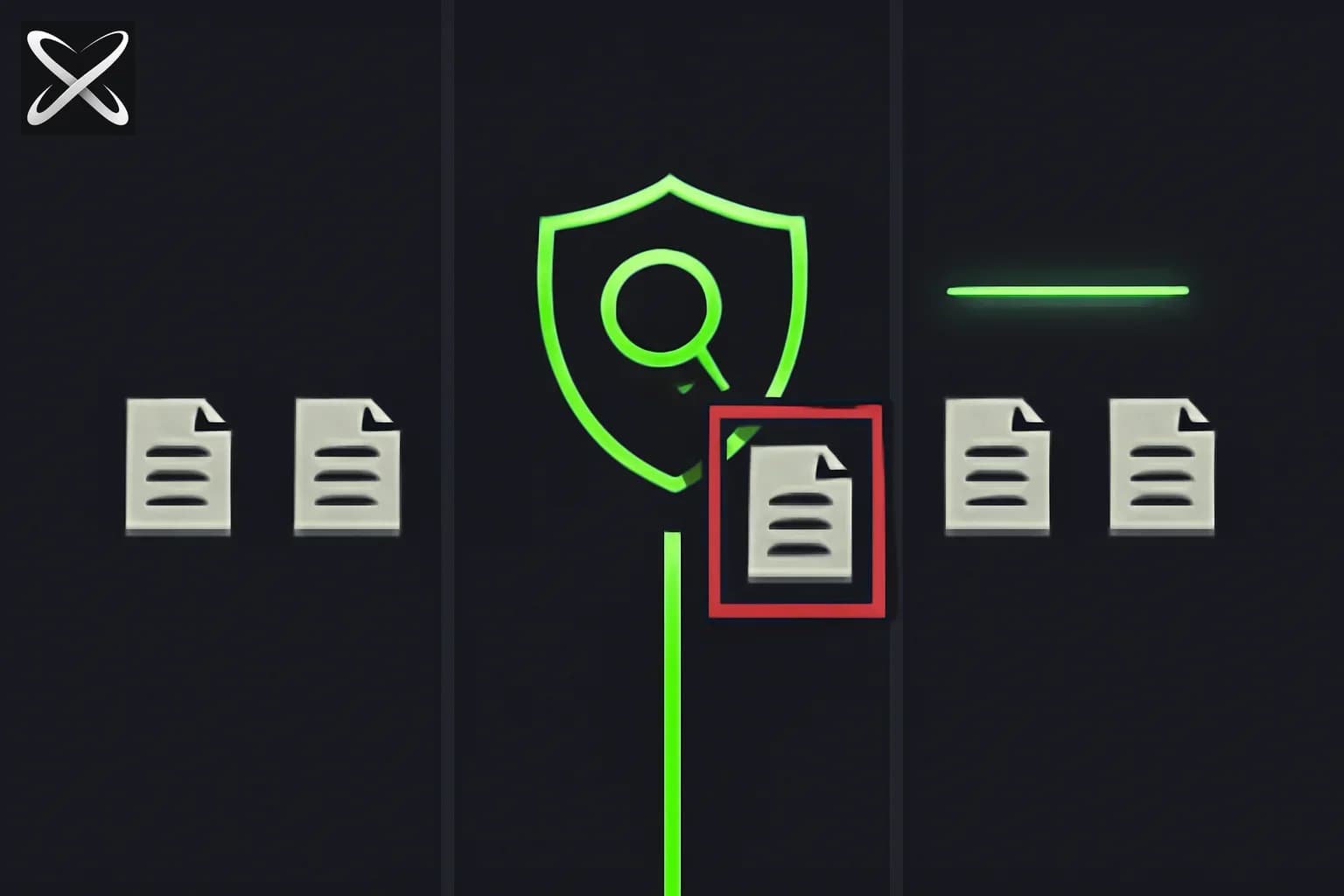
Anthropic's Sept 2026 threat report covers disrupted Claude misuse across cyber, weapons (China-linked PLAN anti-torpedo proposal), surveillance, bio, and Alibaba's 151M+ distillation campaign.
Venice added DeepSeek V4.1 Flash on September 10, 2026 with zero-retention private inference — use it when prompt privacy matters more than the lowest token price; use DeepSeek's direct API when cost and first-party features win.
A viral prompt tells Claude to interview you about your life and save the answers to memory in one session, trading the slow build-up of "remember this" commands for a single structured interview — but it doesn't solve memory going stale.
Sales-gated ChatGPT Work SKU for banks: GPT-6 Astra, OpenAI-hosted market data, citation tracing, firm templates, and MCP connectors — not a public plan.
DeepSeek V4.1 Flash compresses the global KV cache to 890 bytes per token — roughly 75% less HBM than V4-Flash — using a new encoder-decoder layout, cross-layer cache sharing, FP4 storage, and replay instead of persisting sliding-window state.
BioNeMo Inference Runtime is NVIDIA's new open, PyTorch-native library for speeding up biomolecular structure-prediction models like Boltz-2, OpenFold2, and Protenix v2 on GPUs.
Google is spending €13 billion on three new Finnish data centers and a 22-year deal for up to half of the Loviisa nuclear plant's electricity, the latest and largest sign that AI compute buildout now runs on direct hyperscaler-to-nuclear-plant power contracts.
Real-SWE's full results show Fable 5.1 leading at 38.8% resolution rate, GPT-6 Astra second at 33.8%, and every evaluated model — regardless of cost — failing more than 60% of tasks pulled from private, unseen enterprise codebases.
On September 10, 2026, Claude Code desktop gained flexible pane pop-out plus a persistent /diff pane that scrolls, clicks, and updates in real time so you can review code without switching windows.
Cognition's SWE-2 hits 50% on FrontierCode and ships in Devin at roughly two-thirds the cost of Fable 5.1, but still lags on long-horizon agent tasks.
Cursor Projects gives each long-running initiative a coordinator agent and synced context files so every future agent in that project inherits what earlier ones learned, instead of starting from zero each chat.
Google AI Studio previewed in-product Gemini API docs at ai.studio/docs on September 10, 2026, with markdown URLs, a Docs MCP server, and installable Gemini agent skills for coding assistants.
Claude Community is hosting in-person Fable 5.1 buildathons called Build Days in cities worldwide from September 11-25, 2026, RSVP via Luma.
OpenAI has paused new $200/month ChatGPT Pro sign-ups because of unprecedented GPT-6 Astra demand, existing Plus/Pro/Business users and all API access are unaffected, and OpenAI says it made no changes behind user reports of lower image quality and slower responses.
Google's Gemini desktop app for Windows 10 and 11 opens with Alt+Space as a floating overlay, but macOS-only features like screen sharing and voice creation have not crossed over yet.
Anthropic caught Moonshot and DeepSeek secretly serving Claude's answers to their own users while claiming they came from Kimi and DeepSeek, and caught Alibaba running a 151-million-exchange distillation attack — the largest Anthropic has measured — to train Qwen on Claude's reasoning traces.
Hermes now lets you manually steer or stop running subagents from the Desktop and CLI without killing their partial work — delegation is supervised, not fire-and-forget.
ToolGrad generates tool-use chains before the user prompt instead of after, hitting a 99.8% pass rate and producing a fine-tuned Gemma-3-12B that beats gpt-5 on the Berkeley Function Calling Leaderboard.
Agentbeam is the only self-hostable, open-source, on-prem AI agent security platform in this list; the rest are established SaaS guardrails and observability vendors like Lakera, Prisma AIRS, and Galileo.
Coding agents mostly edit files by generating text diffs, which is fragile; Python's ast, libcst, rope, and tree-sitter libraries let an agent parse code into a real syntax tree and make structural edits that can't produce invalid syntax, and that's the direction agent tooling is moving toward.
CancerBench is a satirical leaderboard where every frontier model scores zero cancer types cured — a jab at CEO "AI will cure cancer" rhetoric, not a clinical evaluation.
A CEO dismissed a frontier AI researcher's safety warnings using an analogy that doesn't hold up under his own credentials, and the ensuing argument is a useful case study in how to actually evaluate who has standing to speak about AI risk.
Within a day of Apple's iPhone Duo keynote, an Android developer recreated its fold transition animation on a Galaxy Z Fold 8 using hinge-angle sensors, two screenshots, and a blur shader — a real proof of concept, not an installable system-wide feature, because third-party apps can't get the display access Samsung would need to expose for it to work everywhere.
At $1,999 / ₹2,99,900, iPhone Duo money buys two M6 Mac minis, a Pro Max plus a Mac mini, or a rival foldable with cash left over — but not a Mac Studio or a new car in India.
There is no public evidence that Jacob Coxon's resignation was coordinated with Elon Musk or timed against GPT-6 Astra; the documented facts are a real Musk-Anthropic compute partnership, a real launch date, and Coxon's own stated reasons, which point to a simpler explanation than a plot.
OpenAI's Navier-Stokes announcement quietly demonstrated that AI-assisted Lean 4 formalization can compress a task that used to take a human-week per textbook page down to hours, which matters for any field — from security policy to smart contracts — that depends on machine-checkable correctness.
SMART keeps almost no code on main: humans edit a DAG of design docs with worked examples, coding sub-agents regenerate the library, and incremental patching debt is driven toward zero each rebuild.
explainx.ai leads this ranking of India's top 10 AI publications for 2026, followed by established outlets like Analytics India Magazine, Inc42, MediaNama, and The Ken.
Choose AI publications by format and purpose: original reporting, engineering explanations, research papers, or hands-on learning.
A single public fruit fly connectome dataset, combined with capable coding agents, let independent hobbyists build four viral demos in one week — because open, well-documented data plus AI-assisted coding collapses the time between "here's a dataset" and "here's something playable built on it."
+47 more updated posts
AI Observability by OpenObserve offers comprehensive observability for agents and LLMs, ensuring seamless performance monitoring.
The iPhone Duo features the largest display ever in a sleek, foldable design, enhancing user experience and functionality.
Typewise Nova enhances customer experience through self-improving AI technology, ensuring continuous improvement in interactions.
AirPods 5 deliver advanced audio experiences with 5x Active Noise Cancellation and AI-powered features like Live Translation.
Suno v6 is designed specifically for the music industry, offering tailored features to enhance music creation and production.
Get each day's AI news in your feed reader: daily RSS · every post
A developer used GPT-6 Astra to wire all 166,700 neurons of a real, published fruit fly brain map into Minecraft so its simulated activity drives a fly character's movement — a hobbyist demo built on a public science dataset, not a new scientific finding on its own.
GPT-Live-1 is now callable via the OpenAI API, letting developers build voice agents that listen while speaking and hand off reasoning and tool calls to any backend model instead of being locked into ChatGPT Voice.
NASA and IBM open-sourced a foundation model trained on multi-instrument lunar observation data, letting researchers and developers detect ice deposits, volcanic history, and craters across missions without building a model from scratch.
HeyGen open-sourced a MIT-licensed LiveAvatar starter that wires GPT-Live-1 for full-duplex voice to HyperFrames overlays, shipping a Japanese tutor you can fork into other real-time avatar experiences.
A builder had GPT-6 Astra design, source, and order parts for a physical DJ controller from a single prompt — a preview of "vibe hardware," where an agent handles the whole path from concept to a box of components on your desk.
Hugging Face's new Open Alignment team targets open-model safety and cyber defense; until its roadmap ships, builders should use the Alignment Handbook, public evals, and incident-hardening patterns from July 2026.
Claude Managed Agents can now be watched live via ant beta:sessions connect (with a --web UI) and can auto-approve, deny, or ask about tool calls based on stated intent instead of requiring manual review of every call.
Cohere's North Small Translate is a 218B MoE translation model that scores 83.60 on WMT26 in Cohere's GPT-5.6-Sol evaluation, with CC BY-NC weights for research and RWS for enterprise deployment.
Love, Rendered pairs restored youth photos with performance-capture models that map present-day micro-mannerisms onto younger likenesses — a guided reconstruction of an unfilmed first meeting, not an unsupervised deepfake.
EU cyber-defense and life-sciences organizations can now apply for vetted Mythos 5 and Mythos 5.1 access through Anthropic's European verification programs — not a general Claude.ai rollout, but the first EU path since June's export controls.



