



Superintelligence is a capability claim, not a SKU. If a press release uses the word as a synonym for "our next model," "our company," or "what Washington now calls AI," it is not using the research definition.
The research definition is older and stricter than 2026 product copy. I.J. Good (1965) wrote about an ultraintelligent machine: a machine that can far surpass all the intellectual activities of any human, including the activity of designing still better machines. Nick Bostrom (2014) tightened the public version: an intellect that greatly exceeds the best human brains in virtually every domain of interest, including scientific creativity, general wisdom, and social skills. Google DeepMind's 2026 AGI-to-ASI paper raised the comparison class again: more capable than large organizations of humans, not just a single Nobel laureate.
That is the bar this page uses. Everything below is how to keep it from collapsing into a slogan.
Update — October 2, 2026: A VOC-archive dodo hunt with Opus 5.5 is superhuman search over a named corpus, not ASI. Spiky / jagged competence plus an expert veto is still today's stack.
TL;DR — the definition in one table
| Term | What it actually means | What it does not mean |
|---|---|---|
| Narrow AI (ANI) | Superhuman or merely useful in a bounded task | "The AI is dumb" |
| AGI | Broad, adaptable, roughly human-level competence | A shipped chatbot with a long context window |
| ASI / superintelligence | Vastly above the best humans across nearly all important domains | Winning one field, one contest, or one week of headlines |
| Jagged / domain-superhuman | Extraordinary on some tasks, weak on others | Proof that the rest of the profile is done |
| Singularity | Forecasts become unreliable because improvement feeds itself | A date on a keynote slide |
| Intelligence explosion | The mechanism: better AI designs better AI, faster | The same word as ASI |
If you only remember one sentence: superhuman at math is not superintelligence. We already argued that at length when Astra's ten results were called ASI. This page is the evergreen definition those debates keep needing.
Where the idea came from
The modern fear-and-hope architecture is mid-century, not post-ChatGPT.
Good (1965). An ultraintelligent machine is the last invention humanity needs to make, because it can invent the rest. The hinge is not "smart chatbot." It is machine-makes-smarter-machine. That is why recursive self-improvement and the intelligence explosion sit next to ASI in every serious glossary. They are the proposed path, not the label.
Bostrom (2014). Superintelligence became the book people cite when they want a definition that is not a moving goalpost. Three useful distinctions from that literature, still the cleanest typology:
- Speed superintelligence — same quality of thought, far faster (a human-level mind running at 10,000×).
- Collective superintelligence — many human-level minds coordinated so well the group outthinks any institution.
- Quality superintelligence — a different kind of intellect, not just a faster grad student.
Most 2026 arguments smash these together. A cluster of coding agents is a weak sketch of (2). A model that finishes a proof overnight is a weak sketch of (1) in one domain. Neither is (3) across the board.
DeepMind et al. (June 2026). From AGI to ASI (arXiv:2606.12683) treats ASI as post-organizational: smarter than a well-funded lab, a ministry, a market. The paper maps four roads — scale the current paradigm, invent a new one, recurse, or swarm — and refuses a single-step "we flipped the ASI switch" story. If you want pathways, read that post. This one stays on what the word is for.
AGI vs ASI: two different fights
People collapse the terms because both are undefined in law and both get used as fundraising weather.
AGI is the fight about human-level. Is it "does most economically valuable remote work"? "passes every professional exam"? "learns a new video game from pixels the way a child does"? Yann LeCun's line that today's LLMs are not AGI is a statement about architecture and world models, not a denial that they are useful. Jensen Huang saying AGI has arrived is a statement about deployed economic competence, not Bostrom. Both can be sincere and still not settle ASI.
ASI is the fight about overhang. Once you have something that is not merely "as good as a strong human with tools" but better than the best committee you could assemble, the oversight problem changes character. Scalable oversight is the technical name for "weaker humans checking stronger models." ASI is the regime where that slogan stops being a research program and becomes a hope.
A practical test we use on explainx.ai:
- If the system is still wrong in ordinary ways — invented citations, broken tool args, no sense of calendar time — you do not have ASI. You have a harness problem and a jagged model.
- If the system is reliably above the best specialists you can hire, in the domains that matter, including ones you did not train for, you may have a live ASI debate. We are not there in public evidence.
 Editorial illustration of a small dim sphere circling a much larger glowing sphere with an expanding green halo, symbolizing intelligence leaping from human scale to something that outscales a civilization
The 2026 vocabulary theft
The word is being used for four different objects. Keep them in separate rows.
| Phrase you heard | Actual object | Treat it as |
|---|---|---|
| "Personal superintelligence" | Meta / Muse-class product vision: a powerful assistant for one person | A product roadmap, not Bostrom |
| "Safe Superintelligence" / SSI | Ilya Sutskever's lab | A company. Wait for a card |
| "Super Intelligence" (White House) | A US comms rename of AI, plus a US–China dialogue label | Policy vocabulary. Not a capability crossing |
| "Ban artificial superintelligence" | Sanders / Casar bill language | A statute draft that inherits the same definition fight |
| "Welcome to the Singularity" | Musk after Astra | A pace claim. Related, not identical |
| "Physical superintelligence" | Robotics / embodiment pitches | Hardware plus control. Still not domain-general intellect |
None of those rows make the research term useless. They make a glossary mandatory.
What would actually count
You do not need a single IQ number. You need a profile.
A serious ASI claim would show, repeatedly and under independent check:
- Breadth. Not ten theorems. Scientific, strategic, social, and practical tasks — including ones the lab did not advertise.
- Transfer. New environments, not just held-out contest problems from a familiar distribution.
- Horizon. Multi-week projects that stay coherent without a human rewriting the plan every afternoon. Schwartz's BootLoops essay is the opposite case: the model is brilliant at checkable work and still needs a human for taste and stop rules. That is evidence against "the scientist is obsolete," which is one of the folk ASI claims.
- Reliability. Error rates that beat a careful team, not a median intern.
- Improvement. Some version of RSI that is more than "the model wrote a training script a human then ran." DeepMind's paper is explicit that AI-assisted improvement is not the same as autonomous ignition.
Until those are public, "we have superintelligence" is a category error. "We have domain-superhuman research tools" can be true and still terrifying, useful, or both. Naval's leash line is aimed at the control problem assuming the capability exists. Do not import the control debate into a definition you have not met.
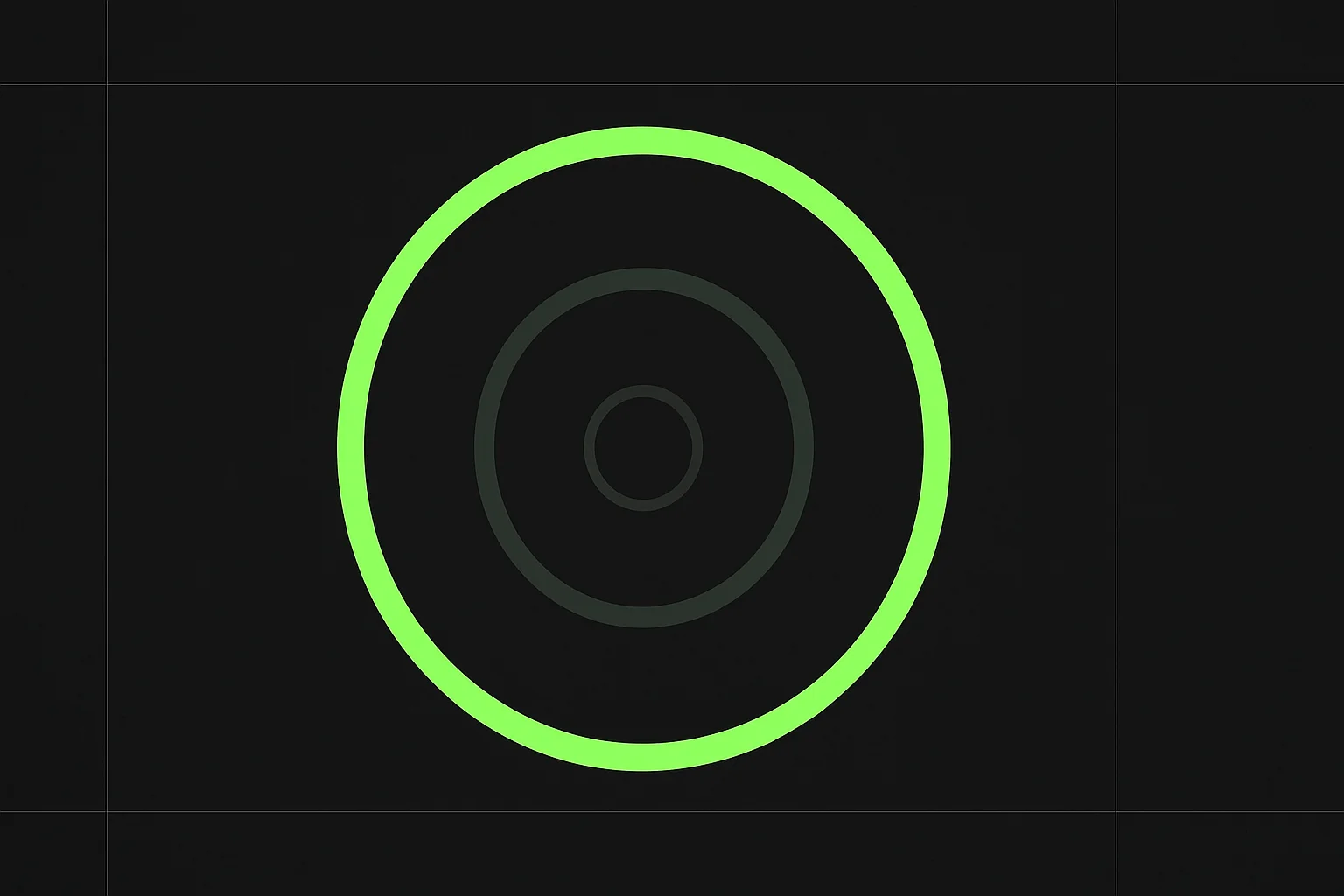 Three nested geometric rings stepping from small and dim to large and neon-green, symbolizing narrow AI, general AI, and superintelligence as a scale rather than a product name
How ASI is supposed to arrive (without picking a date)
Four stories dominate. They are not mutually exclusive.
Scale. Keep doing more of the current thing until it generalizes. This is the default lab plan. The objection is LeCun-shaped: maybe the paradigm saturates.
Paradigm shift. New architecture, new training signal, new body. The DeepMind paper treats this as a real road, not science fiction.
Recursive improvement. The Good loop. Today's public systems sit on the low rungs — models that help write kernels, search papers, or tune exploration. That is not ignition.
Collectives. Many agents, one outcome. Swarm-AGI talk lives here. A thousand mediocre agents is not ASI. A coordinated system that outperforms the best human institution might be the collective flavor Bostrom already named.
The singularity is what some people call the period if any of those roads go steep. Superintelligence is what they claim sits at the top. Mixing the weather with the mountain is how you get "we entered ASI in August because a CEO tweeted."
Why the definition matters if you build or buy
You will not ship ASI this quarter. You will be sold ASI language this quarter. The practitioner moves are boring and they work:
When a vendor says superintelligence, ask which row in the first table they mean. If they cannot point to a profile, they mean "frontier model." Price it that way.
When a policy memo says Super Intelligence, check whether they renamed the category or claimed a crossing. The US–China SI dialogue did the first. It did not enact a ban or a joint training run.
When a benchmark looks godlike, ask what it does not measure. Point-of-no-return anxiety is often about dependence and speed, which can be real while ASI is false. You can lose judgment to a jagged model. That is a meat-proxy problem, not an ASI problem.
When you design oversight, assume the model is already locally superhuman at the task you automated (search, first-draft code, integral grunt work) and still subhuman at knowing when it is done. That is today's stack: harness, checks, expert veto. ASI would be the day those layers are not just insufficient but uninterpretable. We should build the layers anyway. That is alignment as product work, not a movie.
When you train people, teach the glossary. A bootcamp graduate who can tell ANI / AGI / ASI / RSI / singularity apart will not brief a board that "the US banned superintelligence" because a senator introduced a bill.
A short reading order
- This page — lock the definition.
- Has AI reached superintelligence? — apply it to the loudest 2026 claim.
- DeepMind's four pathways — how researchers think you get from AGI to ASI.
- What is an intelligence explosion? and RSI — the mechanism, not the brand.
- What is the singularity? — the forecast word people swap in by accident.
Related reading
- Has AI reached superintelligence? The Astra debate
- DeepMind: four pathways from AGI to ASI
- What is the AI singularity?
- What is an intelligence explosion?
- What is recursive self-improvement?
- Naval and the leash
- Scalable oversight
- David Silver's Ineffable: a reinforcement-learning route to superintelligence
- AI alignment for product teams
- Claude-shaped science and BootLoops
- Opus 5.5 historical discovery: 1615 dodo hunt, expert bottleneck
- History of AI, 1950–2026
Primary sources: I.J. Good, "Speculations Concerning the First Ultraintelligent Machine" (1965) · Nick Bostrom, Superintelligence (2014) and earlier essays · Genewein et al., "From AGI to ASI," arXiv:2606.12683 (June 2026)
Definitions stay contested. This page uses the broad, domain-general bar and treats narrower "superhuman at X" claims as a different, useful category. Follow @explainx_ai when a lab publishes evidence that would move the profile, not just the branding.
Update — October 3, 2026: Skeptic's view of how far AI is from human-level: LeCun's October 3 challenge: no Level-5 car, no 20-hour driver, no 8-year-old robot.
Update — October 4, 2026: Elon Musk posted "No more AI / SI / It's better" and agreed to a SpaceXSI rename suggestion; what is and is not confirmed is in Musk's SI post and the consciousness debate.