



The dodo is not the story. The agent harness is.
In early October 2026, historian Benjamin Breen (Res Obscura) described a research loop that used Claude Opus 5.5, agent fleets, and embeddings over the GLOBALISE Dutch East India Company (VOC) archives. The loop surfaced a previously unnoticed April 1615 eyewitness hunt in the Wapen van Amsterdam log of Isbrant Cornelisz van Petten. Hacker News put the write-up at 103 points. Cute-animal coverage will stop at the bird. The useful question for anyone building research agents is narrower: when does a frontier model produce novel historical knowledge, and where does it still fail?
This is the same argument we made yesterday for physics. In Claude-shaped science, Matthew Schwartz’s claim is that models hunt checkable problems and experts still pick what matters. Breen’s archive run is the humanities twin. Terence Tao’s guest-post punchline was “need more mathematicians.” Breen’s version: need more historians.
TL;DR — the questions this post answers
| Question | Direct answer |
|---|---|
| What happened? | Opus 5.5 + agent fleets + embeddings over GLOBALISE VOC logs, directed by Breen |
| What is the hard find? | April 1615 Mauritius landfall: crew caught tortoises, dodos (dodeersen / dodersen), geese, parrots |
| Why is that new? | Breen flags a gap in the 1611–16 sighting timeline versus Parrish 2013 |
| What else moved? | A 1638 velthoenderen / red-rail reading missed because an 1890 French edition rendered it as perdrix |
| Jahangir dodo? | Tentative Jesuit 1616 “ostrich” → Goa → Mughal court. Not nailed down |
| Who decides it is knowledge? | The historian. Models rank passages; they do not own significance |
| Same as BootLoops? | Yes in shape: checkable retrieval + expert taste. Different corpus |
| Is this superintelligence? | No. It is spiky / jagged competence on a specialist task |
The five-step loop (copy this, not the bird)
Breen’s method is not “ask a chatbot about dodos.” It is a research harness:
- A specialist question. Breen already works on early-modern extinctions and the exotic-animal trade. That prior is the scarce input. The same person vibe-coded a prize-index searcher in July; the judgment about what corpus is worth embedding is still his.
- A large edited corpus. GLOBALISE is a structured window on VOC archives — not “the open web,” not a random PDF dump. Edited text is a feature. It is also a limit: transcription quality is uneven, and Breen caveats that the way a historian should.
- Embed and search. Passages become vectors. Queries like “flightless birds on Mauritius” or Dutch variants of dodo / dodaers retrieve neighbors a keyword grep would miss. If you need the geometry, start with what an embedding is.
- Frontier models rank candidates; a human reviews. Opus 5.5 (and sibling agents) score and summarize hits. Breen reads the Dutch. Nothing is a find until that step.
- Iterate. Agents spawn more embedding searches from the last useful hit — more ships, more dates, more animal names. That is a fleet, not a one-shot prompt. The math analogue is the star-fleet / parallel harness pattern: many workers, one specialist on the merge.
The practitioner translation is blunt. If you skip step 1, you get a tourism chatbot. If you skip step 4, you get a confident bibliography of ghosts.
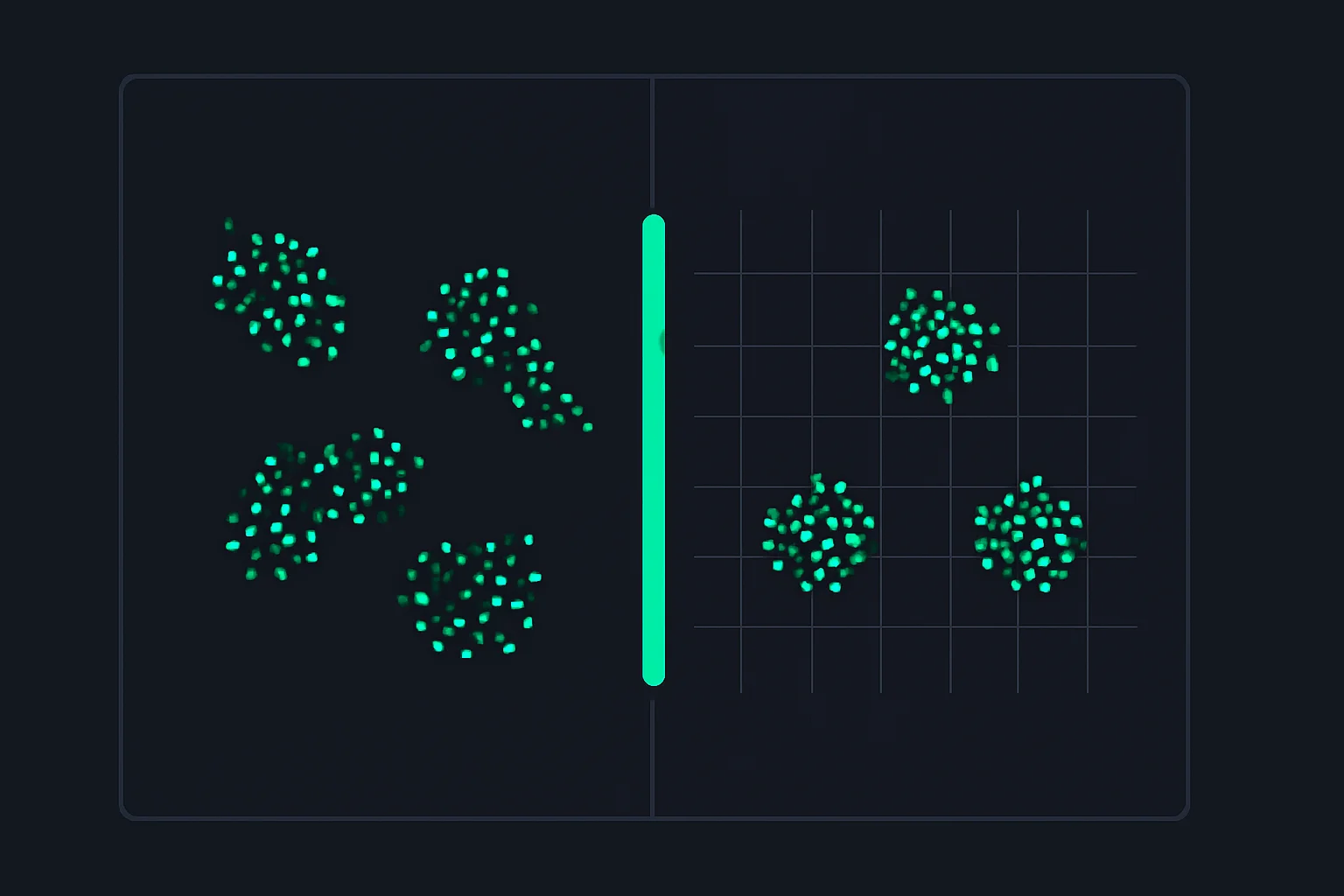 Semantic embeddings turn archival passages into nearest-neighbor search — the retrieval layer under Breen’s VOC loop
What the loop actually surfaced
Treat these as Breen’s reported finds, not as new folio citations invented here. We are not reprinting unpublished page numbers we do not have.
April 1615: the Wapen van Amsterdam
The ship made landfall on Mauritius in April 1615. The log attributed to Isbrant Cornelisz van Petten records that the crew caught many tortoises, dodos, and some geese and parrots. The Dutch forms Breen highlights are dodeersen / dodersen.
Why that matters to a historian of extinction: published sighting timelines have a thin stretch in 1611–16. Parrish 2013 is the comparison Breen uses. An eyewitness hunt in that window is not a meme. It is a dated observation in a ship’s log, sitting in a corpus that was theoretically searchable and practically unread at that resolution.
The model did not “know” the gap. Breen did. Retrieval without the timeline question is just more animals in a log.
Color that is not the find (and still useful)
The same run pulled human mess that keyword history often skips: Jonathan Hide stealing ebony, two sea cows, and 20 land tortoises bound for St Helena; a carpenter threatening a Dutch official with an axe. That is what an unfiltered VOC day looks like. It is also a reminder that semantic search returns neighbors of the query, not a curated exhibit. Someone still has to say “this is color” versus “this updates the extinction table.”
1638: velthoenderen and the red rail
A 1638 mention of velthoenderen — field-hens, in context the Réunion / Mauritius red rail — had been sitting in plain sight. Breen’s account of why specialists missed it is bibliographic, not model-mystical: an 1890 French rendering took the word as perdrix (partridge). Once the translation is wrong, later readers search the wrong bird.
That is a Claude-shaped problem in the Schwartz sense: the check is “does the Dutch say what the 1890 French said?” A model that can hold both strings and a specialist who knows velthoenderen is a rail, not a partridge, can close it. A model alone will happily argue either side.
Jahangir and Ustad Mansur: keep the hedge
Breen also traces a tentative chain toward the famous Mughal dodo associated with Jahangir and Ustad Mansur: a Portuguese Jesuit in 1616 calling something an “ostrich” on Mauritius, then a path through Goa to the Mughal court. He does not claim this is settled. Neither should you.
Agents are good at assembling possible itineraries from scattered mentions. That is also how they launder a maybe into a headline. On explainx.ai we will leave it as Breen left it: a hypothesis, not a closed attribution.
Claude-shaped history is Claude-shaped science
Schwartz’s October 1 essay is not “AI will do physics.” It is impedance mismatch: the scientist wants a collaborator on an unstated conceptual problem; the model wants breadth, tools, and a check. BootLoops is a harness for the second kind of work. Experts (O’Dwyer, Desai) still flipped “technically correct” into “scientifically interesting.”
Swap the corpus. VOC logs are checkable in the same way integrals are checkable: does this passage say this, in this language, on this date? Significance is not checkable that way. “Does this close a 1611–16 gap?” is a question only someone who has read Parrish and the rest of the sighting literature can ask.
That is why the Tao line maps so cleanly. A Fields-adjacent culture can say it needs more mathematicians in the loop. An archive culture needs more historians. The GPT-6.1 Sol class of cheap-strong models changes how many candidates you can rank per hour. It does not change who owns the gap in the literature.
Where the agents fail (this is the part to steal)
They have no taste
Breen is explicit: models are bad at significance. They will retrieve a real sentence and a trivial sentence with the same confidence. The expert-attention bottleneck is not a polite disclaimer. It is the product. If you staff a “historical discovery agent” without a historian, you have built a highlight reel.
They get lost in the weeds
One failure mode Breen names is khipu material — Andean knotted-string records — where a curious model will wander because the neighborhood in embedding space is interesting, not because it answers the Mauritius question. Coding agents do the same thing when they “fix” an unrelated file. The harness needs a stop rule: this search is done when the dated animal-name set stops growing, not when the model is still having fun.
Their errors are not human errors
Hacker News reached for spiky intelligence: competence that is locally extraordinary and then snaps. Commenters compared it to a 3D print that looks solid until a 90-degree overhang fails; to a Chinese-room spatial ontology that can name rooms and still not know how a body turns left. The point is not that the dodo hit is fake. The point is that the next hit may fail in a shape no junior historian would fail. You cannot review these traces the way you review a grad student’s notes. You have to re-read the Dutch.
Transcription is not ground truth
GLOBALISE is edited. Edited is not infallible. Breen caveats transcription quality; so should every RAG demo that treats OCR as scripture. A model that “finds” a word the transcriber invented has found a bug in the corpus. Hybrid search (lexical + vector) still matters when the token is a rare Dutch plural.
The cipher parallel: six hours versus weeks
Breen points at Carter Church and a Napoleonic cipher as the time-asymmetry people should actually quote. The model-side work was on the order of six hours. The specialist-side work was weeks. That ratio is the real product story.
Six hours of Opus is cheap relative to a career in VOC Dutch. Weeks of a cipher specialist are not replaceable by spinning another fleet. If your dashboard only shows tokens and wall-clock model time, you will advertise a discovery the human has not finished checking. Schwartz named the same failure victory theater. John Rood’s pushback on BootLoops was to put elapsed time and completed jobs in the harness, not in the model’s campaign narration. Archive loops need the same counter: passages reviewed by a named human, not “agents explored the seventeenth century.”
What people are asking (HN, not the press release)
Did the AI discover the dodo? No. A historian who already knew what a find would look like used a fleet to search a corpus at a scale one person does not casually read. The novelty is in the hit, not in the model waking up as an ornithologist.
Is this a template for every archive? Only if you have (a) an edited corpus, (b) a question with a check, and (c) someone who can reject 90% of the ranking. Parish registers and Slack exports fail (b) and (c) more often than people admit.
Should we fine-tune a “history model”? Probably later, and not first. The lift here is retrieval + ranking + a specialist, the same stack as embeddings in production and a coding harness. Fine-tuning a model to sound like a journal article is how you hide the review step.
Does this mean 2026 models are generally superhuman researchers? No. See the ASI definition and the Astra debate. Superhuman search over a named corpus is a slice. Taste, credit, and “is this the interesting bird” remain human.
What you should actually run this week
You do not need VOC Dutch to use the pattern.
- Write the specialist question first. “Find animals on Mauritius, 1600–1640, including spelling variants” is a question. “Explore the archives” is not.
- Embed an edited corpus you are allowed to use. Measure transcription error on a sample before you celebrate.
- Rank, then read. The model’s job is a shortlist. Yours is the folio.
- Log rejects. Schwartz started from hundreds of candidates. Breen’s interesting misses (partridge, ostrich, khipu weeds) are as useful as the hit.
- Separate color from claim. Sea cows and axes stay in the notes. The dated dodo hunt is the claim. The Jesuit ostrich stays in the hedge column.
- Credit the human on the gap. The model will write a dramatic recap. Do not let it assign the literature review.
If you want the software-shaped version of the same loop, start with the harness guide and the Opus 5.5 launch card. If you want the science-shaped version, read BootLoops. This post is the history-shaped one.
Update — October 3, 2026: Same expert-attention pattern in research math — Meta's Muse Spark six-paper batch still needed named mathematicians and a second review bench: coverage.
Related reading
- Claude-shaped science and BootLoops
- What is an agent harness?
- What is superintelligence? ASI vs AGI
- Claude Opus 5.5 launch: benchmarks and pricing
- What is an embedding?
- Book Prize Index — Breen’s earlier semantic-search tool
- Star-fleet math agents
- Has AI reached superintelligence? The Astra debate
Primary sources: Benjamin Breen, Res Obscura (October 2026 write-up on the GLOBALISE / VOC dodo loop) · Hacker News discussion (103 points at capture) · Parrish 2013 as cited by Breen for the 1611–16 timeline gap · Matthew Schwartz, Claude-shaped science (Anthropic, October 1, 2026)
Ship names, Dutch spellings, dates, and the Jahangir chain are reported from Breen’s account as of October 2, 2026. Transcription quality in GLOBALISE is uneven; we are not adding folio citations beyond that write-up. The Jesuit–Goa–Mughal path remains speculative. Model names and archive coverage will move — re-read the primary post before you cite the hunt in a paper.