



Apple has opened Siri AI to every app developer, according to its November 3, 2026 announcement as reported by 9to5Mac. Any app can now create Siri AI integrations through App Intents. A new feature called app skills lets apps teach Siri how to chain complicated, multi-step actions. The features arrive in iOS 27.3, macOS 27.3 and aligned releases, and the betas are available to developers now.
This matters because the first version of Siri AI only worked with a narrow set of supported schemas. If you build or use iPhone apps, the question changes from "will Siri understand my app?" to "have I described my app well enough for Siri?"
TL;DR: what changed for Siri AI and third-party apps
| Question | Answer, with source |
|---|---|
| What did Apple announce? | A Siri AI initiative letting any app create Siri AI integrations, plus "app skills" (9to5Mac, Nov 3) |
| Which release? | iOS 27.3, macOS 27.3 and aligned releases; developer beta now |
| What was the limit before? | A much smaller set of supported schemas in the first Siri AI versions |
| What is the mechanism? | The App Intents framework, which replaces SiriKit (heise, July) |
| Do I need to name the app? | Not in many cases, for example with an active Live Activity |
| Is it available in the EU? | Reported not on iPhone and iPad as of July; check current status |
| Is there a public release date? | None found |
What exactly did Apple announce?
9to5Mac's Benjamin Mayo wrote that Apple "announced a major new Siri AI initiative for third-party developers, allowing any app to create Siri AI integrations for the first time." The first versions of Siri AI, he noted, were limited to a much smaller set of supported schemas. The article draws its examples from Apple's developer documentation. We could not open that documentation page ourselves, so every detail below is as relayed by 9to5Mac, and we mark it that way.
Two ideas sit at the center. The first is open access: instead of a short list of app categories that Siri understands, any app that implements App Intents can offer content and actions to Siri. The second is app skills, which 9to5Mac says "sound very similar to what other LLM-driven AI models offer, enabling richer understanding of complicated tasks."
The headline from some aggregators said Apple opened a "preview to all developers." That wording is close but loose. What is confirmed is that the 27.3 betas are available to developers now. Siri AI itself has been gated by a waitlist, which 9to5Mac covered, so having the beta does not mean every tester gets the assistant instantly. We found no Apple statement that removes the waitlist.
What can Siri do with app skills?
The 9to5Mac report gives two concrete examples from Apple's documentation.
Cross-app chaining. Siri can find custom content in one app, pass it to a specified app, and perform an action. Apple's example is a request to send "my favorite sneakers" to a partner using a messaging app. Siri finds the favorited sneakers, works out who the partner is, finds them in Contacts, then sends the sneaker information through the messaging app. That is four steps across three data sources from one sentence.
Less app naming. With 27.3, users do not have to say the app's name in many cases. If a ride-sharing app has an active Live Activity, Siri will understand that "change the ride address" belongs to that app.
A flight-tracking app skill is the third example: the skill maps which app intents Siri should use for a given kind of request. Mayo says the first version of Siri AI "was simply incapable of doing" this. Apple has also used the new foundation across its own apps, according to the same report, with what Mayo calls a significant rollout of new capabilities.
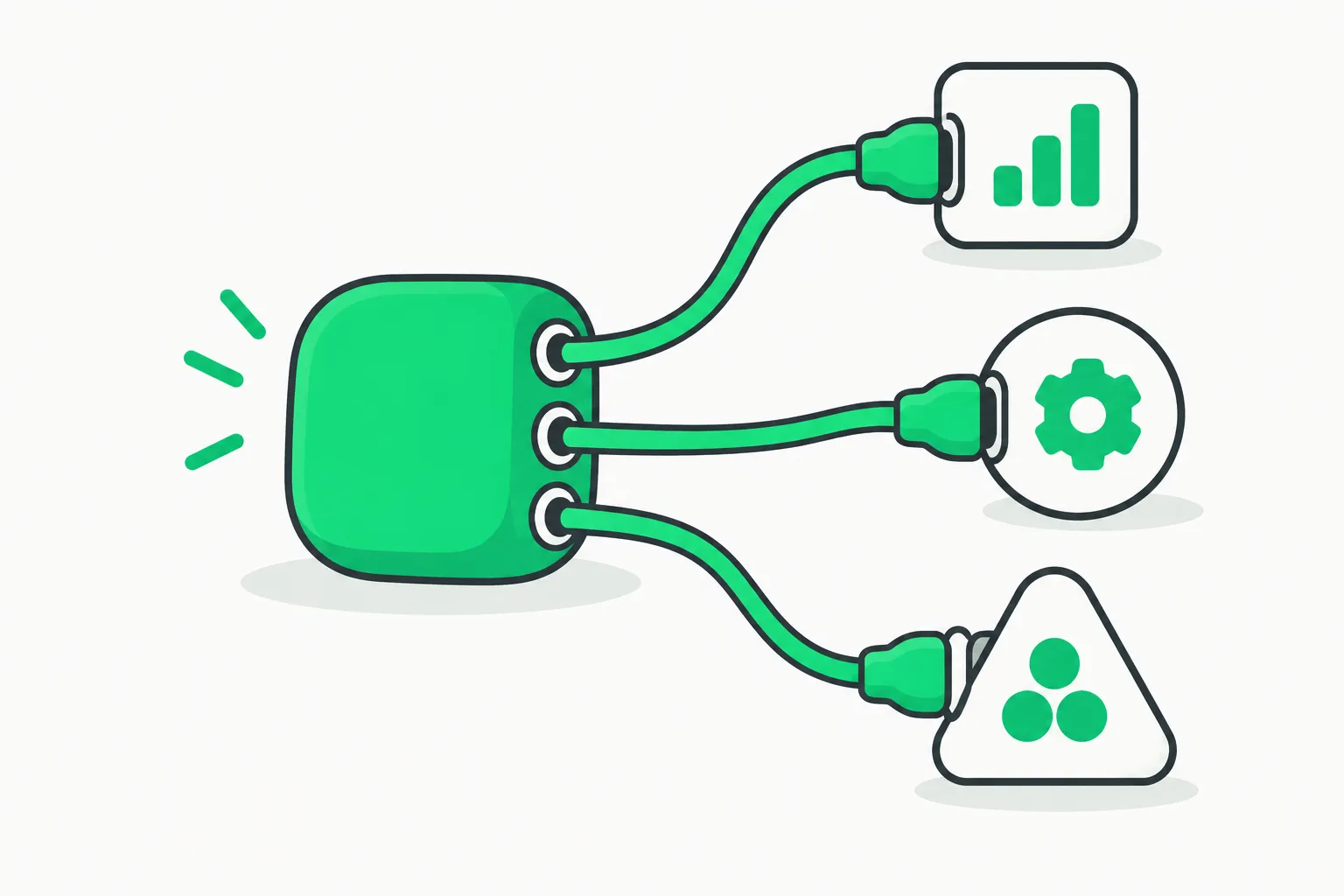 Connector hub showing how apps plug tools into an assistant, illustrating Siri AI app skills
How did we get here? A short timeline
- June 8, 2026: The first iOS 27 developer beta arrives, with access to the new Siri AI gated behind a waitlist, per 9to5Mac.
- July 6 to 7, 2026: Testers find that iOS 27 beta 3 lets Siri AI pull data from a few third-party apps. 9to5Mac reported battery and charging queries working with the Tessie app for Tesla and with the Ford app, but not with Tesla's official app. Siri asked permission before pulling data.
- July 7, 2026: heise noted that in the first two betas, testers could only query Apple's own apps, that App Intents gained streaming responses, multi-step dialogues and extended data types, and that SiriKit was being retired.
- November 3, 2026: Apple announces open third-party access and app skills for iOS 27.3.
The July tests were inconsistent, and Apple shared no list of supported apps. The November announcement is the first one that describes a general mechanism instead of a lucky set of apps.
What does this mean for developers?
If you ship an iOS or macOS app, the work is mostly about describing what your app can do in a form Siri can plan with.
- Audit your App Intents. SiriKit is going away, per heise. If you still rely on it, migrate.
- Expose content, not just buttons. The sneaker example works because the app can return "favorites" as data Siri can pass elsewhere.
- Think in chains. App skills exist for tasks that span steps. Write down your three most common multi-step user journeys and check whether each step is an intent.
- Test with Live Activities. Automatic app routing depends on an active Live Activity in Apple's example, so apps with those get a head start.
- Plan for permissions. In the July tests Siri asked for permission before reading app data. Expect users to see that prompt.
Our guides on agent skills and the Model Context Protocol cover the same shape of problem: an assistant needs a machine-readable description of what your software can do. App skills are Apple's version, tied to its own framework. The same pattern shows up at Google in Gemini app skills replacing Gems.
What does this mean for users?
You may be able to say less. A request that names no app can still reach the right one when context makes it obvious. A request that spans apps, such as sending something you saved to a contact, may become one sentence instead of three taps.
There are limits. Apple has not published a list of supported apps. Developers have to adopt this, and apps built on the new SDK cannot ship to the App Store until the final iOS 27 SDK rules allow it, as heise explained in July. Check what a given app actually supports before relying on it.
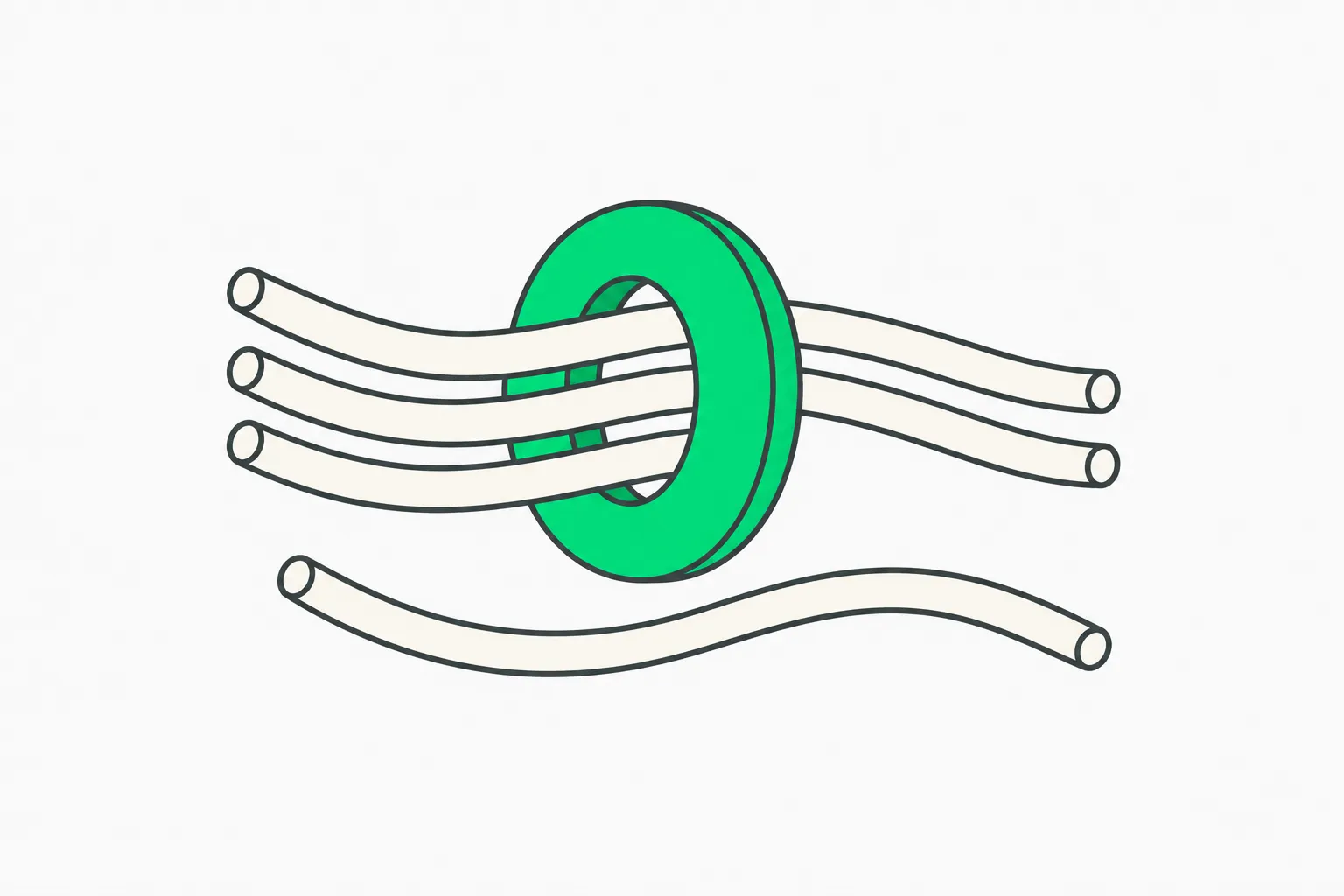 Cables passing through a permission ring, illustrating scoped Siri AI access to third-party app data
What about privacy and the EU?
Giving an assistant access to many apps raises the stakes on what it can read. The July tests showed a permission prompt, and Apple's wider design for Siri AI is covered in our posts on Ternus on Siri server features and usage limits and the Wired interview on agents and apps. We did not find detail on how app skills handle data sent to Apple's servers, so treat that as open.
On Europe, heise reported in July that Apple was not releasing Siri AI for iPhone and iPad in the EU for now, citing ongoing discussions with the EU Commission, while Mac and Vision Pro would get it in the fall in US English. Our coverage of the HomeView and EU Siri AI situation has related context. Whether 27.3 changes that is not stated in the reports we found.
What is still unconfirmed?
- Apple's primary page. We relied on 9to5Mac's reading of the developer documentation. Check Apple's developer site for the exact wording and API names.
- Waitlist. No source we found says it is gone.
- Release date. iOS 27.3 has no public date in the coverage we found.
- Supported-app list and server data handling. Not published.
- Fees. Some commentary before WWDC wondered about fees for Siri integrations. We found no confirmed answer.
Bottom line
Siri AI moves from a handful of hand-picked schemas to an open framework, and app skills give developers a way to describe multi-step jobs. It is the strongest sign yet that Apple is building its assistant around the same idea as other agent platforms: an assistant is only as useful as the tools it can call. The details live in the 27.3 betas and Apple's documentation. Start there before you commit roadmap time.
Details reflect reports available on November 3, 2026 and may change as the betas evolve.
Related reading
- Apple Watch Live Rewind and Siri Recaps in the iOS 27.3 beta
- Apple Ternus on Siri AI server features, usage limits and paid access
- Apple CEO Ternus: not shipping AI for AI's sake, Siri, agents and apps
- Apple HomeView, Apple TV and Siri AI in the EU
- What are agent skills? Complete guide
- What is MCP? Model Context Protocol guide
- Gemini app skills replace Gems