



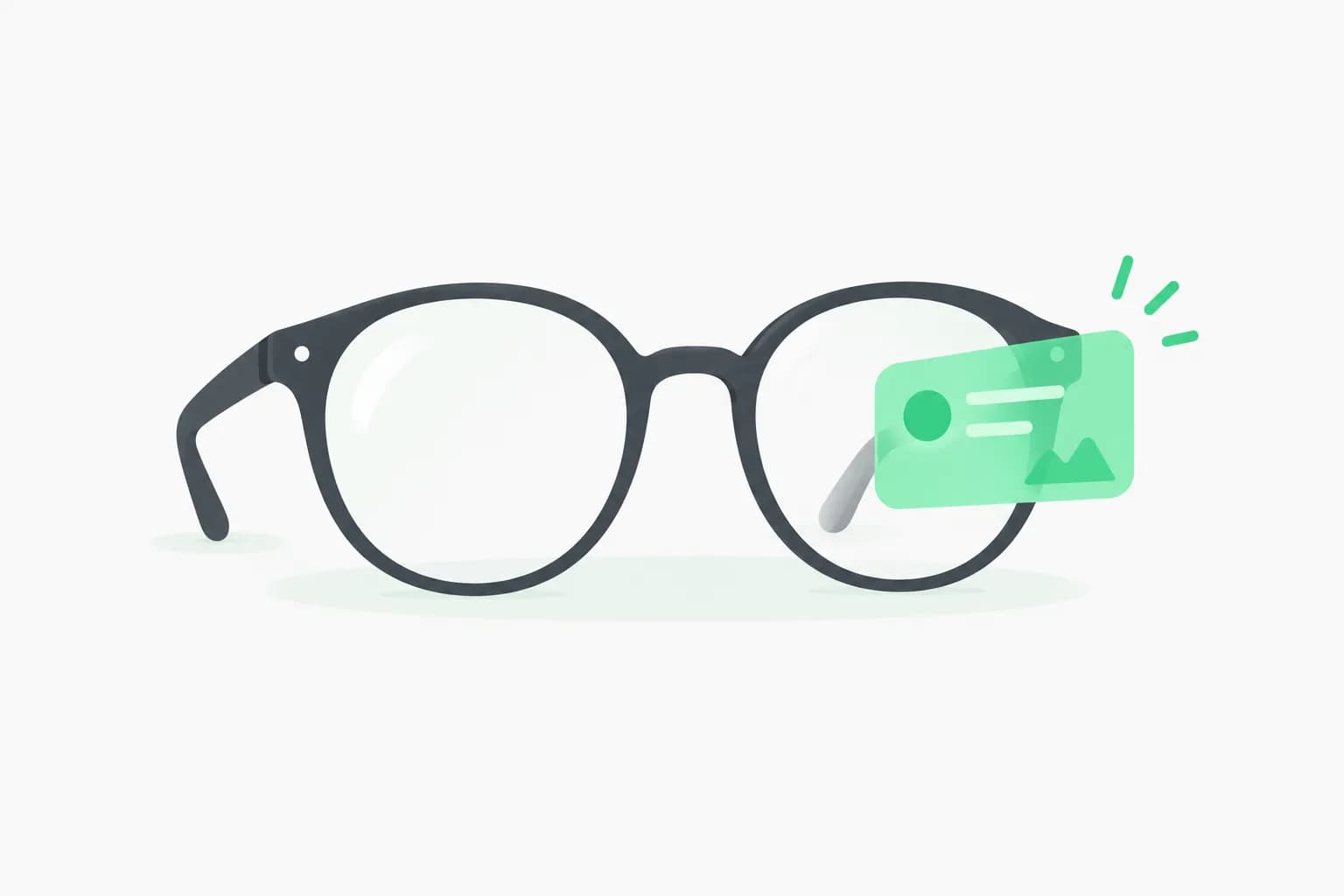
Mark Gurman reported on November 15, 2026 that Apple still plans to unveil its first smart glasses at WWDC 2027 and begin shipping them before year-end, with Siri AI app integrations on a paired iPhone as the headline feature—not full apps running on the glasses themselves. The Verge and MacObserver relay the same Power On outline: internal project N50 hardware is largely set, but Siri and supporting software lag, so both the June reveal and the ship window remain official targets yet at risk.
For developers already shipping Siri app skills in iOS 27.3 beta, this is the hardware story those APIs were meant to feed. For wearable shoppers, it is Apple answer—still pre-announced—to Meta camera glasses and agent voice layers without copying Meta on-device app model.
TL;DR: what Gurman says is on track vs late
| Topic | Gurman report (Nov 15, 2026) | Builder takeaway |
|---|---|---|
| Reveal target | WWDC 2027 | Start App Intents work now; WWDC is the SDK moment |
| Ship target | Before end of 2027 | Same Siri skills must ship on iPhone first |
| Software status | Behind schedule | Dates can slip even if hardware is final |
| App model | Siri → iPhone apps, not on-glass apps | Thin glasses cannot host heavy app runtimes |
| Phone dependency | Paired iPhone for third-party flows | Design offline fallbacks on phone, not glasses |
| Displays | No AR in first model | Different category from Vision Pro |
| Audio | Industry-leading calls/music per employee testing | Competes with Ray-Ban speakers on quality |
| Privacy | Camera activity indicators planned | Align with wearable misuse debates |
What Apple is reportedly building
Gurman describes prototypes employees nickname AirPods for your face: lightweight frames without the optical stack of Apple Vision Pro-class headsets. The Verge adds hardware color:
- A trimmed visionOS 28 software layer rather than full spatial computing shell
- A custom chip rooted in older Apple Watch silicon, not M-series Mac parts
- Cameras with flush openings and planned visible-in-use indicators
- Wi-Fi so some functions continue briefly when you walk away from your phone—especially audio, not arbitrary third-party compute
- A magnetic charger roughly the size of a Tic Tac on the left temple, usable while wearing the frames
None of that is confirmed in an Apple newsroom post. It is Power On sourcing repeated by outlets that cite Gurman. Treat silicon generation and exact OS numbering as reported internals that could change before any developer beta ships.
Why Siri app integrations are the centerpiece
Apple already telegraphed the software strategy on November 3, 2026 when it opened Siri AI app skills and App Intents to any iOS app in the 27.3 developer beta—covered in our Siri app skills explainer. Gurman's November 15 glasses reporting closes the loop:
Glasses will not run Uber, OpenTable, or your coffee app locally. Siri on the frames is meant to invoke constrained actions inside apps that already run on the tethered iPhone—book a ride, change a reservation, kick off a workflow you defined as an app skill.
AppleInsider's summary compares that to HomeView: the smart display does not execute arbitrary APKs, but it can surface CarPlay-audio-capable apps. Glasses copy the pattern with voice as the primary input instead of a touchscreen across the room.
That matters for engineering leads because it shrinks the glasses software problem to:
- Low-latency wake word and mic arrays on-device
- Secure Siri routing to the phone over Wi-Fi or a short-range link
- App Intents schemas that describe safe, bounded actions developers certify for hands-free use
It also means your mobile app is the runtime. If your iOS binary lacks robust App Intents coverage by 2027, Apple glasses will not magically run your web wrapper.
The schedule risk: hardware done, Siri not
MacObserver's headline captures the tension Gurman keeps repeating: WWDC 2027 and year-end ship remain goals, but software delays threaten both. Apple reportedly moved the program from a late 2026 whisper to 2027 earlier; November 15 reporting says hardware teams are waiting on AI and glasses OS, not the other way around.
Compare that to Apple's agentic Siri organizational shake-up in Gurman's November 8 pipeline reporting. Glasses stress the same bottleneck: Siri must reliably chain tools before Apple asks consumers to wear cameras on their faces.
For practitioners shipping agents today, the lesson parallels MCP and agent hosts on phones: the wearable is another thin client if your orchestration logic lives in a pocket supercomputer.
Privacy, Wi-Fi, and the no-AR v1 choice
Skipping AR displays in v1 is a scope cut, not a lack of vision. Gurman and The Verge agree the first product competes on style, audio, Siri routing, and trust—not passthrough AR games.
Wi-Fi independence is partial. Walking away from your phone might not drop a podcast, but third-party Siri tasks still need the iPhone awake, unlocked, and networked unless Apple documents offline caches—which Gurman did not describe November 15.
Camera indicators matter because regulators and venues already debate smart-glass recording norms. Apple leaning on visible capture states would differ from early wearable lapses our AirPods camera leak coverage tracked.
 Voice-assistant waveform illustrating Siri AI hands-free routing to a paired iPhone for Apple smart glasses workflows
How this compares to Meta and open wearable stacks
Meta shipped camera-equipped Ray-Bans with on-device Meta AI voice features and multimodal prompts. Developers integrate through Meta channels, not iPhone App Intents.
Apple's reported approach doubles down on the iPhone install base:
| Dimension | Meta Ray-Ban (shipping) | Apple N50 (reported plan) |
|---|---|---|
| App execution | Meta AI cloud + limited partners | Siri → iPhone app skills |
| Display | None (current gen) | None in v1 per Gurman |
| Platform lock-in | Meta account ecosystem | Apple ID + iPhone |
| Developer API | Meta AI tooling | App Intents / app skills |
| Status Nov 15, 2026 | On sale | Unannounced |
Neither replaces local LLM experimentation on Mac or PC, but both push multimodal agents closer to everyday surfaces.
What developers should do in 2026, not 2027
Gurman explicitly links iOS 27.3 previews to glasses prep. A practical checklist:
- Audit App Intents coverage for the three tasks users would speak on the street—navigation tweaks, commerce, messaging status—not desktop-only admin panels.
- Ship app skills that declare multi-step flows with cancellation paths; glasses users cannot fall back to tapping through nested settings easily.
- Test hands-free failure modes when the phone locks: Siri must return intelligible errors, not silent hangs—patterns we document for Claude and ChatGPT MCP health integrations apply to voice UX too.
- Assume no on-glass WebView for v1; do not plan to render your SPA in frames.
- Watch WWDC 2026 for continuity APIs even if glasses slip; Apple historically seeds CarPlay/Home patterns years before new hardware categories ship.
Teams betting on Android-only apps should still study the pattern: voice wearables reward declarative action schemas, the same design move behind Google Stitch skills for agent IDEs.
 Wearable device on a hand representing thin smart glasses hardware that offloads apps to a tethered phone
Face ID on iPhone Duo and the broader hardware wave
Power On also teased Face ID on iPhone Duo as a parallel schedule story Gurman mentioned alongside glasses in tech-aggregator roundups November 15. That is phone biometrics, not glasses display tech, but it signals Apple wants vision models on multiple form factors before a full AR stack returns.
If Duo ships with stronger on-device face authentication, glasses could eventually use the same secure enclave handoff patterns Vision Pro uses today—speculation only until Apple publishes security guides.
What is not confirmed
- Exact WWDC week date in 2027 and whether a slip becomes spring 2028
- Price, regions, and EU Siri AI availability—Apple still holds EU platform releases for some Intelligence features
- Battery life numbers, IP ratings, and prescription lens partners
- Whether camera resolution matches or beats Meta's latest sensors
- Enterprise MDM policies for always-on microphones in regulated workplaces
Until Apple posts on newsroom.apple.com, treat Power On as the best available map, not a product page.
Why this story matters for AI builders
Consumer AI is leaving chat boxes. Glasses turn Siri from a party trick into a routing layer for apps you already maintain—if those apps speak App Intents fluently.
The strategic read for startups:
- Voice-first UX becomes a distribution channel tied to Apple approval of skill descriptions, not just App Store search.
- Latency budgets shift to phone ↔ wearable links; optimize cold starts on the phone, not only model tokens.
- Trust UX (indicators, logging, delete-my-recording flows) is as important as model quality—see epoch-style impersonation risks for how fast users punish brands that feel surveilled.
What to watch next
| Milestone | Why it matters |
|---|---|
| iOS 27.3 public release | App skills leave beta; real user utterance data arrives |
| WWDC 2026 sessions | Possible Glasses-adjacent tooling even if hardware stays secret |
| WWDC 2027 keynote | Expected unveil if schedule holds |
| Meta Connect annually | Sets consumer expectations Apple must match on price and AI demos |
| Gurman follow-ups | Software slip or recovery signals before Apple speaks |
We will update this post when Apple publishes official specs or when Gurman revises the calendar.
Related reading
- Siri AI app skills in iOS 27.3 beta
- Agentic Siri pipeline shake-up (Gurman)
- Meta Connect glasses and Muse
- Smart glasses misuse and bans
- Apple AirPods camera leak patterns
- A2A and MCP agent routing
- Google Stitch agent skills
- Local AI hardware without Mac Studio
Reporting reflects Mark Gurman Power On and outlets citing it on November 15, 2026. Apple has not announced smart glasses publicly.