



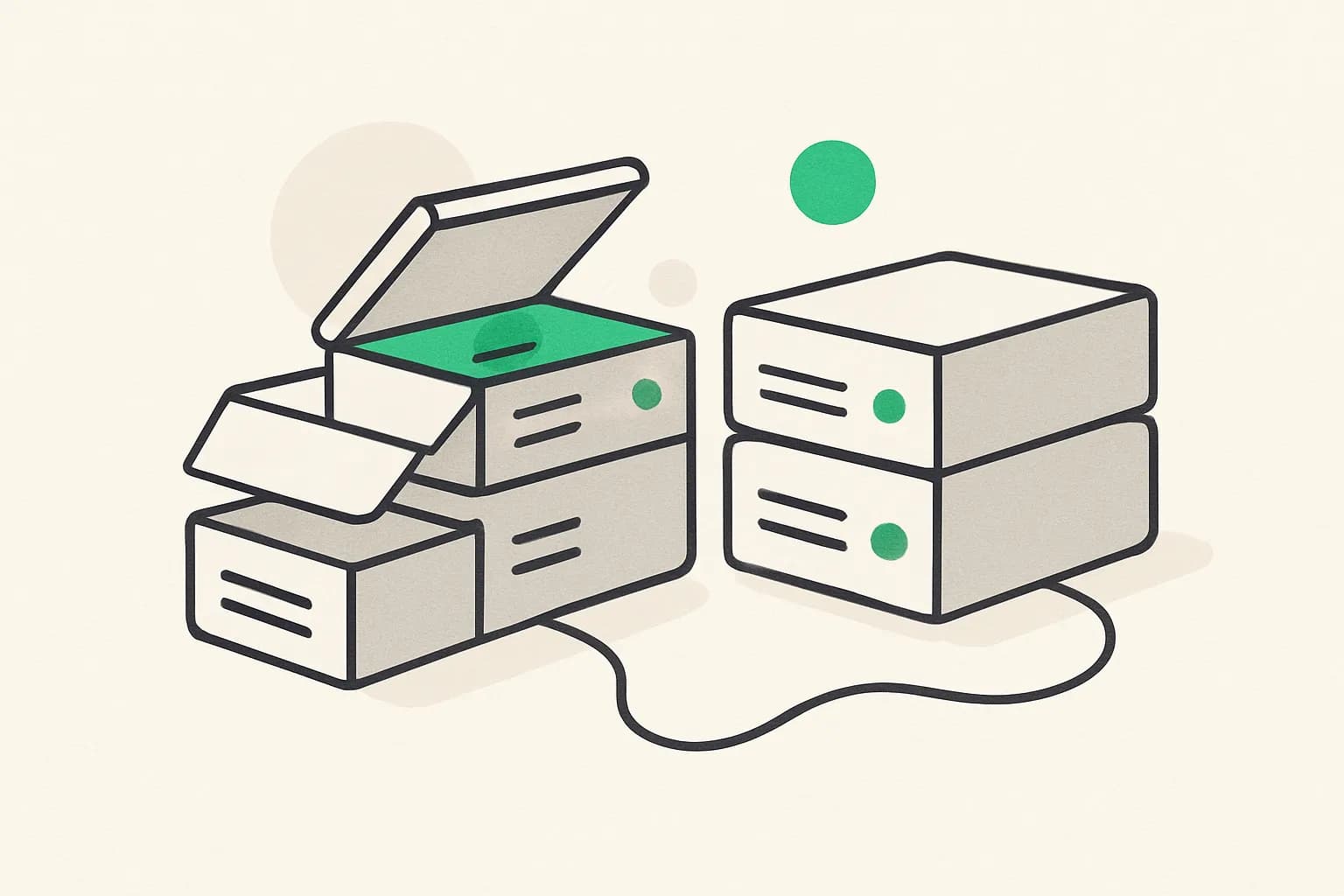
Muru is a new Python application server stack from Graham Dumpleton, the longtime maintainer of mod_wsgi. Released in alpha on PyPI as muructl and muru, it pairs a Rust HTTP edge with a Python worker runtime, supports WSGI and ASGI in one deployment, and treats blue/green deploys, canaries, and rollbacks as traffic policies instead of full restarts. Simon Willison highlighted the project on November 21, 2026 after Dumpleton published three weeks of daily build notes — part documentation, part diary of AI-assisted systems programming.
If you ship FastAPI, Django, or Flask and you are wiring coding agents into deploy loops, Muru's muructl mcp serve path is the headline: agents get MCP tools to cut a release, probe it, read stack traces, and roll back without inventing a bespoke CI script every sprint.
TL;DR: what Muru promises
| Piece | Role (per docs and README) |
|---|---|
| Rust edge | Terminates HTTP/1.1, HTTP/2, TLS; static files, uploads, compression |
| Controller / daemon | Chooses releases, worker counts, routing; not on the request hot path |
| Python workers | Run your app; preload once, fork many with import checks |
| Releases | Immutable artifacts; new code runs beside the old release until traffic moves |
| muructl | CLI for run, daemon start, serve (containers), and MCP |
| Status | Alpha — 0.1.0 pre-releases; APIs may shift |
Why Dumpleton started over after mod_wsgi
mod_wsgi embedded Python inside Apache httpd for a generation of deployments. Dumpleton's Twenty years of mod_wsgi, and what comes next post (November 4, 2026 in the Muru build diary linked from Simon Willison) frames the next step as one coherent runtime from laptop to production, not a chain of nginx + gunicorn + supervisor + custom reload scripts.
Muru's architecture page separates three concerns:
- Edge — client-facing protocol work in Rust.
- Host and workers — Python interpreters running your application code.
- Controller — release inventory, scaling decisions, and traffic policies.
That split matters when you compare Muru to "just run uvicorn behind Caddy": Muru wants release objects, worker groups, and observability hooks to be first-class, not bolted on after the fact.
 Local on-device development stack, illustrating running Muru with muructl run on a laptop before production
Deploys as traffic changes, not restarts
The feature set that will feel familiar to platform engineers — and unfamiliar to solo devs — is immutable releases:
- A deploy creates a new release next to the current one.
- Blue/green, weighted canaries, A/B splits, and preview URLs are configuration changes on the controller.
- A release that fails health checks never receives traffic.
- Rollback is flipping traffic back, not redeploying artifacts in a panic.
The canary tutorial and conditions docs (PromQL-shaped expressions over Muru's own metrics) describe gates that decide when a canary earns more share. That is closer to service-mesh style traffic management than to sending SIGHUP to gunicorn — without requiring a mesh sidecar.
For teams already sketching multi-agent web apps, Muru offers a self-hosted place to practice safe rollout discipline before you trust agents to push container images prod-wide.
Python-aware process management
Muru advertises behaviors that generic WSGI servers hand-wave:
| Mechanism | What Muru claims |
|---|---|
| Preload | Import application code once; fork workers; import check before fork |
| Worker groups | Different process pools for different mounts or apps |
| Timeouts | Soft and hard request limits |
| Memory limits | Per-worker caps with recycling |
| Scaling | Scale from worker-reported load signals |
| Free-threaded Python | Designed with no-GIL builds in mind (ADR 0013) |
The docs also support handing a request between WSGI and ASGI inside a worker, which is how a legacy WSGI stack can still pick up WebSockets without standing up a parallel Starlette process.
If your mental model today is Gunicorn + Uvicorn workers + nginx, Muru is arguing those three roles collapse into muructl — at the cost of adopting a young control plane.
No separate nginx in the happy path
On a single node, Muru wants to terminate TLS, serve virtual hosts, handle static assets, compress responses, and return custom error pages at the edge so Python threads spend time in your code.
That does not forbid external load balancers — the how-to guides cover running behind a proxy and PROXY protocol as future scope. It does mean Muru targets teams tired of maintaining three config files that must reload in the right order.
Built for coding agents: MCP on muructl
The builder-facing differentiator in November 2026 is agent operations:
muructl mcp serveexposes MCP tools that wrap muructl commands.- Agents can deploy a change as a release, run checks, pull events, logs, tracebacks, and worker stacks, and roll back when a gate fails.
- The repo ships a skill file teaching agents the workflow; CLI commands that report state can emit JSON for shell-driven agents.
That lines up with how teams already use Claude Code and MCP hosts — but aimed at deployment rather than browser automation.
Simon Willison quoted Dumpleton's AI as a lifestyle choice post (November 11, 2026 in the same Muru diary series): the model may write a lot of code, but judging what is not good enough yet still sits with the maintainer — and twenty years of mod_wsgi mistakes are the training data for those judgments.
How to try Muru in five minutes
From the Getting started page:
uv tool install muructl
muructl run app:application
Open http://127.0.0.1:8080. Muructl supplies the muru runtime package to the interpreter; your application's pyproject.toml does not need a muru dependency line.
Supported platforms per docs: Linux and macOS, CPython 3.11–3.15. Production ADRs emphasize Linux; macOS is the comfortable dev path.
Workshops on Binder or GitHub Codespaces run Muru in the browser if you want a guided tour before installing locally.
Muru vs gunicorn, uvicorn, and Cloudflare Workers
| Approach | Best when | Muru angle |
|---|---|---|
| gunicorn + nginx | Battle-tested, huge community | Muru collapses edge + workers + deploy policy; younger ecosystem |
| uvicorn/hypercorn alone | Simple ASGI dev | Muru adds release management and Rust edge features |
| Cloudflare Python Workers | Global edge, no servers to patch | Muru is self-hosted; you own the daemon and data path |
| Kubernetes + Helm | Large org standard | Muru offers muructl serve and K8s how-tos but is not a full PaaS |
None of these are drop-in replacements: Muru asks you to learn releases, overlays, and muructl verbs. The payoff is one toolchain from muructl run on a laptop to muructl daemon start under systemd.
AI-assisted development without hiding the maintainer
The muruhq/muru repository is Apache-2.0, hosted under muruhq, with 742 commits visible when explainx.ai checked on November 22, 2026. CONTRIBUTING.md states contributions arrive as requirements and issues, not drive-by pull requests — the maintainer implements accepted work, consistent with a heavily agent-assisted workflow.
AGENTS.md and CLAUDE.md in the repo signal how Dumpleton expects agents to behave in-tree. For readers evaluating agent-written infrastructure, Muru is a live case study: public changelog entries, ADR numbers into the seventies, and a design specification document set that reads like a textbook.
Risks and limits to respect in alpha
| Risk | Mitigation |
|---|---|
| API churn | Pin muructl version; read CHANGELOG before upgrades |
| Alpha stability | No production SLAs; run staging drills first |
| Operational learning curve | Releases, overlays, and conditions are more complex than gunicorn -w 4 |
| Agent-driven deploys | Treat MCP deploy rights like CI keys; scope tokens and require human approval on production daemons |
Muru does not solve model security or prompt leakage on its own. If agents deploy both app code and inference routes, pair Muru experiments with the checklist from Dragos canary research and sane router hygiene.
systemd, containers, and Kubernetes paths
Muru's docs draw a straight line from muructl run to muructl daemon start under systemd to muructl serve as PID 1 inside a container. ADR 0010 and ADR 0035 describe splitting host and workers inside the image while daemon and edge stay outside in some layouts — worth reading before you dockerize a Django monolith.
The Muru how-to guides index includes A Kubernetes Deployment and overlays on a schedule material for running releases under orchestrators: you are not re-teaching Kubernetes about blue/green; you are teaching Muru's controller while K8s supplies replicas and disks.
For builders comparing Muru to Soduwork-style agent workspaces, Muru is narrower: HTTP application serving, not a full multi-harness IDE. Pair them when agents write Python APIs in Soduwork and Muru handles how those APIs roll out.
Observability: dashboard, toolbar, and wrapture tracing
Muru ships a server-rendered dashboard (ADR 0011: htmx, SSE, uPlot) that shows but never mutates production state in every mode — a safety choice for on-call engineers who do not want a stray click to shift canary weight.
In development, the toolbar injects panels for request inspection and ties into wrapture tracing, Dumpleton's earlier tracing project referenced in the docs. That matters when an agent deploys a release via MCP and you need one URL that explains which worker served a 500 without SSH grep.
Events and webhooks can fan out to your existing incident stack. None of this replaces OpenTelemetry everywhere, but it is more opinionated than stock gunicorn logs.
Where to read next
Dumpleton's daily posts (linked from Willison's roundup) walk through HTTPS in development, import-once fork-many, canaries without a service mesh, Kubernetes overlays, and toolbar tracing — unusually transparent for a pre-1.0 server.
Official sources to bookmark:
- Muru documentation
- muruhq/muru on GitHub
- From gunicorn to Muru tutorial
- Coding agents how-to
- MCP tools reference
 Coding assistant on a laptop, illustrating AI-assisted infrastructure work on the Muru server project
Related reading
- Poki: on-iPhone agent install with Claude Code — another November 2026 open tool aimed at agent workflows.
- Mozilla WebBrain: local-first browser agent — MCP-shaped automation on the client side.
- AWS Quick Flows multi-agent web apps — managed agents in production web stacks.
- Cloudflare Python Workers GA — contrasting edge-hosted Python.
- What is OpenRouter: enterprise router guide — routing inference, while Muru routes HTTP to your Python app.
explainx.ai covers models, agents, and the infrastructure builders run locally. For live AI workshops, see /workshops.