



ArtCraft used the AI Engineer Code Summit mainstage on November 12, 2026 to argue that agent-assisted development can reopen categories Adobe, Microsoft, and Figma locked behind subscriptions. CEO Brandon Thomas framed a Crafting Apps suite already listed on getartcraft.com/apps — seventeen native Rust applications with shared rules: open licenses, local files, CLI, JSON, and MCP entry points. The pitch goes beyond our October PhotoCraft deep dive: a launcher, a full creative stack, and a promised AutoCraft factory.
Confirmed today: the app catalog, GitHub repos, and speaker pages from AI Engineer and the Let's Open Source the World session. Still stage-claimed: ~1.7 million daily downloads, ~4,000 contributors, and ~60% Photoshop parity — Thomas cited those figures on stage; explainx.ai found no matching metrics in ArtCraft filings or README stats on November 13.
TL;DR
| Question | Answer |
|---|---|
| What shipped? | 17 Crafting Apps on getartcraft.com; photocraft and artcraft repos on GitHub under Apache-2.0 |
| What is new vs October? | Suite positioning, launcher, AIE Code manifesto, PdfCraft / FigCraft / WordCraft neighbors, AutoCraft tease |
| Can agents drive edits? | Yes — README and speaker bio describe CLI + MCP parity with UI commands |
| Is Photoshop dead? | No — PhotoCraft still labels early alpha; Adobe pushes EditAgent-style tool routing |
| How to try? | Install via ArtCraft Launcher or per-app builds; clone storytold/photocraft and cargo run |
What the conference actually scheduled
The AI Engineer Code Summit schedule placed Thomas in Continental 4–6 at 10:10–10:30 a.m. on Thursday, November 12, immediately after keynotes on factory-style engineering. The session abstract (official AIEWF copy) says ArtCraft wants to become a "Wikipedia of open source" for software categories, recreate tools in Rust, and run "fully agentic software factories" that stress Git, CI, triage, and shared UI libraries.
That text is the sober primary source. It does not repeat download counts. It does commit to open apps plus open infrastructure — the same split Thomas emphasized when he said users should own apps, protocols, and models in the closing minutes reporters quoted from the hall.
For builders, the session belongs in the same bucket as factory patterns for agentic coding and DESIGN.md-style UI discipline: less about one benchmark, more about whether your repo can absorb agent throughput without CI collapse — a pain Thomas admitted publicly.
Seventeen apps on one craft page
The Crafting Apps index is the inventory readers should trust before any keynote slide. It groups:
- Creative stack: PhotoCraft, VectorCraft, FilmCraft, LightCraft, EffectCraft, AniCraft, DesignCraft, FigCraft, TextureCraft, MaterialCraft, SoundCraft
- Document and office stack: PdfCraft, WordCraft, DeckCraft, GridCraft
- Engineering stack: CADCraft, plus community SolidCraft (we covered SolidCraft MCP CAD separately)
- Meta: Craft Anything for studying other software, then rebuilding
Each card lists maturity (Early alpha, In development, etc.) and whether macOS, Windows, Linux, and Web installers exist. That honesty matters: the suite is not a uniform GA drop. PhotoCraft and PdfCraft show Early alpha with installers; FilmCraft and several 3D tools are still In development.
ArtCraft's public rules mirror the README table in PhotoCraft:
- Open source on GitHub
- Native Rust, not Electron wrappers
- Familiar professional UX so muscle memory transfers
- Local files — no mandatory cloud round trip
- Agent-ready automation surface
- WebAssembly builds for browser tabs on many apps
Those six bullets are how ArtCraft differentiates from browser-only creative experiments and from closed generative Photoshop betas that keep the host application proprietary.
PhotoCraft in the suite (not a solo stunt)
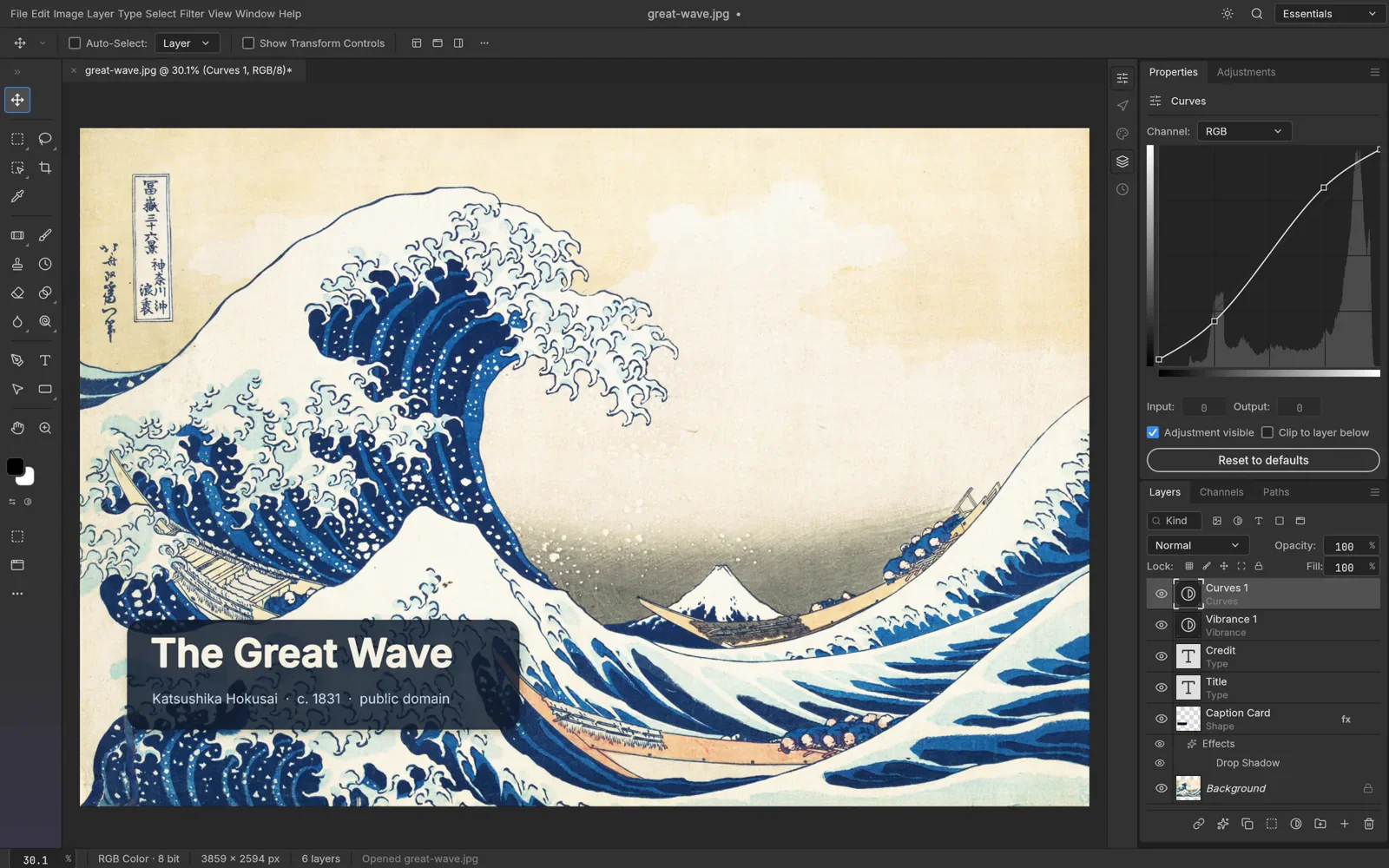 PhotoCraft open-source Rust image editor showing layers and curves adjustments in the ArtCraft Crafting Apps suite
Image: ArtCraft
PhotoCraft remains the gravitational project. GitHub star counts move too fast to quote precisely in a daily post, but the repository's own README still describes clean-room Rust, PSD round-trip tests, and early alpha status — the same caution we documented in October.
Thomas's on-stage development narrative (summarized by multiple outlets after the talk) adds process color explainx.ai cannot verify:
- A spec-style prompt listing Photoshop tools, data structures, and importers
- A second "build the application" prompt pass
- MCP and CLI wiring up front
- A ~24-hour first UI approximation
- Internal goals of ~76% feature breadth and ~46% professional readiness on GitHub marketing copy, versus ~60% parity language he used live
Treat those percentages as product marketing plus keynote rounding, not independent benchmarks. If you need rigor, run your own PSD corpus like the README's psd-tools tables — the same discipline we recommend in REA reverse-engineering workflows.
Thomas also claimed PhotoCraft opens about ten times faster than Photoshop on his demo hardware. That is plausible for a smaller alpha binary, but it says nothing about filter correctness, color management, or plugin ecosystems professionals still buy Adobe to retain.
PdfCraft and the "clone the suite" strategy
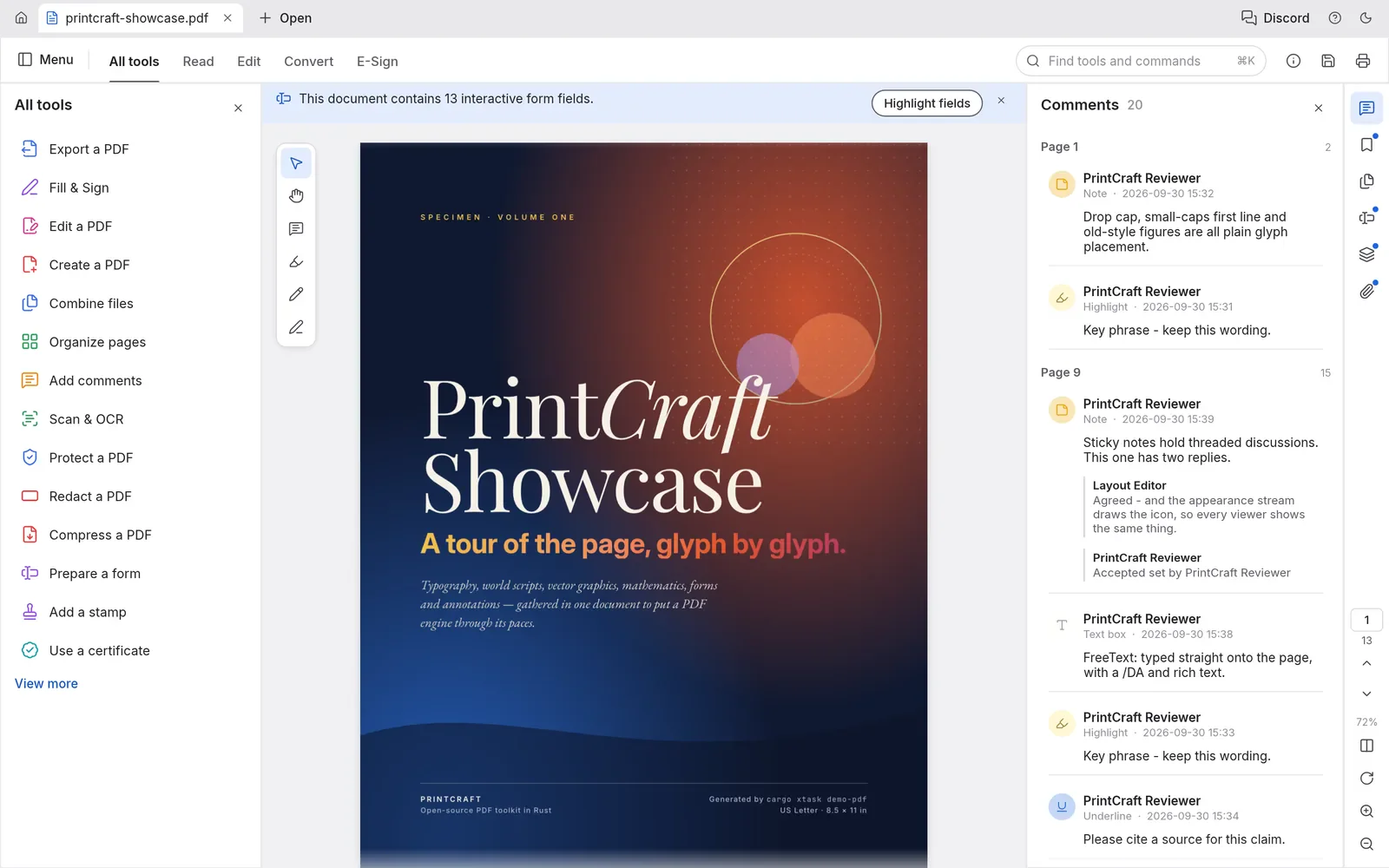 PdfCraft open-source PDF workbench from ArtCraft Crafting Apps with comments panel visible
Image: ArtCraft
When Thomas mentioned PdfCraft — ArtCraft's Acrobat-class tool — the room applauded. PdfCraft's product page (linked from the suite index) positions it as an open PDF workbench: read, organize, combine, split, secure.
Strategically, PdfCraft shows the playbook is category-by-category rewrites, not a single hero repo. That is closer to how teams used LLMs to port tsc to Rust than to a one-off Photoshop stunt. It also raises clean-room and trademark questions we outlined for PhotoCraft: descriptive use of Adobe trademarks is not the same as feature parity or file-format litigation risk.
FigCraft (Figma-class UI design) and WordCraft (word processor) extend the same idea into interface design agents and document automation — categories where MCP tool hosts already expect structured commands.
Agent control: why MCP is the moat they want
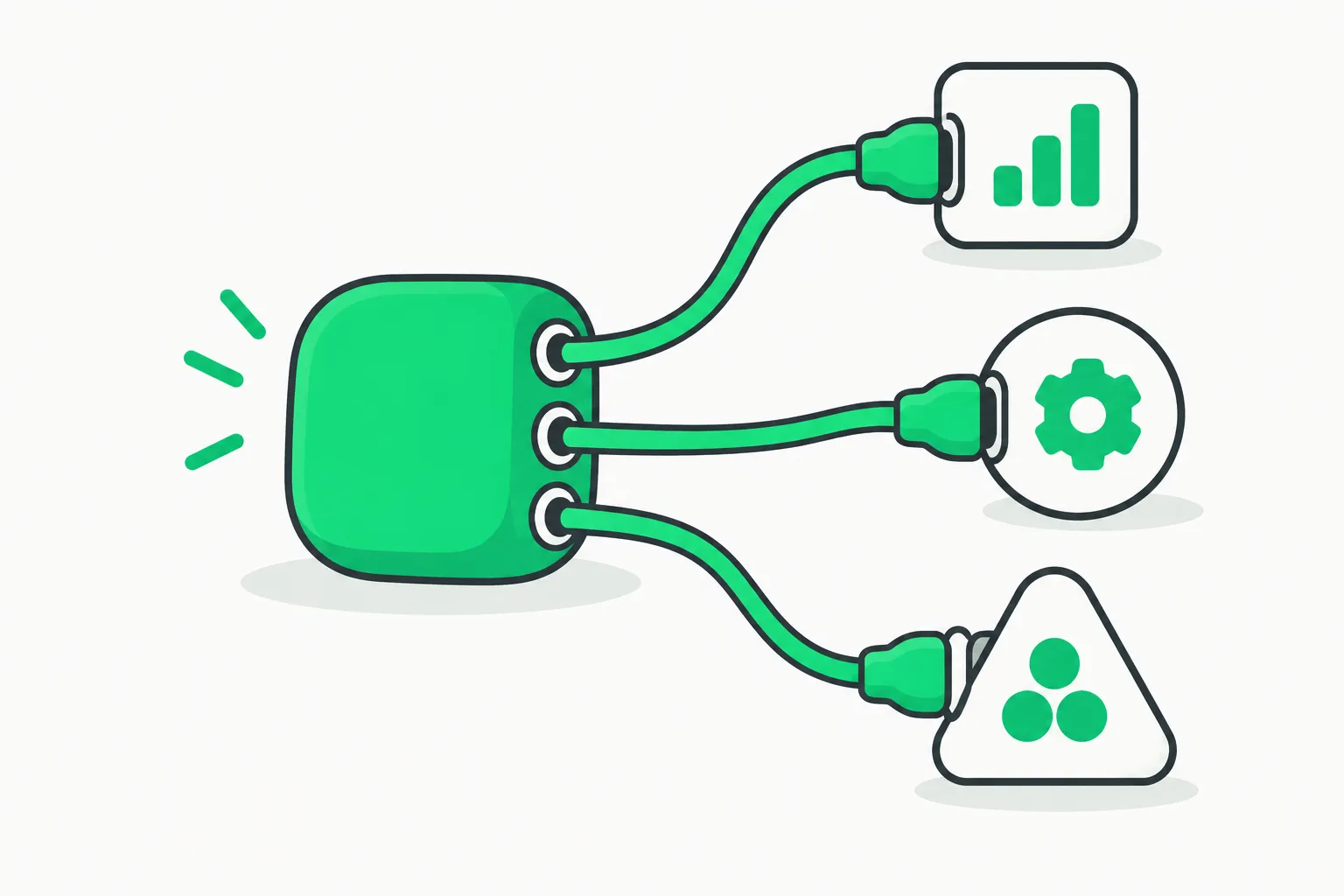 MCP hub linking tools, gears, and nodes for ArtCraft agent-ready creative apps
ArtCraft's speaker bio on ai.engineer states plainly that PhotoCraft's GUI, CLI, JSON channel, and MCP server expose the same editing commands. That design choice is the bridge to Claude Code skills and loop-style agent workflows:
- Human proves an edit manually in the UI
- Agent replays the command via MCP with audit logs
- Artist keeps layers editable instead of baking a single PNG from a cloud model
This is the opposite of black-box generative replace, and it is why some anti-AI artists reportedly still engage: the stack is inspectable.
Thomas also described artists "vibe coding" workflows atop PhotoCraft — informal customization without waiting for Adobe's roadmap. That behavior matches what we saw when REA users rebuilt interfaces after reading specifications.
Limits: MCP does not erase AGPL vs Apache obligations, plugin ABI gaps, or GPU driver bugs on Linux. Agents accelerate typing; they do not waive license review.
Operations pain Thomas admitted
The keynote's useful engineering honesty was not the Photoshop screenshot — it was CI melting.
Thomas listed GitHub permissions, Rust build farms, CI falling over, and co-located RAM servers as real bottlenecks when thousands of contributors land on repos with agent-generated patches. ArtCraft's answer splits labor:
- Humans own schema migrations, API design, and backend policy
- Agents own "immutable" UI surfaces — desktop apps and games — where bad merges are easier to spot
That split rhymes with production engineering agents on AWS and with token-efficiency discipline when you let models touch big Rust workspaces.
He teased AutoCraft as a forthcoming open-source autonomous software factory. Until a repo ships, file it beside other factory announcements at the same conference — valuable as direction, risky as procurement justification.
Stage claims vs verified facts
| Claim | Source we could open | Verified? |
|---|---|---|
| 17 official Crafting Apps | getartcraft.com/apps | Yes |
| Apache-2.0 PhotoCraft repo | github.com/storytold/photocraft | Yes |
| MCP + CLI command parity | Speaker bio + README | Yes |
| ~1.7M daily downloads (accelerating) | Mainstage remarks (press summaries) | Not independently verified |
| ~4,000 developers in community | Mainstage remarks | Not independently verified |
| ~300 community apps in flight | Mainstage remarks | Not independently verified |
| First PhotoCraft build in ~24 hours | Mainstage remarks | Plausible anecdote, not reproducible here |
| AutoCraft factory open source soon | Mainstage remarks | Wait for repository |
If you cite ArtCraft to your board, lead with the left column, not the download curve.
What people are asking
Is this legal? Same clean-room framing as our PhotoCraft legal explainer — reimplementation from public behavior is common; trademark and trade dress fights would be for counsel, not blog comment threads.
Why Rust? Native performance for brushes and scopes, memory safety for untrusted PSDs, and Wasm portability — the same reasons SolidCraft chose Rust for CAD kernels.
Does Adobe care? Adobe's research line (EditAgent, generative layers) aims to keep professionals inside Creative Cloud. ArtCraft wants them outside with forkable code. Both can be true.
How does this connect to chip smuggling news? It does not — except metaphorically: Singapore server fraud charges remind us hardware supply chains are geopolitical, while ArtCraft attacks software rent extraction. Different crises.
Try it without hype
- Install ArtCraft Launcher or grab a per-app installer from the suite page.
- Clone PhotoCraft:
git clone https://github.com/storytold/photocraftand runcargo run --release -p photocraft -- image.psd. - Register MCP in your agent host using commands from the README (pattern matches SolidCraft MCP setup).
- Log failing PSDs and missing filters before you promise clients a switch.
Related reading
- PhotoCraft October deep dive
- SolidCraft MCP CAD
- Adobe EditAgent research
- What is MCP
- REA reverse engineering as prompt DX
- Loop engineering for coding agents
- DESIGN.md for agent-built UI
- Claude Code token efficiency
Crafting Apps maturity labels, GitHub star counts, and conference remarks are accurate as of November 13, 2026.