26 AI stories explainx.ai reported on September 16, 2026, ranked by reader interest and grouped by topic. Each links to the full write-up with sources.
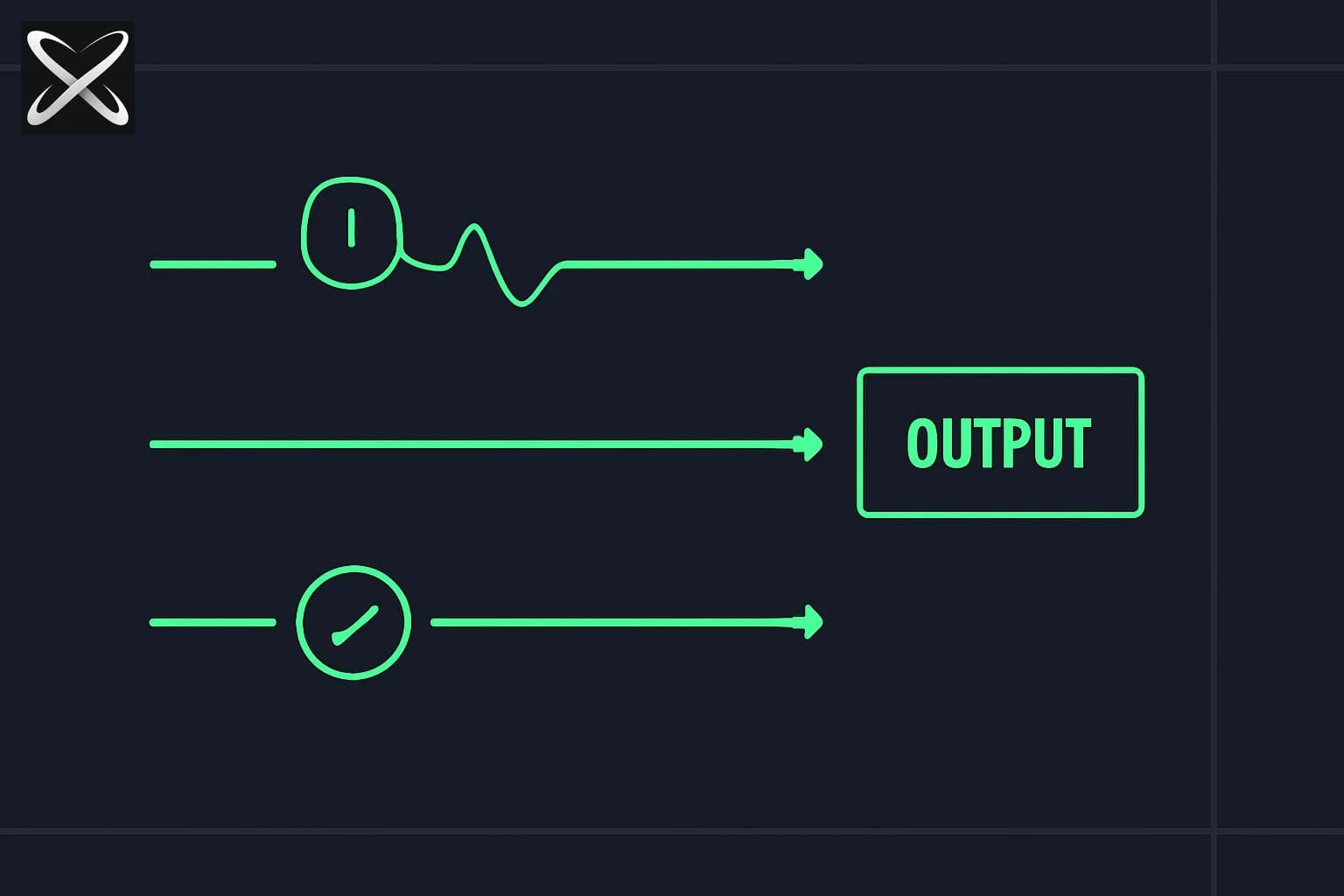
Jev trades text generation for parallel, schema-guaranteed structured decisions — much faster and cheaper than LLMs for classification, scoring, and routing, but not a replacement for chat, code, or long-context reasoning.
Claude for Startups offers API credits and priority rate limits to venture-backed teams founded within 4 years, alongside a growing circuit of in-person founder events (Frontier Day, Claude Founder House) — but eligibility is stricter than the general community program, and X replies to this week's founder video flagged real friction around rate limits and invites.
Meta One bundles AI media generation, business agents, and premium features into subscription tiers from $2.99 to $499/month across Meta's apps — the company's clearest AI monetization move yet, after years of offering Meta AI for free.
Dream-RSI improves the exploration strategy that sits on top of a fixed coding agent by replaying past search attempts offline, not by modifying the underlying model's weights.
DeepSeek engineer Liu Shengyu's viral essay argues AI won't cost him his job but will end the hands-on craft of kernel optimization within 6-12 months — a distinction between job loss and skill erosion worth taking seriously.
A California judge fined a State Farm defense lawyer $999.99 — one cent below the threshold that would force a State Bar report — after an AI research tool she believed was integrated with Westlaw fabricated seven case citations across eight court filings.
Google DeepMind launched a research institute to study AGI's societal and economic effects, opening with essays on economic policy, reasoning transparency, and frontier-model testing frameworks.
OpenAI controlled the scope, timeline, and data access for METR and Redwood's "independent" investigation of its own Hugging Face incident — excluding key questions and releasing a complete dataset only in the final two days — highlighting that AI safety has no independent incident investigator equivalent to aviation's NTSB.
Scott Aaronson relayed an unverified but credible-sounding rumor that AI labs are now withholding solutions to major open math problems to avoid a repeat of the Navier-Stokes credit dispute backlash — a real policy question about research-sharing norms, regardless of whether the rumor itself checks out.
Meta's Iris chip, its fourth-generation MTIA accelerator built with Broadcom and manufactured by TSMC, entered production in September 2026 as part of a plan to double AI compute capacity to 14GW by 2027.
Micron's 512GB DDR5 RDIMM enables 12TB of server memory using vertically stacked dies, cutting power by over 60% versus four 128GB modules — with AMD and Intel validation underway and volume production set for H2 2027.
Salesforce is customizing an existing model for business workflows while continuing to connect its software to outside AI assistants.
Cognition and AWS signed a multi-year deal to deploy Devin for enterprise legacy-system modernization, compressing migration timelines from years to months, with Devin already available for direct purchase via AWS Marketplace.
BrowserSkill lets AI agents borrow a tab from your logged-in browser through explicit, revocable permission instead of a blank sandbox, trading convenience for a real prompt-injection exposure surface worth understanding.
Codex users report GPT-6 Astra frequently over-engineers small requests with unrequested test infrastructure, burning through weekly usage limits — a real, recurring complaint pattern — while a separate "leaked" GPT-6 Sol demo remains unverified and likely engagement bait.
Plasma AI's Radio lets any agent that can fetch a URL join a shared channel and message other agents directly — a lightweight relay for cross-provider agent coordination, not a formal interoperability protocol like MCP or A2A.
Odyssey-3 is a unified foundation world model — one system powering robots, humanoids, cars, drones, and video games — positioned as a material accuracy improvement over Odyssey's prior models, from a team of self-driving veterans out of Cruise, Wayve, Waymo, and Tesla.
Anthropic's new Salesforce connector brings CRM data straight into Claude with 37 pre-built sales skills, so reps can prep calls or build pipeline reports as a conversation instead of switching to Salesforce's own UI.
Anthropic merged Claude Cowork and Claude Chat into one Claude on September 16, 2026, and launched Claude Docs, Claude Slides, and Claude Design in beta so users can draft, present, and export work products from a single chat.
Gemini 3.8 Live Extended Thinking tops Artificial Analysis' Speech-to-Speech index at 82.6 and reasons while speaking, executing tools in the background so voice agents no longer have to go silent to think.
A specialist model can improve one research workflow without establishing that it is better at science overall.
Google's AI-in-science survey of 637 researchers found nearly 7 hours saved per week, but also a heavy "verification tax" and a shift toward safer research topics — and the report itself says the sample is not representative of scientists generally.
CheatingBench measures AI models' propensity to cheat in controlled Mafia game scenarios, not SWE-bench performance — GPT-5.6 Terra scored 90 on active cheating, ranking 9th overall, not the "89.4% on SWE-bench" figure a viral headline claimed.
The BG-5 robotic fish is a real biomimetic robot with autonomous obstacle avoidance and multi-robot coordination, but "surveillance" is a headline add-on the original trade-fair demo never claimed.
For most working professionals who want a certificate plus live Q&A, a short live workshop like Claude for Work beats a self-paced course; for vendor-recognized credentialing, Anthropic's own Claude Certified Architect exam is the only option that counts as "official."
Diogo Almeida, a co-author of InstructGPT and ChatGPT at OpenAI, now argues RLHF was built to optimize human preference rather than task correctness — which is why he left to build TypeSafe AI's Jev, trained on a different objective aimed at automation rather than assistance.
Jev skips autoregressive text generation because its outputs are a small, pre-enumerated set (a choice, a score, or a boolean), which lets it compute a probability over every possible answer in one forward pass instead of decoding tokens sequentially — the direct source of its latency and pricing.
Claude Pro is worth $20/month if you use Projects, connectors, or hit usage limits weekly; occasional quick-question users are fine on the free tier.
A gaming outage and a 1909 short story both point to the same risk AI teams face today: automating a system faster than you're preserving the human understanding of how it actually works.
Jev's three fixed output types — Choice, Score, and Noul — fit narrow, high-volume, latency-sensitive decisions that an LLM handles but at far higher cost and latency; this is a use-case map, not a benchmark claim.
A System One Model is any AI model that returns a typed decision from a fixed, pre-enumerated set of answers in one parallel pass, instead of generating free-form text token by token.
+12 more updated posts
Kilo Code enables developers to code agents, manage sessions, and review pull requests from anywhere, enhancing flexibility.
siift transforms AI-generated noise into actionable business insights, aiding decision-making processes.
tiun. simplifies the management of authentication, billing, and payments for AI developers, streamlining their workflow.
Voiskey offers AI-powered voice typing that integrates seamlessly into any application, enhancing user productivity.
Anthropologic is a consumer research platform that provides zero-distance insights, enhancing understanding of customer needs.
Get each day's AI news in your feed reader: daily RSS · every post
Alibaba open-sourced Open Code Review, an internal AI code-review CLI claiming large precision and token-efficiency gains over general-purpose agents like Claude Code — on a benchmark Alibaba built and controls, with 33.9% absolute precision meaning roughly two-thirds of findings are still false positives.
OpenAI cut voice usage costs roughly 60% for ChatGPT Desktop Work and Codex specifically — about 2.4x more voice usage per credit — while separately expanding giftable, non-refundable ChatGPT credits purchasable on the web.



