



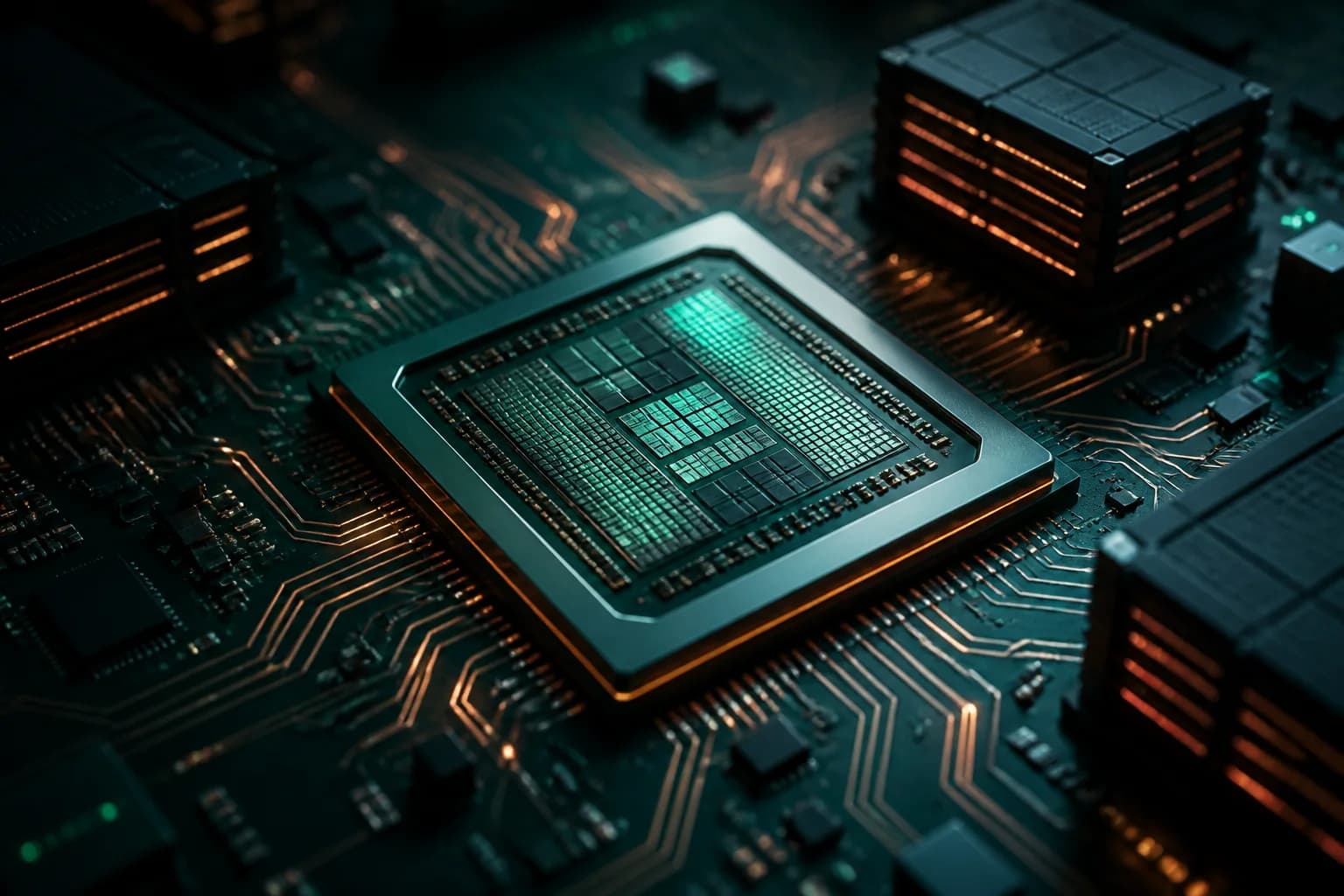
Meta began mass production of Iris, its fourth-generation custom AI accelerator, in September 2026 — a concrete manufacturing milestone behind a much bigger number Meta has been signaling for months: a plan to roughly double its AI compute capacity from 7 gigawatts in 2026 to 14 gigawatts by the end of 2027.
This follows a pattern this blog has tracked closely all year: frontier AI companies increasingly designing their own silicon rather than relying purely on off-the-shelf GPUs. OpenAI's reported Samsung partnership, covered here earlier in September, is the same trend from a different lab. Meta's version has been in motion longer and is now hitting an actual production line.
TL;DR
| Question | Answer |
|---|---|
| What is Iris? | Meta's fourth-generation Meta Training and Inference Accelerator (MTIA) — a custom AI chip |
| When does production start? | September 2026 |
| Who builds it? | Designed by Meta with support from Broadcom, manufactured by TSMC |
| What's the compute target? | Doubling from 7GW (2026) to 14GW by the end of 2027 |
| What's it used for? | Primarily AI training and inference for Meta's own products — Facebook, Instagram, its AI features |
| Will Meta sell Iris to other companies? | No indication of that — it's built for Meta's internal workloads |
| Who else supplies the supply chain? | Samsung Electronics (memory), SanDisk (flash storage), Sumitomo Electric (fiber optics) |
Why a chip production milestone is worth covering
A single chip entering mass production doesn't sound like builder-relevant news on its own, but the compute capacity target attached to it is: a doubling from 7GW to 14GW in roughly 18 months is one of the largest single-company capacity expansions in the current AI buildout, and it directly affects how much inference and training capacity exists for the products built on top of Meta's models — including its open-weight Muse/Llama-successor releases that many builders outside Meta rely on directly.
More compute capacity, if it materializes on schedule, generally means: cheaper inference over time (as amortized infrastructure costs spread across more capacity), faster iteration on Meta's own model releases, and — relevant if you build on Meta's open-weight models — a signal about how much backing those model lines have relative to being deprioritized.
The chip itself: what "Iris" actually is
Iris is the fourth generation in Meta's MTIA (Meta Training and Inference Accelerator) line — Meta's answer to Google's TPUs and Amazon's Trainium/Inferentia chips, custom silicon designed specifically for the company's own AI workloads rather than general-purpose GPUs bought from Nvidia. Meta designed the chip itself, with Broadcom providing design support (building on a broader, multi-year MTIA partnership between the two companies announced earlier in 2026) and TSMC handling manufacturing. Reports indicate Meta completed roughly six weeks of testing on Iris without identifying major issues before committing to the September production start — a relatively fast, low-drama path to mass production for a new chip generation.
The supporting supply chain extends beyond the chip itself: Meta has separately locked in agreements with Samsung Electronics for memory chips, SanDisk for flash storage, and Sumitomo Electric for fiber optic networking equipment — the unglamorous infrastructure layer that determines whether a data center can actually feed a chip with data fast enough to use it efficiently. Announcing chip production without securing that supporting supply chain is a common way ambitious compute plans stall in practice, so the breadth of these parallel agreements is itself a signal of how seriously Meta is treating the 14GW target.
The bigger trend: every major AI player wants its own silicon
Meta's Iris push sits alongside a now-familiar list of frontier labs and hyperscalers building custom AI chips instead of relying purely on Nvidia:
| Company | Custom chip program | Status as of Sept 2026 |
|---|---|---|
| Meta | MTIA (Iris is gen 4) | Entering mass production |
| OpenAI | Reported Samsung partnership | Reported, not yet in production per public reporting |
| TPU (Tensor Processing Unit) | Long-running, multiple generations deployed | |
| Amazon | Trainium / Inferentia | Multiple generations deployed at AWS scale |
| Microsoft | Maia accelerator program | In deployment for internal Azure AI workloads |
The economics driving this are consistent across the list: Nvidia GPUs carry a substantial margin, are supply-constrained during demand spikes, and are general-purpose enough that a chip tuned specifically for a company's own model architecture and inference patterns can often deliver meaningfully better cost-per-token for that specific workload. The tradeoff is the multi-year design and manufacturing lead time and the capital risk of committing to a chip generation before knowing exactly what next year's model architectures will need — which is part of why this remains a strategy only the largest, most capital-rich AI players have pursued at scale so far.
Timeline of Meta's MTIA program
For context on how Iris fits into Meta's broader custom-silicon effort: the Meta-Broadcom partnership behind the MTIA line was extended in April 2026 to cover more than 1GW of initial custom silicon deployment on a 2-nanometer process, with Iris marking the fourth generation of chips to ship under that partnership. Each prior generation targeted progressively larger workload shares of Meta's own inference and training pipeline, moving the company step by step away from pure dependence on off-the-shelf Nvidia GPUs.
What this means if you build on Meta's models
If your product depends on Meta's open-weight models or its AI product APIs, the compute capacity story is a leading indicator worth tracking loosely: capacity expansions of this scale typically precede price reductions or capability expansions on the serving side, though Meta hasn't announced specific pricing changes tied to this milestone. It's also a data point in favor of Meta continuing meaningful investment in its open-weight model line — a capacity buildout this large isn't built for a product line the company is planning to deprioritize.
Reading the "1GW" and "14GW" numbers correctly
It's worth being precise about what these gigawatt figures actually measure, since they get thrown around loosely in coverage. They refer to power capacity — the electrical load a company's data centers are provisioned to draw, not a chip count or a FLOPS measure. A gigawatt of AI compute capacity translates roughly (depending on chip generation and efficiency) into tens of thousands of accelerator chips running continuously, plus all the cooling, networking, and power delivery infrastructure needed to keep them fed. When Meta talks about doubling from 7GW to 14GW, it's describing a doubling of the entire physical footprint dedicated to AI workloads — land, power contracts, cooling systems, and chips together — not just a chip order.
That distinction matters because it's also why these buildouts take years of lead time rather than happening on a software release cycle: securing enough electrical grid capacity, negotiating power purchase agreements (often including renewable energy contracts), and physically constructing or retrofitting data centers are the actual bottleneck, more often than chip design or manufacturing itself. Meta's Broadcom/TSMC chip production timeline and its power/supply-chain agreements with Samsung, SanDisk, and Sumitomo Electric are two halves of the same constraint — a fast chip is useless without the power and physical infrastructure to run thousands of them continuously.
What historically goes wrong with buildouts this size
Compute capacity announcements at this scale carry real execution risk worth naming rather than glossing over. The most common failure modes in past AI infrastructure buildouts have been: power grid interconnection delays (utilities can take longer to deliver committed capacity than a company's internal timeline assumes), chip yield issues that surface only after initial testing looked clean, and supply-chain bottlenecks in adjacent components (memory, networking hardware) even when the core chip itself ships on schedule. Meta's reported six-week clean testing window for Iris is a genuinely positive early signal, but it covers chip functionality, not the full stack of power delivery and data-center construction that determines whether the 14GW target actually lands by the end of 2027 rather than slipping into 2028.
FAQ
What is Meta's Iris chip? Iris is the code name for Meta's fourth-generation MTIA custom AI chip, designed by Meta with Broadcom's support and manufactured by TSMC, entering mass production in September 2026.
Why is Meta building its own AI chips instead of just buying Nvidia GPUs? Custom silicon lets Meta tune chips for its own workloads, reduce dependence on Nvidia's supply and pricing, and gain more predictable capacity as it scales toward 14GW by 2027.
How much compute capacity is Meta targeting? Roughly doubling from 7GW in 2026 to 14GW by the end of 2027.
Who else is involved in building Iris? Broadcom (design support), TSMC (manufacturing), plus supply agreements with Samsung Electronics, SanDisk, and Sumitomo Electric.
Is Meta the only AI company building custom chips? No — OpenAI (reportedly with Samsung), Google (TPU), Amazon (Trainium/Inferentia), and Microsoft (Maia) all run their own custom silicon programs.
Will Iris chips be sold to other companies? No indication of that — Iris is built to support Meta's own AI training and inference workloads.
Related reading
- OpenAI partners with Samsung on custom AI chips
- OpenAI's Jalapeño chip for LLM inference, built with Broadcom
- Google's Frozen v2 TPU chip for Gemini 4 pretraining
- Meta's Muse Glimmer: open-weight 30B agentic model
- Data centers: the real environmental impact
- The AI bubble: a 2026 reality check
- Official: Meta MTIA program updates via Meta AI
Details in this piece reflect reporting available as of September 16, 2026. Production timelines, capacity targets, and supply-chain agreements may change as Meta's buildout progresses.