



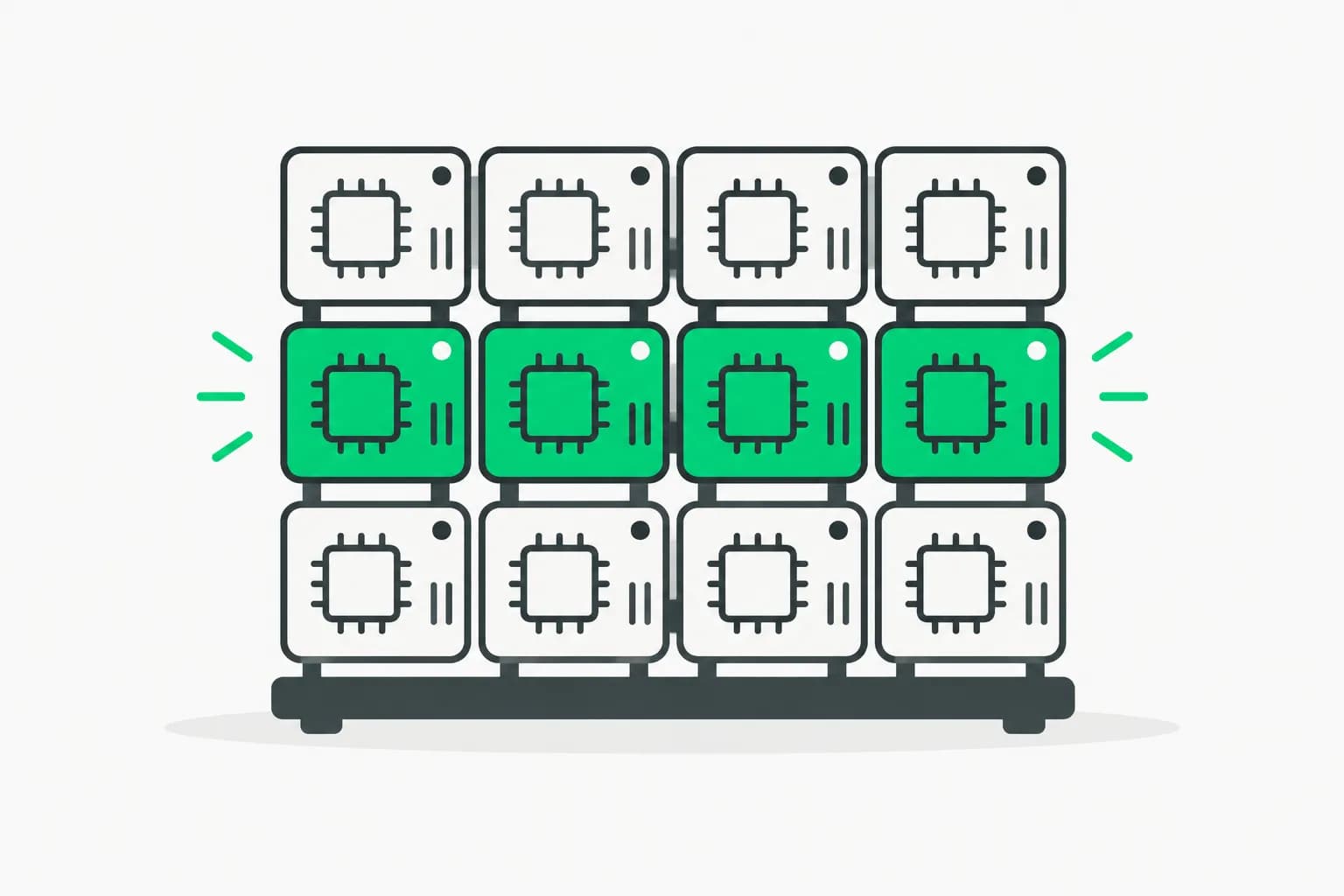
SpaceX's third-quarter results, released on October 20, 2026, make one thing plain: the rocket-and-satellite company now earns more from AI than from anything else. Revenue came in at about $14.58 billion, up 161% year over year, and the AI segment alone delivered $7.56 billion, up roughly 830%, with an operating profit of $431 million. A year earlier that same business lost $1.7 billion at the operating line.
This post sticks to what the reports confirm, flags where outlets disagree, and treats Elon Musk's forecasts as claims. The full SEC filing was not retrievable when we wrote this, so figures come from TechCrunch, CNBC's live coverage, and a Crypto Briefing summary that cites the company's numbers.
Update (October 20, 2026): Q1 2027 revenue guidance and Q4 capex
TechCrunch reports that CFO Bret Johnsen gave formal guidance on the call: total company revenue of $33 billion to $37 billion in the first quarter of 2027, against $14.58 billion in Q3. That is, unlike Musk's $500 billion to $1 trillion ARR prediction, a number from the CFO, but it is still a forward-looking statement and not a result. Johnsen also said SpaceX expects to spend $35 billion to $40 billion on new capital investments in the fourth quarter, after $19.6 billion in Q3.
Musk, per the same report, argued that the constraint on deploying superintelligence is "more in power and cooling and infrastructure than it is in chips," and said turbine makers face 12 to 18 month delays in obtaining metal blades and vanes, which SpaceX is working around with its own casting capability.
SpaceX Q3 2026 at a glance
| Metric | Q3 2026 | Source |
|---|---|---|
| Total revenue | About $14.58B, up 161% | CNBC, TechCrunch |
| Analyst estimate | About $12.7B | CNBC, Reuters via Crypto Briefing |
| Net income | About $4.4B (vs a roughly $1B loss a year ago) | TechCrunch |
| AI (Super Intelligence) revenue | $7.56B, up 830% from $813M | CNBC, Crypto Briefing |
| AI operating income | $431M (vs a $1.7B loss) | CNBC |
| Connectivity (Starlink) revenue | About $5.25B, up 69% | Crypto Briefing |
| Starlink consumer subscribers | 13.6M (vs 7.2M a year ago) | Crypto Briefing |
| Total capex | About $19.6B, of which about $16.4B is AI | TechCrunch, Crypto Briefing |
| Compute capacity | 1.7 GW nameplate (vs 0.6 GW) | Crypto Briefing |
| Cursor contribution | $608M revenue through Sept 30 | Crypto Briefing |
Two caveats. First, outlets disagree on adjusted earnings per share (one reports 45 cents against 13 cents expected, another 35 cents against 15 cents), so we don't quote an EPS figure. Second, TechCrunch notes the quarter was helped by about $1 billion tied to a recovery in bitcoin prices, plus related-party income that may come from a SpaceX investment in another company. Year to date the company is still down $413 million through nine months.
Starlink is still growing, but no longer the headline
Connectivity did not stall. Revenue of about $5.25 billion was up 69%, operating income of about $2.37 billion was up 99%, and consumer subscribers nearly doubled from 7.2 million to 13.6 million over the year, per the Crypto Briefing summary. In the second quarter Starlink had $4.29 billion of revenue and 12 million subscribers, so the quarter-on-quarter step is roughly $1 billion and 1.6 million subscribers.
The difference is where the marginal dollar goes. Starlink produces operating profit that funds the AI build-out, and the AI segment is where the growth and the spending are. Connectivity earned about $2.37 billion in operating income while AI capex alone was about $16.4 billion, so the satellite business covers only a fraction of the compute bill. The reports we read do not break down how the remainder is funded, so check the cash-flow statement in the filing.
Why the AI segment is the story
In the second quarter, the AI segment brought in $2.56 billion and was still losing money, as we covered in the SpaceX Q2 earnings breakdown. One quarter later it is almost three times larger, profitable, and bigger than Starlink. SpaceX attributes the jump to new cloud services agreements, adoption of its Grok models, and the Cursor acquisition, according to the Crypto Briefing summary.
That mix matters. The segment is no longer "the xAI business." It combines three very different revenue engines:
- Grok models and apps, sold through subscriptions and the API. See the Grok Voice 3.0 launch for a recent product, and the X subscription tiers.
- Cursor, the coding tool SpaceX bought for about $60 billion. The acquisition closing post has the timeline, and the original deal coverage explains why it was priced the way it was.
- A GPU cloud ("neocloud") business that rents out compute, which TechCrunch says now holds 1.7 GW of capacity.
The Cursor number is the easiest to sanity check. A reported $608 million in revenue over roughly six weeks of ownership (August 14 to September 30) is a large slice of the $7.56 billion, but it still leaves the bulk of the segment coming from cloud contracts and Grok. We could not find a breakdown of how much is each, so treat any claim about "Grok revenue" specifically as unverified until the filing is read.
The compute behind the numbers
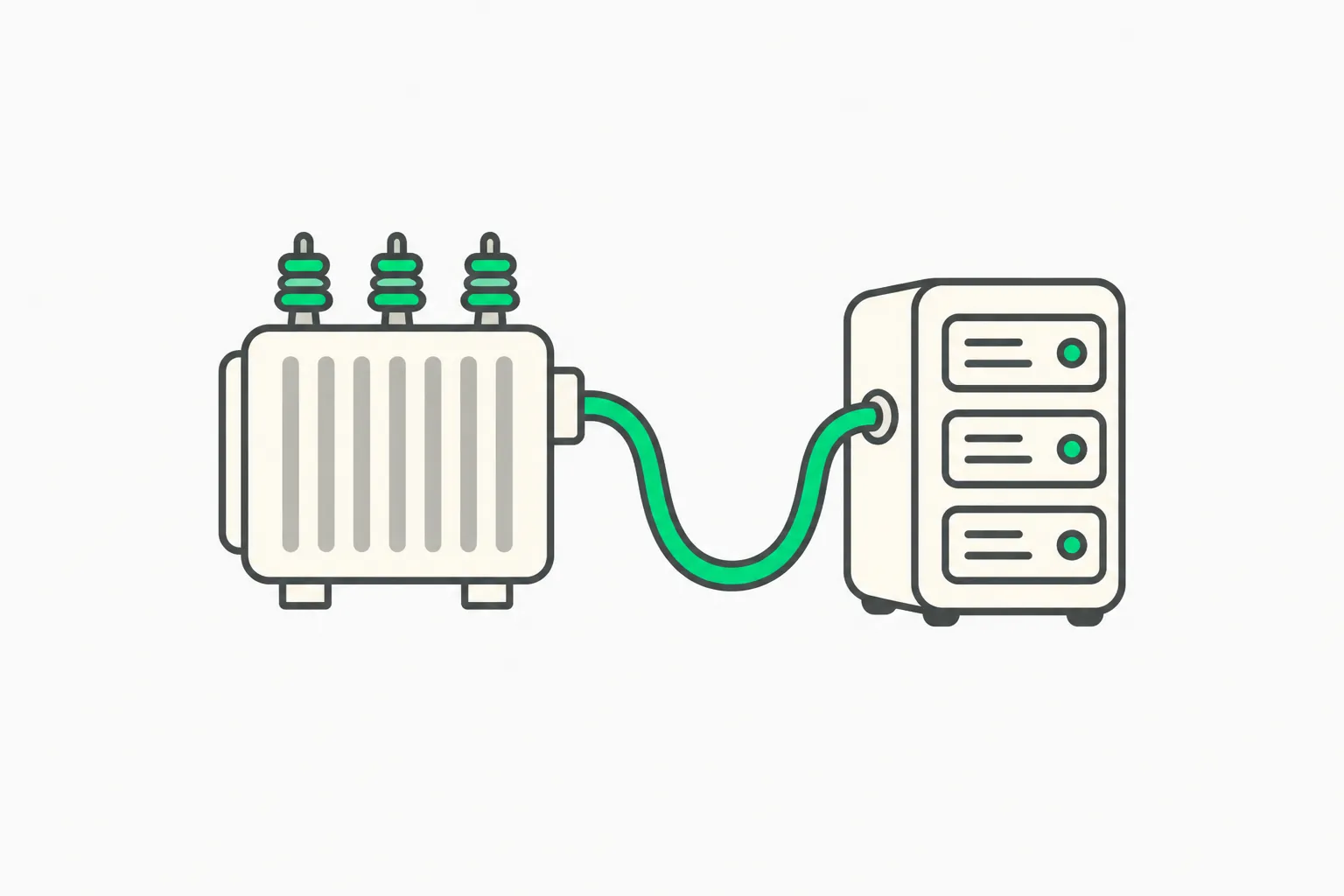 Power cable feeding a server cabinet, illustrating SpaceX's 1.7 GW of AI compute capacity
The capacity figure is the one builders should watch. Nameplate capacity went from 0.6 GW to 1.7 GW in a year, and about $16.4 billion of the $19.6 billion in quarterly capex went to AI. Colossus II, the second Memphis data center, is still under construction. TechCrunch quotes Musk as saying the main limit on deploying "superintelligence" is power, cooling and infrastructure rather than chips, and that he spends four days a week in Memphis.
That fits the pattern across the supply chain this month. TSMC reported record profit on AI demand, and ASML said AI demand exceeds EUV supply into 2027 and 2028. SpaceX is the demand side of the same chain: someone has to pay for the wafers, and here the payer is a company that also sells rockets. For the fab angle see the Terafab operational-control claim.
A nameplate gigawatt is not the same as a gigawatt of GPUs running at full utilization. Nameplate means the capacity the facilities are built to supply. How much of that is actually earning rental income at any moment is not in the reports we could read, and it is the number that would tell you whether the 830% growth is repeatable.
What is claimed and what is verified
 Bar chart under a magnifier with one highlighted bar, showing how to read SpaceX Q3 2026 earnings claims
| Claim | Status |
|---|---|
| Revenue $14.58B, up 161% | Reported by CNBC and TechCrunch; matches the company release as cited |
| AI revenue $7.56B, operating income $431M | Reported by CNBC and a filing summary; consistent across outlets |
| Net income $4.4B | Reported by TechCrunch; includes about $1B tied to bitcoin recovery and related-party income, so it is not a clean operating profit |
| Musk: Super Intelligence ARR of $500B to $1T by end of 2027 | A verbal prediction, not guidance. Not verified and far above current run rate |
| "Playing in Little League" Yankees comparison | A Musk quote on SpaceX's position, as reported by TechCrunch |
The run-rate arithmetic is worth doing. A quarterly AI revenue of $7.56 billion annualizes to roughly $30 billion. A $500 billion to $1 trillion annual recurring revenue by the end of 2027 would mean growing that figure 16 to 33 times in about five quarters. Anthropic, by comparison, is reported to have earned about $16.8 billion in Q3 revenue, and its draft prospectus coverage, which we summarized in the Anthropic draft prospectus post, shows how far those numbers are from a trillion dollars. Musk's figure may be aspirational framing for investors; we found nothing in the reporting that supports it with contracts or backlog.
What this means for people who build with or pay for these tools
- Cursor users: the product is now inside a company reporting on it as part of a profit centre. Pricing and model routing decisions will be made with that segment's margin in mind. Our Cursor staff probe post covers a separate data-handling question that is worth reading if you work with client code.
- Grok API users: Grok's growth is real enough to be named as a driver, which suggests continued investment, but there is no model-level revenue disclosure. The Grok Bot routing post shows how SpaceX products also route to non-Grok models.
- Anyone renting GPUs: a 1.7 GW neocloud arm means SpaceX is now a competitor to the usual GPU rental providers, and it has the balance sheet to price aggressively.
- Branding watchers: the segment name "Super Intelligence" follows the company's earlier rename. The SpaceXSI rename explainer and the Salesforce and Tesla follow-ups trace how quickly the label spread.
How to check the numbers yourself
- Open SpaceX's Q3 8-K earnings release on SEC EDGAR (the company files under Space Exploration Technologies Corp) and read the segment table. The Q2 release is a useful template for where the AI and connectivity lines sit.
- Compare AI segment revenue with Cursor's stated contribution and compute capex. If most of the growth is from the cloud line, the story is about GPU rental, not about Grok adoption.
- Look for the notes on related-party income and the bitcoin-linked revenue, since they affect how you read net income.
- Read the capex outlook for Q4. The Q2 filing said capex would stay near $18 billion per quarter, and Q3 landed at about $19.6 billion in total.
What we do not know yet
- How much of the $7.56 billion is Grok, Cursor, and cloud rental respectively.
- Utilization of the 1.7 GW, and how much is leased to outside customers versus used for SpaceX's own training.
- Whether the $431 million operating profit survives once Colossus II depreciation starts.
- What, if anything, SpaceX will formally guide for Q4.
We will add an update if the filing changes any figure above.
Related reading
- SpaceX Q2 2026 earnings and the Nvidia Starmind deal
- SpaceX closes the Cursor acquisition
- TSMC Q3 2026 results
- ASML Q3 2026: AI demand exceeds EUV supply
- Anthropic draft prospectus: revenue, loss and compute
- Grok Voice 3.0
Figures are as reported on October 20, 2026 and may change when the full filing is read. This is not investment advice.