



Update — October 7, 2026: Brett Adcock's Hark launched Hark Pro, a proactive assistant priced like Muse. See what it is and how it compares.
Update — October 7, 2026: Musk said Grok Bot will route tasks to the best back end, including Claude Opus 5.5, Midjourney and Suno. See what was announced and what is missing.
Update — October 3, 2026: A sixth option — Conway's Underdog — runs personal AI on your Mac locally (not a cloud PC, not an open gateway): Underdog private personal AI.
Five products now claim to be your always-on agent, and they split cleanly into two camps. Hosted: OpenAI's Dots (launched September 29, 2026), SpaceXAI's Grok Bot (August 11), and Meta's Muse (September 8-9). Self-hosted and open source: OpenClaw and Hermes Agent. This comparison of OpenAI Dots vs Grok Bot vs Meta Muse vs OpenClaw vs Hermes Agent is built on what explainx.ai has already verified, and it is meant to answer one question: which one should you actually run?
If you only want the three hosted products, read our three-way comparison. If you only want the two open-source ones, read Hermes Agent vs OpenClaw. This post is the bridge between them.
TL;DR: the five agents side by side
| Question | Dots | Grok Bot | Muse | OpenClaw | Hermes Agent |
|---|---|---|---|---|---|
| Type | Hosted (OpenAI) | Hosted (SpaceXAI) | Hosted (Meta) | Open source, self-hosted | Open source, self-hosted |
| License | Proprietary | Proprietary | Proprietary | MIT | MIT |
| Model choice | GPT-6 Astra | SpaceXAI / Cursor models | Muse Spark 1.3 | Any (Anthropic, OpenAI, Gemini, Ollama, more) | Any (OpenRouter, Nous Portal, NIM, more) |
| Where it runs | OpenAI cloud computer | A Linux VM per member | Meta Secure VM | Your machine or VPS | Your machine or VPS |
| Cost to start | First dot included with Pro / Business Premium | Bundled in SuperGrok / Cursor plans, limited free trial | Free to 100M tokens/week, then $20 / $100 | Software free; you pay tokens and hosting | Software free; you pay tokens and hosting |
| Credential handling | Passwords hidden from the model | Bots sign in as you | Surrogate tokens, Sentinel broker | You decide (config and env) | You decide, tool approval on by default |
| Learns from use | Notes to itself | Retains preferences | Memory | Static skills | Curator writes new skills |
| Channels | ChatGPT, Slack, Teams, texting soon | Desktop, iPhone, integrations | iOS, Android, web, WhatsApp | 24+ channels | Telegram, Discord, Slack, WhatsApp, Signal, CLI |
| Availability | Eligible markets | Widely available | US only at launch | Anywhere | Anywhere |
Star counts and CVE figures for the two open-source projects come from our June 2026 comparison (Hermes about 188k stars, OpenClaw about 247k), so treat them as dated.
Who owns the computer, and why does that decide everything?
The real split is not model quality. It is who runs the machine the agent lives on.
Hosted agents put the computer in the vendor's cloud. Dots gets its own cloud computer and browser, and you can inspect it. Grok Bot gives each member a Linux VM. Muse runs a per-user Secure VM. You get isolation you did not have to build, and you accept the vendor's data terms, plan gating, and roadmap.
Self-hosted agents run wherever you put them. OpenClaw is, in our earlier framing, a gateway architecture with an agent inside; Hermes is an agent with a learning loop wrapped around a gateway. Both run on a Mac mini or a cheap VPS, and neither needs a local GPU because inference goes to whatever provider you configure.
The consequence: with a hosted agent your threat model is mostly about the vendor and your own grants. With a self-hosted agent your threat model includes your firewall, your gateway exposure, and your patch cadence. Our MCP security guide applies to all five.
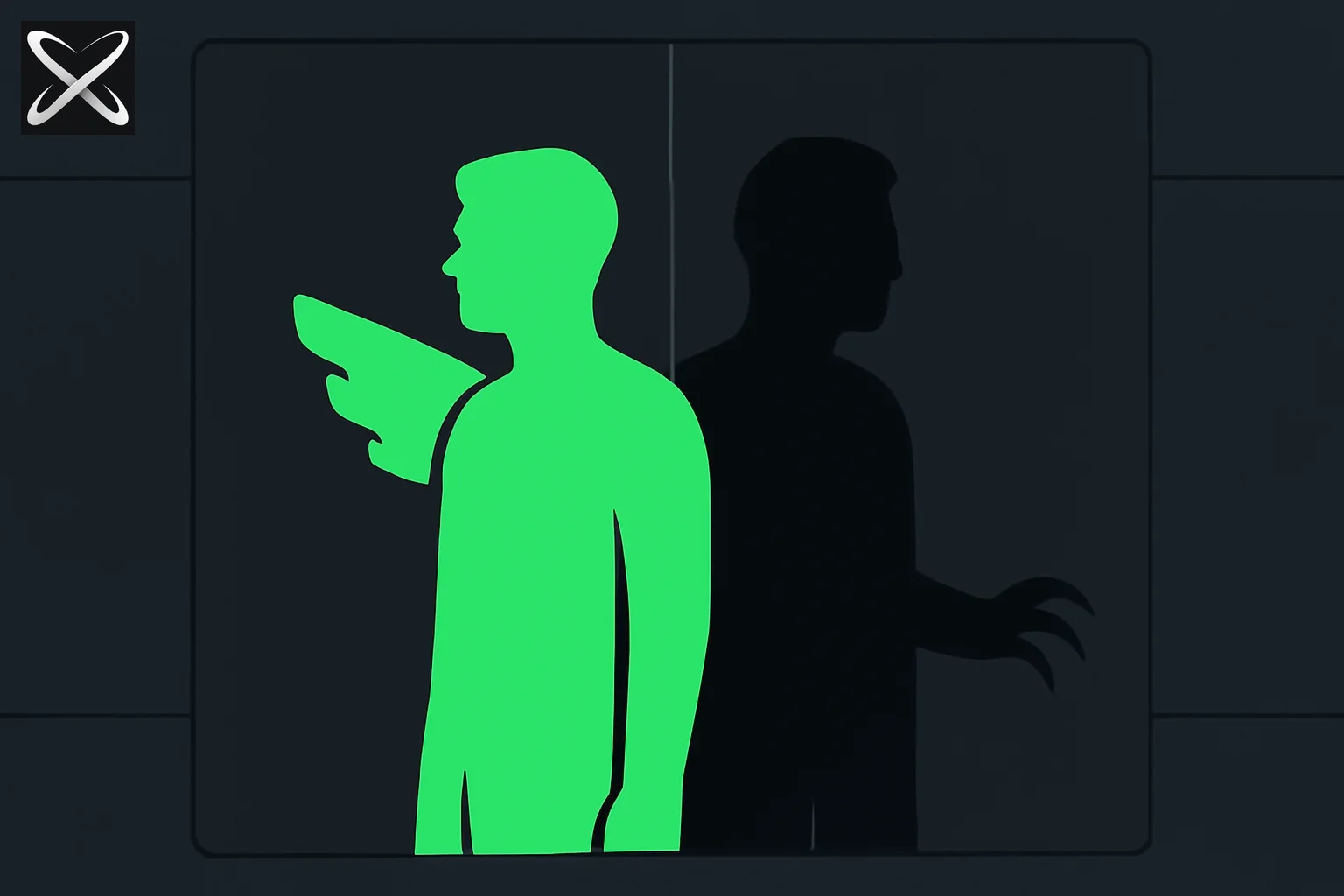 Two agent silhouettes divided by a line, used here to frame the open-source versus hosted split
How do the two open-source agents differ from each other?
Briefly, since the full comparison goes deeper.
OpenClaw is about breadth. It supports 24+ messaging channels, a large skill ecosystem (5,400+ claws at the time of our June comparison), and moved to a 501(c)(3) foundation. Its 2.0 release (v2026.8.1, August 31) added guided setup that detects existing AI subscriptions, a rebuilt Control UI, shared cloud sessions for teams, and SQLite-backed sessions, with breaking migrations you should read before upgrading.
Hermes Agent is about depth. Its Curator system reflects on finished tasks and writes Markdown skills it loads next time, so it improves on your recurring work. Newer releases added Bot Mode (named persistent bots that message each other) and manual subagent control. That makes it the closest open-source analogue to Grok Bot's multi-bot model. You can also run it on a remote VPS with Telegram.
What does each one cost in practice?
| Agent | What you pay | What you do not know yet |
|---|---|---|
| Dots | First dot included on eligible Pro and Business Premium plans | Extra dot prices are unpublished |
| Grok Bot | Bundled; reported roughly $120 per seat per month on Cursor Premium Teams up to $300 on SuperGrok Heavy | No published standalone price |
| Muse | Free to 100M tokens per week; $20 and $100 plans | Non-US availability |
| OpenClaw | Tokens plus hosting; can reuse a ChatGPT or Claude subscription | Your own usage variance |
| Hermes Agent | Tokens plus hosting; Curator reflection uses extra tokens | Your own usage variance |
Open source is not automatically cheaper. A busy self-hosted agent on a frontier model can out-spend a flat hosted bundle, while a light personal agent on a $5 to $10 VPS is far cheaper. Budget by token volume, not by sticker price. Our OpenClaw subscription guide covers the reuse-your-plan route.
Where has each one already failed?
Track record matters more than a launch demo.
- Muse: shared a YouTuber's address with a Marketplace buyer after Allow Always (incident record); tested human concierge calls and hot-fixed a Mac zero-day (trust week); blocked by Amazon (details).
- Grok Bot: early-beta reliability complaints and a documented shared-VM caveat: "do not use separate Bots as a security boundary." See the credential risk discussion.
- OpenClaw: nine CVEs disclosed in a four-day window in March 2026 (patched), plus an agent that used an unauthenticated booking API to cancel a stranger's reservation while doing an ordinary task (gym incident). Also see Is OpenClaw safe?.
- Hermes Agent: no reported CVEs as of June 2026 and safer-by-default tool approval, but a shorter public incident history is not proof of safety.
- Dots: nothing yet, because it is a day old.
The pattern repeats: failures are rarely the model being dumb. They are an agent doing something the user technically allowed. The open-source agents make that risk yours to manage; the hosted ones make it partly the vendor's, but with less visibility.
Which one should you pick?
- You want the fastest start and already pay for ChatGPT Pro: Dots.
- You want a free trial and are in the US: Muse, with banking and DMs left disconnected.
- You live in Cursor and want several coordinated workers: Grok Bot.
- You want any model and 24+ channels: OpenClaw.
- You want an agent that gets better at recurring tasks, on your hardware: Hermes Agent.
- You need to pass a security review: Dots (read-only background research, hidden passwords) or Muse (Sentinel) on the hosted side; Hermes with tool approval on the self-hosted side.
- You want no lock-in: OpenClaw or Hermes, with instructions kept as portable agent skills.
For unattended coding specifically, none of the five replaces Codex persistent mode or a loop-engineering setup.
Questions people are asking
Is OpenClaw or Hermes a real alternative to Dots?
For personal automation, yes, and they add model choice and data location that Dots cannot. What you give up is the vendor-run cloud computer, the polished ChatGPT surface, and OpenAI's password vault. You build those guardrails yourself.
Which is best for a team?
OpenClaw 2.0's shared cloud sessions target team use, but its docs say they are collaboration controls, not a hostile-tenant security boundary. Dots offers an admin beta for Enterprise, Edu, and Healthcare. Grok Bot has had enterprise admin-panel activation since September 3.
Can I mix them?
Yes. A common setup is a hosted agent for personal errands and a self-hosted agent for recurring workflows you need to audit. Keep their accounts separate and revocable.
Here is the Grok Bot "teammate" thread again, since Hermes Bot Mode is the open-source answer to the same idea:
Honest limitations of this comparison
- Star counts and CVE numbers for OpenClaw and Hermes are from June 2026 and will have moved.
- Dots is one day old, with no independent testing.
- Grok Bot prices are reported bundle tiers, not a published rate.
- Vendor architecture claims (Sentinel, the Dots vault) have no public independent audit we can cite.
- We did not run all five head-to-head on one task. This is a synthesis of verified coverage, not a benchmark.
What to do this week
- Choose one hosted and, if you are technical, one self-hosted agent. Do not try all five.
- Start each on a research-only goal and read its activity log.
- Connect one low-stakes account per agent, never the same inbox everywhere.
- Write rules the way you write a CLAUDE.md: what it may read, what it must ask, what it must never send.
- Revisit in a week, then widen scope.
Follow @explainx_ai as each of these gets new releases and incident reports.
Related reading
- Underdog private personal AI — on-device alternative
- OpenAI CFO called Dots “Muse” on CNBC
- Dots vs Grok Bot vs Meta Muse: the hosted three-way comparison
- Hermes Agent vs OpenClaw: which open-source agent to use
- OpenAI Dots: always-on GPT-6 Astra agents
- Meta Muse launch and Sentinel architecture
- Grok Bot early beta
- OpenClaw 2.0 release
- Hermes Bot Mode
- Top 10 things you can do with OpenClaw · with Hermes Agent
Official: Introducing Dots
Plans, prices, and incident details are accurate as of September 30, 2026. Open-source star counts and CVE figures date from June 2026 and should be re-checked on each project's repository.
Update — October 4, 2026: Why Muse took off with ordinary users, from a design angle: What Meta got right with Muse.
Update — October 8, 2026: Another entrant — Tab, a personal assistant you text on iMessage or WhatsApp, emerged from stealth at a $300M valuation.