



Update (July 9, 2026 — Foundation): OpenClaw announced a 501(c)(3) Foundation — 4.5M new claws/week, ClawCon in 16 countries. Foundation post →
OpenClaw is the AI assistant that answers you on the channels you are already in — Telegram, Signal, WhatsApp, Slack, Discord, iMessage, and 20+ more. You run it on your own machine, bring your own AI model, and extend what it can do through installable claws from ClawHub.
247,000 GitHub stars. 5,400+ claws. 24 supported channels.
Here are the 10 workflows that make OpenClaw worth setting up.
For setup fundamentals, start with the What is OpenClaw guide. For a comparison with Hermes Agent, see Hermes Agent vs OpenClaw.
1. Twitter/X feed management with BirdClaw
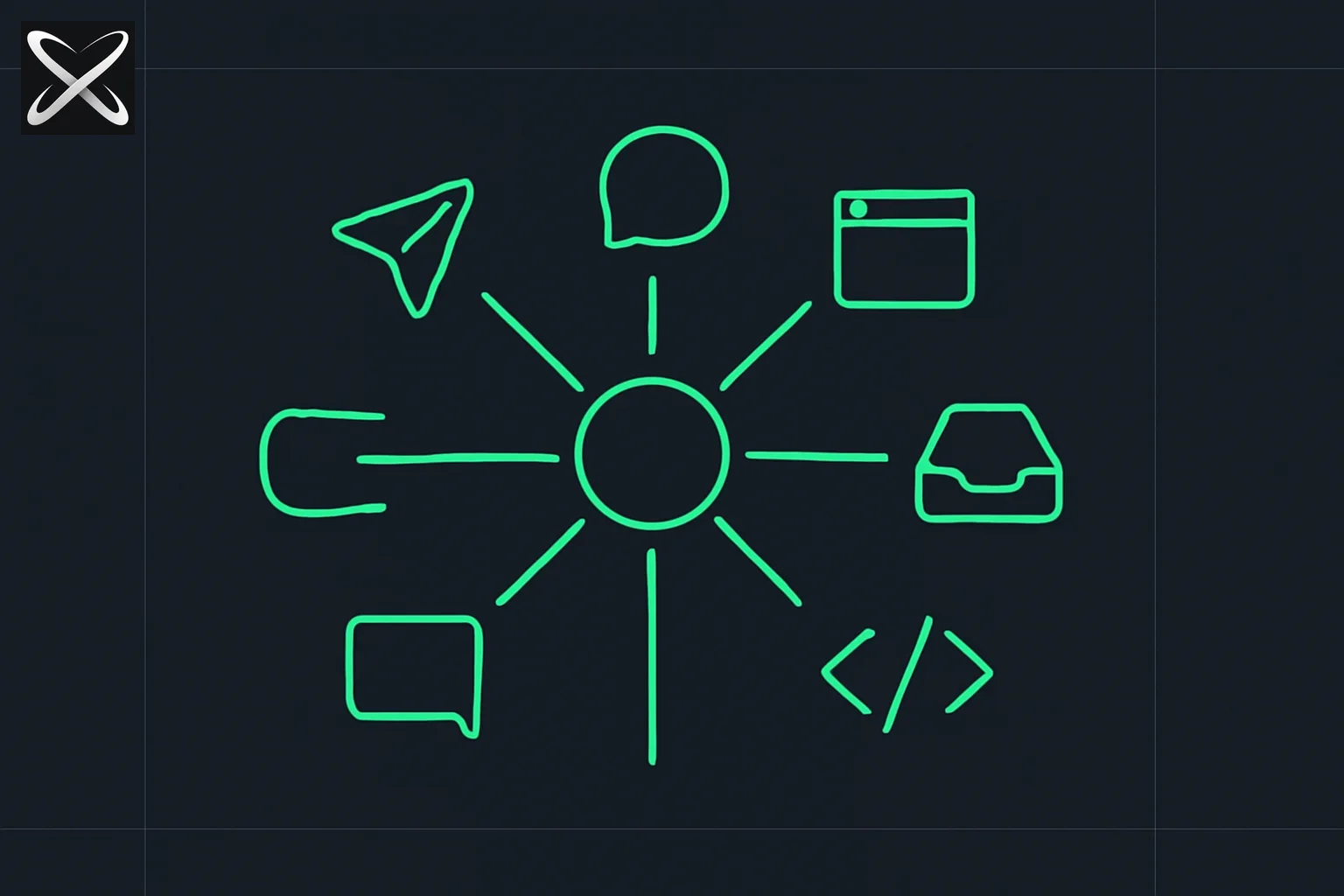 Top 10 OpenClaw workflows diagram: a central hub icon radiating ten spokes to distinct channel icons in a circle
What it looks like: Message your Telegram bot — "what happened on Twitter today?" — and get a structured digest: highlight tweets, top links from your network, people worth following up with. No browser. No algorithm.
This is the BirdClaw + OpenClaw combination. BirdClaw stores your Twitter data in a local SQLite database; the BirdClaw claw surfaces it through your OpenClaw agent. From Telegram you can also search bookmarks, triage DMs by influence score, and manage blocklists.
you: summarise my Twitter mentions from today
openclaw: [queries BirdClaw SQLite]
→ 12 mentions: 3 need replies, 9 informational
→ Top topics: MCP servers, local LLMs, AI agent tooling
→ Most influential mention: @steipete (450k followers)
Claws needed: birdclaw + BirdClaw setup
2. GitHub PR and issue management
What it looks like: "List my open PRs, flag anything unreviewed for more than 2 days, and summarise the diffs." OpenClaw reads your GitHub via the gh CLI, lists stale PRs, fetches diffs, and returns structured summaries you can act on directly from Telegram.
You can go further: "post a comment on PR #234 saying I'll review it Thursday." OpenClaw writes the comment via gh pr comment. The entire GitHub workflow — reading, triaging, commenting — runs through your messaging channel without opening a browser.
you: what GitHub notifications need my attention?
openclaw:
→ 2 PRs awaiting your review (>48h): PR #234, PR #241
→ 3 issues assigned to you: #102, #118, #129
→ 1 PR waiting on CI: #238
Claws needed: github from ClawHub
3. Multi-channel unified inbox
What it looks like: One Telegram command — "what needs my attention across all channels?" — gives you a unified view: emails flagged for reply, GitHub notifications, Slack messages in important channels, and Twitter mentions. All from OpenClaw's multi-channel awareness.
This is OpenClaw's core thesis: you should not have to context-switch between six apps to understand what needs your attention. One agent, connected to everything, surfaces the signal.
you: daily triage
openclaw: → Gmail: 4 need replies (partnership, invoice x2, PR feedback)
           → Slack: 3 messages in #engineering channel, 1 DM from @alex
           → GitHub: 2 PR reviews waiting
           → Twitter: 5 mentions worth acknowledging
Claws needed: gmail, slack, github, birdclaw
4. Obsidian vault assistant
What it looks like: "Find my notes on vector databases and summarise what I concluded about Qdrant vs Weaviate." OpenClaw reads your Obsidian vault, runs full-text search, finds the relevant notes, and synthesises a response — including backlinks to the source files so you can open them.
The read direction works offline. The write direction — "create a new note called 'OpenClaw setup' with these key points" — writes directly to your vault folder using the write tool.
you: what have I written about TypeScript performance?
openclaw: [searches ~/obsidian/]
→ 4 relevant notes found
→ Key themes: avoiding Object.keys() in hot paths,
  compile-time vs runtime type checks, bundler impact
→ Newest note: "TS 5.x strict mode effects" (3 weeks ago)
Claws needed: obsidian from ClawHub + OBSIDIAN_VAULT_PATH env variable
5. Daily briefing on your schedule
What it looks like: Every morning at 7:30am, before you touch your phone, OpenClaw sends you a briefing on Telegram: today's calendar, top GitHub notifications, email summary, and a Twitter digest from BirdClaw. One message, all the context you need to start work.
The daily-brief claw orchestrates the other claws — calendar, GitHub, Gmail, BirdClaw — and formats the output for your configured channel. Set it up once; it runs on a cron schedule via your OS task scheduler.
Morning brief (07:30):
📅 Today: Standup 9am | Design review 2pm | 1:1 4pm
📬 Email: 2 need replies (client update, invoice)
🐙 GitHub: PR #234 needs your review
🐦 Twitter: 8 mentions, top link: [article on MCP servers]
Claws needed: daily-brief, calendar-intel, gmail, github, birdclaw
6. Web research and deep dives
What it looks like: "Research the current state of post-quantum cryptography standards and give me a 5-point brief I can share with the security team." OpenClaw searches multiple sources, fetches and reads the most relevant pages, and synthesises a structured brief with source citations.
For longer research tasks, the deep-research claw generates sub-questions, runs parallel searches on each, and synthesises results into a structured report. The output format — brief, report, table, bullet list — is configurable in the prompt.
you: research the NIST PQC standards announced this year
openclaw: [searches Brave, fetches whitehouse.gov, NIST docs, SecurityWeek]
→ Summary: 2 binding deadlines — ML-KEM by 2030, ML-DSA by 2031
→ Key sources: 4 (all fetched and read locally)
→ Brief for security team: [structured output]
Claws needed: web-search, deep-research (or web-fetch-reader)
7. Browser automation for repetitive web tasks
What it looks like: "Check the pricing page for these 5 tools and tell me if anything changed since last week." OpenClaw opens each page in a headless Playwright browser, extracts pricing tables, compares against stored values, and reports changes.
You can go further: "fill out this form with my standard company info." OpenClaw opens the browser, navigates the form, fills fields, and submits — with confirmation before anything irreversible. Useful for repetitive onboarding flows, competitive monitoring, or site testing.
you: check competitor pricing pages (list of 5 URLs)
openclaw: [opens Playwright browser for each]
→ ToolA: $49/mo, unchanged
→ ToolB: CHANGED — was $29/mo, now $39/mo
→ ToolC: now has annual plan ($199/yr, new)
Claws needed: browser-control + npx playwright install
8. Notion workspace intelligence
What it looks like: "Find the Q2 roadmap in Notion and summarise what shipped vs what's still pending." OpenClaw queries your Notion workspace via API, finds the roadmap database, reads statuses, and returns a concise done/pending breakdown.
The write direction is equally useful: "Create a new Notion page called 'OpenClaw setup notes' under the Engineering wiki and add these bullet points." OpenClaw creates the page with the correct parent and formatting.
you: what's the status on the mobile launch checklist in Notion?
openclaw: [queries Notion API]
→ 8 tasks complete, 3 pending
→ Pending: push notification setup, App Store screenshots, beta invite emails
→ Deadline: 2 weeks from today
Claws needed: notion from ClawHub + Notion integration token
9. PDF and local document Q&A
What it looks like: "Summarise the contract in ~/Downloads/vendor-agreement.pdf and flag any clauses about data retention." OpenClaw reads the PDF locally using pdf-reader, extracts the text, and answers your question — without the file ever leaving your machine.
This is directly useful for developers and freelancers who regularly deal with contracts, technical specs, or research papers they do not want to upload to cloud AI services. All processing stays local except the model inference call.
you: what are the payment terms in ~/Documents/client-contract.pdf?
openclaw: [reads PDF locally]
→ Net 30 days from invoice date
→ Late payment: 1.5% per month
→ Data retention clause: Section 12.3 — client data deleted within 90 days of termination
Claws needed: pdf-reader from ClawHub
10. Signal and WhatsApp agent through existing contacts
What it looks like: Your OpenClaw instance, running at home on your Mac or VPS, is reachable through your normal Signal or WhatsApp number. You message yourself — it answers. No new app, no new account, no context-switching.
This is the channel flexibility that made OpenClaw go viral. Signal users who do not want to manage a separate Telegram bot can use their existing number. WhatsApp users in markets where it is the primary communication tool get the same capability.
Setup: Signal requires registration (Signal CLI or signal-cli transport). WhatsApp requires a Baileys bridge or Meta Cloud API credential. See docs.openclaw.ai for channel-specific setup.
Quick install for these workflows
# Install OpenClaw
npm install -g openclaw
openclaw onboard

# Install the claws for these workflows
openclaw skills install github --global
openclaw skills install obsidian --global        # if you use Obsidian
openclaw skills install notion --global          # if you use Notion
openclaw skills install gmail --global
openclaw skills install daily-brief --global
openclaw skills install browser-control --global
openclaw skills install pdf-reader --global
openclaw skills install birdclaw                 # requires BirdClaw installed separately
openclaw skills install deep-research --global
For BirdClaw setup (needed for workflow #1), see the full guide: BirdClaw: Local Twitter Workspace.
Which workflow should you try first?
Start with a read-only task whose output you can compare with its sources. A daily briefing from one calendar is easier to evaluate than a unified assistant connected to every account. Check whether the digest preserves times, distinguishes tentative events, and includes the items you actually need. Add another source only after that small workflow is dependable.
Use a separate trial configuration for the first run. Give the agent a public repository or a harmless sample folder instead of your entire workspace. For messaging, ask it to produce a draft that you review before posting. This lets you inspect tone, recipients, and source accuracy while keeping mistakes easy to correct.
The ten workflows above are patterns, not a promise that every named community skill is installed or compatible with your version. Verify the package, its instructions, and required permissions before adding it. A skill name in an article is a starting point for discovery; the installed artifact determines what your agent can actually do.
How should a scheduled brief handle missing data?
Decide what the digest should say when a source is unavailable. An empty calendar result can mean there are no events, but it can also mean the account connection failed. Those outcomes should not produce the same confident “nothing today” message. Include a visible source status so you can distinguish a quiet day from an incomplete briefing.
Choose the timezone explicitly and inspect one scheduled delivery against the calendar it summarizes. If a run is delayed, label the time range the digest covers. Do not let a retry send several identical messages without an identifier that makes the duplicate obvious. Repeated automation needs a delivery policy as well as a prompt.
Keep the first schedule modest. A morning read-only summary can establish that the machine stays available and the account tokens remain usable. Autonomous replies and changes to calendar events add consequences that should be evaluated separately rather than becoming an accidental side effect of the same task.
How do you assess a browser or document task?
Ask for evidence attached to conclusions. A research brief should point to the page supporting each material claim. A document summary should identify the relevant file and preserve distinctions between quoted facts and the agent's interpretation. If the source cannot be opened, mark the claim as unverified instead of treating the summary as a substitute.
For browser automation, define the stopping point before the run. Searching a site and preparing a form are different from submitting it. Confirm which action your request authorizes and what the agent should show you before an external change. This keeps a useful assistant aligned with the actual workflow you intended.
Once a task works, save a short record of its configuration and checks. Revisit it when the provider, model, or integration changes. Persistent memory can reduce repetition, but a remembered success does not establish that today's connector behaves the same way.