



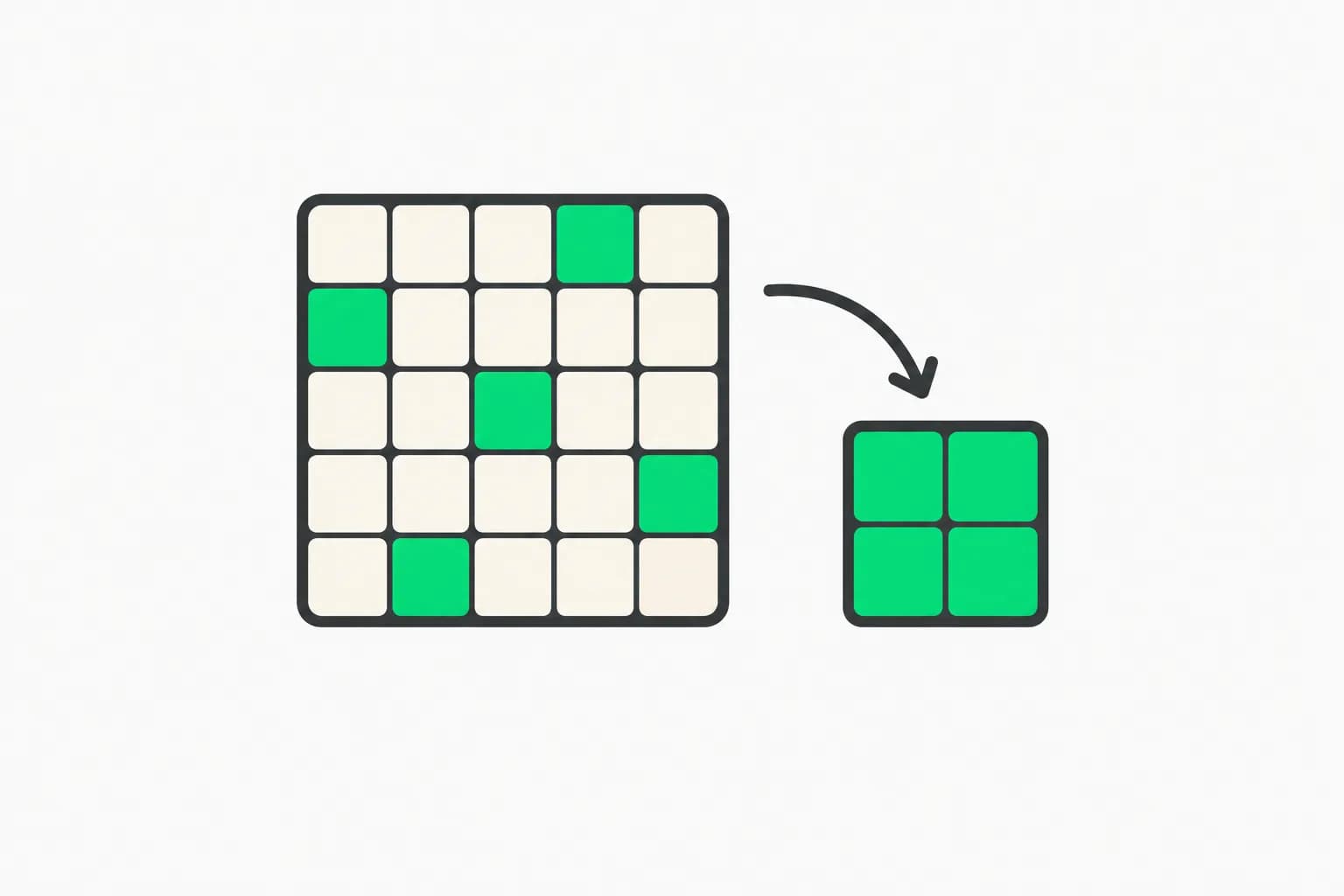
NVIDIA on November 17, 2026 added a second public quantization experiment atop Qwen3.8-Flash-Next: nvidia/Qwen3.8-Flash-Next-NVFP4-QAD, an image-text-to-text mixture-of-experts checkpoint exported with ModelOpt QAD after 100 optimizer updates. It ships the full multimodal stack—vision encoder, PLE n-gram embedding, and MTP module—in roughly 129.7 GB of safetensors shards.
For local inference engineers, the important distinction is naming: -QAD means quantization-aware training tweaks, not merely re-labeled NVFP4 weights. NVIDIA''s card warns the recipe is more aggressive than Qwen3.8-Flash-Next-NVFP4 and that accuracy gains are not statistically established.
TL;DR
| Item | Model card claim |
|---|---|
| Base model | Qwen/Qwen3.8-Flash-Next |
| Training stack | NVIDIA ModelOpt + NeMo AutoModel (FSDP2) |
| QAD steps | 100 optimizer updates |
| Expert precision | NVFP4 routed + shared experts (trained) |
| Extra layers | GDN / QSA / indexer projections → MXFP8 |
| Disk footprint | ~129.7 GB weights |
| HF task | image-text-to-text |
What QAD changes in the weight stack
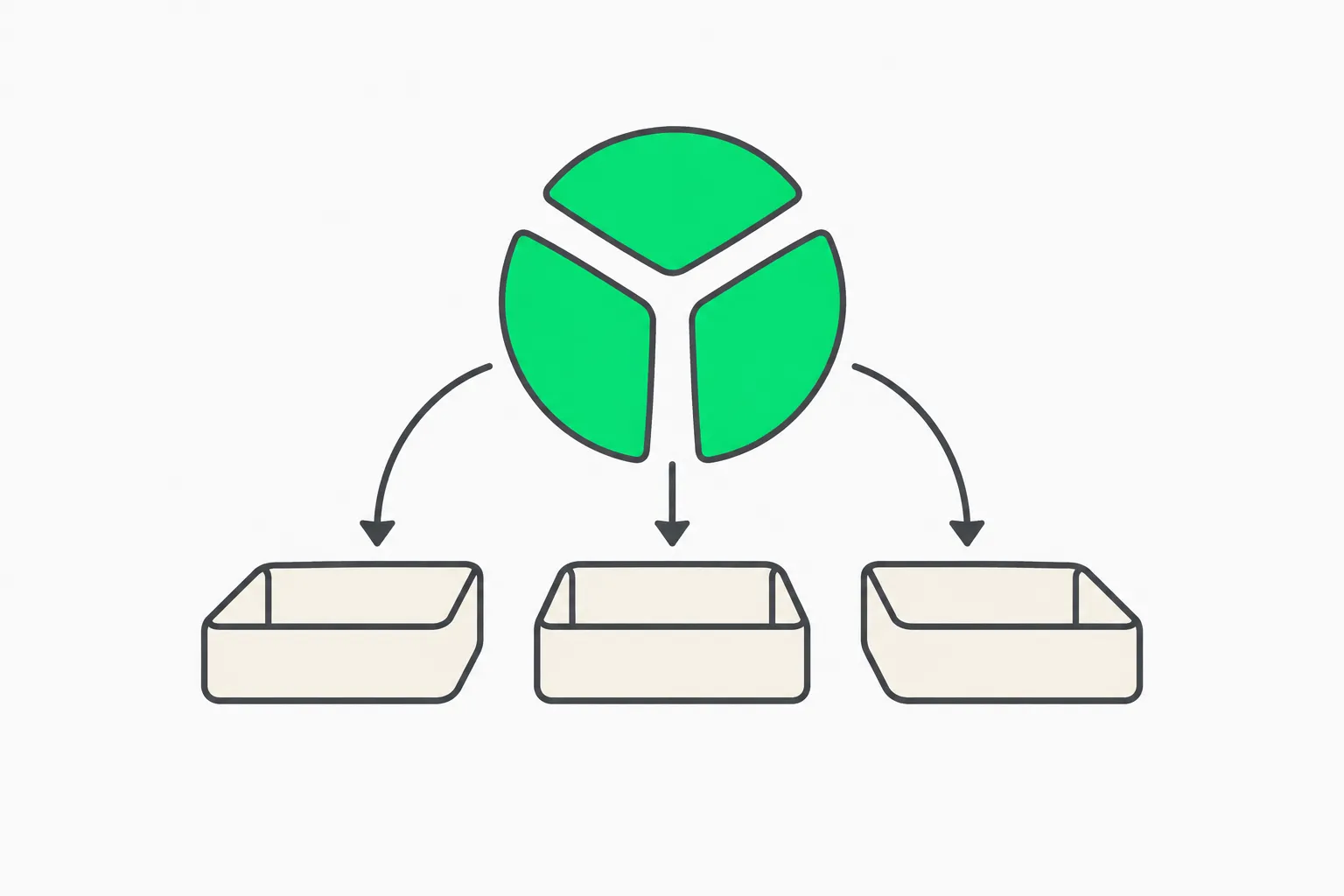 A model core split into matching shards for distribution, echoing consolidated NVFP4 and MXFP8 safetensors
The Hugging Face README includes a component table. Summarized:
- Main LM routed experts (48 MoE groups) stay NVFP4 block size 16, trained with QAD.
- Shared experts (144 linear matrices) move to NVFP4 under QAD—where the earlier NVFP4-only release left them differently.
- GDN projections (180 matrices) use MXFP8 blocks under QAD.
NVIDIA explicitly says the repository name''s -QAD suffix identifies the method, not a promise that the old NVFP4 recipe stayed intact.
Consolidation note: NVIDIA merged shards for distribution, verified SHA256 against export, and claims tensor names, shapes, dtypes, and values are unchanged—relevant if you diff against internal checkpoints.
Hardware and deployment reality
 Open box releasing weight seeds toward waiting hands, symbolizing a ~130 GB Hugging Face checkpoint download
explainx.ai previously covered Qwen3.8-Flash-Next FP4 on 96 GiB for workstation-class NVFP4 inference. This QAD drop is larger and experimental:
- Card metadata when fetched showed on the order of 180B parameters and ~130 GB files—plan multi-GPU or tensor-parallel serving.
- Pair with NVIDIA Rubin / DGX Spark SC26 news if you are standardizing on NVIDIA''s FP4 software path, but do not assume Spark-class 96 GiB holds the full multimodal artifact without offloading vision weights.
For API buyers comparing open weights to hosted Qwen4 rumors, start with Qwen4 commit claimed-vs-verified—this checkpoint is not a Qwen4 SKU.
Multimodal behavior and chat template
The fetched model card embeds a long chat_template supporting images, videos, tool calls, and reasoning effort knobs (xhigh, medium, low). That matches Qwen''s agentic multimodal positioning in Alibaba Qwen4 Max guardrails coverage—vision inputs are first-class, not bolted-on CLIP.
Builders testing vision agents should reuse safety patterns from MMFlash speculative decoding and vLLM Rubin throughput claims when wiring serving stacks—quantized MoEs stress kernel coverage more than dense 7B models.
Robotics and benchmarking cross-links
Open Qwen3.8-Flash-Next numbers already appear in uni-robot-agent harness tests on RoboDojo. This release does not ship a robotics fine-tune; it gives hardware teams a frozen multimodal blob to test ModelOpt convergence.
If you care about embodied AI evaluation, pair quantitative tests with Embodied AI Criteria Exposure—quantization shifts calibration on vision-heavy simulators.
Who should download—and who should wait
Download if you:
- Maintain NVFP4/MXFP8 kernels in TensorRT-LLM, vLLM, or NeMo.
- Need a reference artifact to compare QAD vs post-training quant.
- Run regression tests on MoE routing after aggressive low-bit training.
Wait if you:
- Need proven accuracy on production tasks—NVIDIA says QAD gains are not statistically established.
- Want a small-GPU demo—see edge on-device agents for a different size class.
How to try it safely
- Read the LICENSE on Hugging Face.
- Mirror weights to local NVMe; expect hundred-gigabyte transfers.
- Pin transformers, modelopt, and NeMo versions to NVIDIA''s README recommendations when published—experimental cards move fast.
- Log VRAM, tokens/s, and vision-token costs separately; multimodal MoEs hide memory cliffs in aggregate benchmarks.
Parameter inventory from the model card metadata
When we fetched the Hugging Face page on November 17, 2026, safetensors metadata listed on the order of 180 billion total parameters with sharded storage across NVFP4, MXFP8, BF16, and integer dtypes. The vision encoder remains bundled, so vision-off serving still pays disk for frozen weights unless your runner strips modules explicitly.
MoE routing with 48 expert groups means kernel support matters more than parameter count marketing. A quant recipe that NVFP4-trains shared experts changes latency variance—watch p99 when vision tokens spike.
ModelOpt and NeMo AutoModel context
NVIDIA positions ModelOpt as the export path from training to TensorRT-LLM-friendly checkpoints. The card''s 100 optimizer updates label signals early QAD, not months-long RL finish. Compare against production NVFP4 drops in 96 GiB local guide where maturity was higher.
If you maintain forks of vLLM or SGLang, track Together prefix-cache work and vLLM Rubin claims—quantized MoE plus spec decode is where bugs hide.
Vision + tool-use testing matrix
| Scenario | What to verify |
|---|---|
| Single image QA | Color calibration after NVFP4 vision encoder |
| Multi-image chat | Chat template picture counters |
| Tool calls with vision | Function XML + redacted thinking blocks |
| Video frames | video_pad special-token path in the bundled chat template |
| Reasoning effort low | Latency vs xhigh quality |
Use small golden sets—not leaderboard scores—because NVIDIA disclaims statistical accuracy gains.
Licensing and redistribution caution
license:other on Hugging Face means read LICENSE before merging into products. Qwen upstream terms may prohibit certain military or surveillance uses independent of NVIDIA''s export packaging. Indian builders comparing Sarvam Token Factory should still run counsel review on combined artifacts.
When to prefer plain NVFP4 instead of QAD
Choose Qwen3.8-Flash-Next-NVFP4 (non-QAD) when you need stability and documented recipes for DGX Spark demos. Choose QAD when you are researching quantization loss on shared experts and can tolerate experimental checkpoints.
Serving stack suggestions (non-prescriptive)
- Download to local NVMe; avoid network FS for 130GB shards.
- Pin
transformers,accelerate, and NVIDIA container tags together. - Warm up with text-only prompts before vision to separate encoder failures.
- File issues on NVIDIA forums with commit hashes—HF cards update intraday during ModelOpt sprints.
Training teams watching Qwen4 rumors
QAD on Qwen3.8 is a stepping stone, not Qwen4 Max. Track Alibaba Qwen4 Max API for hosted benchmarks while you offline-test quant artifacts.
FSDP2 and cluster notes for teams reproducing QAD
The Hugging Face card cites NeMo AutoModel with FSDP2 during QAD export. If you retrain rather than infer only, expect multi-node NCCL tuning and checkpoint frequency limits different from single-GPU GGUF workflows popular in consumer guides.
Frozen vision encoder language matters: fine-tuning vision layers may be disabled in this artifact—check README before assuming LoRA-on-vision works. Robotics teams citing uni-robot-agent should confirm whether QAD weights match harness versions they benchmarked.
Energy and cost estimating for 130 GB weights
129.7 GB on disk is not 129.7 GB VRAM active at once, but MoE routing still causes memory spikes during expert activation. Budget power and cooling in colocation quotes the way SK Hynix memory posts budget HBM—inference at scale is facility math.
Document hardware SKU, driver build, and checkpoint revision in every internal benchmark sheet. Quantized MoE vision models are not reproducible across driver point releases—future you (and NVIDIA support) will need that paper trail when p99 latency drifts without code changes.
Comparison to Qwen3-Coder and terminal agent stacks
This checkpoint is not Qwen Code—there is no bundled CLI. It is a weights drop for teams already running Qwen3.8 in custom orchestrators. If your agent loop depends on tool schemas, validate function-calling tokens against your harness, not Hugging Face widgets.
DeepSeek users comparing free chat limits (DeepSeek limits post) should remember local QAD trades API caps for ops burden—you become the capacity planner.
Benchmark honesty checklist
- Report batch size, sequence length, and vision resolution with every tokens/s figure.
- Separate prefill vs decode when MoE routing warms up.
- Note driver and CUDA versions in reproducibility footers.
- If accuracy moves less than 1 point, say within noise per NVIDIA''s disclaimer.
Failure modes we expect in early QAD artifacts
Expert collapse (always routing to subset of MoE experts) shows up before BLEU moves. Vision-language mismatch (model answers about the wrong crop) appears when NVFP4 hits patch embeddings harder than LM layers. Tool-call XML malformed outputs spike when MXFP8 projections sit on GDN paths—run JSON/schema validators on 100% of tool traces during QA weeks.
If you quantize further with community GGUF tools, you are off-map relative to this NVIDIA recipe—fine for hobbyists, risky for compliance demos. Prefer vendor-supported paths when customers ask whether outputs match approved checkpoints.
Telemetry: log per-layer dtype at load time once; silent cast bugs between BF16 buffers and NVFP4 experts have burned teams in prior ModelOpt sprints (community reports, not NVIDIA guarantees).
When this card moves from 0 downloads to production traffic, watch NVIDIA''s model card commits for README errata—early QAD drops often gain install prerequisites days after upload.