



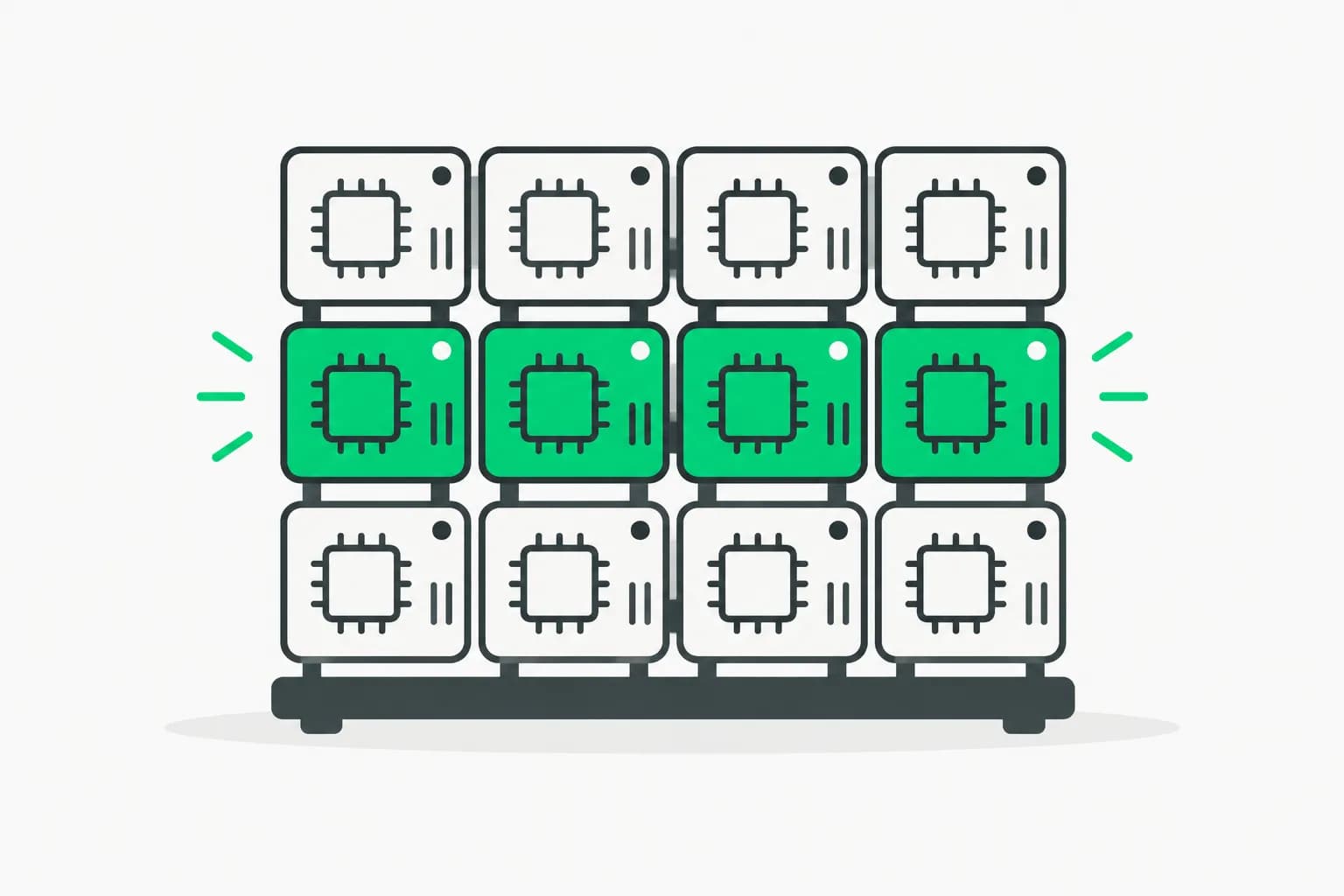
NVIDIA’s November 16, 2026 SC26 blog post introduces a DGX Spark HPC Developer Kit — four linked DGX Spark nodes that turn a desk into a multi-node GPU lab for molecular dynamics, weather models, and large-model fine-tuning without waiting on shared cluster queues. It is the hardware story adjacent to DGX Spark eight-node GLM clusters and Gigabyte GB300 deskside boxes, but aimed at research compile-debug cycles, not consumer inference demos alone.
TL;DR
| Spec (per NVIDIA post) | Value |
|---|---|
| Nodes | 4× DGX Spark in ConnectX-7 ring (no switch) |
| Aggregate memory | 512 GB |
| Storage | 20 TB NVMe |
| Large models | Up to ~700B params with NVFP4 across four nodes |
| Software | HPC SDK playbook — coming soon |
| Availability | On sale via OEMs + NVIDIA Marketplace at SC26 |
What NVIDIA shipped at SC26
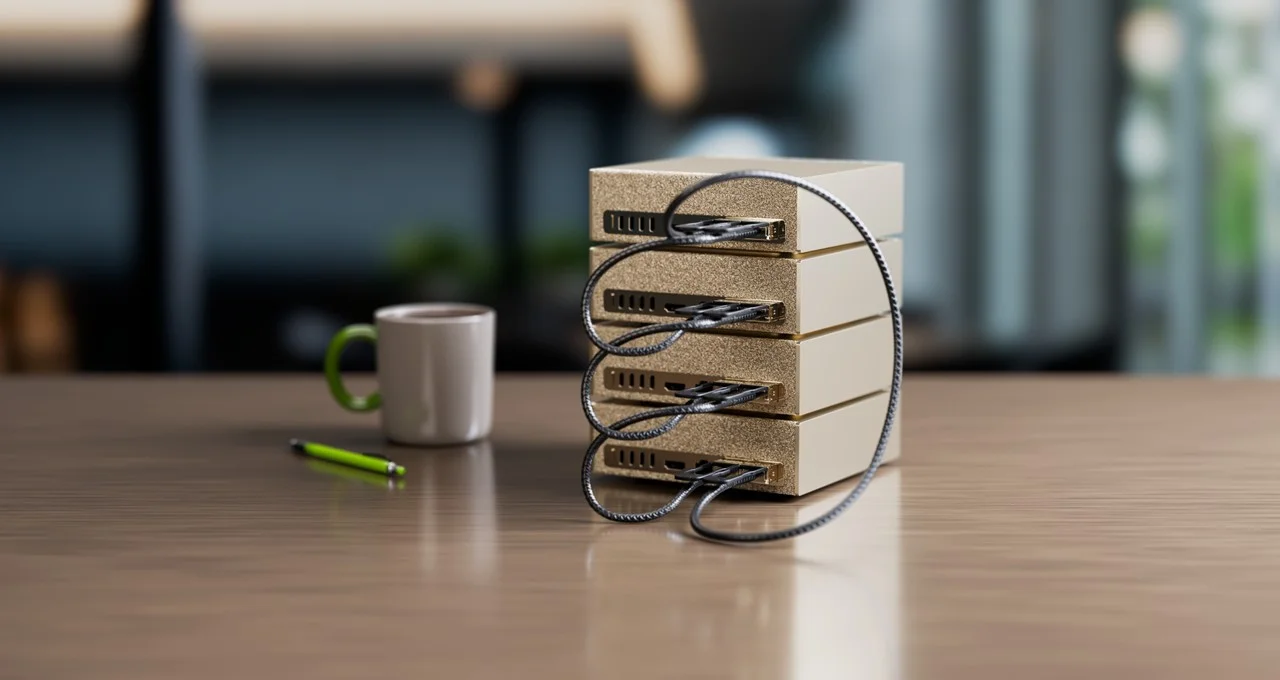 NVIDIA DGX Spark HPC developer kit four-node desk cluster at SC26
Image: NVIDIA
NVIDIA frames the kit as answering a specific pain: researchers with fixed allocations on national supercomputers spend queue time on debugging that could happen locally. Four GB10 Grace Blackwell Superchip nodes, each wired to neighbors in a ring, give MPI-style multi-node development on the same desk where a PI reviews unpublished datasets.
Memory and model scale are the headline numbers for AI builders. 512 GB combined and 20 TB NVMe let teams shard weights and checkpoints across nodes; NVIDIA claims NVFP4 deployments up to 700B parameters across the cluster, citing DeepSeek V4.1-class models as an example.
That is not a promise every lab will hit on day one — kernel maturity, cooling, and network tuning still matter — but it signals NVIDIA wants Spark associated with frontier-model adaptation, not only 7B chatbots.
Scientific and agent workloads NVIDIA highlights
 Desk-scale GPU cluster motif for local HPC iteration
The post mixes traditional HPC and agentic science:
| Workload | What NVIDIA said |
|---|---|
| LAMMPS + Kokkos | Materials simulation across four nodes |
| NAMD | Molecular dynamics |
| Community stack | GROMACS, OpenFOAM, WRF cited from broader Spark community |
| NIM microservices | OpenFold3, Boltz-2 structure prediction |
| Agent-assisted science | Agents that prep inputs, launch runs, summarize — scientists validate |
Customer vignettes anchor credibility beyond spec sheets:
- Kvantify — cuQuantum tensor-network simulations up to 70 qubits / 975 gates on a single DGX Spark for penicillin ground-state circuits.
- CYRAN AI (IIT Delhi) — PixelFlux accelerates JPEG 2000 decoding for satellite imagery on Spark.
- OpenFold — fine-tune OpenFold3 for protein-ligand predictions on desk hardware.
- Rubin Lab, UC Berkeley IGI — Evo 2 embeddings for bacterial traits; 15× faster iteration vs 11-hour cluster queues cited.
- Hartwig Group, UC Berkeley — LoRA on Nemotron 3 Super 120B-A12B for chemistry ML using NVFP4 on one device.
Those examples are vendor-reported case studies, not independent benchmarks explainx.ai reproduced — but they show NVIDIA’s positioning: Spark is credible for graduate-lab iteration, not only executive demos.
HPC SDK playbook — what to expect
NVIDIA promises an HPC SDK installation playbook matching data-center supercomputer toolchains:
- GPU-accelerated C, C++, Fortran compilers
- Libraries and MPI tools already used on NVIDIA-powered machines
- Multi-node FP32 and mixed-precision algorithm testing before porting upstairs
Until the playbook ships, treat multi-node Spark as early-adopter territory. Our NVKE Kubernetes preview and AICR Vera Rubin recipes cover day-one cluster software at rack scale; this kit is the opposite end — personal responsibility for cabling, cooling, and MPI debugging.
Buying and partners
NVIDIA lists Acer, ASUS, Dell, GIGABYTE, H3C, HP, Lenovo, MSI, xFusion as channels, plus NVIDIA Marketplace. The post does not print a single global MSRP in text explainx.ai fetched — builders should request quotes through OEM configurators.
Is DGX Spark a gaming PC? NVIDIA’s SC26 copy targets researchers and developers, not esports. Gaming questions in search demand are secondary; Spark’s value is controlled science data and multi-node dev.
How Spark HPC fits NVIDIA’s 2026 desk narrative
Three threads collide in November:
- Supply-chain storytelling — see Deb Shoquist’s infrastructure supply chain interview.
- Rubin rack throughput — see Rubin NVL72 analysis and five co-design tactics.
- Desk sovereignty — Spark kits let labs keep PHI, sequences, and unreleased materials local, resonating with TensorFold local inference and Apple–Meta local Muse partnerships.
What researchers should do this week
- Map workloads — If your bottleneck is queue latency on small MPI jobs, price a four-node kit against reserved cluster hours.
- Track the playbook — Subscribe to NVIDIA’s Local AI newsletter (linked from the primary post) for HPC SDK release timing.
- Plan cooling and power — Four GB10 desks draw real watts; siting matters as much as for single Spark GB10 boxes.
- Separate inference from MD — Agent demos are optional; LAMMPS/NAMD/OpenFOAM validation is the kit’s proof language.
What researchers ask before buying a four-node Spark kit
Is the DGX Spark HPC Developer Kit the same as four retail Spark boxes? NVIDIA markets it as a bundle: nodes, cabling, and playbook guidance. Confirm whether OEM quotes include ConnectX-7 ring cables or whether you must spec them separately.
How much power does four GB10 desks draw? NVIDIA’s post does not list rack watts explainx.ai could verify. Budget datacenter-in-a-bedroom cooling — the same discipline as B300 rental spikes teach for single-GPU economics.
Can I run Kubernetes on the kit? The SC26 announcement centers on HPC SDK + MPI. For K8s, cross-read NVKE preview and AICR Rubin recipes — different packaging, same long-term NVIDIA cluster story.
Does 700B NVFP4 mean I can host GPT-class models locally? It means NVIDIA believes four Sparks can hold certain 700B NVFP4 deployments such as DeepSeek V4.1-class weights. Your miles vary with context length, batch size, and framework version.
Is this a gaming product? No. Search interest in gaming is a red herring; CUDA paths here target LAMMPS, NAMD, OpenFOAM, and Nemotron fine-tunes.
How does SC26 timing matter? Supercomputing Conference week clusters HPC buyer attention. If you attend Chicago, NVIDIA invites hands-on demos — useful for touching thermals before PO approval.
Networking without a switch: why the ring topology matters
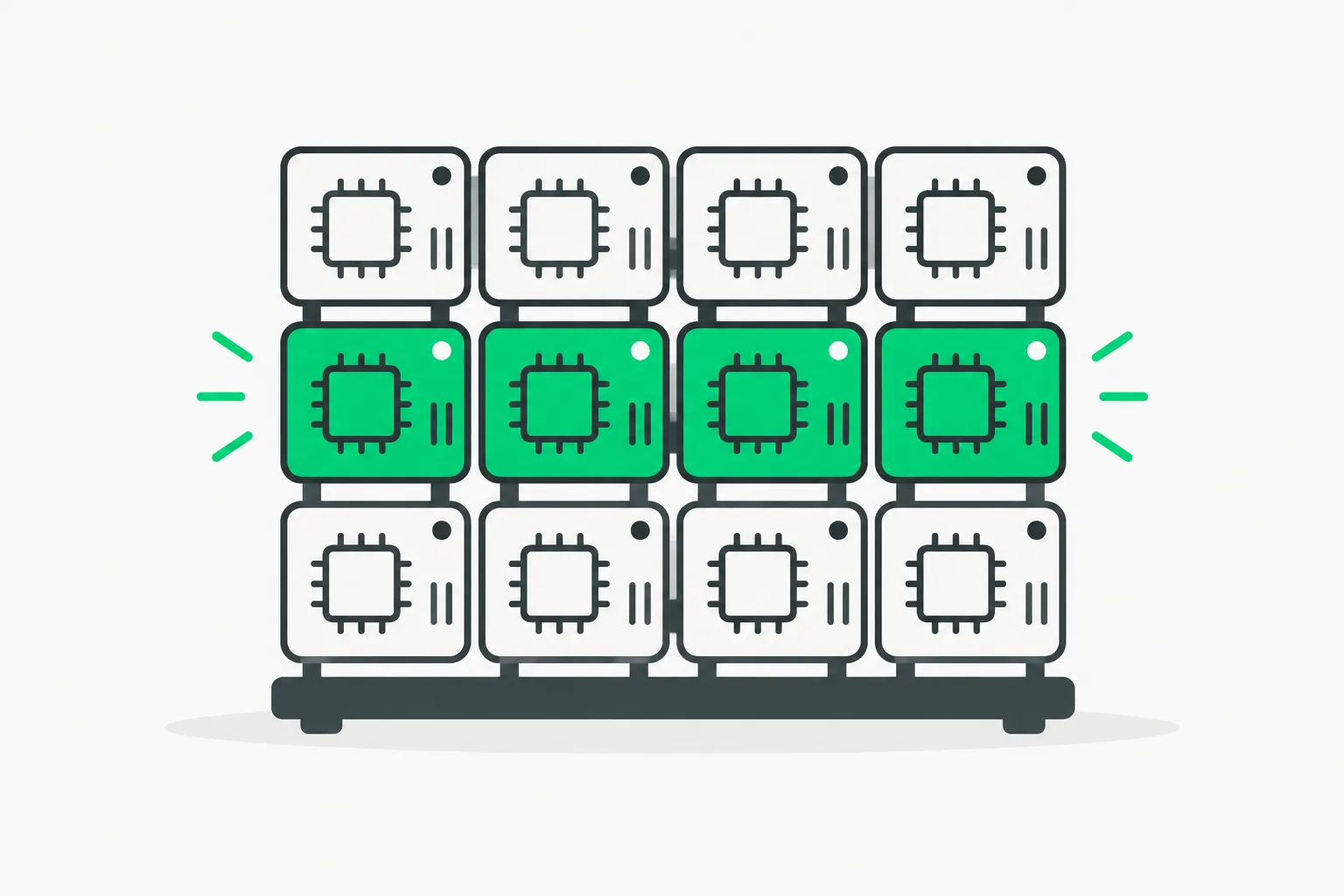 GPU rack cluster for multi-node memory and inference sharding
NVIDIA emphasizes direct neighbor links to avoid buying a network switch for a desk cluster. That design trades flexibility for simplicity:
- Pros: lower parts count, faster setup for grad students, predictable NCCL topologies once the playbook ships.
- Cons: scaling past four nodes means new architecture — not incremental ports on the same ring.
For AI agent teams, the ring is less important than aggregated RAM: 512 GB lets you shard optimizer states during LoRA on models that would not fit one GB10 — the Hartwig Nemotron 120B anecdote is the proof point.
Software runway: what ships today vs coming soon
| Component | Status (Nov 2026 blog) |
|---|---|
| Hardware kit at SC26 | On display and for sale |
| HPC SDK playbook | Coming soon |
| LAMMPS/NAMD demos | Named as validated workloads |
| Nemotron life-sciences recipes | Described for on-prem workflows |
Treat playbook = coming soon as a gating item for PI purchase orders. Until it lands, you are buying hardware confidence, not a turnkey MPI image.
Agent-assisted science without autonomous lab equipment
NVIDIA’s copy describes agents that prepare inputs and summarize runs while humans validate — not fully autonomous labs. That matches explainx.ai’s broader stance on agentic robotics roadmaps: human sign-off stays in the loop for anything touching unpublished data or regulated specimens.
If you experiment with Codex or Claude Code driving simulation YAML generators, keep Spark queues local so prompts never leave the cluster VLAN.
Partner OEM list and procurement notes
NVIDIA’s post names Acer, ASUS, Dell Technologies, GIGABYTE, H3C, HP, Lenovo, MSI, and xFusion as sale channels, plus NVIDIA Marketplace. None of those pages, in text explainx.ai fetched, standardized a global SKU price — enterprise buyers should expect region-specific quotes and education discounts negotiated separately from consumer RTX Spark lines covered in game-developer DLSS updates.
Universities buying a kit for classroom HPC should also budget sysadmin time: four-node rings still need SSH keys, MPI hostfiles, and thermal monitoring — skills overlap with Slurm recovery open source playbooks even before the HPC SDK playbook lands.
When comparing to cloud bursts, model the queue latency you avoid: the Berkeley IGI anecdote cites 11-hour waits versus 15× faster local iteration — dollar math depends on whether your lab bills graduate time or cloud credits more aggressively.
Related reading
- Eight-node DGX Spark GLM cluster decode gains
- Gigabyte GB300 deskside vs DGX Spark
- NVIDIA recovery for SLurm training jobs
- DeepSeek V4.1 KV cache software story
- Nemotron 3.5 Super VL open agents
- LeRobot streaming robotics
SC26 also overlaps with CUDA at twenty years messaging on NVIDIA’s blog — a reminder that HPC SDK maturity on Spark is inheriting decades of Fortran and MPI investment, not mobile-grade drivers.
NVIDIA also points readers to RTX Spark social accounts for consumer-local-AI updates — distinct from this HPC kit SKU. Do not conflate game-developer Spark messaging with LAMMPS-on-your-desk messaging when writing internal RFPs.
Accurate as of November 17, 2026. Hardware specs and customer vignettes follow NVIDIA’s SC26 blog; independent benchmark reproduction was not part of this article.