



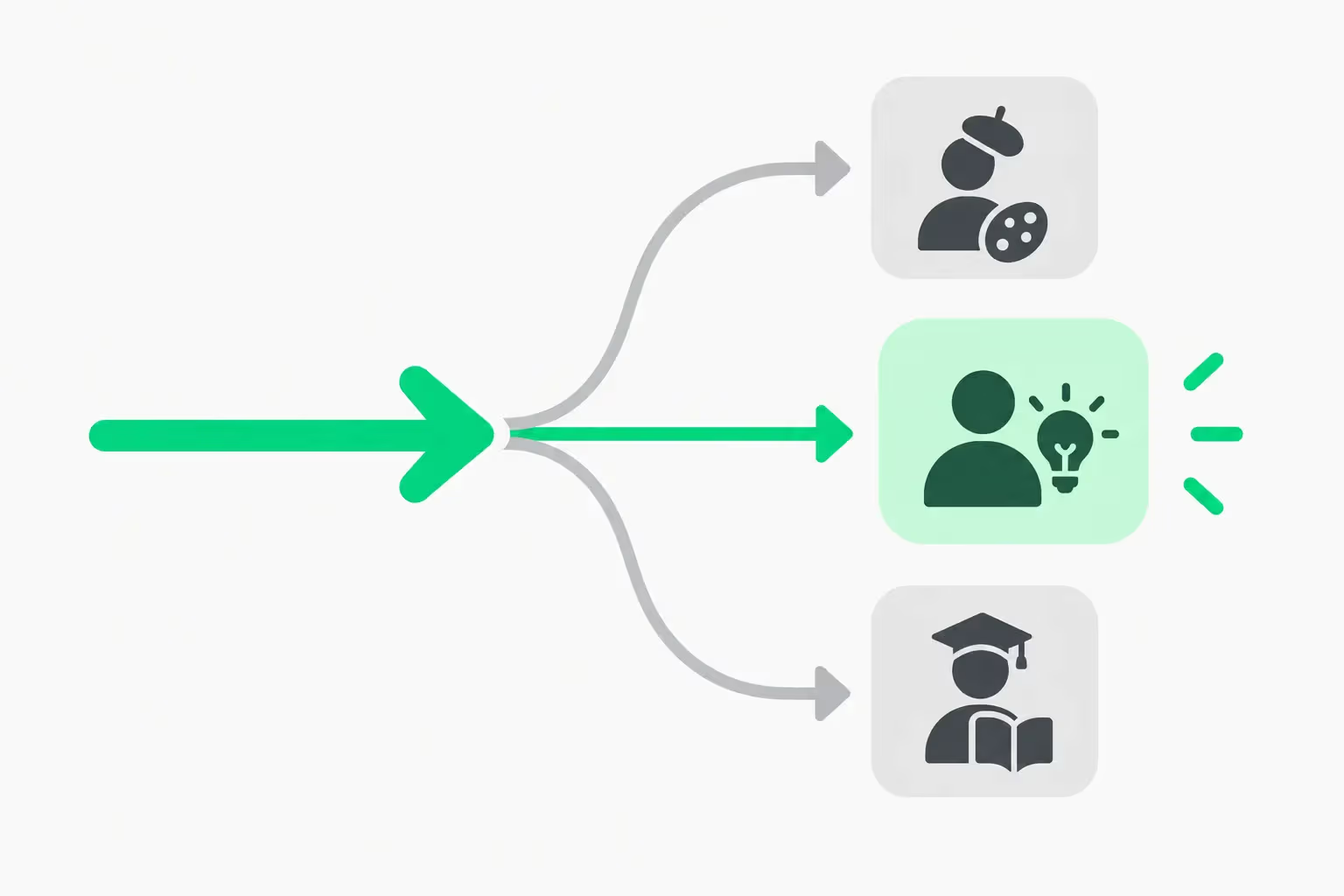
Meta has released Muse Spark Open, an open-weight mixture-of-experts model with roughly 816 billion total parameters, about 42 billion active per token, and a one-million-token context window. The Hugging Face launch guide describes it as "the most capable US open-weights model to date," a superlative we could not check against any benchmark table (see below). It reads text, images, audio and video, writes text, and was trained for agentic coding: reading a repository, calling tools, and fixing its own mistakes over long sessions.
For anyone following Meta's Muse line, this is the full-size sibling of Muse Glimmer, the 30B open model from August, and the open counterpart to the hosted Muse Wonder and Muse Code products. Apple has already shown it running across four Mac Studios in its MLX and RDMA research.
This post sticks to what the Hugging Face guide, NVIDIA's technical blog and AWS's SageMaker walkthrough actually say, and flags what is still unverified.
TL;DR: the questions people will ask
| Question | Answer |
|---|---|
| Size? | About 816B total, about 42B active per token |
| Architecture? | Mixture of experts, 256 experts per layer, 8 chosen per token, 62 layers |
| Context? | Up to 1,048,576 tokens |
| Inputs and outputs? | Text, images, audio, video in; text out |
| Checkpoints? | BF16 (about 1.5 TB) and NVFP4 (4-bit, for Blackwell GPUs) |
| Licence? | Muse Model License with the Muse Spark Usage Policy (per AWS) |
| Can reasoning be disabled? | No; effort levels low, medium, high, xhigh (default xhigh) |
| Cheapest way to try it? | A 2-bit llama.cpp quant on a 512GB Mac, or SageMaker JumpStart |
| Independent benchmarks? | Not yet seen by us |
What is actually in the model?
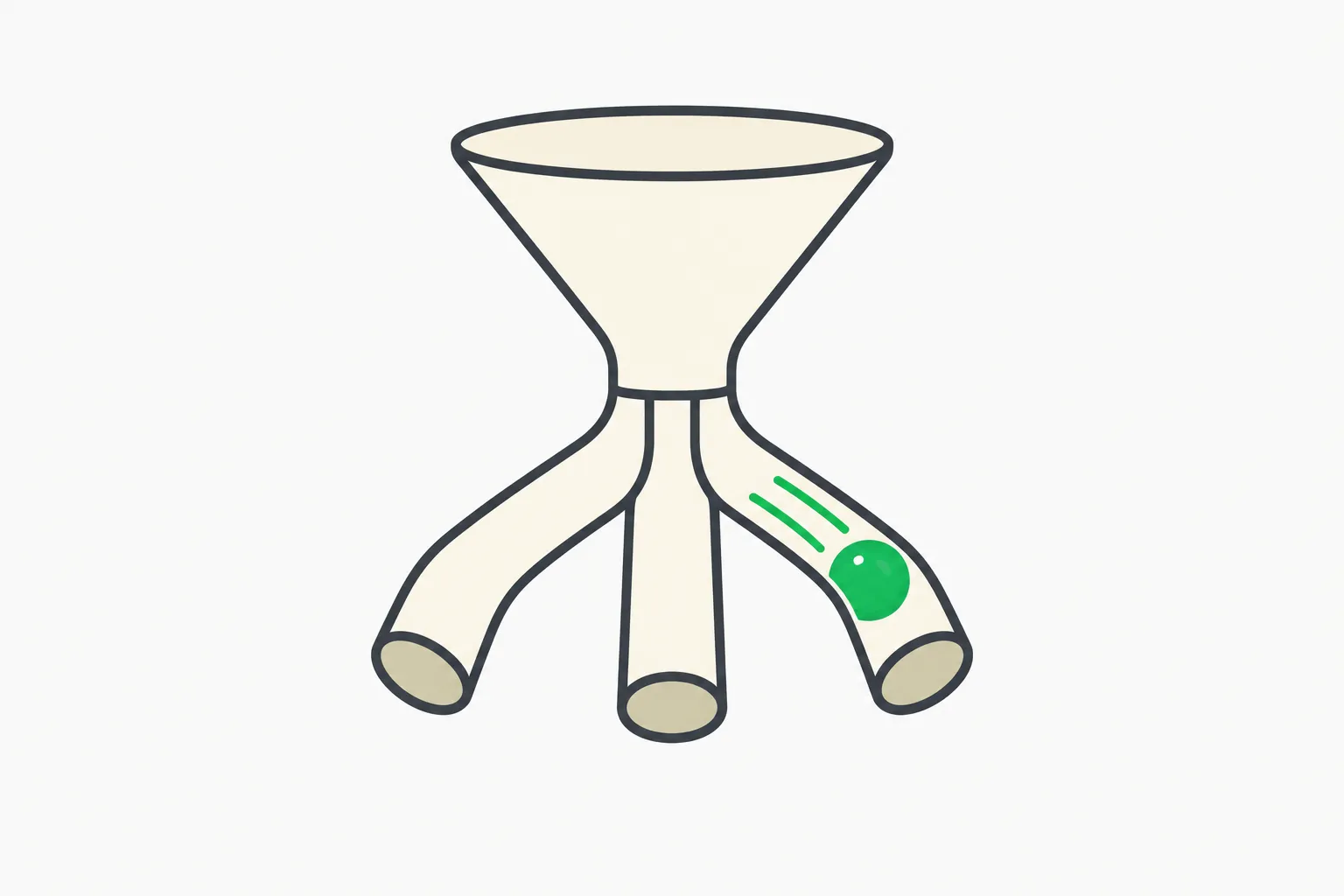 Mixture of experts routing diagram showing a token sent to a few of many experts in Muse Spark Open
According to the Hugging Face launch post, the language model has 62 layers and a hidden size of 8192, with 128 query heads and 16 key-value heads (grouped-query attention). Every layer replaces the dense feed-forward block used in Muse Glimmer with an MoE block of 256 experts, and a router picks 8 per token. The experts hold about 97 percent of all parameters.
That has a practical consequence the post spells out: all 256 experts must sit in memory, so you need the memory of an 816B model, but each token costs the compute of roughly a 42B model. Fast and big, but not small.
Other details from the same post:
- A 1.8B-parameter perception encoder turns images and video frames into tokens, using 14 by 14 patches.
- Audio goes through a separate convolutional encoder that emits one token every 80 ms, or 12.5 tokens per second.
- Input and output embedding matrices are separate, about 1.66B parameters each.
- The chat template uses a channel-based format first seen in gpt-oss, where the model routes reasoning, commentary and the final answer to different recipients.
- Both Muse Glimmer and Muse Spark Open share a tokenizer and vocabulary.
How much memory does a 1M-token context cost?
Hugging Face does the arithmetic: grouped-query attention adds 126,976 values per token to the KV cache, about 250 KB per token in BF16, or roughly 266 GB for a full million-token window. So the 1M context is real, but filling it is a serious memory commitment on top of the weights. Plan capacity for the cache, not just the checkpoint.
What was it built to do?
Meta describes the model, in the words relayed by AWS and NVIDIA, as trained on real developer workflows: multi-file refactors, long debugging sessions, tool calling and first-attempt accuracy on large codebases. NVIDIA adds that it uses goal conditioning and context compaction to stay on track in long sessions, browses the web with images, spawns subagents for decomposable work, and does computer use across desktop, mobile and browser. It writes commentary before each action so a developer can see what the agent is doing.
NVIDIA's own demo, a video on its technical blog, shows the model diagnosing a bug from a screen recording with narrated audio. Treat that as a vendor demo, not an evaluation.
How do you run it?
 Open-weights release illustration for running Muse Spark Open locally or on cloud GPUs
Transformers
The Hugging Face guide uses AutoModelForMultimodalLM with a DistributedConfig that sets tensor and expert parallelism. The BF16 checkpoint needs four nodes of eight H200s (tensor parallel 32); NVFP4 fits one B200 node. The processor handles images, video (sampled at 2 FPS, capped at 96 frames by default) and audio (mono, 24 kHz).
llama.cpp
The easiest local route. Install the prebuilt binaries and serve a quant straight from Hugging Face:
curl -LsSf https://llama.app/install.sh | sh
llama serve -hf ggml-org/Muse-Spark-Open-816B-A42B-GGUF:Q2_K
Hugging Face reports that on a Mac M3 Ultra with 512GB, an imatrix-calibrated 2-bit quant ran at 18 tokens per second and used about 304 GB, leaving room for the KV cache. The built-in web UI accepts audio and images and exposes the reasoning lever. For a lighter-weight llama.cpp front end, see our look at Llama Windows.
SGLang, vLLM and NVIDIA
The reference SGLang configuration serves the NVFP4 checkpoint across four GB300 GPUs with the modelopt_fp4 quantization and a FlashInfer MoE runner. NVIDIA says out of the box on a GB300 NVL72 it saw up to 50K tokens per second per GPU and up to 600 tokens per second per user on agentic workloads, with speculative decoding, and offers a downloadable NIM container plus NeMo AutoModel (SFT and LoRA) and Megatron Bridge for post-training. Those are NVIDIA's numbers on NVIDIA hardware.
Amazon SageMaker JumpStart
AWS lists both variants in US East (N. Virginia) and US East (Ohio). NVFP4 runs on ml.p5e.48xlarge, BF16 on ml.p6-b300.48xlarge. It is a gated model, so you accept an EULA (accept_eula=True in the SDK). AWS notes the endpoint stays in your account, can sit in your VPC with KMS encryption and network isolation, and that you pay for the multi-GPU instance for as long as it runs. Deployment takes 15 to 20 minutes, per the AWS walkthrough.
Local clusters of Macs
Apple's research post reports about 36.7 tokens per second on four M5 Ultra Mac Studios; our write-up of it is linked above. The two data points (18 tokens per second on a 2-bit quant on one M3 Ultra versus roughly 37 on a four-machine 4-bit cluster) are not directly comparable because quantization, hardware and settings differ.
Is it really open?
The weights are public, but AWS says they carry the Muse Model License, which includes the Muse Spark Usage Policy. We have not reproduced the licence terms here, and you should read them before building a product. "Open-weight" here means you can download, host and fine-tune, not that the licence matches Apache 2.0 or MIT. Meta also has a history of mixing open and closed releases in this family, which we covered in our look at what Meta got right with Muse.
What is claimed and what is verified?
| Claim | Source | Status |
|---|---|---|
| 816B total, 42B active, 256 experts, 1M context | Hugging Face model guide, NVIDIA, AWS | Consistent across three sources |
| "Most capable US open-weights model" | Hugging Face guide wording (it attributes the description to Meta) | A superlative; we did not find a comparison table to check it against |
| 50K tokens/s per GPU, 600 tokens/s per user | NVIDIA | Vendor numbers on GB300 NVL72 with speculative decoding |
| 18 tokens/s on M3 Ultra 512GB at 2-bit | Hugging Face | Reported by the launch partner, not independently reproduced |
| Strong first-attempt coding accuracy | Meta via AWS and NVIDIA | No benchmark numbers in the sources we could open |
Meta's own announcement page would not load for us during research, so we cannot quote its benchmark table. Until independent evaluations land, treat coding-quality claims as Meta's. When independent results appear we will add an update section.
Which model for which job?
| Job | Reasonable pick | Why |
|---|---|---|
| Experiment on a laptop or single GPU | Muse Glimmer 30B | Small dense model from the same family |
| Private coding agent in your cloud account | Muse Spark Open NVFP4 on SageMaker | Weights in your account, VPC and KMS options |
| Maximum local capacity on Apple hardware | Muse Spark Open on 512GB Mac or a Mac cluster | See Apple's numbers |
| Hosted, no ops | Meta's Muse Code | No hardware to manage |
What this means for what you build or pay
If you run coding agents, an 816B open model changes the economics only if you can feed it memory. Per-token compute is modest, but the weights are large, and a full 1M context adds hundreds of gigabytes. For most teams the realistic paths are a managed endpoint in your own cloud account or a small GPU node using NVFP4. The privacy upside is real: prompts and source code stay on infrastructure you control. The risk is that agentic models can act on your machine, so sandbox them and limit tool permissions.
Related reading
- Muse Spark Open vs Muse Glimmer vs Nemotron 3.5 Bolt vs Super VL: hardware comparison
- Apple: 800B models on four Mac Studios
- Meta Muse Glimmer open 30B model
- Meta Muse Wonder launch and Muse Code
- Muse Spark solving open math problems
- RTX Spark launch software
- Llama Windows tray app
Specs and availability are accurate as of October 15, 2026 and may change as Meta, Hugging Face, NVIDIA and AWS update their pages.