



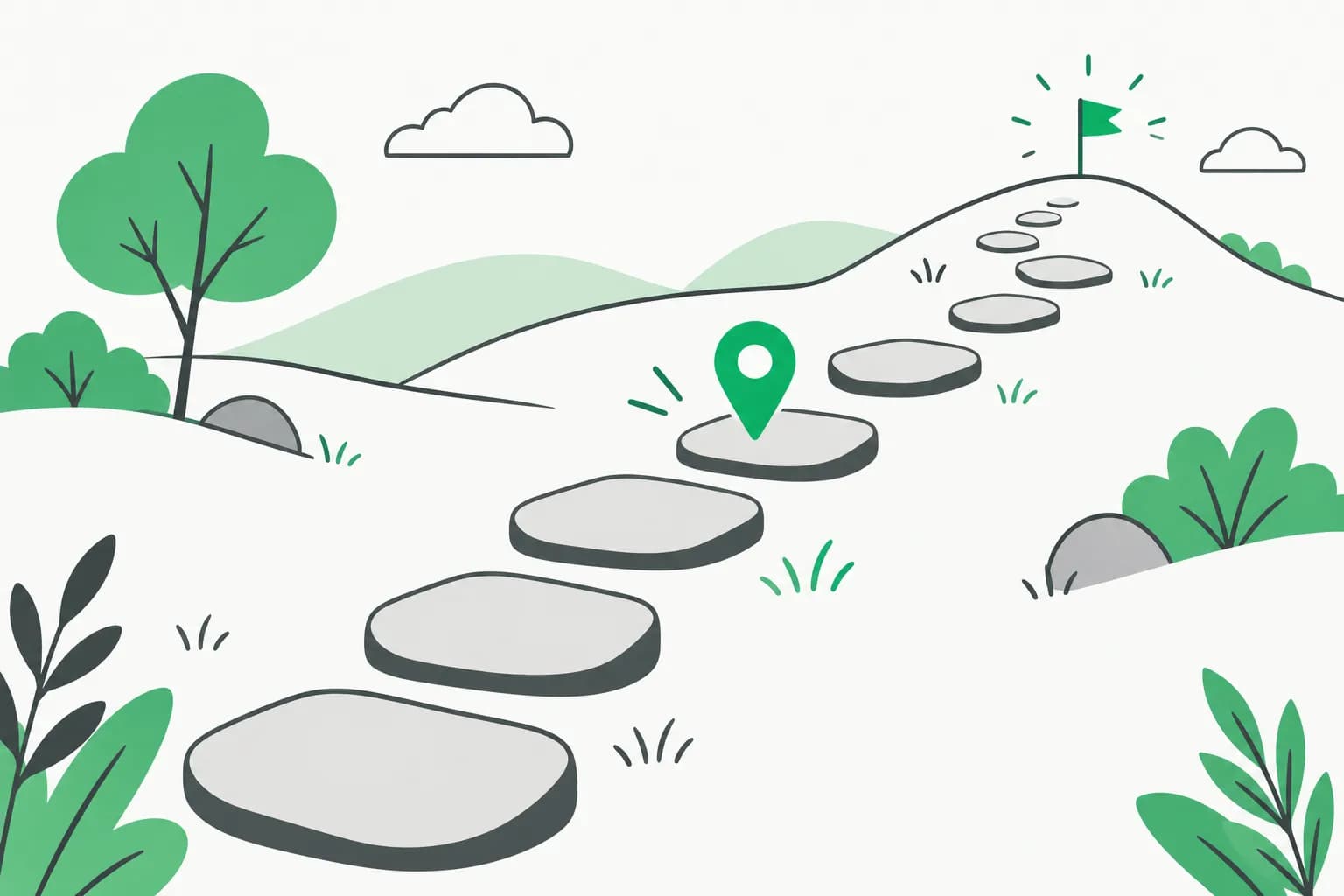
explainx.ai has organized its entire library — 276 articles, roughly 132 hours of reading — into 20 guided pathways, replacing an unstructured blog archive with a sequenced way to actually get somewhere. If you've read a few explainx.ai posts and wondered what to read next, or you're arriving fresh and don't know where to start, this is the answer: pick a pathway, read in order, and each article tells you exactly what comes after it.
TL;DR — what changed
| Question | Answer |
|---|---|
| What's new? | 20 structured pathways at /pathways, plus a personalized /pathway/journey mode, interactive sound-designed chapters, notes, Q&A, and an AI chat tutor |
| How much content? | 276 articles, ~132 hours total, spanning beginner to advanced |
| Cost to read? | Free — no account needed to start any pathway |
| What does a subscription add? | Mock certification tests, an AI chat tutor for follow-up questions, and cross-device progress tracking |
| Shortest pathway | AI Skills or AI for Kids & Families — both 3 hours |
| Longest pathway | Azure AI Apps and Agents Developer certification prep — 13 hours |
| Certification-mapped tracks | Claude Certified Architect, AWS GenAI Developer, Azure AI-103, Google Cloud GenAI Leader |
| Where to start if new to AI | AI Foundations or Prompt Engineering |
| Where to start if you use Claude daily | Claude Code Mastery or Building AI Agents |
 Illustration of a seed growing into a network, representing the AI Foundations pathway
Why pathways, not just a blog archive
A blog that publishes daily is genuinely useful for staying current, but it's a poor way to learn something end to end — there's no sequence, no way to tell what's foundational versus what assumes context you don't have yet, and no signal for "you've covered this, move on." Pathways fix that by taking the same underlying articles and organizing them into a deliberate order, grouped by what a specific kind of learner actually needs next.
Each pathway article carries an embedded quiz question, so reading isn't purely passive — you get a checkpoint before moving to the next piece. That mirrors a finding we've covered before: a Dartmouth study on the Phosphor tutoring platform found written-answer quizzes graded by Claude produced real exam-score gains, while multiple-choice-only quizzes showed no measurable learning effect despite similar engagement. Pathways lean on that same principle: a question that makes you produce an answer, not just recognize one.
What "interactive" actually means here
This isn't just articles with a quiz bolted on at the end. A handful of chapters across the pathways run as interactive chapters — a distinct reading mode with quiz beats that give immediate feedback, paired with ambient background music and sound cues (correct, wrong, complete, a typewriter tick as text renders) rather than a silent page. Reading mode also has a distraction-free option that collapses the sidebar to full canvas when you want to focus.
Beyond the reading experience itself:
| Feature | What it does |
|---|---|
| Personalized journey (/pathway/journey) | Answer a short onboarding profile (role, level, goal) and get a custom step-by-step sequence pulled across pathways, with per-step time estimates |
| Completion certificate | Finishing a personalized journey generates a downloadable certificate |
| Notes panel | Jot down notes inline while reading, tied to the specific article |
| Q&A tab | Ask a question on any article; it's reviewed and answered before going public, so the Q&A section grows from real reader questions rather than being pre-written |
| AI chat tutor | Ask follow-up questions inline without leaving the article (subscriber feature) |
| Installable app | Pathways support "install as app" on Chrome and Android via PWA support, so you can open reading straight from your home screen |
The recommendation engine behind the personalized journey is intentionally rule-based today rather than model-driven — it's built behind a swappable interface specifically so it can move to an AI-driven version later without changing the surrounding product.
The 20 pathways, grouped by level
Beginner (7 tracks)
| Pathway | Hours | Articles | Best for |
|---|---|---|---|
| AI Foundations | 5 | 13 | Total beginners — tokens, transformers, agents, the landscape |
| Prompt Engineering | 5 | 14 | Anyone who wants to direct AI more precisely |
| AI Skills | 3 | 12 | Quick orientation to what AI can and can't do yet |
| AI Tools by Role | 5 | 13 | Function-specific tool picks (marketing, PM, ops, etc.) |
| AI for Creatives | 5 | 9 | Designers, writers, video and image workflows |
| AI for Kids & Families | 3 | 7 | Parents introducing AI concepts to children |
| Developer Fundamentals | 6 | 10 | Engineers new to building with AI APIs |
Intermediate (7 tracks)
| Pathway | Hours | Articles | Best for |
|---|---|---|---|
| Claude Code Mastery | 7 | 15 | Daily Claude Code users who want to go deeper |
| Building AI Agents | 7 | 19 | Developers building agentic systems |
| Context Engineering | 7 | 13 | Practitioners optimizing what goes into the context window |
| Loop Engineering | 4 | 12 | Anyone automating recurring agent workflows |
| MCP: Model Context Protocol | 6 | 12 | Developers connecting agents to tools and data |
| AI Model Landscape | 7 | 16 | Choosing between frontier and open-weight models |
| AI Safety & Ethics | 5 | 17 | Anyone responsible for responsible-AI decisions |
| Google Cloud Generative AI Leader | 8 | 15 | Google Cloud GenAI Leader certification prep |
Advanced (5 tracks)
| Pathway | Hours | Articles | Best for |
|---|---|---|---|
| Advanced Agent Architecture | 8 | 13 | Engineers designing multi-agent production systems |
| Graph Engineering | 6 | 8 | Knowledge-graph and structured-reasoning work |
| Claude Certified Architect — Foundations | 10 | 26 | Anthropic's official certification exam prep |
| AWS Certified Generative AI Developer — Professional | 12 | 18 | AWS GenAI Developer certification prep |
| Azure AI Apps and Agents Developer — Associate (AI-103) | 13 | 14 | Microsoft AI-103 exam prep |
 Illustration of geometric shapes moving in formation, representing the Building AI Agents pathway
Certification-mapped tracks get special treatment
Four pathways are built to shadow an official vendor exam guide directly, not just cover related topics loosely. The Claude Certified Architect — Foundations pathway maps to all five domains of Anthropic's official exam guide, with embedded quiz questions and links to timed mock tests for subscribers. The same pattern applies to AWS's GenAI Developer Professional track, Azure's AI-103 associate exam, and Google Cloud's Generative AI Leader certification. If you're studying for one of these exams specifically, start there rather than the general beginner tracks — they assume you already have working AI fluency and go straight at exam task statements.
How this compares to a code-first curriculum
Not every learner wants the same shape of content. We recently reviewed Microsoft's AI-For-Beginners, a free, 55.7k-star GitHub curriculum that teaches neural network internals through Jupyter notebooks in PyTorch and TensorFlow — genuinely excellent if your goal is understanding how a CNN or transformer works under the hood, but it assumes you can already read and write Python fluently.
Pathways start from the opposite assumption: no coding background required to begin, plain-language articles instead of executable notebooks, and a track — AI Foundations — built specifically for people who've never opened a terminal. The two resources aren't really competing; they're solving for different starting points. If you want the underlying mechanics of deep learning, the Microsoft curriculum is the stronger choice. If you want to become productive with today's AI tools, agents, and certifications without a from-scratch detour through backpropagation, pathways are built for exactly that. For a broader comparison across free options, see our ranked list of the top 10 free AI learning platforms.
Getting started
No signup is required to read — go to /pathways, pick the track that matches your situation from the table above, and start with article one. If you're not sure where you fit, three quick signals: new to AI → AI Foundations; already using Claude daily → Claude Code Mastery; building agentic systems → Building AI Agents.
How to choose your first pathway
With 20 tracks, the quickest way to pick is to start from your situation rather than from the topic list.
- You have never used AI seriously. Start with AI Foundations at 5 hours, or AI Skills at 3 hours if you only want orientation.
- You use Claude every day. Claude Code Mastery at 7 hours is the direct next step.
- You are building agentic systems. Building AI Agents at 7 hours is the intermediate entry point.
- You are studying for an exam. Go straight to the matching certification track: Claude Certified Architect at 10 hours, AWS at 12, Azure AI-103 at 13, or Google Cloud GenAI Leader at 8.
- You are short on time. AI Skills and AI for Kids & Families are the shortest tracks at 3 hours each.
If none of these fits, the personalized journey at /pathway/journey builds a custom sequence from a short profile covering role, level, and goal, with a time estimate for each step. Reading is free and needs no account, so the cost of trying a track and switching is low.
Related reading
- Social learning for AI: why solo chat fails and what works — cohorts, talk-back chapters, and team assignments
- How Melo Teaches With Generative UI: Real-Time Illustrations — how Melo builds live diagrams mid-lesson
- Introducing Melo, the explainx.ai learning copilot — the AI tutor that lives inside these pathways and can quiz you on any article
- Top 10 free AI learning platforms in 2026, ranked and reviewed
- Microsoft AI-For-Beginners: 24-lesson curriculum, reviewed
- What are agent skills? Complete guide
- Loop engineering with Claude Code: a complete guide
- AI Foundations pathway
- Claude Certified Architect — Foundations pathway
- Browse all pathways
Pathway counts, hours, and article totals reflect the explainx.ai pathways library as of August 1, 2026. Track content and hour estimates are updated as pathways grow — check /pathways for the current library.