



Part 3 of 3: Individuals · Business · Fortune 500
TL;DR — C-suite framing
| Stakeholder | What open source buys | What it costs |
|---|---|---|
| CEO | No single-vendor kill switch on AI productivity | 18-month program, not a quarter |
| CFO | Cap token OPEX; assetize GPU where sensible | $2M–15M Y1 program |
| CISO | Data stays in regional VPC; audit prompts | Platform team + SIEM integration |
| GC | MIT/Apache license clarity; less deemed-export on internal tools | Policy + foreign-national access design |
| CTO | Two open families + eval lab; not religion | 10–30 FTE platform org |
If your name is on Annex A, you already know Mythos is back—for you. Everyone else in the Fortune 500 is building contingency or losing ground to competitors who did.
This guide is what it takes organizationally to go open source at global scale. Model picks and benchmark tables live in the Fable/GPT-5.6 open replacement map.
The Fortune 500 problem June 2026 exposed
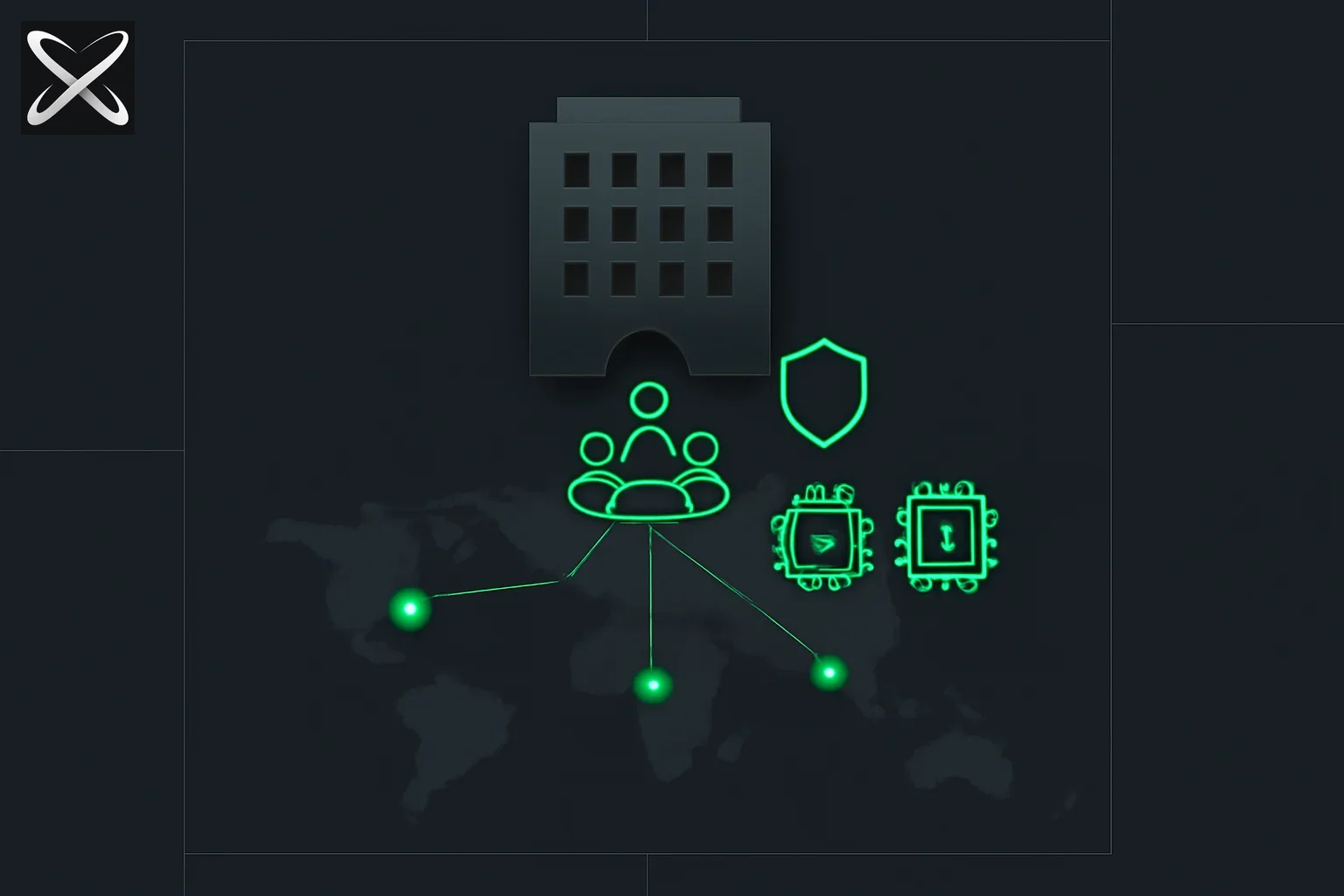 Open source AI for Fortune 500 diagram: a corporate building over a world map of glowing regional server nodes linked to a governance round table
Three events rewrote enterprise AI risk registers:
- Fable 5 global suspension — capability removed overnight
- Mythos restore to ~100 US orgs — permissioned cyber tier
- GPT-5.6 Sol trusted preview — competitor parity also gated
Strategic implication: Treating frontier API as operating system is now concentration risk on par with single-cloud without multi-region DR.
Open source for Fortune 500 is not ideology—it is business continuity.
What it takes (seven enterprise capabilities)
1. Governance — AI steering committee
Members: CTO, CISO, Chief Data Officer, GC, one business unit SVP, regional CIO (EU/APAC rotation).
Charter (quarterly):
- Approved model catalog (open + closed)
- Burst criteria for closed frontier
- Prohibited data classes in any cloud
- Geopolitical review when weights originate from US/PRC/EU labs
Output: One internal AI Standard doc—not 40 Slack threads.
2. Procurement — exit the “single API” RFP
Rewrite vendor language:
| Old RFP | New RFP |
|---|---|
| “Enterprise Claude/OpenAI agreement” | “Open-weight inference + optional burst credits” |
| Per-seat frontier | Per-GPU-hour or self-host CapEx |
| Vendor SOC 2 only | Your SOC 2 over your stack |
Fortune 500 buyers: NVIDIA (DGX / H100 estates), Dell/HPE, CoreWeave/Lambda reserved capacity, Red Hat/OpenShift AI support contracts.
Reference architecture: DGX Spark / large unified memory for pilot lab nodes—not every employee gets one.
3. Platform engineering — central inference plane
Target architecture:
                    ┌─ EU vLLM (GLM-5.2, Qwen3)
Global LLM API ────┼─ US vLLM (Nemotron, Kimi)
 (internal)        └─ APAC vLLM (regional mirror)
        │
        ├─ Model router (task, cost, data class)
        ├─ Eval service (regression on deploy)
        └─ Burst gateway → Opus/GPT (5% traffic, logged)
Scale indicators:
| Engineers on platform | GPU footprint (indicative) |
|---|---|
| 1,000 | 8–32× H100 equivalent |
| 5,000 | Multi-region, 50–200 GPUs |
| 50,000+ | Hybrid cloud + on-prem AI factory |
Software: vLLM / TensorRT-LLM, Kubernetes, KServe or custom scheduler, LiteLLM Enterprise or in-house gateway.
4. Internal eval lab — stop trusting vendor charts
Fortune 500 ships nothing on vendor Terminal-Bench screenshots alone.
Eval lab owns:
- 500–2,000 tasks from your repos, tickets, runbooks
- Harness parity — same agent scaffold as production (Codex CLI, internal agent)
- Regression gate — no model upgrade without ±2% tolerance sign-off
Publish internal leaderboard quarterly—GLM vs Qwen vs Nemotron on your code.
5. Legal & compliance — licenses and workforce
| Topic | Action |
|---|---|
| MIT / Apache 2.0 | Default allow with attribution |
| Modified MIT (Kimi) | GC review for redistribution |
| Deemed export | Self-host internal tools in-region; separate from Annex A Mythos negotiations |
| GDPR / DPDP | DPIA for internal LLM; no training on personal data without basis |
| Sector (HIPAA, FINRA) | Air-gapped tier for restricted workloads |
Can governments ban AI? — Fortune 500 assumed yes after June 12.
6. Organization — roles at scale
| Function | FTE range (indicative) |
|---|---|
| AI platform engineering | 8–25 |
| ML ops / SRE (GPU) | 5–15 |
| Eval & safety | 3–8 |
| FinOps (GPU/API) | 2–4 |
| Embedded in BU | AI champions, not owners |
Not “let each BU buy ChatGPT Team”—that is how Annex A envy spreads.
7. FinOps — unit economics the board understands
Report monthly:
- $/1M tokens internal vs former frontier
- GPU utilization % (target 60–75%)
- Burst % to closed APIs (target <10% by month 18)
- Incidents — model downgrade, outage, eval failure
Narrative for board: “We decoupled 85% of AI inference from US permissioned APIs; burst spend capped at $X.”
18-month Fortune 500 roadmap
| Phase | Months | Deliverable |
|---|---|---|
| Mandate | 0–2 | Steering committee; AI Standard v1; kill shadow-only frontier |
| Lab | 2–4 | Eval suite; 1 region pilot cluster; GLM + Qwen POC |
| Pilot BU | 4–8 | 500-engineer division on open default |
| Multi-region | 8–12 | EU + APAC vLLM; data residency sign-off |
| Scale | 12–18 | Group-wide internal API; Nemotron/MoE for long agents |
| Optimize | 18+ | Fine-tunes; burst <5%; M&A integration playbook |
Anti-pattern: 18-month pilot with no production traffic—competitors ship.
Hosting at scale — decision matrix
| Pattern | When | Risk |
|---|---|---|
| On-prem GPU farm | Stable load, capital, data gravity | Obsolescence, utilization |
| Reserved cloud GPU | Burst elasticity, global | Vendor lock-in on cloud |
| Sovereign cloud (EU) | GDPR, Schrems III anxiety | Higher $/hour |
| Managed open API | Fast start, less ops | Still third party |
| Orchestration layer | Sakana Fugu-style multi-model | Latency, verify claims |
Two-family rule: e.g., GLM (Z.ai) + Qwen (Alibaba) OR Nemotron (NVIDIA) + Llama (Meta)—never 100% one lab.
Mythos, cyber, and what open will not replace
Annex A Mythos is offensive cyber at frontier tier. Open weights today do not replace sanctioned Glasswing/CVP programs for critical infrastructure.
Fortune 500 cyber teams should:
- Negotiate CVP/Glasswing if eligible
- Run defensive open models in isolated VPC for vuln research
- Not pretend GLM-5.2 on corporate LAN equals Mythos red-team clearance
Board and executive narrative (template)
One slide Fortune 500 CIOs actually use:
Problem: 62% of engineering AI tokens ran through permissioned US frontier APIs; June 2026 proved global suspend and Annex-only restore paths.
Strategy: Open-weight default on regional inference; closed burst capped at 10% spend.
Investment: $X M Y1 platform; $Y M avoided token OPEX at scale.
Risk if we wait: Competitors on Annex A or Chinese open weights ship features while we queue for GPT-5.6 GA.
Ask: Approve AI Standard, headcount for platform team, multi-region GPU reserve.
M&A and legacy integration
Acquired companies bring their ChatGPT contracts and shadow MCP servers. Fortune 500 open-source programs need:
- 90-day integration — migrate acquired eng to internal LLM API
- Kill duplicate frontier contracts where open default suffices
- Harmonize data classification (acquired startup’s “YOLO paste into Claude” stops day 1)
War-room scenarios (tabletop)
| Scenario | Open-source program response |
|---|---|
| Fable permanently US-only | Already on GLM/Qwen default — no sprint |
| GPT-5.6 GA delayed 6 months | Eval lab tracks open gap closing; burst budget unchanged |
| New export rule on weight download | Second-family weights mirrored in EU/APAC before rule effective date |
| Major open model CVE | Router pins last-known-good hash; eval gate blocks upgrade |
Run these quarterly with CISO—not after the headline.
Partner ecosystem (who Fortune 500 actually calls)
- NVIDIA — hardware, Nemotron, NIM containers
- Systems integrators — Deloitte/EY sovereign AI practices (verify bench, not slideware)
- Red Hat / VMware — K8s GPU scheduling at enterprise support SLAs
- Hugging Face Enterprise — private model hub, audit logs
Avoid single-vendor “we will run AI for you” unless contract includes portability of weights and configs.
Most Fortune 500 already have:
- Microsoft Copilot / Google Duet bundles
- Salesforce Einstein
- ServiceNow AI
Open-source plane sits underneath for custom engineering, R&D, internal agents—not necessarily replacing every SaaS embed day one.
Integration pattern: Copilot for Office; internal GLM/Qwen API for codebase and proprietary docs.
Success metrics (what “done” looks like)
By month 18, healthy programs show:
- ≥80% internal agent tokens on open/self-hosted
- <10% burst to closed frontier
- Zero production dependency on models that can be globally suspended without notice
- Eval regression catches downgrades before developers notice
- Regional endpoints for ≥90% of employees without cross-border prompt routing
Bottom line
Fortune 500 open source is governance + platform + eval + multi-region hosting—a program, not a POC.
Individuals buy a GPU; businesses buy a server; Fortune 500 buys organizational immunity to the next Lutnick letter.
Series: Individuals · Business · Benchmarks & models · Mythos trusted partners context
Program budgets and FTE ranges are illustrative for global enterprises, June 29, 2026—calibrate to your industry and existing cloud commit.
Prove portability with one business workload
Choose a representative task and preserve its input contract, evaluation rubric, data classification, and expected output. Run the same task through the proposed primary and fallback arrangements. A second model family listed in a slide is not yet a usable continuity path if the application cannot call it or interpret its output.
Test the operational handoff as well as answer quality. Who changes routing, who approves the fallback, and how do employees see a degraded capability? Define the tasks that may continue and the ones that should pause. Some workflows can tolerate a weaker answer; others require the unavailable capability or a human review.
Treat the budget and staffing ranges above as planning illustrations. Estimate your own workload from observed request volume, model memory, concurrency, response targets, and support obligations. A large company name does not determine the required GPU count.
Review the full data path
Regional inference is one part of the architecture. Inspect prompt logs, monitoring, backups, support access, and any retrieval or external tool calls as well. A model endpoint in one region does not by itself prove that every related data flow stays there or that a deployment meets every legal requirement.
Keep the resulting deployment review with the approved workload, rather than treating it as a blanket approval for every future use. New data classes and external actions can change the review needed even when the same model and cluster remain in place.
The continuity program is concrete when the fallback has been exercised, the data path is documented, and the operating owner can recover a failed workload. These are stronger milestones than an aspirational percentage of traffic routed to open weights.