



Part 2 of 3: Individuals · Business · Fortune 500
TL;DR — business decision table
| Question | Answer for 5–500 employee cos. |
|---|---|
| Why now? | Frontier APIs gated; token bills scale with headcount; clients ask where data goes |
| Minimum infra | 1× GPU server (24–80GB VRAM) + LiteLLM proxy |
| People | 0.25 FTE senior eng + existing IT |
| CapEx vs OpEx | $15k box or $3k/mo Lambda/CoreWeave GPU |
| Model pick | GLM-5.2 + Qwen3 (two-family rule) |
| Timeline | 60–90 days to production default |
| Still need Claude? | Yes, ~5–15% burst on eval failure |
Your company is not Anthropic’s trusted partner. Your engineers are not on GPT-5.6 Sol preview. If AI is embedded in delivery—agencies, SaaS, consultancies, fintech back-office—you are one policy change away from margin collapse.
Open source for business means owning the default inference path for internal work, not romantic self-sufficiency.
What “business scale” means (and what it does not)
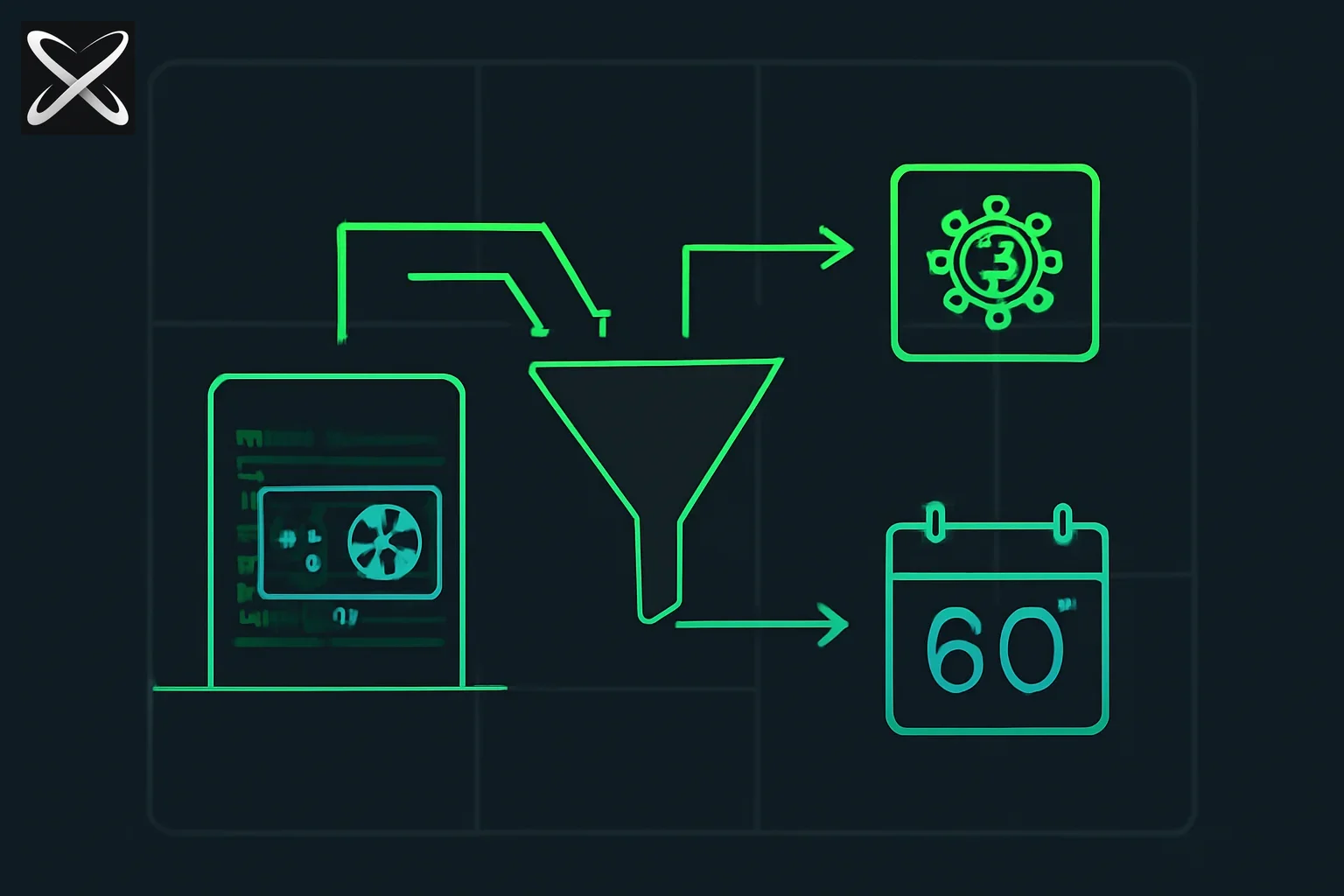 Open source AI for business diagram: a single GPU server with a routing proxy splitting local and cloud-burst traffic on a 60-day timeline
| Business (this guide) | Individual | Fortune 500 | |
|---|---|---|---|
| Headcount | 5–500 | 1 | 5,000+ |
| GPU count | 1–8 | 0–2 | 100+ |
| Governance | Founder + eng lead | Personal | Board, procurement, legal |
| Goal | Cut API bill 50–80% | Privacy + learning | Sovereignty + regulatory |
What it takes: five business investments
1. Infrastructure (one inference plane)
Option A — On-prem / office closet
- 1× workstation: RTX 4090 24GB or used RTX 3090 — $1.5–3k
- Select a checkpoint and quantization that fit the machine; measure context memory and queueing under representative team load.
Option B — Cloud GPU (no hardware ops)
- Lambda / CoreWeave / AWS g5.2xlarge — ~$1.50–3/hr
- vLLM Docker; persistent volume for weights
Option C — Managed open API
- Together / Fireworks host GLM-5.2, Llama, Qwen — you get open weights economics without GPUs
- Still vendor risk, but no Annex A problem
See Mac vs GPU for why Mac is a dev laptop, not your inference server.
2. Software stack (standardize early)
Developers → LiteLLM gateway (OpenAI-compatible)
                ├─ primary: glm-5.2-vllm (internal)
                ├─ coding: qwen3-coder-vllm
                └─ fallback: claude-opus / gpt-5.5 API (gated)
- LiteLLM — one API key, budgets per team, logging
- vLLM — production throughput
- Eval suite — 100 tickets from last sprint; pass/fail scoring
Codex + Ollama OSS patterns apply if you standardize on OpenCode/Codex CLI.
3. People (roles, not headcount)
| Role | Time | Owns |
|---|---|---|
| AI platform owner (staff eng) | 25–50% | Models, upgrades, uptime |
| Security | Review once | Data classification, burst policy |
| Finance | Monthly | API vs infra TCO |
| Everyone else | 2hr onboarding | When to use local vs cloud |
You do not need to hire an ML researcher.
4. Policy (one page, enforced)
Write it down:
- Green data — internal code, drafts → local/open only
- Yellow — anonymized prod logs → local + approval
- Red — customer PII, PHI → no cloud without legal sign-off
- Burst rule — if open model fails eval twice, allowed Opus/GPT with ticket link
June 2026 export controls mean US HQ + foreign engineers on Claude Fable was already broken—self-hosting changes the deployment boundary but does not by itself establish compliance for internal tools (international access context).
5. Money (honest TCO)
20 engineers, heavy agent use (illustrative):
| Frontier API only | Hybrid open default | |
|---|---|---|
| Monthly tokens | $8k–25k | $1k–4k API burst |
| Infra | $0 | $500–3k (cloud GPU or amortized box) |
| Year 1 total | $96k–300k | $30k–80k |
Break-even on CapEx GPU box often <12 months at $10k+/mo API spend.
Model selection for business workloads
| Workload | Model | Why |
|---|---|---|
| Product engineering | GLM-5.2, Kimi K2.7 | Best open coding/agentic reports mid-2026 |
| Support / ops docs | Qwen3 32B | Cheap, multilingual |
| Finance / analysis | DeepSeek R1, Qwen3 235B | Reasoning chains |
| Customer-facing chatbot | Fine-tuned 8B–14B | Latency + cost; not raw GLM-5.2 |
Benchmark context vs Fable/GPT-5.6: enterprise comparison.
Kilo Code planning test: GLM-5.2 9.0 vs Fable 9.1 — viable for spec → build pipelines (planning post).
Security checklist (business minimum)
Before production:
- TLS on LiteLLM gateway; no plain HTTP inside office WiFi
- API keys per team; rotate quarterly
- No default admin keys in Slack
- Prompt logging retention policy (30–90 days max unless legal hold)
- SBOM for vLLM Docker images
- Backup weight volume — re-download is slow
For SOC 2 path, map controls to CC6 logical access and CC7 monitoring—auditors care that you control keys, not Anthropic.
Illustrative migration sketch: 40-person SaaS engineering org
Before: Claude Team + ad hoc API keys; ~$12k/mo; Fable suspension broke two agent pipelines.
After (90 days):
- A server sized for the selected checkpoint and serving runtime, with a smaller evaluated fallback
- LiteLLM with $500/mo Opus burst cap
- Result: ~$4.5k/mo infra + burst; eval within 5% of pre-ban quality on internal suite
Lesson: Pilot squad found planning tasks identical to Kilo benchmark; multi-file refactors still needed burst 20% of time.
Build vs buy for business
| Self-host GPU | Managed open API (Together/Fireworks) | |
|---|---|---|
| CapEx | High | Low |
| Ops burden | You | Vendor |
| Data control | Maximum | Good (contract-dependent) |
| Latency | Best on LAN | Internet |
| Best for | 15+ daily active devs | <15 devs, fast start |
Many businesses start managed, move self-host when API bill exceeds $6k/mo for 6 consecutive months.
Hiring and talent (business)
Open source repoints talent rather than replacing it:
- Less prompt-hacking around rate limits; more eval and RAG ownership
- Job specs shift toward LiteLLM + vLLM maintainers (higher leverage, smaller pool)
- Retention during Fable outage required a credible internal API, not “use Opus” alone
Common business mistakes
- CEO buys GPUs, no platform owner — idle hardware by month six
- Unlimited personal Claude while mandating open internally — no savings, data leaks
- Single-model religion — one license or geopolitical shock with no fallback
- Skipping eval — silent reversion to cloud; finance sees flat OPEX
- Customer data in week-one pilot — start internal-only until legal signs policy
60-day business rollout
| Week | Milestone |
|---|---|
| 1–2 | Token audit; pick primary open model; buy/provision GPU |
| 3–4 | LiteLLM + vLLM staging; eval 200 real tasks |
| 5–6 | Pilot one team (5–10 devs); daily quality Slack channel |
| 7–8 | Company-wide default; disable personal Claude on green data |
| 9–12 | Fine-tune optional; add second model family; quarterly eval |
Anti-pattern: Mandating open models without eval — engineers will secretly use ChatGPT and you lose audit trail.
Vendor shortlist (business tier)
| Vendor type | Examples | Use when |
|---|---|---|
| GPU cloud | Lambda, CoreWeave, AWS G5 | No datacenter, need burst |
| Open API | Together, Fireworks, DeepInfra | Fast start, no GPU ops |
| Gateway | LiteLLM (OSS + enterprise) | Team keys, budgets, logging |
| Vector DB | Qdrant, Weaviate self-host | RAG on internal docs |
| Burst closed | OpenRouter, direct Anthropic/OpenAI | Eval failure escape hatch |
Negotiate annual burst caps on closed APIs before you migrate—finance will ask.
Business sustainability means your LiteLLM billboards show 80%+ open traffic in the dashboard—not a one-time blog post about “we care about sovereignty.” Review routing rules every sprint; model releases in 2026 arrive faster than quarterly procurement cycles.
When business should NOT go open-first
- Customer-facing product needs frontier quality and you cannot afford eval gap
- No one owns uptime — single GPU SPOF without on-call
- Regulated burst-only workloads (some health/finance) where validated vendor required
- Team <5 with <$500/mo API spend — optimize subscriptions first
Open source + agency/client work
Agencies face client data segregation:
- Per-client LiteLLM virtual keys routing to dedicated Qdrant collections
- Never train on Client A data for Client B
- Contract language: “We run open-weight models in [region] VPC; no third-party frontier training.”
Differentiator vs competitors still on permissioned Anthropic/OpenAI tiers.
Bottom line
Business open source is one GPU plane, LiteLLM, written policy, and 60–90 days of disciplined eval—not a research program.
You buy predictable cost, data control, and survival when the next model is trusted-partners only.
Update (July 9, 2026): Chatto went AGPL — single-binary team chat with SSO and voice, no enterprise paywall on core features. Another self-host option for teams already running their own GPU plane.
Series: Individuals · Fortune 500 · Full benchmark map
Budget ranges reflect US/EU mid-market SaaS and agencies, June 28, 2026.
How do you size hardware without confusing active parameters with memory?
Start from the checkpoint you intend to load, its quantization format, and the serving runtime's requirements. In a mixture-of-experts model, only some experts may perform arithmetic for each token, but the rest of the weights still need an appropriate storage and access strategy. Active parameter count does not establish that the full model fits in a small GPU.
Include the context cache and concurrent requests in the capacity plan. A model that loads successfully for one short prompt can still run out of memory under the team's actual workload. Measure a representative session on the proposed configuration before purchasing hardware or promising a number of concurrent users.
What should a pilot establish before rollout?
Choose one team and a bounded set of internal tasks. Compare the candidate model with the current workflow, including human correction time and fallback requests. Track failure cases alongside costs. A cheap response that creates more review work may not be a cheaper completed task.
Assign an owner for updates, outages, and access changes. Replacing a managed API means taking responsibility for operational work that was previously bundled into the service. Budget for that work explicitly instead of treating the hardware purchase as the whole migration cost.
Use the pilot to decide whether to expand, adjust, or stop. The enterprise benchmark guide offers a way to keep the acceptance criteria stable. A rollout timeline is a planning example, not evidence that every company can reach production readiness in the same number of weeks.