




Three engineers who helped found xAI unveiled a new company on November 24, 2026 built around a simple thesis: the best test of intelligence is forecasting what happens next. Epochal's introducing post says today's models read the entire internet with hindsight, while people learn by deciding with incomplete information and only later seeing outcomes. Its first product, Time Portal, gives agents a point-in-time view of the public web — more than a trillion pages, thirty-plus years of history, and minute-level snapshots on fast-moving sites — plus Linux sandboxes whose clocks and package mirrors match the chosen date.
| Question | Answer |
|---|---|
| Who founded Epochal? | Guodong Zhang, Zihang Dai, Manuel Kroiss (named as xAI founding-team members), plus Alex Bocharoff and Frank Luan |
| What shipped? | Time Portal APIs: search, fetch, and sandbox |
| Archive scale (claimed) | 1T+ pages, 7T+ URLs tracked, 30+ years, 1-minute granularity on dynamic pages |
| Reported funding | Bloomberg cites $100M from Zhang; Epochal declined to discuss funding with the outlet |
Why xAI's co-founders are building forecasting infrastructure
 Epochal forecasting mission artwork from the November 24 company launch post
Image: Epochal
Quartz and The Next Web report that Zhang, Dai, and Kroiss started Epochal after xAI was folded into SpaceX in February 2026. That departure matters for readers tracking Grok and SpaceXSI branding: some of the people who shaped xAI's early engineering are now betting on evaluation-grade forecasting, not a bigger chat model.
Epochal's own language is sharper than a generic "prediction startup" pitch. The introducing post argues that reciting known facts is easy for people and models, while working out where the world is going requires deep world models. It wants agents to live through thousands of yesterdays, one day at a time, instead of training on stories whose endings are already visible in the crawl.
That framing sits next to explainx.ai coverage of world models and latent prediction and METR time-horizon curves, but Epochal is selling data and environments, not a single foundation weights file.
 Epochal Time Portal point-in-time web archive for AI forecasting agents
Image: Epochal
Time Portal: search, fetch, and sandboxes without spoilers
 Time-gated Linux sandbox pattern for agent evaluations
The Time Portal announcement breaks the product into three API surfaces:
- Search with native time-gating — one URL can map to many dated versions, with version chains on news and data pages.
- Fetch for the page body as it existed at the as-of instant.
- Sandbox — a time-gated Linux microVM where the kernel clock, Ubuntu image, apt/pip/npm mirrors, and outbound HTTP respect the same timestamp.
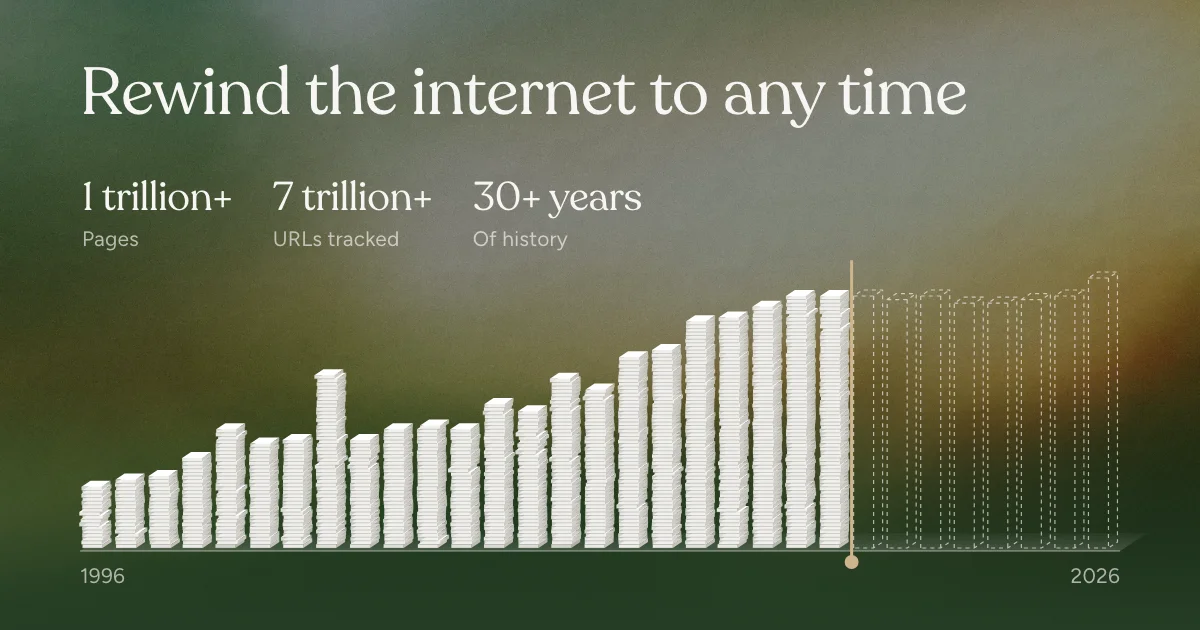
Epochal lists headline archive stats in that post: 1 trillion+ pages indexed, 7 trillion+ URLs tracked, 30+ years of history, and one-minute granularity on the most volatile pages. It also acknowledges hard problems — coverage (did the agent see everything a human would have?) and leakage (no privileged hindsight through side channels).
For builders running computer-use agents or OpenClaw-style harnesses, the design pattern is familiar: isolate time so grades reflect reasoning under uncertainty, not accidental access to later headlines. Epochal is productizing that pattern at web scale.
What developers are saying on Hacker News
The Hacker News thread is still thin — four points and a handful of comments — but it already highlights two angles practitioners care about.
matthewbowerban (comment) writes that accurately predicting the future may be the best benchmark for intelligence, and perhaps the only one that matters for near-term models. edot (comment) links Epochal's visualizer and notes reported personal investment by Guodong Zhang — treat that dollar figure as commenter relay, not company confirmation.
How Epochal says it measured simulation quality
Epochal's benchmark story is the part most teams will try to reproduce. In the Time Portal post, the company describes:
- 347 live forecasting tasks deployed on public question platforms.
- A replay weeks later inside Time Portal with the as-of instant matched to the original forecast time.
- Ablations granting agents the live web after resolution or no web at all.
It reports Pearson correlation 0.98 between live and Time Portal replays, versus 0.16 when agents could browse the resolved live web and 0.49 with no web. Those numbers come from Epochal's own write-up; independent replication is not yet published.
Readers comparing benchmarks should note how this differs from ShellBench (office-style completeness) or Hugging Face Harbor (repository repair). Epochal optimizes for temporal integrity of evidence, not terminal commands or rubric lines in a fake inbox.
What is verified vs. what outlets report
| Claim | Source | Status |
|---|---|---|
| Epochal and Time Portal launched Nov 24, 2026 | epochal.com blog | Verified |
| Founders include Zhang, Dai, Kroiss from xAI's founding team | Same official posts | Verified |
| 1T+ pages, 30+ years, minute granularity | Time Portal post | Company-stated; no third-party audit cited |
| $100M personal investment by Zhang | Bloomberg via Quartz relay | Reported; spokesperson would not discuss funding |
| Archive licensing for every page | The Next Web notes no licensing details | Open — compliance risk for commercial customers |
The licensing gap matters for founders: Epochal has not, in the posts we read, explained robots.txt, publisher agreements, or DMCA posture for a trillion-page corpus. Enterprise buyers should ask for data provenance and takedown SLAs before piping proprietary forecasts through the APIs.
How to try Time Portal this week
Epochal points builders to:
- visualizer.epochal.com for interactive exploration (linked from HN and the blog).
- A limited free tier mentioned in coverage; production limits and rate caps were not spelled out in the November 24 posts.
A practical first test:
- Pick a dated macro or product event your team already studied.
- Run the same agent prompt on live web vs. Time Portal as-of the day before the event.
- Log whether the agent quotes later articles, stale prices, or package versions that break the illusion — the failure modes Epochal calls leakage.
Pair that with your existing agent security review habits: sandboxes that fetch arbitrary URLs still need egress policy, even when the clock is honest.
Where Epochal fits in the xAI and agent landscape
Epochal does not compete head-on with Grok API watermarking or Grok Bot team deployments. It is eval and training plumbing for teams that believe forecast calibration will separate the next generation of agents from chat wrappers.
Connection points readers may search:
- Policy and geopolitics forecasting — adjacent to explainx.ai's export-control timelines, but Epochal has not announced government customers.
- Scientific forecasting — different from OpenAI's math agent manuscripts, which optimize proofs, not open-world events.
- Enterprise copilots — may borrow Time Portal patterns for "what did we know on date X?" audits without retraining models.
Building forecasting agents without time leaks
Teams rolling their own evals can steal Epochal's checklist even without buying the product:
- Freeze package indexes — pin pip, npm, and apt snapshots when reproducing historical decisions; Epochal's mirror gating mirrors what air-gapped labs already do manually.
- Split retrieval from synthesis — log URLs with timestamps and content hashes so graders can prove the model never fetched post-event articles.
- Report correlation, not vibes — Epochal's 0.98 figure is only meaningful because they replayed identical task IDs; copy that discipline when comparing Claude Code vs Codex on internal macro memos.
For policy-heavy forecasts, pair Time Portal-style sandboxes with explainx.ai's UK FCA agentic payments authorization read-through: regulators care about what the model could have known at submission time, not Monday-morning hindsight.
Staffing and talent signal
Epochal's roster mixes xAI founding engineers with hires from OpenAI, Anthropic, and Google DeepMind, per Quartz. That pattern — small vertically integrated teams leaving hyperscaler orbit — mirrors Noam Brown's reported OpenAI departure chatter and Cognition's Devin security buys.
For hiring managers, Epochal is a signal that agent infrastructure, not raw parameter scale, is where senior researchers place next bets.
Competitive landscape for point-in-time agent data
Epochal is not the only team chasing counterfactual web access. Research stacks have long used WARC files, Common Crawl slices, and private news databases with manual cutoffs. What Epochal sells is API-level gating plus OS-level sandboxes, reducing the integration work to stand up a believable as-of environment.
Compared with static benchmark snapshots like those in ShellBench, Time Portal targets open-domain questions where the evidence set is unbounded. Compared with finance terminals that already timestamp quotes, Epochal focuses on general web pages whose publishers constantly rewrite headlines.
Enterprise buyers should ask Epochal the same questions they ask data vendors:
- Refresh cadence — how quickly do newly archived minutes appear?
- Deletion compliance — can publishers force removal retroactively?
- Audit logs — can compliance teams prove an agent never queried post-cutoff URLs during a decision replay?
Until those answers are public, treat Time Portal as pioneer infrastructure suitable for R&D budgets, not regulated trading or clinical trial decisions without legal review.
Technical details from the official Time Portal post
Epochal's technical write-up emphasizes version chains: highly dynamic URLs may map to dozens of captures per day. That design matters for agents asked to forecast earnings or policy votes where a single page receives stealth edits.
The sandbox stack sets:
- Kernel clock to the as-of instant.
- Distribution versions (Ubuntu, libraries) matching the historical date.
- Package mirrors that refuse future artifacts.
- Egress proxies forcing HTTP through Time Portal filters.
Misconfiguration in any layer becomes leakage, the failure mode Epochal measures with its 0.98 correlation experiment. Teams self-hosting similar stacks should run red-team prompts that call curl example.com/latest-headline and verify the proxy blocks post-dated content.
Roadmap questions Epochal has not answered publicly
Coverage summaries note open gaps:
- Licensing for cached publisher pages.
- Enterprise SLAs for sandbox uptime.
- Model-agnostic pricing — whether customers bring GPT, Claude, or open weights.
Following Epochal's blog and product changelog is the fastest legitimate signal for the next release.
Related reading
- OpenClaw ShellBench grades real-world agent work
- Hugging Face Harbor and agentic evaluation
- What are world models?
- METR time-horizon hazard curves
- xAI Grok API EU watermark defaults
- SpaceXSI Grok bots and accounting
Last updated: November 25, 2026