



Australia did not ban AI music. A trade association changed the entry rules for its own charts. ARIA — the Australian Recording Industry Association — is a private industry body that compiles and owns the ARIA Charts. On Tuesday 25 August 2026 it updated its Charts Code of Practice so that wholly AI-generated recordings are ineligible. Nothing became illegal in Australia. No regulator acted. The top comment on the Hacker News thread got there before most of the coverage did: these are "ARIA official charts, not Australia the country's official charts."
That correction matters because the second-most-repeated claim about this story is also shaky. ARIA is not setting a novel precedent — it is implementing a framework the major record companies published on 29 July 2026 and IFPI adopted globally the following day. And the genuinely interesting question, the one the same HN thread raised and nobody answered, is how you prove a song is "substantially human made." ARIA's own FAQ answers that in two words, and the answer is not what most readers assume.
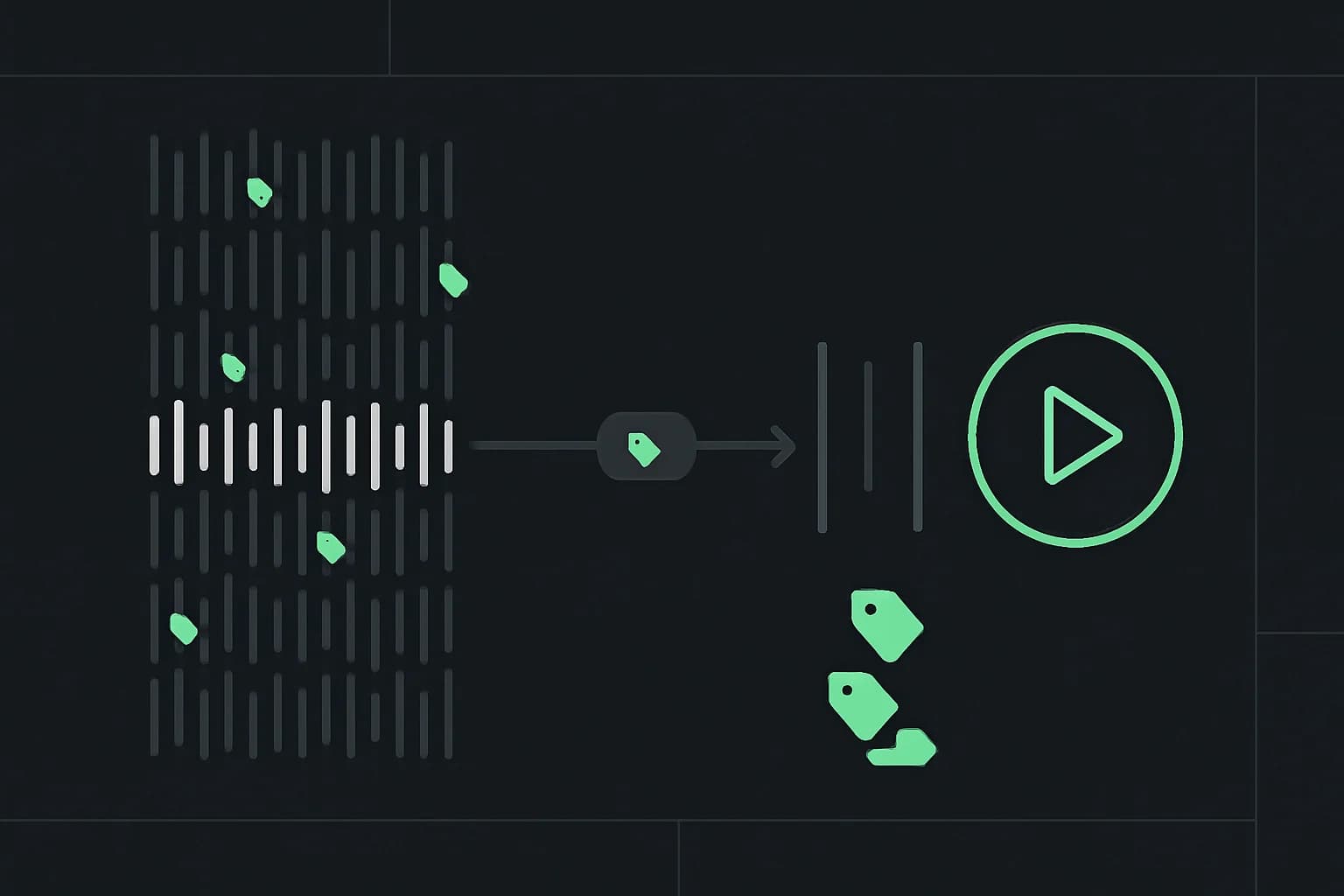
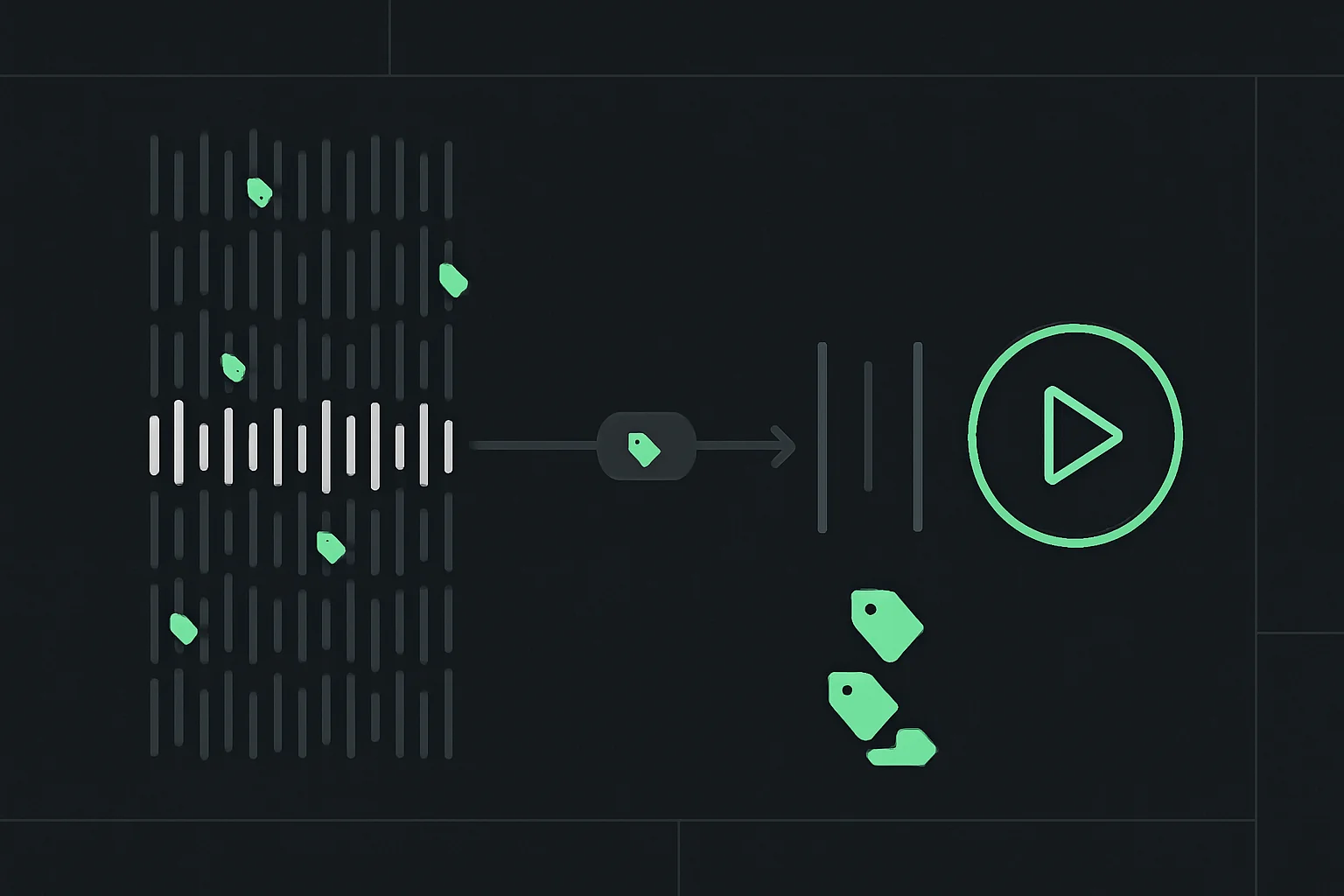 Audio waveform passing through a labelling gate into a play button, illustrating AI-disclosure metadata deciding music chart eligibility
TL;DR
| Question | Answer |
|---|---|
| Is this an Australian government law? | No. ARIA is an industry trade body. It governs ARIA's charts and awards only |
| What exactly is banned? | Recordings where genAI produced the track or its primary creative elements — e.g. an AI lead vocal or key instrumental |
| When does it start? | ARIA Chart dated Monday 31 August 2026, published Friday 28 August 2026 |
| How will they detect AI music? | They mostly won't. Enforcement runs on a mandatory declaration from the rights holder — ARIA's FAQ: "You tell us" |
| What counts as "substantially human made"? | "Human creative input is the primary driver of the work", assessed case by case |
| Does it affect artists using AI tools? | No. AI mastering, stem separation, drum machines, effects, backing vocals and voice transformation stay eligible |
| Are other countries doing this? | Yes, earlier. IFPI rolled the same six principles across 11 chart programmes on 30 July 2026 |
What ARIA actually changed
The operative text is short. Per ARIA's Chart Changes FAQ, a recording developed using generative AI is eligible only where all three of the following apply:
- "It is substantially human made"
- "It raises no stream or chart manipulation concerns"
- "It complies with applicable laws"
Note that third criterion — it is absent from most of the coverage, including the New York Times write-up, which quoted only the first two. It is the hook that pulls unlicensed training data and personality-rights claims into a chart-eligibility question.
ARIA splits recordings into three buckets:
| Bucket | Definition | Eligible? |
|---|---|---|
| AI-Generated | GenAI produced the recording or its primary creative elements — AI lead vocal, AI key instrumental performance | ❌ No |
| AI-Assisted | "Humans wrote the song and performed the lead vocal and the primary instruments. Generative AI did something minor on top of that" — backing vocals, minor non-primary instruments, voice transformation on a human take | ✅ Yes |
| AI in production | AI mastering, stem separation, AI drum machines, short background samples, AI instrument patches a person then plays, AI effects | ✅ Yes |
Ineligible recordings also lose ARIA Award eligibility. ARIA's enforcement powers are unusually broad for a chart body: it can decline a recording for survey, exclude or remove it prospectively or retrospectively, adjust chart positions, withdraw accreditations, and revoke or demand the return of an ARIA #1 Award. Rights holders get a response window, then escalation to the ARIA Chart & Marketing Committee and finally the ARIA Board.
CEO Annabelle Herd framed the intent plainly: charts should reflect what Australians listen to, but a chart rewarding AI output would "undercut the very basis of the recorded music we exist to represent." Many artists use AI tools and charts should "keep room for that," she said — "but music generated wholesale by services built on artists' recordings is a different matter." In ARIA's own release she added that the changes "reflect our intent to remain dynamic and promote the human nature of artistry in what is – to say the least – a rapidly developing space."
Get the date right
Reporting on the start date is a mess worth untangling, because it affects whether a release you are shipping this week is covered.
- ARIA's own documents: the ARIA Chart dated Monday 31 August 2026, published Friday 28 August 2026.
- The NYT said the changes "will apply from Friday" — true of the publication date, not the chart date.
- ABC News said "Friday, August 29, 2026." In 2026, 29 August is a Saturday.
Use ARIA's pair of dates. A chart body's own Code of Practice is the primary source; wire copy paraphrasing it is not.
Why now: the Madonna cover
ARIA's statement does not name a record, but the trigger is not a mystery. Press reporting across Al Jazeera, CBC and the Australian outlets ties the rule change to a cover of Madonna's "Like a Prayer" by Brisbane DJ Josh Fawaz, which used AI-generated vocals and drums — something Fawaz acknowledged only after producers and fans raised suspicions.
The track spent 16 weeks on ARIA's Top 20 Australian Singles chart, peaked at No. 2 in May, still sat at No. 4 on 25 August, topped the Australian Dance Singles chart, and passed 48.5 million Spotify streams. An ARIA spokesperson told ABC News it "may not qualify under the new rules."
That is the honest shape of this story: a chart body discovered its chart could be topped by something its constituents did not consider a record, and closed the gap. Whether you find that defensible probably tracks how you feel about whether pure AI output deserves the same status as human work — a question copyright law in the EU has already answered in the negative, on human-authorship grounds.
ARIA did not invent this. The labels did.
The framing that Australia is out in front is wrong on the record. The timeline:
| Date | What happened |
|---|---|
| 10 July 2026 | IFPI, RIAA, A2IM, WIN, IMPALA, the Grammys, SAG-AFTRA and the Human Artistry Campaign announce the AI-Generated / AI-Assisted labelling split, designed to ride existing DDEX metadata — the same pipeline that carries songwriter credits |
| 29 July 2026 | Sony Music, UMG, WMG, Believe, BMG, Concord, Dirty Hit, Glassnote, HYBE, Mom+Pop and Partisan publish six chart-eligibility principles as a "unified roadmap" for chart compilers |
| 30 July 2026 | IFPI adopts them for the 11 chart programmes it directly manages — MENA (13 markets), Southeast Asia (6 markets), South Africa, Argentina, Brazil, Chile, Colombia, Ecuador, Mexico, Peru, Uruguay — with 20-plus more national programmes targeted |
| 25 August 2026 | ARIA adopts them for the Australian charts |
ARIA's two headline criteria are principles 2 and 3 from the July label proposal, reproduced word for word. The full six also require that the genAI service used was "properly authorised and lawful," that the release does not breach that service's terms, and that AI use is "appropriately signalled to consumers on downstream services."
So the accurate headline is narrower and more interesting than "Australia bans AI music": a national chart body became an early adopter of a rulebook the record companies wrote for themselves. IFPI CEO Victoria Oakley's line — "official music charts do more than just track sales; they celebrate human artistry" — is the mission statement for the whole programme, not an Australian one.
How will they detect AI music? They won't.
This is the part worth reading closely, because it is where every reaction thread went wrong in the same direction. The Hacker News commenter's objection — "I'm not sure how you actually prove this or thus justify any particular instance of enforcement" — assumes ARIA is claiming a detection capability. It is not.
ARIA's FAQ, verbatim:
"You tell us. Every release submitted to the ARIA survey now requires a declaration about the use of generative AI, and that declaration is what ARIA works from."
That single answer reframes the policy. This is not a detection regime. It is an attestation regime: the rights holder makes a declaration, ARIA works from the declaration, and ARIA investigates when something looks wrong. It is closer to a customs form than to a drug test.
Which is the correct design, given the state of the technology. Post-hoc detection of AI-generated audio is weak in exactly the ways that matter here:
- It is adversarially fragile. Re-encode, add analogue noise, run it through a human-performed overdub pass, and classifier confidence degrades fast. Deezer's own detector — the best-documented one in the industry — is described as identifying tracks from specific named generators like Suno and Udio. Model-family fingerprinting is not the same capability as answering "was a human the primary creative driver here."
- The threshold is not a technical quantity. "Substantially human made" is a judgement about creative contribution, not a measurable property of a waveform. No classifier outputs it, because it is not in the signal. It is in the process.
- False positives land on the wrong people. The same failure mode that made classifier-based text detectors a disaster in education applies to producers whose workflows are heavily quantised, heavily processed, or genre-typical.
Spotify put the limitation of self-reporting more bluntly than anyone else has: when it launched AI tags in Song Credits, it stated that "the absence of AI credits doesn't mean AI wasn't used on a song." Disclosure is voluntary and supplied by the label or distributor. Spotify is building the disclosure standard with DDEX, DistroKid, CD Baby, Believe and EMPIRE precisely because there is no way to derive the answer from the audio.
The defensible mechanism is provenance, not detection
This is the argument explainx.ai has made repeatedly about images and text, and it transfers to audio without modification.
If you want to answer "how was this made," the reliable answer comes from signed metadata attached at creation — not from inspecting the artifact afterwards. That is the entire premise of C2PA and Content Credentials: a cryptographically signed manifest recording the originating tool, the edit chain, and a digitalSourceType field flagging AI involvement. It is why we argued that the watermarking backlash had it backwards, and why Anthropic marking Claude's output is infrastructure rather than surveillance.
For music, the provenance surface is richer than for a JPEG. The artifacts that actually evidence human contribution already exist in every professional workflow:
| Artifact | What it evidences |
|---|---|
| DAW project file | Edit history, take counts, automation curves — the shape of human iteration |
| Raw stems and multitracks | That a human performance exists underneath the mix |
| Session recordings / performance video | The strongest single evidence of a human lead vocal |
| Generation logs from the AI tool | Which elements were synthesised, with what prompt, at what step |
| Signed DDEX AI-disclosure metadata | A machine-readable, distributor-attached claim travelling with the release |
None of that is a detector. All of it is producible at creation time and expensive to fabricate after the fact. That asymmetry is the whole point — and it is the same asymmetry that makes provenance systems worth building even though they are strippable, a tension we walked through when researchers forged C2PA signatures on Android.
The honest caveat: provenance is not proof either. A signed manifest attests to what a tool recorded, not to what a human did. A determined actor can generate a track, perform a token overdub, and produce a session file. Provenance raises the cost and creates a record to prosecute against. It does not settle the question.
The quiet second criterion is the enforceable one
Here is the observation almost nobody is making. ARIA's two headline criteria are not equally enforceable, and the weaker-sounding one is the strong one.
"Substantially human made" is a claim about a creative process that leaves no reliable trace in the delivered file.
"Raises no stream or chart manipulation concerns" is a claim about listener behaviour — and streaming fraud leaves enormous, well-characterised behavioural traces. Play-count velocity that does not match social footprint. Geographic distributions that do not match any plausible audience. Session patterns with no skips, no completion variance, no repeat-listener curve. Account clusters with correlated libraries. This is a mature detection discipline with a decade of adversarial history behind it.
The numbers make the point. Deezer's published figures for 2026:
| Metric | Figure |
|---|---|
| Share of daily uploads fully AI-generated (Jan 2026) | 39% |
| Same, April 2026 | 44% |
| Same, mid-2026 — first month above half | over 50% |
| Peak fully AI-generated tracks received per day (June 2026) | ~90,000 |
| Share of total streams going to AI-generated music | 1–3% |
| Share of those AI streams flagged as fraudulent and demonetised | 85% |
Read the last two rows together. AI music is a majority of the supply and a rounding error in demand — and the overwhelming majority of the demand it does register is fake. Spotify, separately, removed over 75 million spam tracks in the year to September 2025.
So the economically significant failure mode is not "an honest AI track legitimately outperforms a human one." It is an AI track farm gaming the chart. And that failure mode is detectable without ever determining whether the audio was AI-generated. The manipulation criterion catches the abuse; the human-made criterion sets the norm. ARIA can enforce the first rigorously and the second only by declaration — which, on the evidence, is roughly the right allocation of effort. It is the same structural insight as AI-generated review sites poisoning search results: the tell is the distribution pattern, not the artifact.
None of which resolves the Fawaz case, where the track appears to have found a real audience of tens of millions of streams. That one is a norms question, and ARIA is answering it with a norm.
What this means if you build with AI
If you ship generative audio, or any creative-AI product, "prove the human contribution" is becoming a product requirement. Not a compliance checkbox at the end — an architectural decision at generation time. Concretely:
1. Capture provenance at generation, not on export. Record which elements were synthesised, at what step, with what prompt and seed, and emit it as structured metadata bound to the output. Retrofitting this is painful; the session state you need is gone by the time the user asks for it.
2. Keep intermediate artifacts by default. Stems, takes, project state, generation logs. Your users will need them to make an eligibility claim, an award submission, or a copyright registration. A tool that discards its own working history is handing users a burden of proof they cannot discharge.
3. Ship the AI-Generated / AI-Assisted distinction in your own UI. The industry has settled on a two-tier split and wired it into DDEX. If your export flow makes users guess which tier they are in, you have moved a liability onto them. Ask the question at export, explain the two definitions in a sentence each, and write the answer into the metadata.
4. Treat disclosure UX as a first-class surface. Apple Music and Spotify both consume DDEX AI-disclosure fields. Distributors are adding the question to upload flows. If your product produces a stem that ends up in a commercial release, the disclosure obligation lands on someone downstream — make it answerable.
5. Assume the label is a ranking input, not a badge. This is the lesson from Spotify demoting AI-generated artist profiles rather than banning them. The visible tag is cosmetic; the consequence is distribution. ARIA now adds chart and award eligibility to the same list. The disclosure you write is increasingly a business input.
6. Understand which side of the line your tool puts users on. Stable Audio's DAW plugin sits inside a human production session and mostly produces AI-assisted output; a text-to-track generator like an ACE-Step or Suno-style prompt interface mostly produces AI-generated output. Same underlying technology, opposite regulatory bucket. Tell your users which one they are in.
Assistive vs wholesale: the line everyone is drawing
Strip out the music specifics and ARIA's rule is the same line being drawn in every creative field at once, in the same shape: AI as a tool inside a human process is fine; AI as the author is not.
- Copyright offices have landed there on human-authorship grounds — EU copyright does not protect purely AI-generated content.
- Software has landed there, sometimes harder — OpenJDK banned AI-generated contributions outright because it could not verify a graduated policy.
- Streaming platforms have landed there as a ranking rule rather than a ban.
- Regulators have landed there as disclosure obligation — see what actually changed after EU AI Act enforcement.
The instructive contrast is OpenJDK. A blanket ban is what an institution does when it cannot verify anything. ARIA's graduated rule — three buckets, an appeals path, retrospective correction powers — is only writable because a disclosure mechanism exists to hang it on. Provenance is what buys you a graduated response instead of a prohibition. That is the strongest practical argument for building it, and it is why the declaration requirement, weak as it looks, is doing more work than the ban.
Where this is genuinely weak
Even-handedness requires stating what does not hold up.
The declaration is unverified and self-interested. ARIA works from what the rights holder says. The party with the strongest incentive to misdeclare is the party filling in the form. ARIA has penalties but no independent way to trigger an investigation except suspicion — which, in the Fawaz case, came from producers on the internet rather than from any system.
"Substantially human made" will produce arbitrary-looking calls. Case-by-case assessment against "human creative input is the primary driver" is a standard, not a rule. Two similar records will get different answers from different assessors, and the reasoning is not published.
Retrospective removal is a real hazard for artists. ARIA can revoke a #1 Award and adjust past positions. An artist who declared in good faith under an evolving definition carries that exposure.
None of it touches the actual economics. Chart eligibility is prestige, not revenue. A track farm optimising for passive-listening royalties never cared about the ARIA chart. The manipulation criterion matters; the chart ban, for the highest-volume abusers, does not.
And it only binds ARIA. Herd explicitly called on radio and other gatekeepers to "implement similar changes across their own codes" — an acknowledgement that ARIA can only govern its own surface. Which brings us back to the correction at the top.
Bottom line
The intent is defensible and the headline is wrong. A trade body decided its chart should measure human artistry and wrote that into its Code of Practice — a legitimate thing for a private chart to do, and not a ban on anything. The mechanism is a declaration, not a detector, because no detector for "substantially human made" exists or is likely to. The criterion that will actually be enforced at scale is the fraud one.
For anyone building creative-AI products, the durable takeaway is not the Australian news peg. It is that the ability to evidence human contribution is becoming a feature, and the systems that will supply it are provenance systems captured at creation — signed metadata, retained intermediates, honest disclosure — not classifiers run after the fact.
Related on explainx.ai
- Update — October 11, 2026: BBC on the AI human premium, with Deezer's AI music data.
- Spotify labels AI artists — demotion is the real penalty — the platform-side version of the same policy problem
- What is C2PA? Content Credentials explained — the provenance standard this argument rests on
- The case for AI watermarks — why provenance beats detection, argued at length
- Anthropic is watermarking Claude's text output — the same mechanism applied to language
- C2PA on Android was forged — the honest limits of signed provenance
- EU copyright does not protect pure AI-generated content — the human-authorship principle underneath "substantially human made"
- OpenJDK bans AI-generated code — what an institution does when it cannot verify anything
- What actually changes after EU AI Act enforcement — the disclosure obligations converging on the same line
- Stable Audio 3.0's DAW plugin · ACE-Step, the open Suno alternative — opposite sides of the assisted/generated split
- AI search poisoning and fake review sites — manipulation detected by distribution pattern, not by artifact
Primary sources: ARIA, "ARIA Charts set eligibility rules for recordings made with AI" (25 August 2026) · ARIA Chart Changes FAQs, aria.com.au · IFPI, "Global principles for the eligibility of recordings developed using AI in official music charts" (30 July 2026) · IFPI/RIAA joint labelling programme announcement (10 July 2026) · Deezer Newsroom AI-detection reports (April, June and July 2026) · Spotify AI-credits announcement via Music Business Worldwide (23 April 2026) · New York Times, "Australia Bans Generative A.I. From Official Music Charts" (25 August 2026) · ABC News Australia (25 August 2026)
Accurate as of 27 August 2026. Dates and policy wording are taken from ARIA's and IFPI's own published documents where available; details of the "Like a Prayer" cover come from press reporting and are not named in ARIA's statement. Chart rules change — check aria.com.au for the current Code of Practice before relying on eligibility guidance. Follow @explainx_ai for updates.