



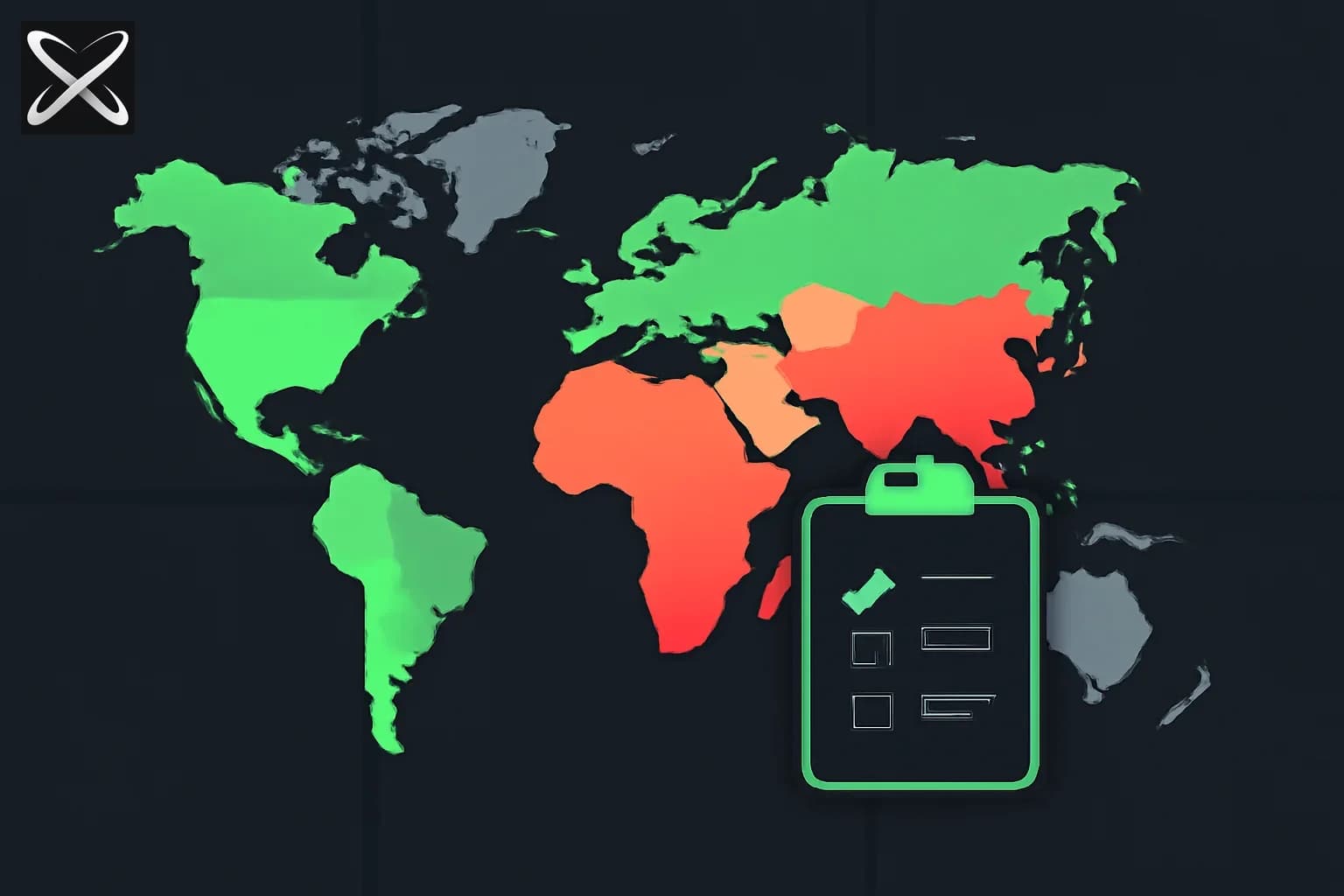
Pure AI output is not yours to protect in Europe — and putting your name on it may be the part that creates legal exposure. A fresh EUobserver interview with Vanderbilt copyright scholar Daniel Gervais, combined with a Munich Local Court ruling on AI-generated logos and ongoing EU copyright modernization talks, has made the EU position harder to ignore: content entirely generated by AI does not enjoy copyright protection. For teams shipping blog posts, marketing copy, and code with Claude Code, ChatGPT, or other models, the asymmetry is stark — no exclusive rights, but full liability when you publish under your name.
TL;DR
| Question | Answer |
|---|---|
| Is pure AI content copyrighted in the EU? | No — works without sufficient human creative choices are not protected |
| Does my byline create ownership? | No — it signals responsibility, not copyright (Gervais) |
| Can I stop others copying my AI post? | Generally not, if the output is purely machine-generated |
| What about editing vs prompting? | Prompting and picking among AI suggestions is insufficient (Munich court); substantive human editing may cross the line — still unsettled |
| US vs EU? | Both lean human-centric, but EU doctrine is clearer; US still litigating case by case |
| Open source code? | Uncertain licensing chain when authorship is purely AI — see GCC and OpenJDK policies |
Why this is surfacing now
The trigger is not a new statute — it is clarity arriving faster than teams expected.
In a EUobserver interview published amid debate over Anthropic's invisible text watermark on Claude, Gervais walked through scenarios most builders already run daily: posting an AI-drafted LinkedIn update verbatim, feeding research into a model and publishing the result under your name, handing AI output to a publisher.
His answers were consistent across every scenario involving minimal human creative input: no copyright, no transferable rights, potential liability.
That aligns with Gervais's earlier work — including his 2019 analysis and a more recent SSRN framework paper on human-machine authorship — and with how European courts are starting to rule. The Munich Local Court held that AI-generated logos do not enjoy copyright protection when the human contribution amounted to prompting or selecting among AI suggestions, not creative authorship in the copyright sense. Coverage in German Law International situates this inside broader EU efforts to modernize copyright for the AI era — not to grant machines rights, but to clarify where human authorship ends.
What Gervais actually said — and why the liability line matters
The interview's most quoted passage is worth reading precisely, not as a meme:
When you put your name on an article that's written by ChatGPT or Claude, you're basically putting a provenance mark on it saying: I take responsibility for this. I haven't written it, but I'm putting my name on it. That doesn't give you copyright, but it does give you liability for the content.
That inverts how many teams treat AI workflows. The instinct is: I ran the model, I hit publish, therefore I own it. Under EU copyright doctrine, ownership and responsibility decouple. You can be accountable for inaccurate claims, infringing passages, or defamatory statements without holding any exclusive right to stop a competitor from republishing the same AI-generated structure.
Gervais also noted a subtle trap in interview scenarios: the recording of his spoken answers may itself carry his copyright, while an AI article synthesized from that recording — even in your tone of voice — may not carry yours.
For explainx.ai readers building content pipelines, the practical read is: watermarks and bylines are disclosure and accountability tools, not IP shields. That connects directly to whether removing AI watermarks is illegal — a separate question from whether you own the underlying text.
Munich court: prompting is not authorship
The Munich Local Court ruling on AI-generated logos is the case teams cite when they need a concrete EU data point beyond academic theory.
The court's reasoning, as summarized in practitioner coverage: mere prompting, or choosing among AI-generated options, does not constitute the human creative contribution copyright requires. A logo entirely produced by AI — even if you iterated prompts — falls outside protection.
That does not mean all AI-assisted design is unprotected. Courts elsewhere will eventually draw lines around substantial human editing, selection among many outputs combined with creative arrangement, and hybrid workflows where humans make expressive choices the model does not. But the Munich baseline is clear: the bar is higher than "I wrote a good prompt."
Compare that to how marketers think about AI content — often optimizing for speed and volume. Speed without human creative investment may produce publishable copy that nobody can exclusively own.
What people are asking
"We edit AI drafts heavily — are we safe?"
Probably closer to protectable than verbatim publishing, but "heavy editing" is not self-proving. Document what a human chose: structure, factual corrections, creative framing, cut lines, legal review. The EU AI Act's transparency rules and copyright authorship questions are related but distinct — complying with disclosure obligations does not automatically create copyright.
"Can our publisher copyright AI-assisted articles?"
Gervais's answer: if there is no copyright in the underlying work, there is nothing to transfer. Publishing contracts that assume the author assigns exclusive rights need revisiting for AI-heavy workflows.
"Does this make AI slop… legal to copy?"
In many cases, yes — that is the point of public-domain status. Others can republish, remix, or compete with purely AI-generated material you published first. Your brand reputation may still matter commercially, but copyright enforcement likely will not.
"What about code and open source?"
This is where the EU copyright question collides with maintainer economics. GCC's July 2026 policy declines legally significant LLM-generated contributions partly because of copyright clarity. OpenJDK's stricter ban goes further — zero AI-generated lines in community patches. The through-line: if AI output may not be copyrightable, open source licenses that depend on a human licensor's rights become harder to reason about.
That does not mean stop using AI in development. It means treat AI-generated patches like you treat shadow AI in the workplace — govern them, disclose them, and do not assume standard IP chains hold automatically.
EU vs US — same direction, different certainty
The US Copyright Office's position, summarized in explainx.ai's AI and law guide, also denies protection for works without meaningful human authorship. But US outcomes still depend heavily on fact-specific litigation.
Europe's doctrinal foundation — author as human creator — makes the default outcome for pure AI output easier to state upfront: public domain, not proprietary.
| Dimension | EU (current doctrine) | US (current practice) |
|---|---|---|
| Pure AI output | Not protected; public domain | Not registrable; protection denied in Copyright Office guidance |
| Prompting alone | Insufficient (Munich court) | Insufficient in current Office guidance |
| Heavy human editing | Uncertain; framework emerging (Gervais) | Case-by-case; some registrations granted |
| Byline effect | Liability without ownership (Gervais) | Similar accountability; ownership still requires human authorship |
| Policy layer | EU AI Act transparency + copyright modernization | Sector-specific litigation; fewer unified rules |
Teams operating globally should assume the lowest common denominator: treat pure AI output as unprotectable everywhere until counsel says otherwise for a specific asset.
What this means for teams using AI — a practical checklist
1. Separate "publishable" from "protectable." AI can produce usable marketing copy, internal docs, and draft code fast. That does not mean you hold exclusive rights. If exclusivity matters — brand campaigns, licensable assets, defensible product copy — budget human creative work on top.
2. Treat bylines as liability acceptance. When a human name goes on AI output, you are vouching for accuracy and legality, not acquiring a monopoly. Run the same review you'd run for human-written content: fact-check, legal scan, brand voice QA.
3. Document human contribution where IP stakes are high. For assets you may need to enforce — logos, flagship reports, patent-adjacent documentation — keep records of creative decisions only humans made. Prompt logs alone likely will not suffice in EU courts.
4. Align with open source policies before you push AI patches upstream. Read your target project's AI contribution rules before submitting LLM-generated code. Core infrastructure projects are explicitly optimizing for human-vouchable authorship.
5. Do not confuse watermark compliance with ownership. Provider-side marking under the EU AI Act addresses transparency. It does not convert machine output into your copyrighted work.
Open questions still worth watching
- Where exactly is the human-contribution line? Editing volume, creative selection, and arrangement standards will emerge through more national court decisions — Munich is one data point, not the final word.
- Software and license compatibility: If AI-generated code lacks authorship, do standard OSS licenses attach cleanly? Maintainers are answering "we're not sure" with conservative policies.
- EU legislative modernization: The German Law International overview tracks Commission and Parliament work to update copyright for AI-era creation — watch for harmonized tests for "human authorship" rather than purely national rulings.
Bottom line
EU copyright law does not protect content entirely generated by AI. Putting your name on that content does not fix the ownership gap — it widens the accountability gap. For builders using AI every day, the actionable shift is strategic: invest human creative labor where exclusivity matters; treat pure model output as fast, copyable, and yours to stand behind but not to lock down.
Related on explainx.ai
- AI regulation complete guide — EU AI Act, US policy, and copyright surfaces
- AI and the law — contracts, IP, and the US Copyright Office position
- Is removing an AI watermark illegal? DMCA §1202 and EU AI Act
- GCC AI contributions policy — copyright threshold for LLM patches
- OpenJDK bans AI-generated code from community contributions
- Europe AI landscape 2026 — EU Act, sovereign compute, policy context
- AI watermarking impact on marketers — speed vs provenance
- Shadow AI workplace privacy risk guide
Primary sources: EUobserver — Gervais interview · SSRN — Gervais authorship framework · German Law International — EU copyright modernization
This article is general information for a technical and educational audience, not legal advice. Copyright law varies by jurisdiction and continues to evolve — consult a qualified attorney licensed in your jurisdiction for guidance on specific assets. Facts and citations reflect sources available as of August 21, 2026. Follow @explainx_ai for updates.