



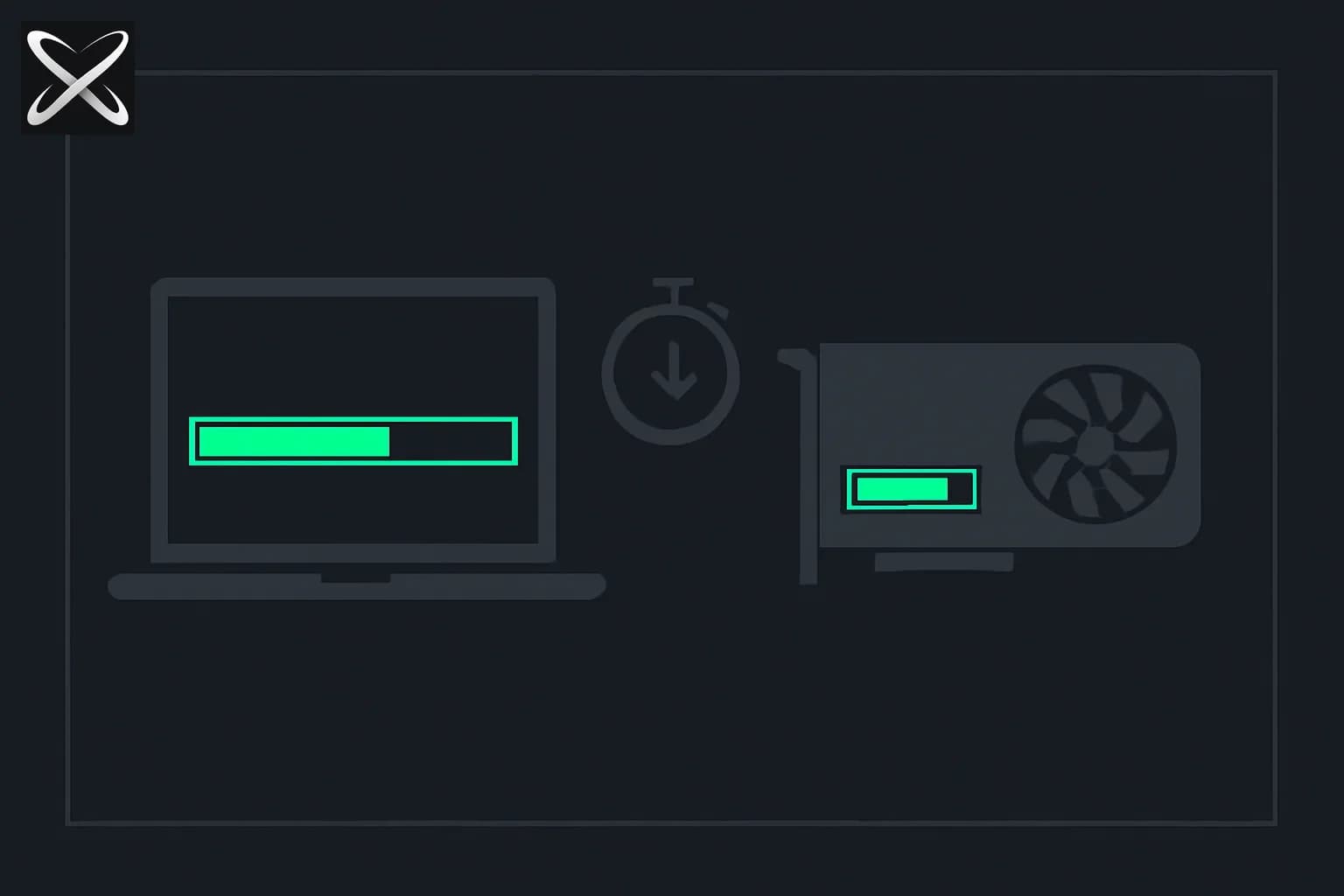
Apple finally put its newest AI silicon in the box homelab builders actually wanted — the same week the internet dunked on MacBooks in server racks.
On August 25, 2026, Apple announced the M6 in a refreshed Mac mini alongside M5 Pro in the same chassis and M5 Ultra in a new Mac Studio. Both minis ship September 22. Marques Brownlee posted within the hour: "M6 Mac Mini starts at $899 now 😮" — and the replies split between AI hype and sticker shock after the M4 mini’s $599 era.
For explainx.ai readers, the story is not the polishing-cloth jokes or the fully specced $18,299 Mac Studio meme. It is whether this 2 nm, Dual Neural Engine mini is the right on-device AI node — and how it connects to the Namespace MacBook rack debate from literally yesterday.
Update — August 25, 2026: Same launch day — Mac Studio M5 Max and M5 Ultra with up to 512GB unified memory, Thunderbolt 5 RDMA clustering, and Core AI for builders who outgrow 32GB on the mini.
Apple CEO Tim Cook posted the launch video on X within hours of the press release — "The new Mac mini is here. Small in size. Big on performance. From everyday productivity to all things AI, it can help you do it all." The clip crossed roughly 1M views on launch day, making it the consumer-facing counterpoint to Apple's spec-sheet PDFs.
TL;DR — questions people are actually asking
| Question | Direct answer |
|---|---|
| What’s new for AI on M6? | Dual 16-core Neural Engine, Neural Accelerator per GPU core, 170GB/s bandwidth, 16GB base (up to 32GB) |
| How much faster for LLMs? | Apple claims 4.8× LM Studio prompt processing vs M4 mini (M6); 4× vs M4 Pro (M5 Pro) |
| What models fit in 32GB? | 7B–14B comfortable at high quant; ~27B at Q4 — not 70B frontier local |
| Starting prices? | $899 M6 · $1,699 M5 Pro (up to 64GB, 307GB/s, TB5) |
| Connectivity? | M6: 2.5Gb Ethernet (10Gb option), Wi-Fi 7, TB4 · M5 Pro: TB5 for mini clustering |
| When does it ship? | September 22, 2026 — pre-orders opened August 25 |
| Mac mini vs MacBook in a rack? | Mini wins $/enclosure when the SKU exists — Namespace ran laptops because no M5 mini shipped until now |
| When do I need Mac Studio instead? | 128GB–512GB unified memory — see Mac Studio M5 Max/Ultra |
What Apple shipped (AI-relevant specs only)
Apple’s press release is unusually explicit about AI compute blocks — not just CPU GHz. The pieces that matter for local builders:
Dual 16-core Neural Engine
Previous M-series chips carried a single Neural Engine. M6 doubles the block: two 16-core engines that system frameworks can use simultaneously, Apple says, for faster model execution on device. Apple quotes up to 2× peak compute over prior generations for on-device AI workflows.
Practical read: Apple Intelligence features, Core ML classifiers, and small transformer graphs get a dedicated low-power path in parallel — not only when the GPU is idle.
12-core GPU with Neural Accelerators
Each of the 12 GPU cores includes a Neural Accelerator. Apple claims:
- ~30% higher peak GPU compute for AI vs M5
- more than 8× vs M1 for prompt processing with on-device LLMs
That is the path MLX, llama.cpp Metal backends, and diffusion apps actually hit when you are not purely on the Neural Engine.
Memory and I/O — where the two minis diverge
| Spec | M6 Mac mini | M5 Pro Mac mini |
|---|---|---|
| CPU / GPU | M6 (12-core GPU + Neural Accelerators) | Up to 18-core CPU, 20-core GPU |
| Max unified memory | 32GB (16GB base) | 64GB |
| Memory bandwidth | 170GB/s | 307GB/s |
| Thunderbolt | TB4 | TB5 |
| Ethernet | 2.5Gb standard, 10Gb option | Same chassis I/O |
| Wireless | Wi-Fi 7 | Wi-Fi 7 |
| Starting price | $899 | $1,699 |
For builders who outgrow even 64GB, Apple’s same-day Mac Studio M5 Max/Ultra launch scales to 512GB and 1.2TB/s — the path for hundred-billion-parameter local runs, not the mini.
LM Studio benchmarks — Apple’s LLM speed claims
Apple’s August 25 testing in LM Studio (prompt processing, on-device LLMs):
- M6 Mac mini: 4.8× faster vs M4 Mac mini
- M5 Pro Mac mini: 4× faster vs M4 Pro Mac mini
Treat these as Apple preproduction figures until independent tok/s land — but they signal which SKU Apple expects LLM builders to buy.
“Always-on agentic computing” — cluster minis via TB5
Apple’s Mac mini messaging goes beyond a desk box: M5 Pro minis with Thunderbolt 5 are positioned for always-on agentic computing — linking multiple minis into a small on-device cluster. M6 stays on TB4 and fits the single-node agent loop; M5 Pro is the fleet SKU when you want headroom, 64GB, and TB5 daisy-chaining.
Apple positions M6 for "AI hobbyists, developers, and enterprises" doing agentic tasks and on-device LLMs — but 32GB max on M6 means the mini is a node, not a Mac Studio frontier box replacement.
For how much of that pool models really see after macOS, see MacBook vs dedicated GPU — the ~75% usable rule still applies on M6.
What you can realistically run on an M6 Mac mini
These are practitioner tiers, not Apple marketing slides:
| Model class | Quant | Fits 32GB mini? | Notes |
|---|---|---|---|
| Gemma 4 12B | Q8 | Yes | Strong multimodal local; see MLX Gemma guide |
| Qwen3.8 27B | Q4 | Tight | HN’s current sweet spot — local OpenCode setup |
| 7B–14B coding models | Q8–Q6 | Comfortable | Good for overnight agent loops |
| 70B+ dense | Any | No | Buy Studio Ultra or a GPU box |
| Apple Foundation Models | N/A | Yes | On-device via Core AI / App Intents — private, small context |
Copy-paste starter stack (same as any Apple Silicon box — chip generation mainly changes tok/s):
# Pull a coding-weight model
ollama pull qwen3-coder:14b

# Serve OpenAI-compatible API on localhost
ollama serve

# Point OpenCode / local harness at http://127.0.0.1:11434/v1
For maximum M6 throughput, llama.cpp with Metal and MLX builds tuned for Apple Silicon usually beat generic paths — especially now that GPU Neural Accelerators are in the marketing path.
M5 Pro vs M6 — which Mac mini for local AI?
Both minis ship September 22, 2026. The decision is not “newer vs older” — it is memory ceiling vs entry price:
| Factor | M6 Mac mini ($899) | M5 Pro Mac mini ($1,699) |
|---|---|---|
| Process / AI silicon | 2 nm, Dual Neural Engine, GPU Neural Accelerators | Prior-gen Pro die, still strong CPU/GPU AI |
| Max RAM | 32GB (16GB base) | 64GB |
| Bandwidth | 170GB/s | 307GB/s |
| Thunderbolt | TB4 — single-node agent | TB5 — cluster multiple minis |
| Apple LLM claim (LM Studio) | 4.8× vs M4 mini | 4× vs M4 Pro |
| Ethernet | 2.5Gb (10Gb option) | Same chassis |
| Best for | Desk agent, MLX experiments, Apple Intelligence, ≤27B local | Always-on agent fleets, 48–64GB headroom, TB5 clustering |
| Skip if | You need more than 32GB or TB5 linking | $899 budget matters more than RAM |
Rule of thumb: buy M6 for the cheapest path into Apple’s newest Neural Engine story; buy M5 Pro when 64GB, 307GB/s, or TB5 mini clusters are the workload.
M6 vs M5 Pro vs M5 Ultra — which Apple AI box?
Apple put three AI-relevant SKUs on the menu August 25:
| Box | Chip | Best for | AI limit |
|---|---|---|---|
| Mac mini | M6 | Default homelab / desk AI node | 32GB, 170GB/s, TB4 |
| Mac mini | M5 Pro | Agent fleets, 64GB local, TB5 clusters | 64GB, 307GB/s |
| Mac Studio | M5 Ultra | Local frontier models, video + AI | 512GB, 1.2TB/s, 80 GPU cores |
M6 mini is the answer to "I want Apple’s newest on-device AI silicon without a laptop display."
M5 Pro mini is the answer to "I want always-on agentic nodes I can link over TB5."
M5 Ultra Studio is the answer to "I want to run models with hundreds of billions of parameters entirely on device" — see the full Mac Studio M5 Max/Ultra breakdown and Unsloth’s Kimi K3 guidance at 128GB+.
If you are choosing between M6 mini and a used M4 Max Studio, read tok/s benchmarks when they land — unified memory size often beats generation for LLMs.
The Namespace connection — why this launch timing matters
Yesterday’s viral clip — MacBooks unboxed for server racks — boiled down to one Hugo Santos quote:
"There are definitely Mac Minis in kind of real data centers, many of them. But there are no M5 Mac minis."
Namespace needed top-tier Apple Silicon for Xcode CI before Apple shipped it in a display-less SKU. MacBook Pros were the available enclosure.
August 25 changes the product ladder: M6 and M5 Pro in a Mac mini. CI fleets and homelab builders no longer must pay for screens and batteries to get the current chip generation — at least at Pro/M6 tier, not Max (still laptop/Studio territory).
That does not automatically mean Namespace swaps overnight — fleet procurement, power budgets, and M5 Ultra density for mixed racks still matter — but the internet’s "just use minis" dunk becomes technically fair again for the new silicon generation.
The $899 elephant — is the mini still the value AI box?
Social reaction (including MKBHD’s thread) centers on price, not Neural Engine core counts:
- $899 entry vs ~$599 M4 mini era — a $300 step many call out as breaking what made the mini attractive
- Base storage still 256GB at that tier — painful for large GGUF libraries without NVMe upgrades
- 16GB base RAM on M6 — fine for macOS, tight for local LLM; 24–32GB is the AI floor (M5 Pro scales to 64GB)
- Ship date September 22 — not same-day; fleet buyers still on M4/M5 laptops until then
Honest builder math:
| If you… | Verdict |
|---|---|
| Need quiet 24/7 agent on ≤27B models | M6 mini still wins vs laptop rack weirdness |
| Need 48GB+ unified memory | Wait for Studio sales or buy M4 Max refurb |
| Need max tok/s per dollar | Dedicated GPU — unchanged |
| Already run cloud coding agents | Hardware is secondary to harness + quota economics |
Apple’s AI story on M6 is real silicon — 2 nm, dual NE, GPU Neural Accelerators. The business story is whether $899 still owns the "cheapest way into Apple local AI" position, or whether RAM price spikes push builders to used Studios and Nvidia boxes instead.
Developer frameworks — what Apple wants you to call
Apple grouped Core AI, Core ML, Metal, and Xcode as the stack that "tap directly into the advanced hardware." Translation for practitioners:
- Core ML / Core AI — on-device inference with automatic CPU + GPU + both Neural Engines
- Metal — MLX, llama.cpp GPU paths, diffusion
- Apple Foundation Models + App Intents — first-party on-device models and Apple Intelligence hooks
- Your own GGUF — still via Ollama, llama.cpp, LM Studio — Apple does not gate third-party weights
None of that replaces a personal local AI workflow design — it gives M6 owners more fixed-function AI throughput when apps opt in.
What people are asking on X (and the straight answers)
Replies under Tim Cook's launch video and Marques Brownlee's thread split along predictable lines — price, design nostalgia, and whether "all things AI" means anything for a 32GB box.
"$300 price bump — why $899?" — The M4 mini's $599 entry made the form factor a homelab darling. Replies call out the step to $899 as breaking the value story — including posts from builders like Yash Gawde and HarshithLucky3 framing it as a straight $300 increase before RAM and storage upgrades. Honest read: Apple moved the floor, not the ceiling; M5 Pro at $1,699 with 64GB is the serious local-AI SKU now.
"I'm sad you took this from us" — Enterprise analyst Evan Kirstel's reply to Cook's video reads like mourning a design change or removed capability rather than price alone — launch-day threads often mix nostalgia for the old chassis with complaints about the new one.
"Can one Mac mini run agentic tasks for a household?" — lucataco asks whether a single box can orchestrate on-device agents across a home — the practical question behind Apple's "all things AI" line. Answer today: one M6 node handles desk-side agents and ≤27B local models fine; a whole-home fleet needs M5 Pro + TB5 clustering or cloud fallbacks.
"Why smaller instead of cheaper?" — Mark Maatos pushes back on the industrial-design narrative: if Apple wanted to win builders, why shrink the desktop footprint instead of lowering price or adding RAM at the base tier? Fair question — 16GB base on a machine marketed for AI is still the real friction point.
"Can this handle GTA 6?" — Wrong benchmark. For games, Apple cites ray tracing and geometry gains; for AI builders, ask tokens/sec on Qwen 27B Q4 when independent tests ship.
"Why $899 on the homepage but $799 on configure?" — Configurator promos and SKU mismatches happen on launch day; verify RAM and storage before comparing.
"AI bubble — nobody is buying until it pops" — Macro sentiment. Practically, local inference demand is already distorting RAM markets; Apple is selling on-device compute, not H100s.
"Second-gen $9 polishing cloth" — Not relevant to LLMs. Meme accordingly.
Who should buy an M6 Mac mini for AI (and who should not)
Buy if:
- You want the smallest Apple box with Dual Neural Engine and GPU AI accelerators
- You run MLX / Ollama / OpenCode locally on ≤32GB models
- You care about privacy and Apple Intelligence on-device
- You are replacing a laptop-in-a-closet CI or agent node with a proper mini
Skip if:
- You need more than 64GB unified memory — get Mac Studio M5 Ultra or refurb Max
- Tokens/sec is the product — Nvidia local setup still wins speed
- $899 base exceeds your $/tok budget — used M4 mini or GPU PC
- You only use cloud agents — fix harness economics first
Update — September 1, 2026: Tim Cook stepped down as Apple CEO the same week this chip shipped; John Ternus, the hardware chief who oversaw this Neural Engine roadmap, is now CEO. See Tim Cook Steps Down: John Ternus Is Apple CEO for what that means for Apple's on-device AI direction.
Related on explainx.ai
-
Tim Cook Steps Down: John Ternus Is Apple CEO — AI Strategy Implications
-
Mac Studio M5 Max and M5 Ultra — 512GB local AI — when 32GB on the mini is not enough
-
Can you use MacBooks as servers? Namespace’s rack video — why MacBooks showed up before this mini launch
-
Update — September 23, 2026: John Ternus revived the AI pitch for both machines a month later, the same week Opus 5.5 and GPT-6 Sol launched — see what changed, and what didn't.
-
MacBook vs dedicated GPU for local LLMs — unified memory math that still applies to M6
-
Build your personal AI system — local hardware guide — full stack beyond the chip
-
How to run open-source models locally in OpenCode — wire localhost inference to a coding harness
-
Mac Studio M5 Max and M5 Ultra — local AI for builders who outgrew the mini
-
Kimi K3 1-bit GGUF on Mac Studio — when 32GB is not enough
Sources
- Apple — M6 and M5 Ultra press release — August 25, 2026
- Apple — Mac mini with M6 and M5 Pro — August 25, 2026
- Tim Cook on X — Mac mini launch video — August 25, 2026 (~1M views)
- Marques Brownlee on X — M6 Mac mini $899 — August 25, 2026
- Namespace MacBooks rack thread context — August 24–25, 2026
Apple’s quoted performance figures come from August 2026 preproduction testing against M5 and M1 systems; independent LLM tok/s on M6 was not available at publication. Configurator pricing and RAM tiers may vary by region. Follow @explainx_ai for local AI hardware coverage.