



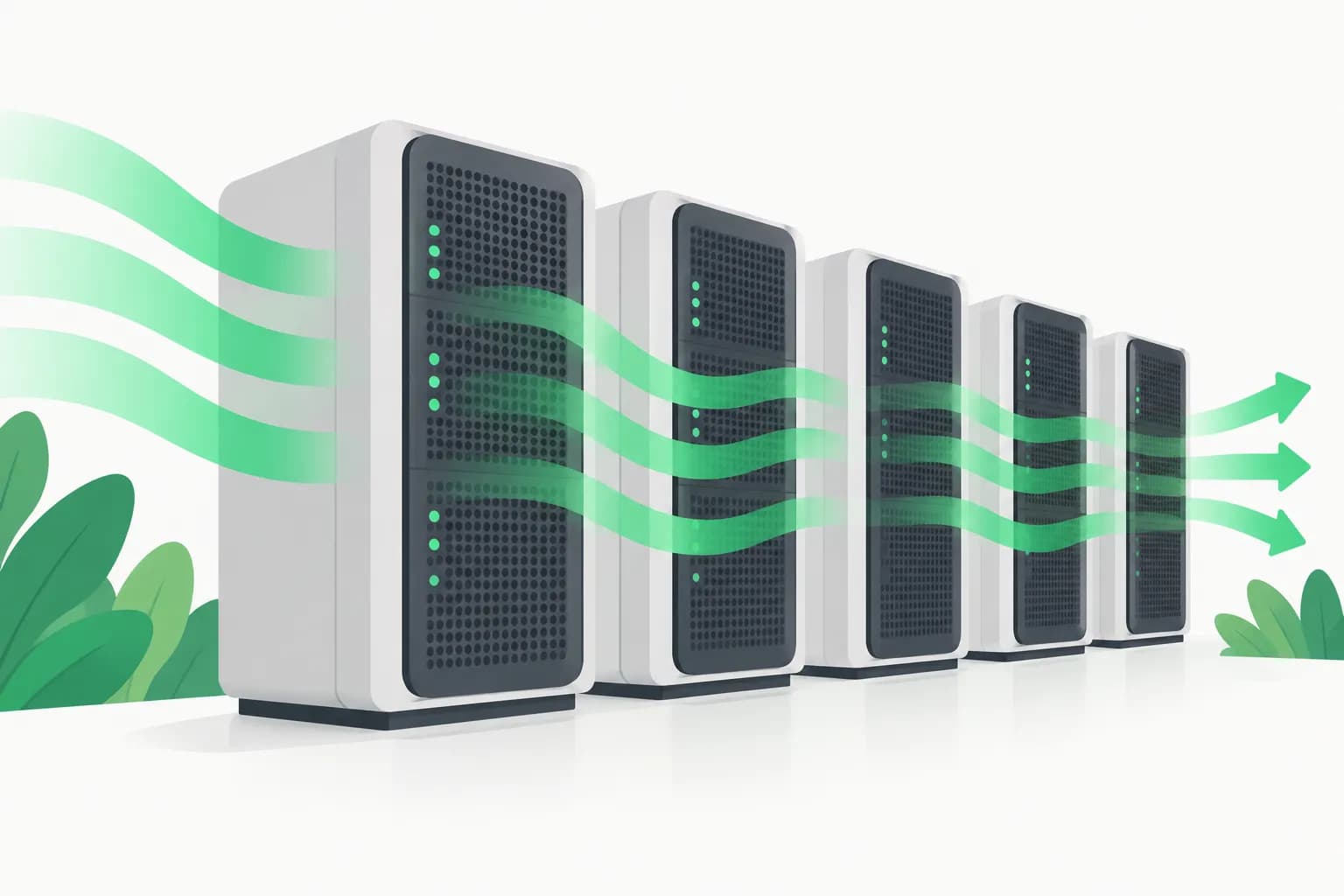
Hyperscalers are signing multi-year optical supply contracts, not just GPU purchase orders. On November 24, 2026 Applied Optoelectronics (NASDAQ: AAOI) announced a long-term agreement (LTA) with an unnamed Tier-1 hyperscale datacenter customer covering 800G transceivers and laser diodes from December 2026 through December 2030. Binding minimums total about $2.2 billion, while management says customer forecasts could exceed $10 billion if capacity comes online — language the release explicitly marks as non-guaranteed.
| Line item | Amount / timing (per AOI) |
|---|---|
| 800G transceivers minimum | ~$1.5B in 2027 |
| Laser diodes minimum | ~$0.7B in 2028–2029 |
| Agreement term | Dec 2026 – Dec 2030 |
| Forecast upside (not binding) | Could exceed $10B over four years |
| Qualification spend | $2M one-time AOI contribution |
What the press release commits
The AOI newsroom post and investor duplicate share the same core terms:
- Supply 800G transceiver products plus laser diodes across the four-year window.
- Allow additional product categories if the customer requests them later.
- Require the customer to fund no capital into AOI as part of the LTA.
- Oblige AOI to spend $2 million accelerating qualification with this buyer.
CEO Thompson Lin frames the deal as proof of technology leadership in advanced optics and AOI's automated manufacturing plus in-house laser capacity for the next AI datacenter deployment phase.
800G transceivers versus laser diodes
 AOI November 2026 hyperscaler LTA infographic for 800G transceivers and laser diodes
Image: Applied Optoelectronics (AOI)
800G transceivers are the front-line items for AI cluster networking — the pluggable optics linking switches and accelerators inside and between buildings. The 2027 minimum is front-loaded, matching hyperscaler schedules for next-generation fabric upgrades explainx.ai tracks alongside TSMC Texas fab applications and Samsung memory LTAs.
Laser diodes arrive in the 2028–2029 bucket because AOI expects some units to feed co-packaged optics (CPO) architectures. Lin's quote ties high-power lasers to silicon photonics, near-packaged optics (NPO), and CPO, with plans to expand laser manufacturing in Texas if demand materializes.
Builders wiring Ethernet fabrics should read this as lead-time insurance — when transceiver vendors sign LTAs, spot-market shortages during ramp years become less likely for customers with allocations.
Binding $2.2B versus $10B "discussions"
CFO Stefan Murry draws a careful line:
- $2.2 billion reflects purchase commitments spelled out in the contract.
- $10 billion+ reflects forecasted demand from long-term discussions — not guaranteed, not revenue guidance, and not purchase orders beyond stated minimums.
The forward-looking block warns that customer forecasts may change and that extra sales require AOI to bring capacity online and win additional commitments.
That structure mirrors explainx.ai's approach in claimed-vs-verified hyperscaler posts: separate signed minimums from headline aspiration.
U.S. manufacturing and qualification
AOI committed to ship an agreed quantity of U.S.-made products starting Q1 2027, ramping through the year. For policy readers, the line intersects domestic content fights and CHIPS-era supply chain reporting, even though AOI is an optics vendor, not a fab operator.
The $2 million qualification contribution signals the customer asked for accelerated validation — common when a hyperscaler swaps vendors during a generational speed bump (400G to 800G to 1.6T roadmaps).
Who might the customer be?
AOI does not name the buyer. The release calls it an existing Tier-1 hyperscale relationship and notes AOI secured another LTA with a second hyperscale customer — implying at least two major buyers in its book.
Readers should avoid guessing a logo without filings. Instead watch 10-Q customer concentration lines and cloud capex guides from OpenAI infrastructure builds and Amazon datacenter pushback for indirect demand signals.
How AOI fits the AI infrastructure stack
| Layer | What AOI supplies | Related explainx.ai coverage |
|---|---|---|
| GPU/accelerator pods | Indirect — optics enable scale-out | Nvidia supply probes |
| Network fabric | 800G transceivers | Oracle-Google TPU networking deals |
| Photonics transition | Laser diodes for CPO/NPO | DeepMind infra research |
| Power and land | Not AOI's lane | COP31 datacenter energy debates |
Optics LTAs rarely trend on social feeds, but they gate cluster launches when lead times slip. Treat AOI like memory LTAs: boring headline, real schedule risk if missed.
What builders should do now
- Map 800G readiness in your datacenter BOM — optics often lag accelerator POs.
- Track CPO timelines if you design custom accelerators; laser supply becomes part of package co-design.
- Separate contract minimums from forecasts when finance models AI capex.
- Watch Texas expansion announcements for AOI laser fabs — employment and permitting news may precede revenue.
- Cross-check Arm hyperscaler server share claims only for total cost of ownership, not optics content.
AOI as a supplier, not a headline brand
Applied Optoelectronics is a Sugar Land, Texas vendor known to carriers and cloud buyers for optical components, not consumer GPUs. The November release emphasizes automated manufacturing and in-house laser technology — capabilities that matter when hyperscalers qualify second sources for modules they cannot single-source forever.
If you only follow Nvidia earnings, optics vendors feel peripheral. On cluster construction calls, they are often the gating item when lead times stretch.
 Network topology ring diagram evoking high-speed 800G fabric links between AI datacenter racks
Why 800G timing matters for 2027 clusters
Networking upgrades often trail accelerator refreshes by quarters. When AOI locks $1.5 billion of 800G transceiver minimums in 2027, it is effectively calling the year when hyperscalers re-cable existing halls for higher radix Ethernet fabrics.
For software teams, the practical effect shows up in NCCL latency, checkpoint times, and multi-rack training stability — not in a press headline. If optics slip, GPU pods can sit idle while switches wait for pluggable modules.
explainx.ai's OpenRouter weekly spend snapshot shows how inference traffic shifts between labs; training clusters underneath still depend on physical interconnect contracts like this one.
Co-packaged optics in one paragraph
 Server rack beside a building, evoking on-prem AI datacenter builds that depend on optical interconnect supply
Co-packaged optics (CPO) moves photonics closer to switch silicon to cut power per bit. AOI's 2028–2029 laser diode bucket is the tell that this customer expects CPO pilots to graduate into volume during the LTA window — not necessarily in 2027's transceiver tranche.
Lin's statement that AOI will expand laser capacity in Texas if CPO demand grows links the deal to industrial policy threads: domestic laser fabs are as strategic as leading-edge logic for some lawmakers, even when the dollars are smaller.
Second hyperscale customer context
The release says AOI secured another LTA with a second hyperscale customer, reinforcing that vendor diversification is normal — hyperscalers rarely rely on a single optics house at 800G.
Compare that posture to GPU supply, where export controls dominate headlines. Optics LTAs rarely trigger the same political heat, but they still appear in supplier risk registers CIOs file during multi-year AI programs.
Modeling revenue: minimums, forecasts, and guidance
Investors should chart three layers:
- Contract minimums ($2.2B) — legal floor for planning.
- Management forecast ($10B+) — sensitivity analysis only until new POs sign.
- Street models — must not treat forecasts as guidance; AOI's disclaimer is explicit.
If you run scenario analysis, stress-test 2028–2029 laser pulls separately from 2027 transceiver ramps — mismatched slopes are common when CPO transitions lag pluggable 800G.
Timeline at a glance
| Period | Obligation or milestone |
|---|---|
| Nov 24, 2026 | LTA signed; $2M qualification spend |
| Dec 2026 | Agreement window opens |
| Q1 2027 | U.S.-made product shipments begin |
| 2027 | ~$1.5B minimum on 800G transceivers |
| 2028–2029 | ~$0.7B minimum on laser diodes |
| Dec 2030 | Agreement end date |
| Beyond minimums | Extra volume only if capacity and new POs align |
Procurement teams can map this table directly to RFP gates: qualification in late 2026, volume in 2027, photonics transition in 2028.
How this fits next to GPU supply drama
While Congress debates Nvidia export probes and Megaspeed enforcement, hyperscalers still sign domestic optics deals to keep U.S. training halls on schedule.
The two storylines connect indirectly: export-controlled GPUs stress foreign routing; optics LTAs stress physical plant inside approved countries. Capacity planners must juggle both ledgers.
Questions procurement teams ask
| Question | Answer from AOI release |
|---|---|
| Is the customer named? | No — Tier-1 hyperscale, existing relationship. |
| Can products change? | Yes — other products may be added per future needs. |
| Did customer invest in AOI? | No capital commitment from customer. |
| U.S. content? | Agreed U.S.-made quantity from Q1 2027. |
| Is $10B confirmed? | No — forecast only. |
Risks and open questions
- Customer anonymity limits peer comparison until another vendor cites the same buyer.
- Forecast $10B may never convert if CPO adoption slips or alternate suppliers qualify faster.
- Macro downturns can defer 2028–2029 laser pull-ins even when 2027 transceiver minimums stand.
- Export or tariff policy on laser components could affect Texas ramp assumptions.
- Competitive responses from other optics vendors could reshape pricing before 2028 laser volumes arrive.
Dollar ranges, dates, and product categories follow AOI's November 24, 2026 press release.