



COP31 ended in Antalya on November 22, 2026 without a binding climate pact after negotiators could not adopt cover text the European Union and other delegations called too weak on fossil fuels. The failure landed in the same news cycle as surging AI data-center electricity demand, a voluntary electrification target, and a thin AI pledge that frontier model labs did not sign.
For builders, the summit is less about a single treaty paragraph than about where new GPU capacity gets permitted, which grid mixes back it, and how voluntarily governments and hyperscalers will disclose emissions.
What failed at COP31 Antalya
UN News reports two weeks of talks plus two overtime days closed without consensus. Secretary-General António Guterres called the result deeply disappointing but stressed climate science is unchanged.
Turkish COP31 president Murat Kurum acknowledged the impasse: negotiators could not agree on final text, so formal decisions were not adopted. Reuters says the EU formally objected to a draft cover decision, arguing it failed to meet the moment and risked widening the gap between pledges and action.
The Conversation explains a core fracture: coalitions of climate-vulnerable nations wanted stronger fossil-fuel language, while export-dependent economies resisted. Multiple compromise drafts referenced warming above 1.5°C and carbon removal, yet still could not secure unanimity.
The Verge frames the collapse as the longest COP on record where official negotiations fell apart even as side pledges continued in parallel corridors.
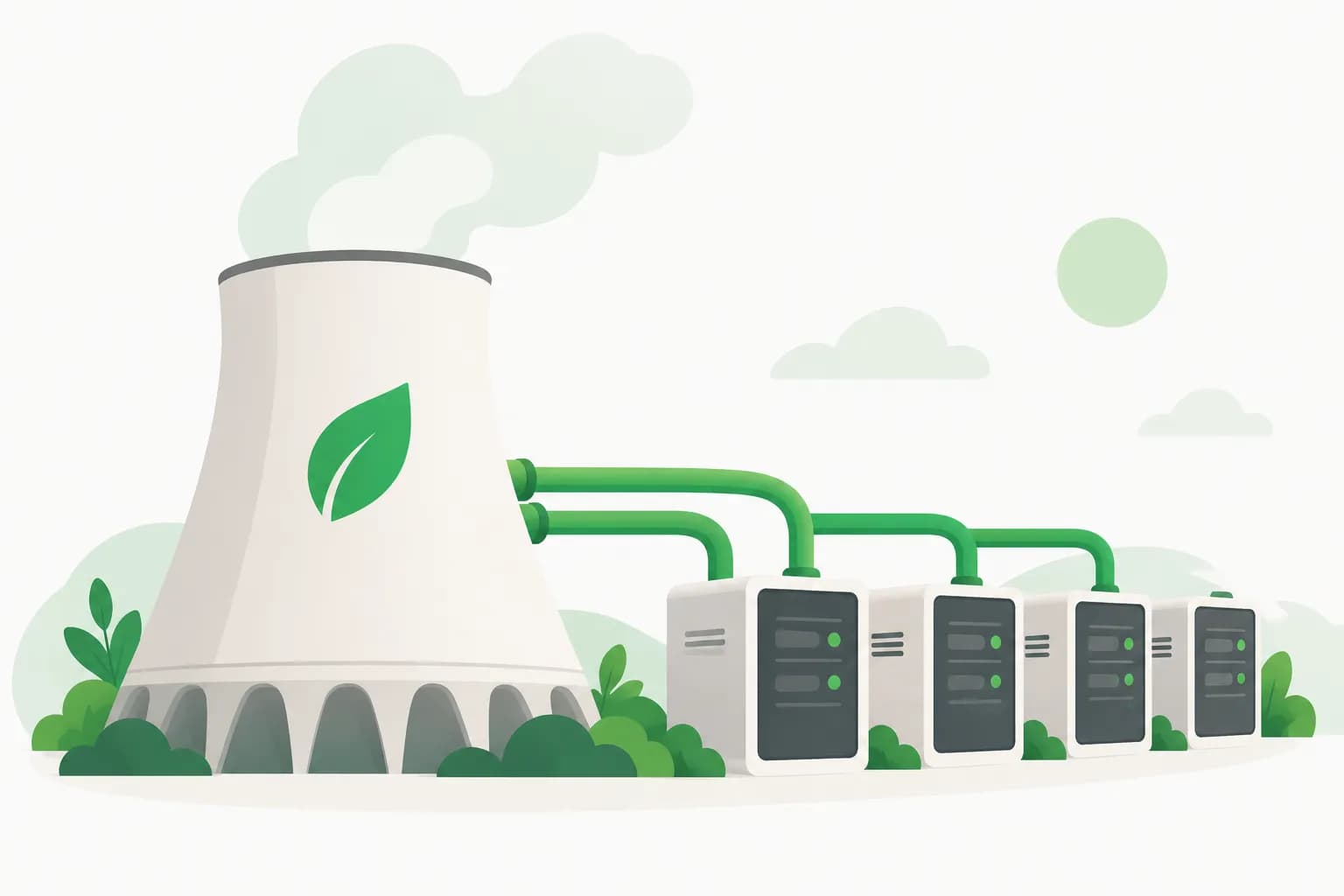
 Cooling infrastructure beside server capacity tied to grid electricity at COP31 data-center debates
AI data centers entered electrification fights
Climate ministers arrived with electrification as a headline tool: move cars, heating, and industry onto wires instead of burning fuels onsite. The Verge quotes Australia's Chris Bowen, COP31 co-president, telling Politico that every climate minister is thinking about data-center power spikes as part of the broader energy transformation.
The collision is timing. The International Energy Agency projections cited in summit coverage describe data-center electricity demand roughly doubling by 2030. Meanwhile teams racing frontier training runs seek fast interconnect, sometimes on-site gas, as explainx.ai tracked in PJM fast energization and Harvard fossil-share findings on US hyperscale sites.
Bruce Douglas, CEO of the Global Renewables Alliance, told The Verge in email that rising data-center demand is not yet sustainable and an AI boom cannot become a fossil-fuel boom. His group co-hosted a COP31 panel on the challenge. The quote aligns with NGO warnings that conservation groups already rely on AI tools while campaigning against unfettered buildout.
| Stress point | Why AI builders should care |
|---|---|
| Grid queue competition | Data centers outbid households for speed to power, per Douglas in The Verge |
| Renewable accounting | Annual certificates without new green electrons can raise system emissions |
| Geography | US and China dominate new AI megasites, amplifying gas backup stories |
 Data center load beside on-site renewable generation, echoing green-electron debates at COP31
The Verge also cites a Sierra Club analysis warning US power-sector emissions could rise 42 percent by 2030 — the same scenario explainx.ai tracked in Sierra Club emissions claims on data-center growth if utilities build fossil infrastructure to serve data-center load, plus Harvard-linked coverage comparing US hyperscale pollution to Denmark-scale annual emissions. explainx.ai treats those figures as attributed third-party estimates, not independent measurements.
The 35-by-35 electrification pledge
Parallel to the collapsed cover text, Turkey and Australia promoted 35 by 35: raise electricity's share of final energy consumption to about 35 percent by 2035, up from roughly 20–23 percent today in different briefings.
Reuters says proponents argued the target could cut emissions by accelerating electrified transport and heat. Critics warned it could shift costs onto poorer nations without explicit fossil phase-out language.
The Conversation reports more than 75 countries and 180 businesses signed the electrification pledge outside official negotiations, including names like the EU and China, even though the goal did not survive in the rejected pact.
 Wind generation feeding grid power that electrification pledges aim to expand by 2035
For AI operators, 35 by 35 is a policy tailwind for wires that can also tighten scrutiny on who consumes the next megawatt. If governments treat electrification as national strategy, AI campuses become easier political targets when they skip queues or contract gas turbines.
Antalya AI Pledge: nine countries, no frontier labs
On November 16, 2026, Turkey launched the Antalya Artificial Intelligence Pledge with the International Telecommunication Union, calling for cleaner AI infrastructure, efficiency, and transparency. Nature lists ten signatories at launch counting Germany in narrative text, while New Scientist names nine governments: Andorra, Brazil, Colombia, Luxembourg, Sierra Leone, Somalia, South Korea, Turkey, Uganda.
The pledge is voluntary. It asks countries to pursue zero- and low-emission energy for AI infrastructure and to review progress yearly at future COPs. None of the largest frontier AI labs appear on Nature's tracker list of organizational endorsements beyond telecom names like Nokia and Telefónica.
Analyst Ketan Joshi told New Scientist he is surprised uptake is low given weak binding language, and warned the pledge may greenwash gas-backed expansion. Jill McArdle of Beyond Fossil Fuels made a similar point in Nature: a green stamp without infrastructure limits risks symbolic politics.
The Verge highlights NRDC criticism that low-emission energy wording still permits natural gas. That matters for builders comparing regions: a Turkey-hosted pledge does not by itself change Virginia interconnection rules or Amazon worker pushback on new sites.
Big Tech emissions rebounds cited beside the collapse
Summit coverage tied corporate net-zero backsliding to AI training and inference scale. The Verge reports Meta is re-evaluating net-zero timing in its 2026 sustainability report, with 45 percent year-over-year emissions growth cited in the same piece. Google and Microsoft footprints are described as rising despite earlier climate commitments.
Those narratives intersect OpenAI campus cost pledges and Trump-era overseas data-center tax talk where US politics already treats AI power as trade and tax policy. COP31 failure does not repeal corporate sustainability teams, but it removes a multilateral floor negotiators hoped would name fossil fuels explicitly this year.
What builders and founders should track
Region selection. Prefer locations where grid operators publish marginal emissions and interconnection queues are transparent. Our data-center environmental impact guide lists questions to ask vendors beyond PUE marketing.
Contract language. If your cloud deal cites renewable matching, ask whether the provider is adding new generation or buying existing certificates while competing with cities for the same limited green capacity, the dynamic Douglas described to The Verge.
Disclosure pressure. The Antalya AI Pledge encourages measuring AI environmental impacts. Even without signatures from OpenAI, Anthropic, Google, Meta, or Microsoft, regulators and NGOs can borrow its checklist in permit fights and procurement RFPs.
Policy windows in the US. Federal absence at COP31 does not stop state rules like governors' frontier-AI consumer frameworks or transmission-cost debates in Senate permitting bills. EU rejection of weak COP text may still toughen Brussels expectations for US firms selling into Europe.
Do not confuse pledge math with physics. IEA data-center demand curves and Harvard hyperscale fossil shares are inventory problems. A nine-country AI pledge does not shrink queue years in PJM or Chile water stress stories.
How COP31 differs from earlier AI-at-COP threads
explainx.ai flagged COP31 sustainable AI language before delegates arrived. The November 22 collapse adds a hard political fact: even co-presidents Turkey and Australia could not hold a fossil-fuel compromise strong enough for the EU.
That is distinct from technical efficiency work. Teams improving inference per watt with KV cache discipline or speculative decoding still face permitting politics when a 500 MW campus lands next to a drought-stressed watershed.
Carbon removal language in late drafts, described by UN News and The Conversation, also matters for AI buyers. If governments lean on CDR accounting without near-term grid decarbonization, hyperscalers can pair gas turbines today with future removal credits tomorrow. Procurement teams should separate offsets from hourly matched clean power when vendors cite COP side letters. Ask for location-specific grid data, not only global marketing slide averages.
Timetable: summit close versus side pledges
| Date | Event | Outcome |
|---|---|---|
| Nov 16, 2026 | Antalya AI Pledge launch | Voluntary AI energy principles; ~9–10 governments per Nature / New Scientist |
| Nov 20–22, 2026 | Overtime negotiations | No adopted cover decision; EU objection on record |
| Nov 22, 2026 | Formal close | UN News confirms no pact; Guterres statement |
| Nov 23, 2026 | Media synthesis | The Verge ties Meta/Google/Microsoft emissions narratives to grid fights |
Related reading on explainx.ai
- Environmental groups use AI while warning on data centers
- US hyperscale fossil power share study
- Data center water and electricity basics
- Amazon workers push back on AI data-center expansion
- OpenAI community compact on campus power costs
- Anthropic data-center power and fuel sourcing concerns
Sources: UN News on COP31 close · Reuters on rejected deal · The Verge on AI data centers and COP31 · Nature on Antalya AI Pledge · New Scientist on nine-country pledge · The Conversation on collapse mechanics