



On October 2, 2026, Anthropic announced the Claude Frontier Academy and put a new job title in front of a lot of people: Frontier Deployed Engineer. The title is new. The job is not. It is the forward deployed engineer, a role that has been around for about two decades and that every major AI lab is now trying to hire at scale.
This guide explains the role from first principles — where it came from, what the work looks like, how it differs from neighboring jobs, what skills and pay to expect, and how to get in. It is written to stay useful after the news cycle moves on. For the news itself, see our Claude Frontier Academy post.
TL;DR — what people are asking
| Question | Short answer |
|---|---|
| What is it? | A software engineer embedded with a customer who ships a production system and owns its outcome |
| What does "Frontier" add? | The engineer works with frontier AI models, not just traditional software |
| Who invented it? | Palantir, in the mid-2000s; the "forward deployed" title was in use by 2009 |
| Pre-sale or post-sale? | Post-sale |
| Quota? | Generally no; measured on deployment and adoption |
| Travel? | Often significant; some OpenAI listings cite up to 50 percent |
| Typical skills? | Production coding, retrieval pipelines, evaluations, agent workflows, observability, security |
| Pay? | High and variable; see the compensation section |
| How do I get in? | Build and document real deployments, then apply directly or get nominated |
The short definition
A forward deployed engineer is a customer-facing software engineer who works for a product company and helps implement that product inside client organizations, sometimes on site beside the client's staff. The engineer commits code that runs in the customer's production systems and owns technical decisions until the software works.
The versions you will see differ in emphasis:
- Forward Deployed Engineer is the Palantir and OpenAI term, and stresses integration and deployment depth.
- Frontier Deployed Engineer is Anthropic's term for the same family of work, tied to deploying Claude.
- Applied AI Engineer is used by Anthropic and many startups and tends to stress model quality and evaluation rigor.
- Customer Engineer and Solutions Architect overlap but are often more advisory.
Do not over-index on the title. Read the job description and look for the telltale features: embedded with a customer, writes production code, no quota, responsible for the outcome.
Where the role came from
Palantir created the role in the mid-2000s. Its early customers in government and defense had data environments so sensitive and idiosyncratic that remote delivery did not work. Someone had to sit with the customer, learn the data and the workflow, and build the software on the spot. Palantir called these engineers Deltas, and by 2009 the forward deployed title was in use, borrowing the military term for forward-basing.
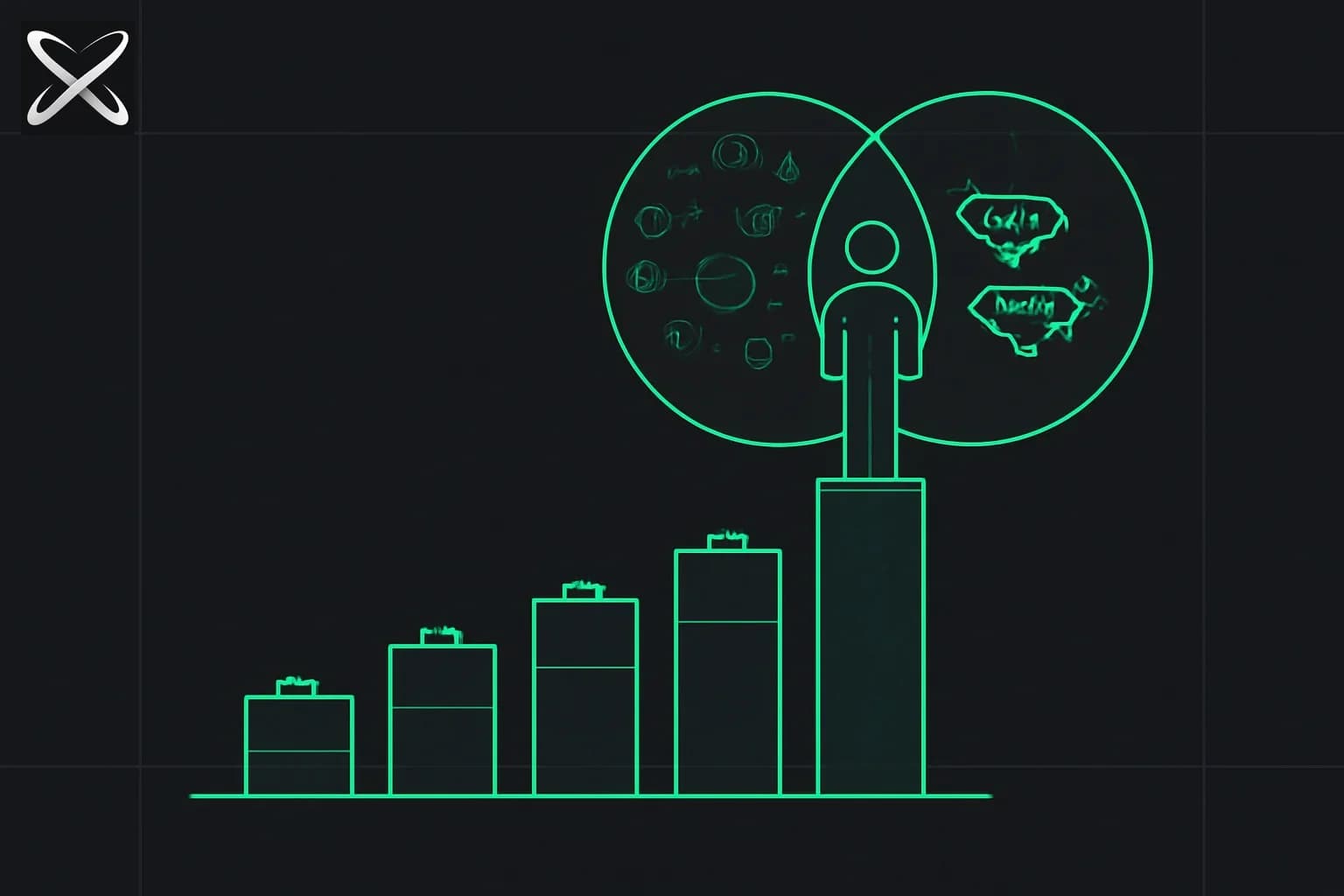
Palantir describes a useful contrast. A regular developer focuses on one capability across many customers; a forward deployed engineer focuses on one customer across many capabilities. That one sentence is the best compact definition of the role.
For almost two decades the title was a Palantir signature. It spread when AI labs realized the same problem had returned: enterprises could buy a frontier model easily and still fail to get it into production. By 2026, Anthropic, OpenAI, Google Cloud, Amazon Web Services and Microsoft had all announced forward-deployed or similar divisions, according to Wikipedia's summary. Reporting from May 2026 described OpenAI and Anthropic launching deployment ventures within days of each other — OpenAI's reportedly backed by more than $4 billion and Anthropic's by $1.5 billion — though I have not verified those figures against the companies' own announcements.
What the work actually looks like
The job description sounds abstract until you see the arc. A typical engagement moves through five stages.
- Discovery. Sit with the customer's domain experts and learn the workflow, the data, the compliance limits and the failure modes. The first deliverable is often a precise problem statement.
- Design. Choose an architecture that fits the customer's environment — their cloud, their private network, their data governance.
- Build. Write production code: retrieval pipelines over internal data, multi-step agent workflows, integrations with legacy systems.
- Evaluate. Build an evaluation suite before launch so that regressions, hallucinations and grounding gaps are caught early. This is the discipline that separates a demo from a deployment.
- Operate. Roll out, monitor latency, token usage, errors and output drift, then keep tuning until the system is reliable.
Throughout, the engineer is the primary technical contact for the account, and carries customer friction back to the internal product and research teams. That feedback loop is a large part of why companies invest in the role.
Where the week goes
The lab below compares how time is typically split across three roles. It is an illustrative teaching model, not survey data; the point is the shape. The article stands on its own if the lab does not load.
FDE vs the roles it gets confused with
| Role | When in the lifecycle | Writes production code? | Quota? | Measured on |
|---|---|---|---|---|
| Software engineer | Continuous, on a shared product | Yes, in the company's product | No | Velocity and quality |
| Solutions engineer | Pre-sale | Demos, rarely production | Often | Deals supported |
| Solutions architect | Pre-sale and design | Seldom | No | Quality of design |
| Consultant | Project-based | Rarely | No | Deliverables |
| Forward deployed engineer | Post-sale | Yes, in the customer's systems | No | Deployment and adoption |
Two clarifications matter. First, the boundary with solutions engineering is real but blurry in practice; some companies use the FDE title for roles that look like integration engineering. Andreessen Horowitz has called the trend "title arbitrage" — rebranding solutions or integration roles to signal importance. Judge a posting by its responsibilities, not its title. Second, FDEs sit between consulting and product engineering: unlike a consultant they own implementation, and unlike a product engineer they focus on one client's workflow.
Why AI made the role explode
Buying a model is easy. Deploying it inside a messy organization is not. One often-quoted 2025 MIT NANDA finding, cited in a May 2026 explainer, says 95 percent of enterprise AI pilots without hands-on deployment support show no measurable business impact; treat it as directional rather than definitive, since I have not re-verified the study. Whatever the exact number, labs see the same pattern: the bottleneck is people who can bridge the lab's knowledge of models with the customer's knowledge of their business.
The labs have said so. Anthropic's CFO Krishna Rao was quoted saying enterprise demand for Claude is significantly outpacing any single delivery model, and Blackstone's Jon Gray described forward deployed engineer scarcity as one of the most significant bottlenecks to enterprise AI adoption. That is the context in which Anthropic committed $100 million to train 10,000 of them.
The skills the job demands
Descriptions from OpenAI, Google Cloud and similar employers converge on a stack:
- Production engineering. Strong Python and JavaScript, clean architecture, debugging in unfamiliar environments. OpenAI's listings cite five or more years of engineering or technical deployment experience.
- Retrieval and data plumbing. Chunking strategies, vector stores and embeddings, reranking, and the unglamorous work of connecting to internal data.
- Evaluation. Test suites that detect hallucinations, regressions and bias before launch. See our guide to AI evals for engineers and PMs.
- Agent workflows. Multi-step, tool-using systems and the frameworks around them; our agent harness guide is a good start.
- Observability. Logging, latency tracking, token cost, error rates and output drift in production.
- Security and compliance. On-premises and private-cloud deployment, data governance, and a working understanding of what the customer's security team will refuse.
- Communication. The role is half translation. You explain model behavior to executives and workflows to researchers.
The communication line is not decoration. Anthropic's own eligibility criteria for the Academy include experience helping others adopt AI.
What it pays
Compensation is high, varies widely, and changes quickly, so treat every figure as an estimate.
| Source | Reported range |
|---|---|
| OpenAI mid-level, San Francisco (June 2026 summary) | $160K–$280K base; $350K–$450K total |
| OpenAI senior (same summary) | $220K–$300K base; $450K–$550K total |
| Google Cloud (same era) | $127K–$183K base plus equity |
| Palantir (salary aggregators, 2026) | Roughly $201K–$620K, median near $278K |
These come from recruiting blogs and aggregator summaries rather than the employers' own payroll data. The same sources note senior roles at AI labs exceeding $785K in total compensation. Use them to calibrate, not to negotiate.
The honest downsides
The role is in demand, and some people still do not want it.
- Travel. Up to 50 percent time at customer sites is cited for some roles.
- Pressure. Compressed timelines and a customer who is watching.
- Scope sprawl. One customer across many capabilities means you may be the integration engineer, the data engineer, the evaluator and the on-call.
- Title ambiguity. Some postings are solutions roles in disguise.
- Economics. Embedded engineering is expensive per customer, which constrains how companies scale it.
If you like deep ownership of one product and a stable team, a product engineering role may suit you better. If you like variety, customers and shipping, the FDE path fits.
How to get in
The Claude Frontier Academy is nomination-only. The role is not.
- Ship something real. An LLM system with users, a metric and an evaluation suite beats a collection of tutorials.
- Document an adoption. Write up a case where you got non-engineers using an AI workflow, including what failed. This is the signal customer-facing roles screen for.
- Learn the stack above. Our FDE preparation guide has a 12-week roadmap, and the FDE interview questions post covers what to expect.
- Understand the market. Our hottest tech role overview and forward deployed roles and the future of work lay out who is hiring and why.
- Add credentials carefully. Certifications are weaker signals than shipped work; see AI certifications versus a portfolio. Anthropic's Claude Certified Architect exam is one option.
- Get feedback. Supervised practice on real problems is the Academy's core mechanism. Live workshops and a structured builder bootcamp path can approximate it.
- Apply across titles. Search forward deployed, frontier deployed, applied AI, customer engineer and solutions engineer postings, then filter by the features: embedded, production code, no quota.
What people are asking
Is a Frontier Deployed Engineer the same as a forward deployed engineer?
Functionally they are close relatives. Frontier Deployed Engineer is Anthropic's label for the role as applied to its models. The underlying job — embed, build, ship, own the outcome — is the same.
Do I need a computer science degree?
The sources reviewed emphasize demonstrated engineering ability and shipped systems over specific degrees. Anthropic's criteria are strong fundamentals, a record of building with LLMs, and experience helping others adopt AI.
Will AI coding agents replace the role?
Agents change how fast an engineer builds, not whether the customer needs a human who understands their workflow, politics and risk tolerance. If anything, faster building moves more of the work into discovery, evaluation and adoption, which are human-heavy.
Is it a good first job?
Most listings ask for several years of experience, so it is more often a second or third role. Early-career engineers can prepare through projects and adjacent roles.
How is it different from AI engineering in general?
An AI engineer may build one product for many users. An FDE builds for one customer's specific workflow and carries the deployment risk.
Honest limitations
- Compensation and market-size figures come from secondary sources and vary by employer.
- I could not retrieve Palantir's own description of the role for this article, so Palantir details rely on Wikipedia and secondary guides.
- The MIT NANDA statistic and the reported joint-venture figures are quoted from a secondary explainer and not independently verified.
- The time-allocation lab is illustrative, not survey data.
Bottom line
A Frontier Deployed Engineer is a forward deployed engineer for frontier AI: embedded with a customer, shipping production systems, measured on adoption. Palantir invented the model; AI labs are now scaling it. You do not need a nomination to prepare — you need shipped deployments, an evaluation habit and the ability to help other people use what you built.
Related on explainx.ai
- Claude Frontier Academy: $100M to train 10,000 engineers
- Forward deployed engineer: the hottest tech role of 2026
- Forward deployed engineer preparation guide
- Forward deployed engineer interview questions
- Forward deployed roles and the future of work
- AI evals for engineers and PMs
- What is an agent harness?
- Claude Certified Architect exam
Sources: Wikipedia — Forward Deployed Engineer · MarkTechPost explainer, May 20, 2026 · Paraform on OpenAI FDE roles, June 2026 · Anthropic — Claude Frontier Academy
Role definitions, pay ranges and company programs reflect public sources as of October 3, 2026 and change often.