



AI education has a credential problem. Every vendor, platform, course marketplace, and training company can issue a badge faster than employers can agree what the badge means. Learners understandably collect them because a certificate feels legible; building something exposes uncertainty and failure.
explainx.ai sells training and offers certification preparation, so our position should be unusually explicit: do not use an AI certificate as a substitute for building evidence of skill. Use instruction and credentials when they create structure, recognized access, or a real hiring signal. Then show the work.
TL;DR: build first, credential for a reason
| Question | Direct answer |
|---|---|
| Will a generic AI certificate get me hired? | Usually no |
| Can a course still be valuable? | Yes—if it creates practice, feedback, and portfolio work |
| What do employers prioritize? | Work experience and direct skill assessment |
| When does certification help? | Named vendor requirement, cloud partner role, compliance, or recognized exam |
| What should come first? | One real, measured project in your domain |
| Best proof of AI skill? | Outcome, process, evals, failures, and human judgment visible together |
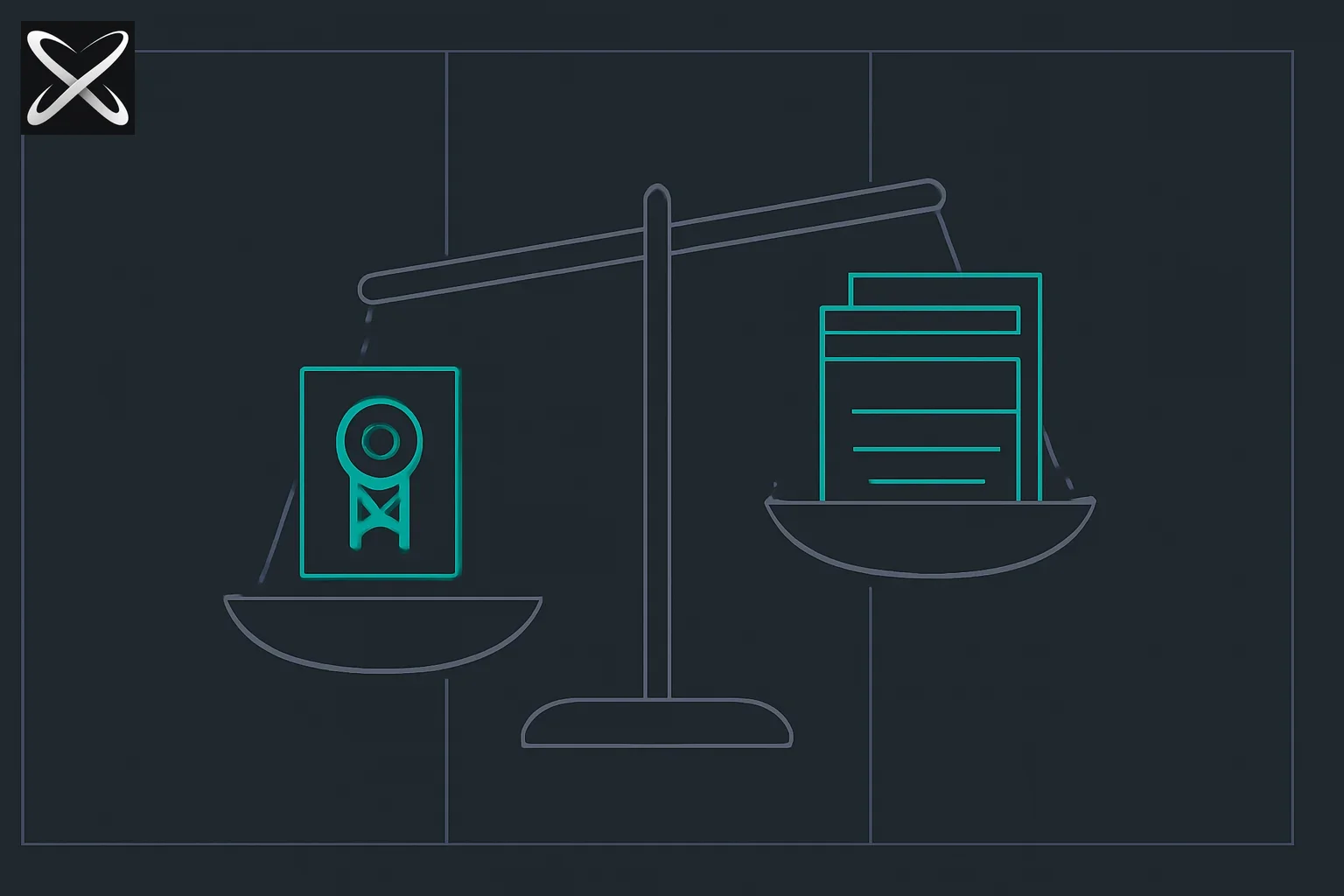 AI certifications vs building a portfolio — a balance scale tipping toward a stack of project folders over a single certificate badge
What employer data says about credentials
The World Economic Forum's Future of Jobs workforce strategy analysis summarizes responses from global employers about how they assess skill through 2030:
| Assessment mechanism | Employers expecting to use it |
|---|---|
| Work experience | 81% |
| Skills assessments | 48% |
| University degree requirement | 43% |
| Online certificates | 14% |
The categories can overlap, and a global survey is not a rule for every AI role. The ordering still matters. Employers trust evidence formed through work and direct testing more than a generic online credential.
Lightcast's certification research also finds a narrow market: the top 50 certifications account for two-thirds of certification requests in postings. Credentials can carry a premium where the market recognizes them, but demand is concentrated. “AI Certified Professional” from an unknown issuer does not inherit the value of a cloud security credential named in thousands of jobs.
Why AI badges are especially weak evidence
The underlying product changes too quickly
A course can test the location of buttons, model names, and prompt syntax that disappear within months. Durable knowledge—evaluation, retrieval, context, privacy, workflow design—can survive, but the badge rarely tells an employer which layer was assessed.
Completion is easy to automate
Generative AI can answer quizzes, draft assignments, and produce polished capstones. A certificate may prove that an account completed a sequence, not that a person can diagnose a failed workflow or defend a decision. The response should not be surveillance-heavy exams everywhere. It should be richer work samples and discussion of process.
“Prompting” can hide domain ignorance
A candidate can demonstrate fluent prompt patterns and still mishandle finance definitions, recruiting bias, legal sources, customer commitments, or software tests. Employers hire the combination of AI leverage and domain judgment described in the AI skills job data.
The badge removes the interesting failures
Real AI work contains retrieval misses, hallucinations, tool errors, context overflow, cost spikes, privacy constraints, and human disagreement. Course certificates celebrate a completed path. Hiring managers need to know what you did when the happy path broke.
The four cases where certification is rational
1. The posting names it
If target jobs repeatedly request an AWS, Azure, Google Cloud, Databricks, security, project-management, or regulated-industry credential, the market has supplied an answer. Search 30–50 relevant postings, count exact mentions, and verify whether the credential is required or preferred.
2. The credential unlocks partner or operational access
Cloud consultancies and implementation partners may need certified employees to maintain status or bid for work. In that case the credential has direct commercial utility beyond learning.
3. The exam is a credible external assessment
A proctored, maintained exam with published objectives, meaningful failure rates, identity verification, and industry recognition can reduce employer uncertainty. It still does not prove job performance, but it is stronger than attendance.
4. The learner needs structure and feedback
A cohort, instructor, deadline, and reviewed assignments can convert intention into practice. The certificate is a receipt for the experience; the artifacts and changed capability are the return.
explainx.ai's own tests and workshops should be judged by this standard. A practice exam can diagnose gaps. It should not be marketed as evidence equivalent to production work.
The portfolio-first sequence
Step 1: choose a job-shaped problem
Avoid “build an AI chatbot.” Choose a recurring outcome from the role you want:
- Operations: consolidate weekly status and flag contradictory updates.
- Marketing: research a market and produce a source-backed brief.
- HR: generate structured interview plans from an approved competency rubric.
- Finance: explain monthly variance with links to source cells and refusal on missing data.
- Software: fix a repository issue and pass tests under a cost budget.
- Sales: prepare an account brief with freshness dates and claim citations.
Step 2: publish acceptance criteria before the demo
Define what success means, what must never happen, and who reviews. For a research brief, require primary sources, dates, traceable claims, explicit unknowns, and a maximum human correction time. This turns aesthetics into evaluation.
Step 3: show the baseline
How long did the task take before? What quality measure existed? What failure was common? Without a baseline, “AI made it faster” is marketing copy.
Step 4: include failure cases
Publish at least three: a source the retrieval missed, a prompt injection, an ambiguous instruction, a cost limit, or a case requiring human escalation. Explain the control you added and what remains unresolved.
Step 5: make your contribution visible
Do not hide that AI helped write code or content. Show the decisions that belonged to you: problem selection, schema, source policy, eval set, test design, review, security boundary, and deployment trade-offs. Employers care whether you can operate the system, not whether every character was typed manually.
Portfolio evidence by career level
| Level | Strong evidence | Weak substitute |
|---|---|---|
| Beginner | One bounded workflow, clear rubric, honest failures | Ten tool certificates |
| Career switcher | Domain-specific project plus translated prior experience | Generic chatbot clone |
| Technical builder | Deployed system with evals, logs, tests, cost controls | Framework tutorial copied unchanged |
| Manager | Pilot with baseline, adoption, governance, and stop condition | “AI strategy” slide deck |
| Consultant | Client-shaped artifact with sources and implementation plan | Vendor feature comparison |
The certificate decision test
Before paying, answer:
- Which target postings name this exact credential?
- Does the issuer have hiring-market recognition outside its own ads?
- Is the assessment harder to fake than watching videos?
- Does the curriculum teach durable concepts or a temporary interface?
- Will I finish with reviewed artifacts I can discuss?
- What opportunity does it unlock that self-study and a project do not?
- Is the cost lower than building the missing experience another way?
If the only answer is “it will look good on LinkedIn,” skip it.
How courses should be designed instead
A responsible AI program should attach every module to observable work. A lesson on RAG ends with retrieval evaluation. A lesson on agents ends with traces, permissions, and stop conditions. A lesson on prompting compares before and after against a rubric. A lesson on policy identifies what data can enter which system.
The program should also teach multiple model classes. Our explanation of why explainx.ai teaches open and closed models treats portability as a learning outcome, not a marketing adjective.
The certificate can summarize what was assessed, but the student's repository or case study should make the assessment inspectable.
What people are asking
What if I have no professional AI experience?
Use a real nonprofit, community, personal-business, or open-data problem. Constrain scope and protect data. A well-evaluated volunteer workflow is more credible than a fictional “enterprise AI transformation.”
Do recruiters have time to inspect projects?
Make the evidence scannable: one-page case study, problem, baseline, architecture, result, three failures, and link to deeper material. The project earns the interview; the discussion proves ownership.
Are degrees different?
For research, advanced ML, and many regulated roles, degrees can signal mathematical depth, sustained study, and eligibility. They are not interchangeable with a short badge. Even degree holders benefit from practical artifacts because applied AI changes quickly.
Should I list course certificates at all?
Yes, when relevant and honest. Put demonstrated projects and work outcomes first. List certificates as supporting education, with issuer and date, not as the headline claim of competence.
A better credential: a verified body of work
The ideal AI credential would link to versioned artifacts, evaluation results, assessor feedback, and the candidate's explanation. It would expire or update when the tested product layer changed while preserving durable competencies. Until that market matures, a thoughtful portfolio performs most of the function.
The position is not “never certify.” It is certify with a reason, after or alongside building. Education should increase capability. Hiring evidence should make that capability observable.
A better way to use a certificate budget
If an employer offers $1,000 for AI learning, do not spend the entire amount on an exam by default. Reserve part for structured instruction, part for the software or API needed to build a real workflow, and part for expert review. The exact split depends on the role, but every dollar should connect to observable capability.
Before enrolling, write the artifact you will produce: a tested research workflow, evaluated support classifier, governed recruiting assistant, or deployed retrieval prototype. Map each course module to a project milestone. If the curriculum cannot support that artifact and the credential is not a hard hiring filter, reconsider it.
After completion, report both signals honestly. The certificate shows exposure to a defined curriculum at a point in time. The artifact shows what you can design, test, explain, and improve. Together they are stronger than either alone, and the build remains valuable when the exam brand or model version changes.
Update — August 30, 2026: Skillmeet.ai productizes the portfolio side inside a job platform — Exposure live containers and leaderboard ranks as hiring signals, not certificate lines.
Related on explainx.ai
- Skillmeet.ai — engineer career OS with Exposure proof layer
- The AI skills employers actually want
- AI career-change roadmap for non-developers
- How to upskill a team on AI
- Complete AI Builder Bootcamp guide
- Did AI actually take these jobs?
- Forward-deployed engineer preparation guide
Employer survey and job-posting patterns are current through July 26, 2026. Credential value varies sharply by occupation, country, vendor ecosystem, and regulation; inspect your target postings rather than applying this stance mechanically.