




"The hottest engineering role in 2026 isn't what you think."
It's not ML engineer. Not AI researcher. Not even software engineer.
It's Forward Deployed Engineer.
And here's the crazy part: most people still don't know the role exists.
While everyone was chasing ML and research positions, demand for Forward Deployed Engineers (FDEs) exploded 729% in one year—from 643 job postings in April 2025 to over 5,300 in April 2026, according to Indeed data.
Google is hiring hundreds. OpenAI acquired a 150-person FDE firm called Tomoro. Anthropic launched a billion-dollar FDE venture in May 2026.
Average total compensation? $238,000. Staff-level? $630,000+.
This article breaks down what Forward Deployed Engineers actually do, why demand is exploding, which companies are hiring, how to break into the role, and whether this is a temporary trend or the future of AI engineering.
TL;DR
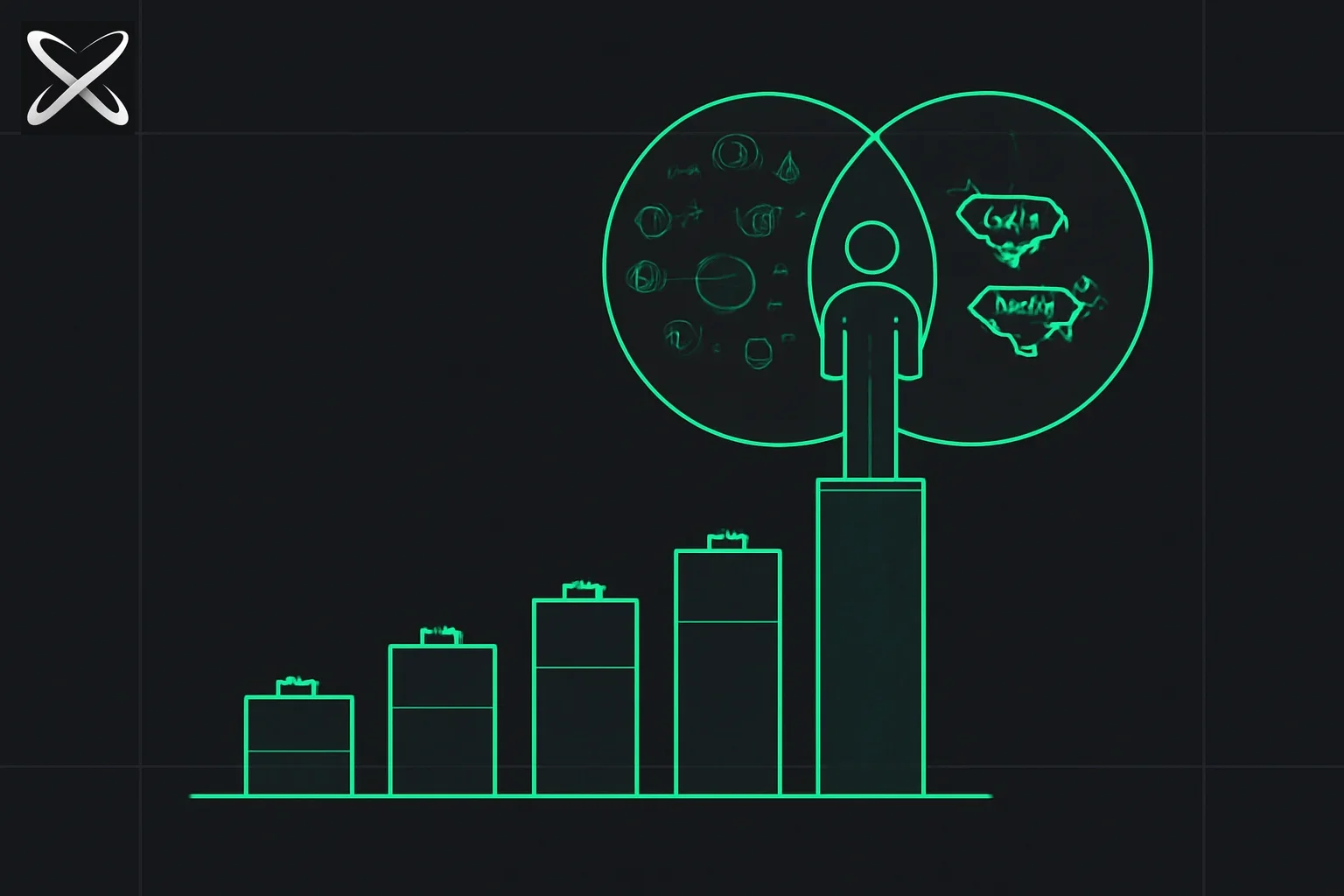 Forward Deployed Engineer role explained — a rising briefcase bar chart with a figure at the overlap of code and handshake icons
| Topic | Summary |
|---|---|
| What is an FDE? | Software engineer who embeds inside customer organizations to build, deploy, and maintain AI solutions in production. Not slides. Not research. Working code that drives revenue. |
| Demand growth | 729% surge in job postings from April 2025 to April 2026 (643 → 5,300 postings on Indeed). |
| Top hirers | Google (hundreds of roles), OpenAI (acquired 150-person FDE firm), Anthropic (billion-dollar FDE venture), Palantir (pioneered the role), Stripe, Salesforce, Scale AI. |
| Salary | Average: $238K. Range: $205K-$486K. Staff-level: $630K+. OpenAI/Anthropic: $350K-$550K for mid-senior. |
| Skills required | Python (mandatory), SQL, AWS/GCP, Docker/Kubernetes, RAG, vector DBs, agentic orchestration (LangGraph/CrewAI). Plus: customer empathy, communication, business acumen. |
| FDE vs ML Engineer | ML Engineers build models in HQ. FDEs deploy AI into customer workflows on-site. One optimizes models. One optimizes outcomes. |
| Interview focus | Case studies (ambiguous real-world problems), coding (Python/SQL), system design, behavioral (cross-functional collaboration, handling ambiguity, customer empathy). |
| Why it's hot | The bottleneck shifted from building AI to deploying it. Companies have powerful models but struggle to integrate them into 10,000-person org workflows. FDEs are the integration layer. |
| Career outlook | Growing faster than any other tech role in 2026. One of the few on-ramps in a frozen labor market. Pays like senior SWE, functions like founder+eng+consultant hybrid. |
Primary sources: Medium · Hashnode · MarkTechPost · Metaintro · Levels.fyi
What Is a Forward Deployed Engineer? (And Why You Haven't Heard of It)
The core concept
A Forward Deployed Engineer (FDE) is a software engineer who embeds directly inside customer organizations to build AI solutions that actually ship to production.
"A forward deployed engineer scopes a customer's AI use case, designs and writes the integration code, debugs production issues on site, and stays on the account until the deployment hits a measurable business outcome like renewal or revenue lift."
Translation:
- You work inside the customer's office (not your company's HQ)
- You learn their systems, their data, their workflows
- You build custom AI integrations that solve their specific problems
- You stay until the solution drives measurable business results (revenue, cost savings, renewals)
Not:
- Writing research papers
- Building models in a lab
- Delivering slide decks
- Handing off work to an implementation team
How Palantir pioneered the role
Palantir invented this model over a decade ago. Their FDEs embed with government agencies, defense contractors, and Fortune 500 companies to configure Palantir's platforms (Gotham, Foundry) for mission-critical use cases.
The Palantir approach:
- Enable many capabilities for a single customer (not one capability for many customers)
- Work side-by-side with analysts, operators, and decision-makers
- Deliver solutions that get used in high-stakes environments (military operations, pandemic response, supply chain crises)
Palantir's success proved the model works. Now the rest of AI is catching up.
FDE vs traditional roles
| Role | Where they work | What they optimize | Customer interaction | Output |
|---|---|---|---|---|
| ML Engineer | Company HQ | Model performance | Rarely | Better models |
| AI Researcher | Lab/office | Research papers | Almost never | Publications, benchmarks |
| Solutions Architect | Company HQ | System design | Frequent (remote) | Architecture docs |
| Forward Deployed Engineer | Customer office | Business outcomes | Daily (on-site) | Production code + revenue |
According to industry analysis:
"An AI engineer typically builds the model or the platform, while a forward deployed engineer takes an existing AI capability and deploys it inside a specific customer's workflow."
Why Demand Exploded 729% in 12 Months
The AI deployment bottleneck
Here's the paradox of 2026:
AI models got incredibly powerful. GPT-5, Gemini 3.5, Claude Sonnet 4.6—these are frontier models that can write code, analyze data, and automate complex workflows.
But most companies can't actually use them.
Why?
- Integration hell: Plugging AI into a 10,000-person org's systems, data pipelines, and workflows is brutally hard
- Adoption friction: Employees don't trust or understand AI; they need hand-holding
- Customization required: Out-of-box AI doesn't solve enterprise problems; it needs tuning and custom integrations
- Production reality: Making AI work reliably at scale (with latency, security, compliance constraints) is different from making it work in a demo
As Hashnode's FDE guide explains:
"As AI becomes more powerful, the bottleneck shifts from building the model to integrating it into how a 10,000-person company actually operates. FDEs are that integration layer."
The numbers: 729% growth in one year
April 2025: 643 FDE job postings April 2026: 5,300 FDE job postings
That's a 729% increase.
For context:
- ML Engineer postings grew ~50% in the same period
- Software Engineer postings grew ~20%
- AI Researcher postings grew ~30%
FDE demand is growing 10-20× faster than any other tech role.
Why now? The shift from research to deployment
According to ProductLeadersDayIndia analysis:
"In 2026, the bulk of the 800% posting surge is for engineering roles, not research roles. Companies like Salesforce, which committed to hiring 1,000 AI-native grads in the class of 2026, are concentrated in deployment and applied-AI tracks rather than pure research."
The market shift:
- 2020-2024: Companies invested in AI R&D (models, infrastructure, research teams)
- 2025-2026: Companies pivot to AI deployment (getting AI into production, driving ROI)
Result: Research positions flatline. Deployment positions explode.
Who's Hiring Forward Deployed Engineers in 2026
Google: Hundreds of roles across 4 continents
Google is hiring hundreds of FDEs to embed with enterprise customers using Google Cloud and Vertex AI.
Locations: United States, London, Paris, Hong Kong
The role: Embed inside customer offices, ship production AI code using Google's infrastructure, and drive adoption of Google Cloud AI services.
"Google Cloud is hiring 59 forward deployed engineers in 2026, embedding them inside enterprise customers... Base salaries hit $127K to $183K for the New York and Atlanta roles, with total comp reaching $700K at senior levels."
Why Google is hiring FDEs:
- AWS and Azure already have strong FDE teams
- Google Cloud needs to catch up on enterprise adoption
- Custom AI integrations drive cloud platform lock-in
OpenAI: Acquired a 150-person FDE firm
In May 2026, OpenAI acquired Tomoro—an applied AI consulting firm with approximately 150 engineers experienced in deployment at companies like Tesco, Virgin Atlantic, and Supercell.
What this means:
- OpenAI recognized they couldn't just sell API access
- They need FDEs to help enterprises actually use GPT-5 in production
- Building vs buying: OpenAI chose to acquire deployment talent rather than train it internally
TC packages at OpenAI: $350K-$550K for mid-to-senior FDEs.
Anthropic: Billion-dollar FDE venture
Anthropic launched a billion-dollar FDE initiative in May 2026, embedding engineers with enterprise customers to deploy Claude in mission-critical workflows.
Focus areas:
- Healthcare (HIPAA-compliant AI deployment)
- Finance (regulatory compliance + AI workflows)
- Government (secure AI for defense and intelligence)
Why Anthropic is betting big:
- Claude Sonnet 4.5/4.6 are competitive with GPT-5
- But adoption requires hands-on integration
- Anthropic can't rely on API sales alone—they need FDEs to drive enterprise contracts
Palantir: The OG Forward Deployed Engineering team
Palantir pioneered the FDE role and continues hiring aggressively.
Salary range (Levels.fyi):
- Total comp: $171K-$415K
- Median: $215K
- Senior (5+ years): $180K-$280K+
Why Palantir FDEs are elite:
- Work on the hardest problems (defense, intelligence, pandemic response)
- Deep access to sensitive data and high-stakes environments
- Palantir's FDE interview is notoriously difficult (case studies, on-site debugging, customer role-play)
Other major hirers
- Stripe: Embedding FDEs with fintech companies to build custom payment flows
- Salesforce: 1,000 AI-native hires in 2026, many FDE-adjacent
- Scale AI: FDEs help enterprises deploy Scale's data labeling and AI infrastructure
- ElevenLabs: Voice AI deployment for media companies
- Anduril: Defense tech FDEs working on autonomous systems
How Much Do Forward Deployed Engineers Make?
Average compensation: $238K
According to Hashnode's comprehensive salary analysis:
Average total compensation: $238,000 Range: $205,000 - $486,000 Staff-level: $630,000+
Breakdown:
- Base salary: $124K-$243K (varies by location and company)
- Equity: $40K-$150K/year (depending on vesting schedule)
- Bonuses: $20K-$100K (performance-based)
By company
| Company | Base Salary | Total Comp | Source |
|---|---|---|---|
| Palantir | $135K-$200K | $171K-$415K (median: $215K) | Levels.fyi |
| $127K-$183K | Up to $700K (senior) | Metaintro | |
| OpenAI | Not disclosed | $350K-$550K (mid-senior) | Hashnode |
| Anthropic | Not disclosed | $350K-$550K (mid-senior) | Hashnode |
| Glassdoor avg | $124K-$197K | $155K (avg) | Glassdoor |
Why FDE salaries are so high
Three reasons:
-
Hybrid role: FDEs blend software engineering, solutions architecture, customer success, and consulting. You're paid for 3-4 roles in one.
-
Travel + on-site: Up to 25-50% travel. Living in client offices. High stress. Companies compensate accordingly.
-
Revenue impact: FDEs directly drive customer renewals and upsells. If you help a customer deploy AI that saves them $10M/year, your $300K salary is a no-brainer.
"Salaries for experienced FDEs are routinely hitting $250K to $400K+ in 2026 because companies recognize they're not just hiring engineers—they're hiring customer-facing technical problem-solvers who drive revenue."
What Skills Do You Need to Become an FDE?
Technical skills: The baseline
According to FDE Academy's skills guide:
Mandatory:
- Python: The language of AI and data. Non-negotiable.
- SQL: You'll work with customer databases constantly. Advanced SQL (CTEs, window functions, query optimization) expected.
- Cloud (AWS/GCP/Azure): Deep knowledge of at least one cloud platform. Containers (Docker/Kubernetes) mandatory.
- JavaScript/TypeScript: For full-stack integrations (web apps, dashboards, APIs).
AI/ML (2026 standard):
- RAG (Retrieval-Augmented Generation): Vector databases (Pinecone, Weaviate), embedding models, semantic search.
- Agentic orchestration: LangGraph, CrewAI, Autogen. Multi-agent systems are table stakes in 2026.
- Evaluation frameworks: How to measure AI output quality, safety, and alignment.
- AI observability: Monitoring AI in production (LangSmith, Weights & Biases, custom metrics).
According to Sundeep Teki's FDE guide:
"For AI FDEs in 2026, the bar has shifted to agentic orchestration (LangGraph, CrewAI), evaluation frameworks, and AI observability/guardrails, on top of RAG and fine-tuning fundamentals."
Systems & infrastructure:
- Data pipelines: Airflow, Dagster, or custom ETL.
- IaC (Infrastructure as Code): Terraform, Pulumi.
- CI/CD: GitHub Actions, CircleCI, Jenkins.
Soft skills: The differentiator
Technical skills get you the interview. Soft skills get you the offer.
According to DataInterview's FDE prep guide:
Critical soft skills:
-
Customer empathy: You need to understand why a client wants something, not just what they asked for. Many customer requests are symptoms, not root causes.
-
Communication: "Communication skills are not a nice-to-have for this role. They're the job." You'll explain technical concepts to non-technical stakeholders constantly.
-
Problem decomposition: Breaking ambiguous, messy real-world problems into actionable engineering tasks.
-
Business acumen: Understanding revenue models, contract structures, renewal cycles. FDEs drive business outcomes, not just technical ones.
-
Radical ownership: When something breaks in production, you fix it. No handing off to another team.
-
Cross-functional collaboration: You'll work with sales, product, customer success, legal, and security—not just engineers.
The AI interviewer's checklist (2026)
According to Sundeep Teki's interview guide:
What interviewers assess:
| Skill | What they're testing | How they test it |
|---|---|---|
| Coding | Can you write production-quality Python/SQL? | Leetcode-style problems, live debugging |
| System design | Can you architect scalable AI systems? | Design a RAG pipeline for 10M users |
| Case study | Can you solve ambiguous problems? | "A retailer wants AI. What do you build?" |
| Customer empathy | Can you translate pain into solutions? | Role-play a customer meeting |
| Communication | Can you explain technical concepts simply? | Present your case study solution |
| AI/ML depth | Do you understand production AI? | RAG failure modes, eval frameworks, agentic systems |
The Forward Deployed Engineer Interview Process
Structure: 3-6 weeks, 4-6 rounds
Typical timeline: 3-6 weeks from first recruiter call to offer.
Interview rounds:
- Recruiter screen (30 min): Role fit, salary expectations, travel willingness.
- Hiring manager screen (45-60 min): Technical background, customer-facing experience, motivation.
- Coding assessment (60-90 min): Python, SQL, or take-home project.
- Coding interview (60 min): Live coding (Leetcode medium/hard).
- Case study interview (60-90 min): The most important round. Ambiguous real-world problem.
- System design / AI depth (60 min): Design a production AI system.
- Behavioral / culture fit (30-45 min): STAR stories, cross-functional collaboration.
- Founder / leadership interview (30-45 min): Vision alignment, long-term fit.
The case study: What makes or breaks FDE offers
According to Palantir's FDE interview guide:
Palantir invented the case study format—now every AI company uses it.
What it looks like:
You're given a large, ambiguous, real-world enterprise problem with 30-60 minutes to solve it. There is no single correct answer.
Example prompts:
- "A hospital system wants to reduce readmissions using AI. What do you build?"
- "A logistics company has 10,000 delivery trucks. They want AI to optimize routes. How do you approach this?"
- "A financial services firm wants to detect fraud in real-time. Design a solution."
What interviewers assess:
- How you decompose the problem
- What questions you ask (about data, constraints, success metrics)
- How you prioritize solutions (MVP vs long-term)
- Whether you think about edge cases (data quality, latency, compliance)
- How you communicate your thinking
"The most important shift: FDE interviewers are not grading your answer. They are watching how you think through a problem you have never seen before."
How to prepare for FDE interviews
According to FDE Academy's prep guide:
Coding:
- Leetcode medium/hard (focus on Python, SQL)
- Practice debugging messy code (common in FDE interviews)
System design:
- Design RAG pipelines, agentic systems, real-time data pipelines
- Study distributed systems basics (CAP theorem, load balancing, caching)
Case studies:
- Practice with Exponent's case library
- Work through 10+ ambiguous problems out loud
- Record yourself and review for clarity
Behavioral:
- Prepare 5 STAR stories:
- Cross-functional collaboration
- Handling ambiguity
- Failed project (and what you learned)
- Technical disagreement
- Driving impact without authority
AI/ML:
- Understand RAG deeply (vector DBs, retrieval strategies, reranking)
- Know agentic orchestration (LangGraph, CrewAI)
- Study eval frameworks and AI observability
FDE vs ML Engineer: Which Role Should You Choose?
The fundamental trade-off
| Factor | ML Engineer | Forward Deployed Engineer |
|---|---|---|
| Work location | Company office | Customer offices (travel) |
| Focus | Model performance | Business outcomes |
| Customer interaction | Rare | Daily (on-site) |
| Technical depth | Very deep (model internals) | Broad (full-stack + AI) |
| Impact visibility | Indirect (better benchmarks) | Direct (revenue, renewals) |
| Career path | Research → staff ML → ML lead | FDE → solutions architect → GTM lead |
| Comp | $180K-$400K | $205K-$630K+ |
| Job security (2026) | Moderate (research roles frozen) | High (deployment exploding) |
When to choose ML Engineer
You should choose ML Engineer if:
- You love working on model internals (architectures, training, optimization)
- You prefer deep technical work over customer interaction
- You want to publish papers or contribute to open-source AI research
- You're uncomfortable with frequent travel or client-facing work
- You prefer stable, predictable work environments
When to choose Forward Deployed Engineer
You should choose FDE if:
- You want to see your code drive real business outcomes (revenue, not benchmarks)
- You enjoy customer interaction and translating pain into solutions
- You're comfortable with travel (25-50% typical)
- You want faster career growth (FDEs often move into leadership faster)
- You thrive in ambiguous, fast-paced environments
- You want higher comp (FDEs typically out-earn ML Engineers by 20-40%)
According to the FDE Academy comparison:
"ML Engineers rarely talk to customers. Forward Deployed Engineers talk to customers constantly. One role optimizes the model, the other optimizes the outcome."
How to Break Into Forward Deployed Engineering (Even Without Experience)
The FDE catch-22
The problem: Most FDE roles require 3-5 years of experience. But how do you get FDE experience if no one will hire you as an FDE?
The solution: Lateral entry from adjacent roles.
Entry paths to FDE (ranked by difficulty)
1. Traditional SWE → FDE (easiest lateral move)
If you're a software engineer with customer-facing experience (e.g., technical support, solutions engineering, customer success engineering), you're one step away from FDE.
What to add:
- Learn Python + SQL (if not already proficient)
- Build 2-3 AI projects with RAG or agentic systems
- Emphasize any customer-facing work in your resume
2. Solutions Engineer / Solutions Architect → FDE
Solutions engineers already do half the FDE job (customer interaction, problem scoping). You just need to level up coding.
What to add:
- Contribute to open-source AI projects (demonstrate coding chops)
- Build full-stack AI demos (not just slides)
- Position yourself as "technical solutions engineer who ships code"
3. Data Engineer → FDE
Data engineers have the SQL, cloud, and pipeline skills FDEs need. Add AI + customer-facing skills.
What to add:
- Build RAG systems with your data pipelines
- Work cross-functionally with product/sales teams
- Emphasize any client-facing data projects
4. ML Engineer → FDE
You have the AI skills. Add customer empathy + communication.
What to add:
- Volunteer for customer demos or pilots
- Work on applied AI projects (not just research)
- Develop a "customer-first" narrative (why you want to deploy AI, not just build it)
5. New grad → FDE (hardest, but possible)
Some companies hire FDEs straight out of college—especially Palantir.
What to add:
- Strong coding fundamentals (Leetcode, system design)
- Customer-facing internships (e.g., solutions engineering intern)
- Personal projects with real users (not just portfolio projects)
- Communication skills (write blog posts, give talks, contribute to open-source docs)
Skills to prioritize (weighted by ROI)
According to SkillScouter's FDE career guide:
Highest ROI skills for breaking into FDE:
- Python (mandatory, focus on production-quality code)
- Customer communication (practice explaining technical concepts simply)
- Case study practice (10+ ambiguous problems solved out loud)
- RAG + agentic systems (table stakes for AI FDEs in 2026)
- SQL (advanced: CTEs, window functions, query optimization)
- Cloud platforms (AWS or GCP, focus on serverless + containers)
The Future of Forward Deployed Engineering
Is this a temporary trend or the new normal?
Two schools of thought:
Optimistic view:
- FDE is the fastest-growing tech role in 2026 and will continue growing through 2027-2028
- As AI becomes ubiquitous, every company will need FDEs to deploy it
- FDEs become the new "solutions architects"—a permanent role in tech orgs
Skeptical view:
- FDE demand is a temporary bottleneck until AI tooling improves
- Once AI deployment becomes easier (better SDKs, no-code AI, self-service platforms), FDE roles shrink
- FDEs are expensive; companies will try to automate them away
My take: FDEs aren't going anywhere
Why FDEs will stay relevant:
-
Enterprise AI is inherently messy. Every company has different data, systems, workflows, and compliance requirements. There's no "one-size-fits-all" AI deployment.
-
Customers need hand-holding. Even with perfect tools, enterprises struggle to adopt new tech. FDEs provide the trust and expertise that self-service can't.
-
Revenue model alignment. FDEs drive renewals and upsells. Companies will keep hiring them because they directly impact revenue.
-
Career evolution. FDEs naturally evolve into GTM (go-to-market) leaders, CTO-track executives, or founder-track operators. The role is a springboard, not a dead end.
According to Metaintro's analysis:
"Google CEO Sundar Pichai and Box CEO Aaron Levie both called FDE the 'most in-demand job in tech' in May 2026. When two CEOs say the same thing within days of each other, it's not hype—it's a signal."
The AI labor market in 2026: FDEs vs everyone else
According to ProductLeadersDayIndia:
2026 hiring reality:
- Entry-level roles: Being wiped out by AI automation
- Research roles: Frozen (OpenAI, Anthropic not hiring researchers aggressively)
- ML Engineer roles: Growing slowly (~50% YoY)
- FDE roles: Exploding (729% YoY)
Quote:
"With AI wiping out entry-level jobs in 2026 and the broader frozen labor market keeping hiring slow even as layoffs stay low, the FDE track is one of the few growing on-ramps."
Translation: If you're trying to break into tech in 2026, FDE is one of the few roles still hiring aggressively.
Should You Become a Forward Deployed Engineer?
The honest pros and cons
Pros:
- ✅ Explosive demand (729% growth, one of the hottest roles in tech)
- ✅ High comp ($238K average, $630K+ at staff level)
- ✅ Direct impact (your code drives revenue, not just benchmarks)
- ✅ Career growth (FDEs move into leadership faster than traditional SWEs)
- ✅ Learning velocity (you see 10+ companies' workflows in a year—compressed startup experience)
- ✅ Job security (companies need FDEs more than researchers in 2026)
Cons:
- ❌ Travel (25-50% typical, can be exhausting)
- ❌ Unpredictable hours (customer emergencies don't respect 9-5)
- ❌ Ambiguity (every project is different; no playbook)
- ❌ Customer stress (you're the face of your company; high pressure)
- ❌ Broad vs deep (you learn many things shallowly vs one thing deeply)
Who should definitely become an FDE
You're a strong FDE candidate if:
- You've worked in customer-facing roles and enjoyed it
- You're comfortable with ambiguity and context-switching
- You want to see your work drive real business outcomes
- You're energized by travel and new environments
- You have strong communication skills (or want to develop them)
- You want to maximize comp without going into management
Who should avoid FDE
FDE is probably not for you if:
- You hate travel or value work-life balance highly
- You prefer deep technical work over customer interaction
- You're uncomfortable with ambiguity or context-switching
- You want a stable, predictable 9-5 role
- You prefer working alone vs in cross-functional teams
Key Takeaways
-
Forward Deployed Engineer is the hottest tech role in 2026, not ML Engineer or AI Researcher. Demand grew 729% in 12 months.
-
FDEs embed inside customer organizations to build, deploy, and maintain production AI. Not slides. Not research. Working code that drives revenue.
-
Top companies hiring: Google (hundreds of roles), OpenAI (acquired 150-person FDE firm), Anthropic (billion-dollar FDE venture), Palantir (pioneered the role), Stripe, Salesforce, Scale AI.
-
Compensation: $238K average. $205K-$486K range. $630K+ for staff. OpenAI/Anthropic pay $350K-$550K for mid-senior.
-
Skills required: Python (mandatory), SQL, AWS/GCP, Docker/Kubernetes, RAG, vector DBs, agentic orchestration (LangGraph/CrewAI), plus customer empathy and communication.
-
FDE vs ML Engineer: ML Engineers build models in HQ. FDEs deploy AI in customer workflows on-site. One optimizes models. One optimizes outcomes.
-
Interview focus: Case studies (ambiguous real-world problems), coding (Python/SQL), system design, behavioral (cross-functional collaboration, handling ambiguity).
-
Career outlook: Growing faster than any other tech role. One of the few on-ramps in a frozen labor market. Pays like senior SWE, functions like founder+eng+consultant hybrid.
-
Best entry path: Lateral move from solutions engineering, data engineering, or software engineering with customer-facing experience.
-
Future: FDEs aren't going anywhere. Enterprise AI is inherently messy and requires human integration. The role will evolve but won't disappear.
Update — July 24, 2026: OpenAI productized the FDE motion as Presence — limited-GA enterprise voice/chat agents deployed by OpenAI FDEs and SIs, not self-serve.
Related on explainx.ai
- Andrew Ng's AI Engineering Skills Map (Aug 2026) — the four skills behind roles like this one
- Amodei worries new hires chase pay over mission (Aug 4)
- OpenAI Presence — enterprise voice & chat agents (Jul 2026)
- How OpenAI's own FDE team works (Oct 2026)
- Andrej Karpathy joins Anthropic: why top AI talent is moving to deployment-focused roles
- Google steals startups: inside the dysfunction killing good products
- Big tech copies startups: you're beta testing for billion-dollar companies
- Top 10 AI skills for coding in 2026
Sources
- The Hottest Tech Role of 2026? Forward Deployed Engineer (Medium)
- Tech's secret weapon: The complete 2026 guide to the forward deployed engineer (Hashnode)
- What is a Forward Deployed Engineer: The AI Role OpenAI, Anthropic, and Google Are Hiring in 2026 (MarkTechPost)
- How to Land Google's Newest AI Role: Forward Deployed Engineers (Metaintro)
- Google Cloud AI Deployment Army 2026: Roles & Salaries (Metaintro)
- Palantir Forward Deployed Engineer Salaries (Levels.fyi)
- Palantir Forward Deployed Engineer Guide (DataInterview)
- Forward Deployed Engineer Interview Prep (DataInterview)
- Forward Deployed Engineer vs Applied AI Engineer (FDE Academy)
- Forward Deployed Engineer Interview Questions (FDE Academy)
- AI Engineering Jobs 2026: The 800% Surge (ProductLeadersDayIndia)
- How to Become a Forward Deployed Engineer in 2026 (SkillScouter)
- Forward Deployed Engineer: Your 2026 Startup Career Guide (Underdog.io)
- A Day in the Life of a Palantir Forward Deployed Software Engineer (Palantir Blog)
Update — July 6, 2026: Palantir — the company that invented the FDE role — is facing sovereignty pushback abroad; see Canada's AI strategy and the Palantir problem for how allied governments are rethinking these contracts.
The Forward Deployed Engineer role is evolving rapidly. Salaries, hiring numbers, and company priorities reflect May 2026 data. Verify current market conditions before making career decisions. That said, the core insight remains: the bottleneck has shifted from building AI to deploying it—and FDEs are the solution.
Final note: If you're considering the FDE path, start building customer-facing projects today. The best way to prove you can deploy AI for customers is to deploy AI for customers—even if it's just for friends, local businesses, or open-source projects.
Update — October 3, 2026: Anthropic launched a $100M training program for the role: Claude Frontier Academy. Evergreen primer: what is a Frontier Deployed Engineer?.