




Jev, TypeSafe AI's first "System One Model," launched September 15, 2026. Five days later, search results for "Jev course" or "Jev workshop" are already cluttered with speculation and thin recap posts, and there is no vendor certification to point to yet — no exam, no official training track, nothing TypeSafe AI itself has branded as a course. That's a gap worth being honest about before ranking anything.
This list is what actually exists right now: real documentation, a real (if young) open-source ecosystem, explainx.ai's own deep-dive series on how Jev works, and — leading the list — explainx.ai's own two structured options: the self-paced Jev & TypeSafe AI course on Udemy, and "Build with Jev: The AI That Decides, Not Writes", our live two-session workshop. They're not the same product competing for the same slot — the course is on-demand video you watch at your own pace for a fraction of the price, the workshop is live, instructor-led, and project-based — so we rank them back to back rather than picking one. Read the disclosure the same way you'd read any vendor's self-ranking: we publish our own at #1 and #2, and the reasoning is laid out below so you can judge it yourself.
TL;DR — what to actually do, in order
| If you want... | Best resource | Why |
|---|---|---|
| The concepts and integration patterns, at your own pace, cheap | Jev & TypeSafe AI course (explainx.ai, Udemy) | On-demand video · watch anytime · Udemy pricing (frequent discounts) |
| Hands-on integration with live feedback | Build with Jev: The AI That Decides, Not Writes (explainx.ai) | 2 live sessions, Nov 7-8, 2026 · 6 real builds · no ML background required |
| The API surface, straight from the source | TypeSafe AI docs | Official, current, free |
| The concept explained without code | How Does Jev Work? | Free, 10-minute read on RLCD and the three output primitives |
| To see where it actually fits your stack | Top 10 Jev/TypeSafe AI Use Cases | Practical routing, moderation, and classification examples |
| A step-by-step integration build | How to Integrate Jev: Agent Routing | Copy-paste example wiring Jev into an agent's routing layer |
| To study real implementations, not just docs | OpenJev and six independent Jev clones | Open-source, inspectable, built within 48 hours of launch |
| A gut check on the speed/cost claims before committing | Jev speed and cost claims, fact-checked | Independent scrutiny of TypeSafe AI's own benchmark numbers |
Ranked shortlist
| Rank | Resource | Format | Cost |
|---|---|---|---|
| 1 | Jev & TypeSafe AI course (explainx.ai, Udemy) | Self-paced, on-demand video | Udemy list price (frequent discounts) |
| 2 | Build with Jev: The AI That Decides, Not Writes (explainx.ai) | Live, instructor-led · 2 sessions, Nov 7-8, 2026 | Check workshop page for current pricing |
| 3 | TypeSafe AI documentation | Self-paced, official | Free |
| 4 | How Does Jev Work? RLCD & System One Models Explained | Self-paced article | Free |
| 5 | How to Integrate Jev: Agent Routing | Self-paced tutorial | Free |
| 6 | Top 10 Jev/TypeSafe AI Use Cases | Self-paced article | Free |
| 7 | TypeSafe AI's own launch post | Self-paced, official | Free |
| 8 | OpenJev | Open-source code | Free |
| 9 | Six Jev clones in two days | Curated open-source roundup | Free |
| 10 | Jev vs XGBoost/BERT Classifiers | Self-paced comparison | Free |
| 11 | Jev speed and cost claims, fact-checked | Self-paced critical read | Free |
How this list was built
Criteria, in order:
- Does it teach the actual mechanism — typed decisions, calibrated confidence, no text generation — not just repeat the launch headline
- Can you verify it against a primary source — TypeSafe AI's own docs, launch post, or code you can run
- Is it hands-on — do you build or integrate something, or only read
- Currency — Jev is five days old at publication; a resource written before the September 15, 2026 launch doesn't qualify, and anything older than a few weeks should be re-checked against TypeSafe AI's docs before you trust specifics
- Honest fit — who should start elsewhere first
explainx.ai's own course, workshop, and four of our own blog posts appear on this list because, as of publication, they're genuinely among the only structured Jev-specific resources that exist — there is no competing paid course, bootcamp, or certification to compare against yet. That will change as Jev matures; this list will be revised when it does. The course and workshop rank #1 and #2 because they answer different questions ("what is this and how do the pieces fit" vs. "help me build and troubleshoot this specific integration"), not because we're picking a winner between our own two products.
1. Jev & TypeSafe AI course — explainx.ai (best self-paced, best value)
Self-paced · On-demand video · Enroll on Udemy · No ML background required
This is explainx.ai's own course, so weigh it with the same scrutiny as everything else here. It covers the same ground as the live workshop's Day 1 — what a "System One Model" is, how RLCD differs from the RLHF behind chat models, the three primitives (Choice, Score, Noul), and the decomposition skill of turning a vague judgment into an atomic, typed question — as video you watch whenever you have the time, for a fraction of the workshop's price and with no live session to schedule around.
Best for: anyone who wants the concepts and integration patterns fast, without committing to a live cohort date — including as prep before the workshop below, if you decide you want the project-based version too.
Skip if: you specifically want live troubleshooting on your own integration or a cohort to build alongside — that's what the workshop adds on top of the same fundamentals.
Enroll in the Jev & TypeSafe AI course →
2. Build with Jev: The AI That Decides, Not Writes — explainx.ai (best hands-on, only live option)
Live, instructor-led · 2 sessions · Nov 7-8, 2026 · 6:30-8:30 PM IST · No ML background required
This is explainx.ai's own offering, so weigh it with the same scrutiny as everything else here. It's a two-evening, intermediate-level workshop for engineers, AI builders, and technical PMs working in Python or TypeScript, built around one core skill: decomposing a vague judgment into atomic, typed questions Jev can answer consistently, then reading its calibrated confidence as a second axis your code branches on — act, confirm, or escalate to a human.
Day 1 covers the concepts properly: what a "System One Model" is and how RLCD (Reinforcement Learning from Calibrated Decisions) differs from the RLHF behind chat models, how to shape state as a string, object, or array, the three primitives (Choice, Score, and the boolean Noul), and the decomposition skill everything else depends on. Day 2 is where it gets built: six real services, wired against your own pipeline rather than a toy demo.
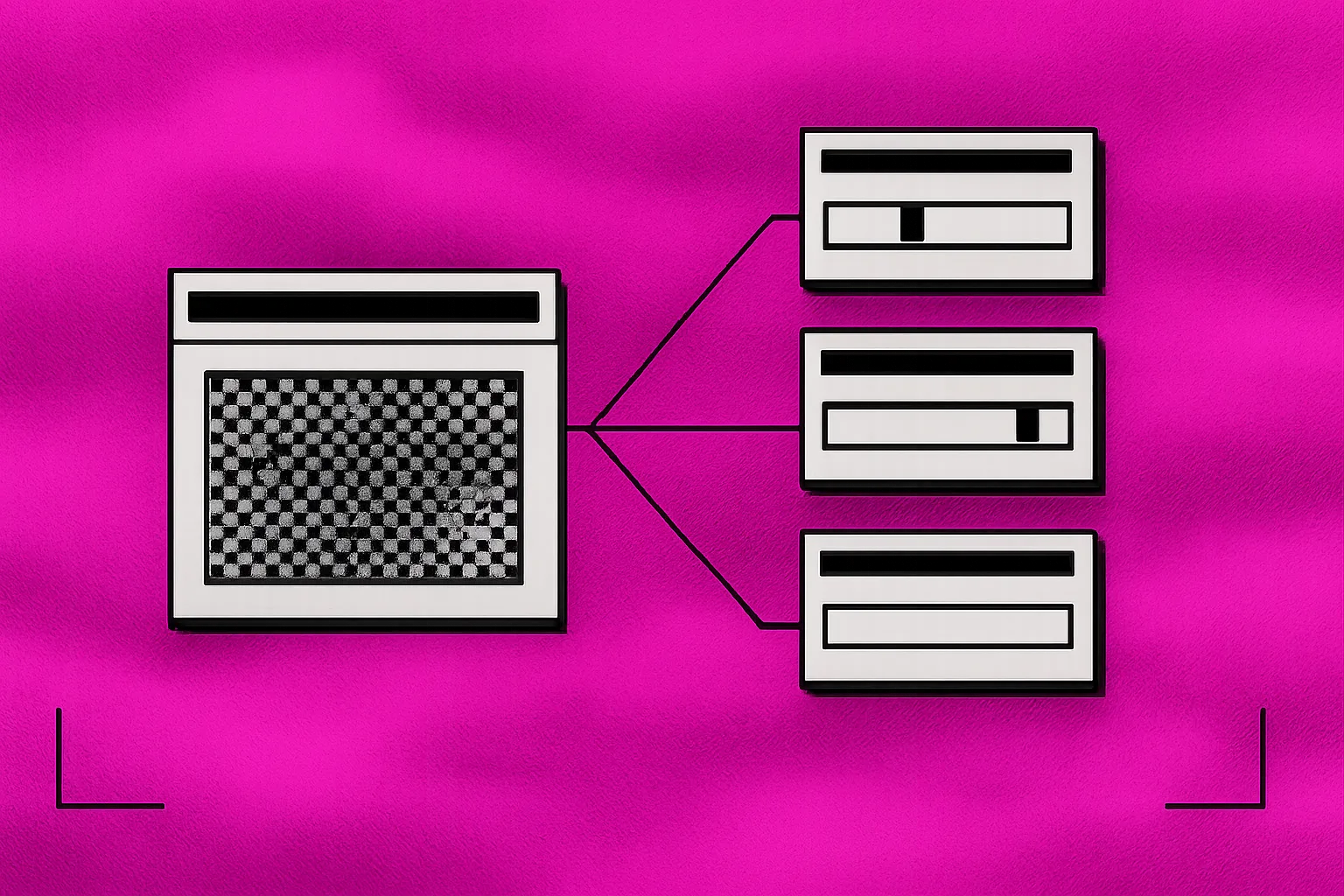 Retro desktop window fanning one support ticket out into several typed decisions — department, urgency, frustration, refund intent, phishing signals
- Support-ticket triage — one call returns department, urgency, frustration, refund intent, and phishing signals; your code routes on the typed answer instead of parsing a paragraph.
- A prompt-injection and policy guardrail — screens every message going into and out of your model for a fraction of the cost of the call it protects.
- A semantic re-ranker — reorders a keyword-retrieved shortlist by scoring query-candidate pairs, no embeddings required.
- A tool-use selector — maps a plain-language request to a typed function call with closed-set arguments.
 Retro desktop window showing a page of candidate actions with one selected by probability, illustrating a real-time browser-use decision loop
- A browser-use decision loop — reads page state and picks the next action in around 100ms, gated by a confidence floor so it stops before clicking something irreversible.
- Fast context compaction — scores every block of a long context for relevance and keeps what matters, instead of replacing the whole thing with a lossy summary.
- A cost-and-latency benchmark harness — runs the same decision through Jev and through an LLM on your own data, so you leave with your own numbers instead of trusting TypeSafe AI's headline 193.6× / 444.6× claims.
The workshop also spends real time on where Jev fails — the documented jev-1.13 failure list (literal reading, counting, arithmetic, dates, multi-hop indirection, adversarial state) — and on installing TypeSafe AI's own agent skill in Claude Code to find and refactor fragile prompt-and-parse code live. Enrollment includes 1-year access to recordings, a private Discord, Melo learning support, and a completion certificate.
Best for: builders who've read the docs and already ship a classification, scoring, or routing decision as an LLM call they'd like to make faster, cheaper, and more consistent.
Skip if: you want a chat assistant, not a decision layer — Jev generates no text, and neither does this workshop teach prompting. Read the use-case guide and the fact-check on its speed/cost claims first if you haven't decided Jev fits your problem yet.
Check the Jev workshop page for pricing and seats →
3. TypeSafe AI's official documentation
Self-paced · docs.typesafe.ai · Free
The only place guaranteed to be current on the API surface, schema definitions, and pricing, because TypeSafe AI writes and maintains it directly. Every third-party explainer — including everything else on this list — is downstream of this source. If a claim in any Jev-related blog post (ours included) contradicts the current docs, trust the docs.
Why #3, not #1: documentation teaches you the API; it doesn't give you feedback on whether your specific integration decision is a good one, or a structured path through the concepts. That's the gap the course and workshop above fill.
4. How Does Jev Work? RLCD & System One Models Explained — explainx.ai
Self-paced article · Free
The conceptual layer before you write any integration code: what "System One Model" means, how Reinforcement Learning from Calibrated Decisions (RLCD) differs from the RLHF behind conversational LLMs, and why skipping autoregressive text generation is what makes Jev's latency and cost numbers possible in the first place. Read this if TypeSafe AI's own launch post assumes context you don't have yet.
5. How to Integrate Jev: Agent Routing — explainx.ai
Self-paced tutorial · Free
A worked example of the integration pattern most builders actually need first: using Jev as a fast, cheap routing layer in front of an LLM-based agent, rather than as a general-purpose model. Covers schema design for the routing decision and where Jev's guarantees (schema-valid output) stop and your own validation (is the answer actually correct) needs to start.
6. Top 10 Jev/TypeSafe AI Use Cases — explainx.ai
Self-paced article · Free
Before integrating anything, this is the fastest way to check whether Jev solves a problem you actually have — classification, moderation, routing, and scoring tasks where a full LLM call is overkill. Useful as a pre-workshop reading assignment if you're planning to attend live.
7. TypeSafe AI's own launch post
Self-paced · typesafe.ai/blog · Free
Founder Diogo Almeida's original announcement, framing Jev against the Jevons-paradox argument for why cheaper, faster inference increases total AI demand rather than shrinking the market for it. Worth reading directly for the framing and the original benchmark numbers, alongside our own fact-check of those numbers (#11 below) rather than instead of it.
8. OpenJev
Open-source code · openjev.com · Free
A browser-based, open-model clone of Jev's approach, built by independent developers within days of the original launch. Reading an open implementation of the same "typed output, no text generation" idea is a genuinely useful way to understand the mechanism at the code level — TypeSafe AI's own model is closed, so this is currently the closest thing to inspectable internals.
Caveat: an open clone is a study resource, not a production substitute — it carries none of TypeSafe AI's guarantees, support, or calibration work.
9. Six Jev clones in two days — explainx.ai
Curated roundup · Free
Within 48 hours of Jev's launch, at least six independent teams shipped their own reimplementation, as tracked by Latent Space. Our roundup summarizes what each one attempted differently — useful for seeing multiple engineering approaches to the same constraint (typed, schema-guaranteed output) rather than treating TypeSafe AI's specific implementation as the only possible one.
10. Jev vs XGBoost/BERT Classifiers — explainx.ai
Self-paced comparison · Free
If your actual task is classification or scoring, this comparison places Jev next to the tools that have done that job for years — gradient-boosted trees and fine-tuned BERT-style classifiers — on the dimensions that matter for a real choice: setup cost, latency, interpretability, and what you give up by not fine-tuning on your own labeled data.
11. Jev speed and cost claims, fact-checked — explainx.ai
Self-paced critical read · Free
TypeSafe AI's launch numbers — 20-200x faster, 40-400x cheaper than comparable LLM tasks — come from TypeSafe AI's own published workflow evals. This post checks those claims against independent commentary, including pieces questioning the "self-tested" nature of the cost multiplier. Read this before you plan a migration around the headline numbers alone.
What people are asking
Is there a free way to learn Jev without any of this taking real time?
Read TypeSafe AI's own docs quickstart section and our use-case guide. That's enough to know whether Jev applies to your problem, in under 15 minutes combined.
Should I wait for the workshop, or start integrating now?
Start reading now — the docs and our self-paced guides don't require the workshop to be scheduled. If you want structured video now rather than later, the Udemy course is available immediately; if you want live troubleshooting on your specific integration, check the workshop page for when the next cohort opens and plan around that date rather than blocking your evaluation on it.
Are any of the open-source Jev clones production-ready?
Treat them as study material, not dependencies, this early. They're valuable for understanding the "typed output, no generation" mechanism hands-on, but none of them carry TypeSafe AI's calibration work, support, or track record — evaluate them the way you'd evaluate any young open-source project before depending on it.
How is learning Jev different from learning to prompt an LLM?
Almost entirely different skill. Prompting an LLM is about wording a request well. Jev's actual skill is schema design — defining the choice set, score range, or boolean condition correctly — and setting a confidence threshold for how you act on its output, since a schema-valid answer is guaranteed but a correct one isn't. See how Jev works for why that distinction matters.
Related reading
- TypeSafe AI Launches Jev: A "System One Model" That Never Hallucinates
- How Does Jev Work? RLCD & System One Models Explained
- How to Integrate Jev: Agent Routing
- Top 10 Jev/TypeSafe AI Use Cases
- Jev vs XGBoost/BERT Classifiers
- Jev speed and cost claims, fact-checked
- Six Jev clones in two days
- Best Claude Courses and Certifications in 2026 — the same honest-ranking approach applied to Claude
- Jev & TypeSafe AI course on Udemy · Jev workshop — check current dates · All workshops catalog
Sources
- TypeSafe AI — official documentation, launch post
- OpenJev
- Latent Space — six clones of Jev in two days
This list reflects what existed as of September 20, 2026 — five days after Jev's launch. There is no vendor certification or established third-party course market yet; this ranking will be revised as that changes. Verify current dates and pricing on the Jev workshop page before enrolling.