



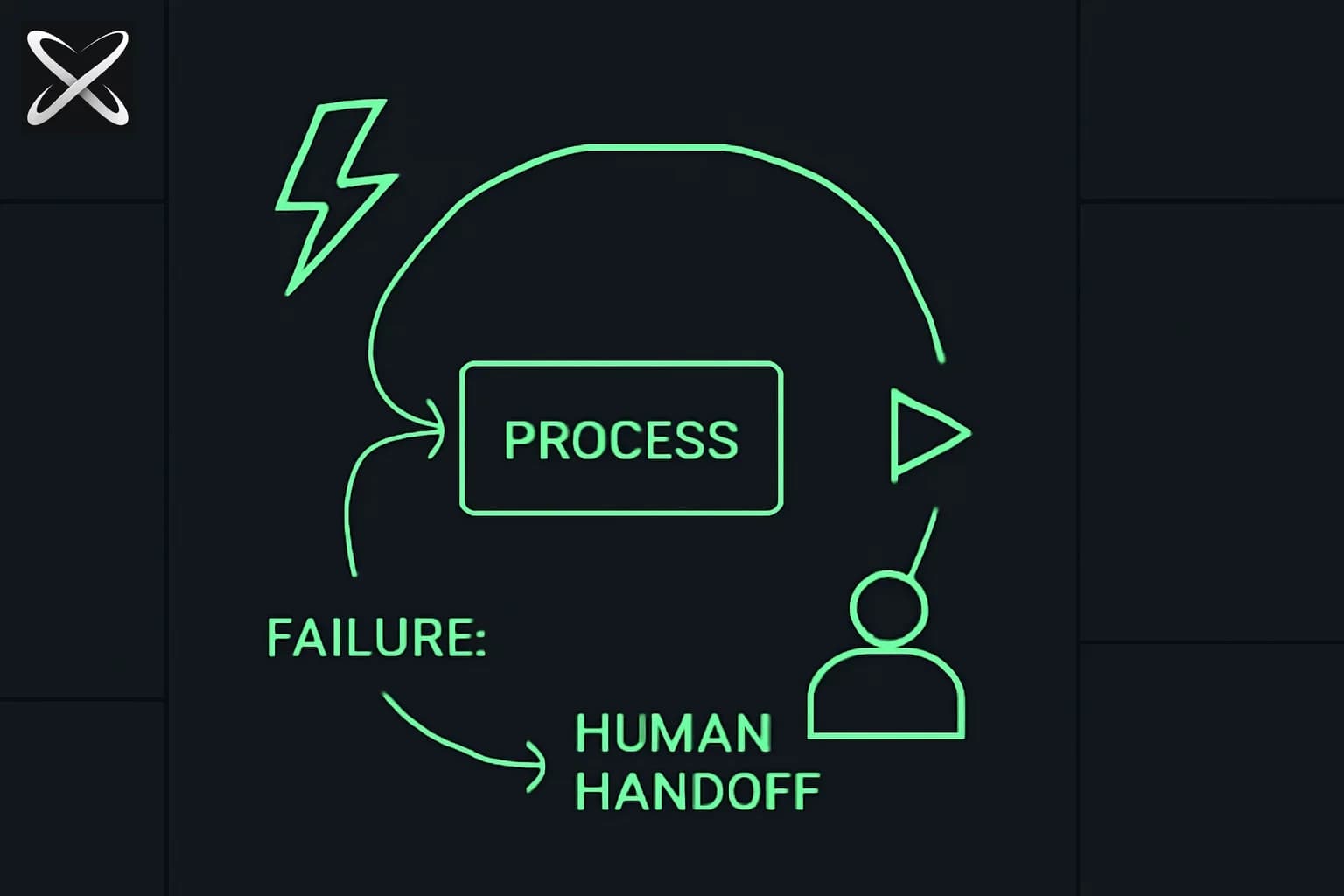
Update — September 26, 2026: A research finding complicates the pattern below directly — when Jev's confident answer is wrong, a downstream LLM check agrees with the mistake 96% of the time instead of catching it, which means the LLM stage is a weaker independent audit on high-confidence errors than this post assumes. See LLMs repeat 96% of confident classifier errors, undermining eval cascades before relying on confidence-based routing alone for high-stakes decisions.
A verification check that costs a fraction of a cent is still a bad idea if it doesn't change what happens next. That's the tension worth sitting with before wiring Jev into an agent pipeline as a cheap-enough-to-use-everywhere judgment layer: TypeSafe's published $0.042 per million input tokens (output is free) genuinely makes small checks affordable at points builders previously skipped because a full LLM call felt too expensive to run five times per task — but affordable isn't the same as useful. This guide works through where to place those checks, the real cost math behind them, and the failure modes that make a checkpoint worthless even at near-zero marginal cost.
TL;DR
| Question | Answer |
|---|---|
| What changes at $0.042/M input tokens? | Checks that were too expensive to run at every handoff become cheap enough to run constantly |
| Where do checks earn their keep? | At handoffs where an error would otherwise travel forward — after retrieval, before drafting, after a tool result, before final handoff |
| What's the real cost to watch? | Not the inference bill — the rate of unnecessary interventions a noisy check triggers |
| Can one request ask several questions? | Yes — TypeSafe says adding questions to a Jev call usually barely changes latency, though each still costs input tokens |
| What shouldn't a confidence score be trusted for? | Treating 0.9 as "90% accurate on my workflow" without validating it on your own examples first |
| How do I roll this out safely? | Shadow-run one checkpoint against real cases before automating, then add the next |
The price changes where you can afford to put judgment
TypeSafe introduced Jev on September 15, 2026 as a model built for structured decisions inside software rather than open-ended chat: give it evidence and a defined question, and it returns a choice, a score, or a yes-probability that code can act on directly. At $0.042 per million input tokens, a concrete budget makes the shift tangible: 100,000 agent runs per month, five checkpoint requests per run, roughly 2,000 billed input tokens per checkpoint (including the questions themselves), comes out to one billion input tokens and $42 per month — about $0.00042 per run for all five checks combined.
That number moves fast with prompt size. The same workflow at 20,000 tokens per checkpoint — ten times the context per check — becomes $420 for identical run volume, not $42. And this budget covers Jev inference only; the generative writer model, search calls, tool invocations, retries, and any human review still carry their own separate costs. The useful question this budget gives you isn't "is $42 cheap" — it's "will the checks this $42 buys prevent more than $42 of wasted downstream work each month?" That framing, not the sticker price, is what determines whether adding checkpoints is worth doing at all.
Worth noting for anyone who's read explainx.ai's earlier Jev cost coverage: this $0.042/M figure is consistent with TypeSafe's own published rate at launch, and it lines up closely with the roughly $0.04/M rate implied by Jev's newly-removed waitlist and $5 free-credit math ($5 ÷ 120 million tokens ≈ $0.0417/M) — one of the few places where two independently-derived TypeSafe numbers actually agree, rather than adding a third unreconciled figure to the pile.
Check the handoffs where errors spread
Picture a research-to-article pipeline: a research agent collects evidence, a writing agent drafts the piece, and the result goes to an editor. The handoffs between those stages are exactly where a small mistake compounds — a research agent that misreads a source doesn't just produce one bad fact, it hands that bad fact to a writer who builds an argument around it and polishes prose on top of it, and the cost of catching the error only goes up the further it travels.
A reasonable set of checkpoints for that pipeline:
| Moment | Question | Action on a problem |
|---|---|---|
| After retrieval | Does this passage help answer the actual question? | Exclude irrelevant material |
| Before drafting | Does the evidence challenge an assumption in the brief? | Carry the contradiction into the draft |
| After a tool result | Did we get the information needed for the next step? | Change the search or request missing input |
| During revision | Is this proposed action repeating work without new evidence? | Stop and reconsider the next step |
| Before handoff | Does the cited passage support the claim built on it? | Revise the claim or request review |
These are proposed integration points, not a benchmarked result — but two of them map directly onto patterns TypeSafe documents in its own cookbooks: a retrieval cookbook that separates useful evidence from conflicting material, and a citation cookbook that checks whether a source actually supports a claim built on it. The mechanism worth noticing: catching a problem at the handoff means the next agent in the chain receives a better input, instead of being asked to produce polished output on top of evidence nobody verified.
Bundle questions about the same evidence, not the same request cycle
A single retrieved passage can be relevant, contain a usable fact, contradict the brief, and contain instructions aimed at the agent itself — four separate questions about one piece of evidence. TypeSafe states that Jev can evaluate independent questions together in a single request, and that adding questions to that request usually changes latency very little, though the added question text still costs input tokens. That makes a compact bundle practical at a checkpoint:
Relevant? → Useful evidence? → Contradiction? → Needs review?
Your own code decides what to do with each answer — Jev returns the judgments, not the routing logic. The limitation worth flagging explicitly: questions about a future tool result still have to wait for that result before they can be asked. Batching works when the evidence you're evaluating already exists at the checkpoint, not as a way to pre-answer questions about data you don't have yet.
The expensive part is often the alarm, not the check
A cheap checker can still produce an expensive workflow if it's noisy. Take the same pipeline: 100,000 runs, five checkpoints each, 500,000 total checkpoint requests a month. If just 1% of those unnecessarily trigger a minute of human review, that's 5,000 avoidable reviews — roughly 83 hours of work — a cost the inference line on the bill tells you nothing about, because $42 of Jev calls and 83 hours of unnecessary human review are wildly different in scale.
The accounting that actually matters is: checking cost, plus unnecessary interventions, plus remaining mistakes — compared against what the same workflow costs without the check at all. A checkpoint that never changes the next step has no operational value regardless of how cheap it is to run, and a checkpoint that routes every ambiguous case to a human doesn't reduce the workload — it just relocates the bottleneck into someone's inbox. Track how often a check catches a real problem, how often it interrupts a correct action, and how much downstream work it actually prevents before treating a low cost-per-call as evidence the checkpoint is worth having.
Give each check a narrow job — and don't outsource arithmetic to it
Jev's constrained output format doesn't make its judgments infallible. TypeSafe documents specific weaknesses with counting, arithmetic, date comparisons, distracting context, and adversarial input — the same category of limitation explainx.ai has covered for Jev's broader use-case fit against traditional classifiers. The practical implication: keep exact calculations and hard limits in deterministic code, and reserve Jev for the semantic judgment code genuinely can't do on its own.
Split responsibilities accordingly. For a citation check, have code first verify the quoted text actually exists in the cited source — a straightforward string match — then let the semantic model judge whether the surrounding passage genuinely supports the claim. For task completion, inspect whether a file exists and whether required tests passed in code before asking a model to judge whether the result addresses the original brief. And give the checker the actual evidence to inspect — the source passage, the claim, the tool output, the current task state — rather than a worker agent's own statement that everything is correct, which gives a checker far less to actually verify against.
On confidence specifically: Jev's confidence field summarizes its own answer distribution, and a reported 0.9 is not proof of 90% accuracy on your specific workflow. Use uncertainty to decide when to gather more evidence or escalate to review, but tune that threshold against your own labeled examples rather than trusting the number at face value — the same caution explainx.ai applies to any self-reported model metric.
Start with one failure you already pay for
Rolling this pattern out across an entire pipeline at once is the wrong first move. Pick a single recurring problem with an identifiable, measurable consequence — unsupported citations, irrelevant retrieval, an agent repeating a failed approach — and collect real examples, deliberately including correct cases that should pass through without interruption.
Run the proposed check alongside the existing workflow first, in shadow mode: record its answers without letting it control anything. Then compare four numbers before automating a response: problems caught before they spread, correct actions unnecessarily interrupted, problems the checker missed entirely, and the net change in review time and total cost per completed task. Automate only once those measurements justify it — the most useful first result from this exercise is often small, like one checkpoint that reliably prevents an unnecessary rewrite. Add the next checkpoint only after the first one is earning its place.
Honest limitations
- The checkpoint table above is a proposed integration pattern, not a benchmarked result — only the retrieval and citation examples map to documented TypeSafe cookbook patterns; the others are reasonable extrapolations of the same idea, not verified case studies.
- The cost math in this post uses illustrative assumptions (100,000 runs, 5 checkpoints, 2,000 tokens per check) to demonstrate the calculation, not a claim about what any specific workflow will actually spend — recompute it against your own run volume and prompt sizes.
- Jev's documented weaknesses (counting, arithmetic, dates, adversarial input) are TypeSafe's own disclosed limitations, not independently audited by explainx.ai — treat them as a starting checklist for what to keep in code, not an exhaustive list.
- This pattern assumes Jev's $0.042/M published rate holds — as covered in explainx.ai's Jev pricing coverage, TypeSafe has published more than one cost-related figure in its first week of general availability, so verify current pricing before budgeting at scale.
What this means for builders
Jev's per-token price doesn't make verification free — it makes it cheap enough to reconsider the places in a pipeline where a team previously accepted uncertainty because another model call felt too expensive to justify. The payoff isn't in running more checks; it's in finding the specific checks that change what happens next — a weak source caught before drafting, a missing prerequisite caught before another failed attempt, an unsupported claim caught before it reaches a reader. Judge any Jev integration by the downstream work it demonstrably helps the rest of the system avoid, not by how little each individual check costs to run.
Related on explainx.ai
- Update — September 29, 2026: GPT Researcher v3.7.0 scores scraped passages with Jev — a production research agent using the same post-retrieval check this guide describes, with BM25 as the no-key default.
- Update — September 28, 2026: 2021 metacognition paper on HN — fast/slow agents + self model; checkpoints are the practical metacognition layer.
- Update — September 26, 2026: Respan Span-01 vs Jev — hosted behavior classifier claiming lower $/M and Behavior Benchmark #1; shadow-test before replacing checkpoints
- Update — September 26, 2026: LLMs repeat 96% of confident classifier errors, undermining eval cascades — why the LLM stage in this exact pattern is a weaker independent check than it looks on confident, wrong answers
- TypeSafe AI Launches Jev: a "System One Model" That Never Hallucinates — the original launch, including the $0.042/M pricing this post builds on
- How to Wire Jev Into Your Agent Pipeline for Routing Decisions — the concrete Vercel AI Gateway / AI SDK 7 / LangChain integration points
- Jev's Waitlist Is Gone — the free-credit math that independently corroborates this post's per-token rate
- Jev vs. XGBoost and BERT Classifiers — where Jev's accuracy ceiling matters against a dedicated classifier
- Is Jev's Speed and Cost Claim Actually True? — explainx.ai's independent fact-check of Jev's cost claims
- What Is an Embedded Evaluator in AI Safety? — a related but distinct verification pattern, at the organizational rather than per-request level
- How to Read AI Benchmarks Without Getting Fooled — the framework behind this post's caution on confidence scores
Primary source: @kenonews on X, "Jev Makes the Checks You Skip Affordable," September 19, 2026 · TypeSafe AI's retrieval, citation, parallel-evaluation, confidence, and limitations documentation, cited throughout.
Pricing, documented limitations, and cookbook references reflect TypeSafe AI's published materials as of this post's September 21, 2026 date. Cost figures in the worked examples are illustrative, not benchmarked results — recompute them against your own workflow before budgeting.