



Tidal will reject and remove wholly AI-generated music starting December 9, 2026. In a November 24 policy article on X, the streaming service said uploads that are 100% outputs of tools such as Suno and Lyria will no longer enter its catalog, and existing tagged tracks will be deleted. Tidal reports about 27 million such tracks today, yet 96% received zero streams in the last three months — a volume problem for discovery, not listener demand.
Update (November 24, 2026): What developers are saying on Hacker News
A Hacker News thread on Tidal's ban reached 130+ points the same day as the policy post. Developer comments highlight detection skepticism, platform comparisons, and policy whiplash—not verified Tidal internals.
| Theme | HN takeaway (paraphrased) | Comment link |
|---|---|---|
| Past policy | User gnabgib notes Tidal once accepted AI music per an older AI policy page—six-month reversal context. | 50630467 |
| Scale | swingboy repeats Tidal's 43% / 96% / 29M stats and asks what Spotify supply looks like—unanswered in thread. | 50630490 |
| Detection | sikozu asks how platforms can detect AI music reliably and wants Spotify to follow Tidal. | 50630636 |
| Sampler gray zone | orblivion argues AI vs programmed instruments boundaries will blur—blackpilled on enforcement lasting. | 50630597 |
| Definition fights | larodi lists six ways "AI music" could be defined—mirrors label disputes in Australia ARIA rules. | 50630759 |
| Viral AI covers | montebicyclelo cites a Spotify track with hundreds of millions of plays as AI cover listeners may not notice—claim in comment, not Tidal data. | 50630834 |
| Switching services | bborud says they may leave Spotify for Tidal if Spotify does not match the ban—consumer intent, not chart proof. | 50630943 |
Treat HN as reaction signal: builders care about detector false positives on human-plus-AI workflows and whether distributors will route slop to smaller platforms next.
Quick answers
| Question | Answer |
|---|---|
| Does Tidal ban AI music? | Wholly AI-generated tracks: yes, from Dec 9, 2026 |
| Can AI-assisted human music stay? | Yes, if not classified as sole AI output |
| How big is the AI catalog? | ~27M tagged tracks (6.3% of catalog), per Tidal |
| Delivery flood | 43% of last 90 days of deliveries were wholly AI |
| Who detects it? | Ircam Amplify, Tidal's stated detection partner |
| Impersonation takedowns | 65,000+ tracks removed for suspected artist-name fraud |
What Tidal announced on November 24, 2026
Tidal framed the shift as protecting artist livelihoods and listener trust. Since introducing an AI policy earlier in 2026, the company says it has been identifying, labeling, and demonetizing tracks determined to be 100% AI generated. TechCrunch's Deezer coverage from October 2026 already described how rivals were labeling or demonetizing AI uploads; Tidal now argues labeling is not enough.
The November 24 article states three enforcement layers:
- Reject new wholly AI-generated deliveries after December 9, 2026.
- Remove existing catalog tracks Tidal classifies as wholly AI generated (~27 million today).
- Ban distributors from submitting such tracks and reject metadata that declares sole AI generation.
Tracks assisted by AI but not sole outputs may remain. That line matters for producers who use stem tools, mastering assistants, or vocal tuning without generating entire compositions from a text prompt.
The numbers behind the ban
Tidal published unusually specific supply-side stats:
| Metric | What Tidal reported (Nov 24, 2026) |
|---|---|
| 90-day delivery share | 43% of distributed tracks wholly AI generated |
| Peak day (Nov 6) | Over 60% of deliveries wholly AI generated |
| Tagged catalog size | ~27 million tracks (6.3% of catalog) |
| Listening | 96% of tagged AI tracks had zero streams in last 3 months |
| Impersonation removals | 65,000+ tracks for suspected artist-name fraud |
The listening stat is the policy hinge. Tidal argues authentic music gets buried when distributors flood the pipe with unplayed AI inventory. That mirrors Deezer's upload-share warnings — more than half of daily uploads were AI in mid-2026 — but Tidal's response is deletion, not a listener toggle.
 A faint watermark corner pattern suggesting AI-labeled tracks in a streaming catalog
Detection, distributors, and metadata
Tidal credits Ircam Amplify for AI detection used to enforce the policy. Public materials do not specify false-positive rates or appeal workflows. Artists who believe a human recording was mis-tagged should expect support channels (Tidal points to @tidalsupport on X) rather than published benchmarks.
Distributors face a harder gate: Tidal will reject deliveries when metadata states a track was generated solely using AI tools. That pushes compliance upstream to aggregators and label tools — the same metadata chain Spotify's AI labeling pushes already stress in industry roundups.
Builder takeaway: If you operate a music generation API, treat store policies as product requirements. Wholly synthetic outputs may need watermarks, provenance fields, and human-performance attestations to survive distribution.
What developers and listeners are asking (and Hacker News)
On Hacker News, commenters focused on discovery pollution, not audiophile bitrate debates. User xvxvx (comment 50629273) highlighted Tidal's 96% zero-play stat and called AI uploads an enshittification pattern. User sprayk (comment 50629606) described Spotify Release Radar surfacing artifact-heavy tracks with generic artist names — a frustration Tidal's impersonation takedowns explicitly target.
Those threads are anecdotes, not audited measurements, but they explain why platforms attack feed-filling AI, not occasional AI-assisted production.
How Tidal compares to other streaming AI policies
| Platform | Policy shape (as of late 2026) | Listener control? |
|---|---|---|
| Tidal | Delete & reject wholly AI-generated tracks from Dec 9, 2026 | No toggle; removal is catalog-wide |
| Deezer | Building toggle to hide AI tracks; heavy upload AI share | Yes (planned before end of 2026) |
| Bandcamp | Banned AI tracks (per industry reporting cited in Deezer post) | N/A — not on platform |
| Spotify | Labels AI tracks and artists more prominently | Limited compared to feed-level AI volume |
| Apple Music | Reported AI labels planned (Variety, via Deezer roundup) | Labeling, not full removal |
For teen-facing feeds, see Pinterest parental AI controls and Canva's generative AI off switch — different media, same "how much synthetic content in recommendations?" question.
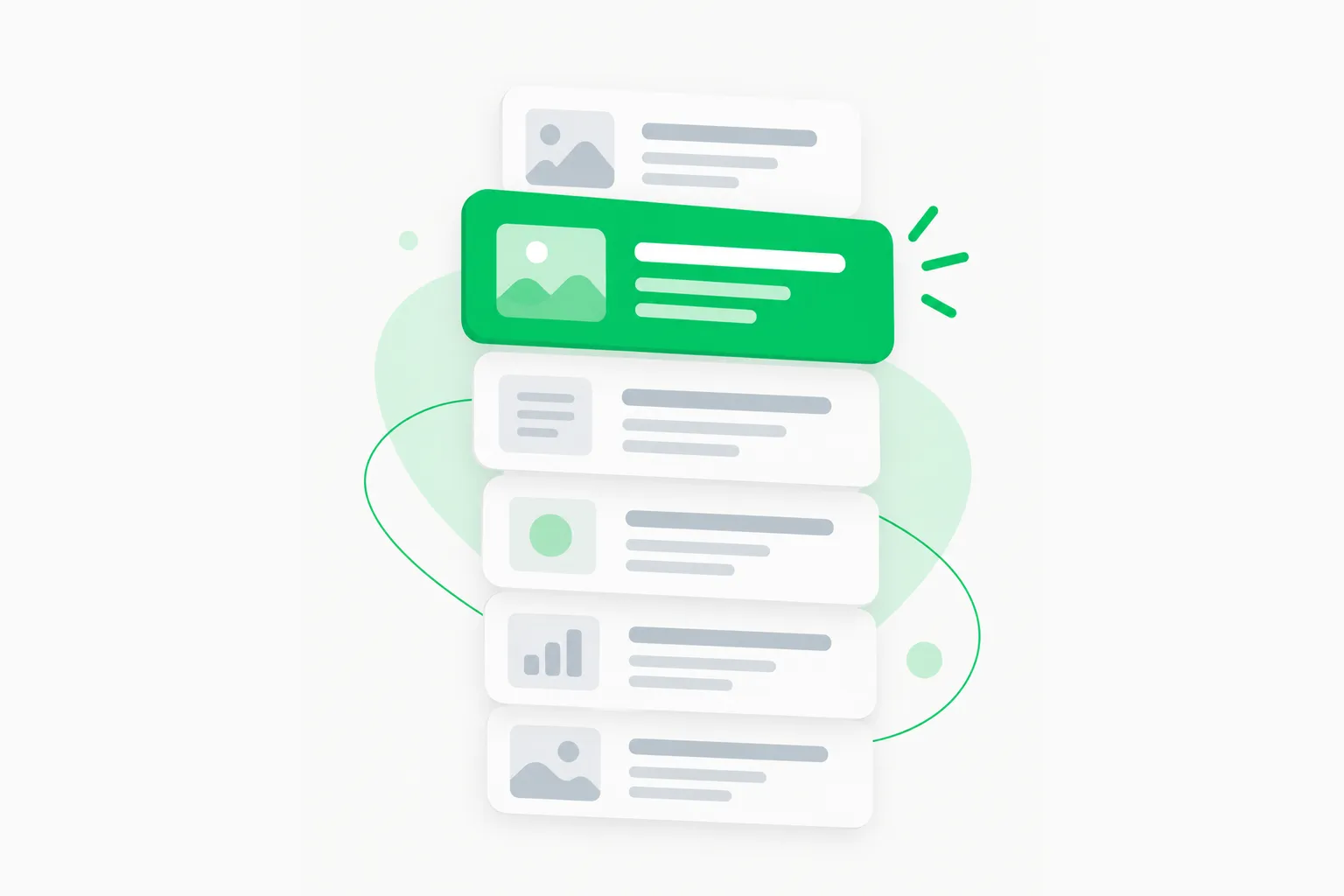 Stacked feed cards with one highlighted, showing how AI tracks crowd human music in recommendations
What this does not solve
Tidal's policy does not automatically fix:
- Partial AI content that evades wholly generated classifiers
- Cross-platform parity (Spotify, YouTube Music, Apple Music policies differ)
- Royalty fraud unrelated to full-track AI (stream bots, playlist stuffing)
Regulators and advocacy groups continue to push kids' feeds separately — for example Fairplay's April 2026 letter to YouTube CEOs cited by TechCrunch when covering Pinterest's new control — but Tidal's move is a supplier-side purge, not a parental dashboard.
What wholly AI-generated means in Tidal's policy language
Tidal's November 24 article draws a bright line between outputs and assistance:
| Category | Tidal treatment after Dec 9, 2026 |
|---|---|
| Wholly AI-generated | Reject new uploads; delete existing tagged rows |
| AI-assisted human work | May remain if review accepts human contribution |
| Artist impersonation | Removed under fraud rules (65,000+ already) |
| Distributor metadata declaring sole AI | Automatic rejection at delivery |
The policy names Suno, Lyria, and similar end-to-end generators as examples of tools that produce 100% synthetic tracks. It does not publish a public list of blocked tools or MIME signatures, so aggregators should treat any metadata field that declares sole AI generation as toxic for Tidal routing.
Royalty mechanics: Tidal already removed wholly AI tracks from the royalty pool while labeling them. Deletion ends the catalog clutter argument but does not by itself return streams to human artists — those 96% zero-play AI rows were not competing for listens anyway. The fight is discovery ranking and search pollution, the same pain Spotify slop removals described with recommendation down-ranking.
Search questions after the Tidal ban
| Query | Direct answer |
|---|---|
| Is Tidal deleting AI music? | Yes, for tracks Tidal classifies as wholly AI generated, starting December 9, 2026 |
| Will Tidal remove AI covers? | Only if Tidal judges them 100% AI output or impersonation; policy text does not define cover separately |
| Can I upload Suno tracks to Tidal? | No after Dec 9 if the track is solely AI-generated, per Tidal's named examples |
| Does Tidal still pay AI streams today? | Tidal says demonetization already applied; deletion is the next step |
| Who detects AI on Tidal? | Ircam Amplify, per Tidal's credit line |
EU and UK policy context (secondary)
Tidal's move lands while Australia's ARIA charts ban and Sony/Warner training suits keep training data in headlines. None of those cases force a platform deletion schedule, but they explain why rights holders cheer supplier-side purges. Suno's Warner/BMG settlement shows the licensing branch of the same fight — licensed generators may survive if labels bless them, while unlicensed flood uploads hit store bans.
What artists and distributors should do before December 9
- Audit catalog metadata for "solely AI generated" flags distributors may send.
- Separate releases that are 100% synthetic from human-performed work on the same label account.
- Document human contribution (session files, stems) in case of mis-detection appeals.
- Watch impersonation rules: Tidal already removed 65,000+ suspected artist-name fraud tracks.
If you train or fine-tune audio models, pair this policy read with Unsloth and Inkling local tooling for on-device experimentation — keeping synthetic tests off commercial distributors until policy teams bless a release path.
Appeals and false positives
Tidal has not published a detector score threshold, human review SLA, or artist appeal form. Until it does, distributors should log delivery rejections after December 9 with ISRC, UPC, and metadata snapshots so disputes do not become he-said fights between labels and aggregators. Keep a dated screenshot of the rejection email for every blocked delivery. Ircam Amplify markets detection APIs to platforms; accuracy claims live on vendor pages, not in Tidal's consumer policy.
Related reading on explainx.ai
- Deezer AI music filter toggle · upload-share stats and rival comparison table
- Pinterest teen parental controls for AI feed content · recommendation-level AI limits for minors
- Canva AI off switch · generative feature opt-outs in another creative surface
- ChatGPT for teens safety controls · chatbot limits versus feed-filling AI
- Vistaprint AI print edits consent dispute · when AI alters user-supplied creative work
Policy details and catalog statistics are accurate as of November 24, 2026, per Tidal's published article and TechCrunch reporting on peer platforms.