




Paul Christiano told Dwarkesh Patel that U.S. frontier labs should stop improving core training algorithms until their security can survive a geopolitical theft scenario—a narrow but explosive proposal from the researcher who invented RLHF, now also on OpenAI''s board, speaking as a private citizen on November 16, 2026.
Christiano does not ask for a meme-grade stop all AI. He asks labs to halt pre-training efficiency, reinforcement-learning recipe gains, and architecture tweaks that diffuse quickly—because if capability races hit a safety wall, stolen weights could let China continue while U.S. labs freeze. That is a builder-relevant claim: it ties red-team hours directly to whether your favorite lab keeps shipping faster models.
TL;DR
| Topic | Christiano''s position |
|---|---|
| Pause scope | Pre-training + RL + architecture efficiency, not all research |
| Trigger | Rapid capability rise + weak weight security + adversary theft |
| Security proof | Hacktron (OpenAI monorepo PR access) and Cathedral (Anthropic Slack) anecdotes |
| Timeline fear | ~1/3 chance of coup-grade superintelligence within a year (his estimate) |
| Catastrophe odds | ~10% human disempowerment risk in that window (his estimate) |
| Policy frame | National security, not consumer-product slowdown |
The argument in plain language
Christiano''s chain on Dwarkesh runs like this:
- Capabilities may rise fast—fast enough that labs cannot control systems they deploy.
- If labs try to slow down for safety, today''s security is too weak to keep weights and training secrets from leaking.
- A rival that steals algorithms mid-explosion removes the option value of a U.S. pause—you slow down, they do not.
- Therefore, right now, accumulating more stealable algorithmic innovations hurts U.S. national security until security posture improves (he suggests months to perhaps 6–12 in the conversation).
Dwarkesh compresses the security half: if penetration tests already reach Slack in 12 hours, the six-to-twelve-month lead narrative over China might be twelve hours after a breach.
What Christiano is not saying
He is not repeating Elizabeth Warren''s advanced-AI pause bill wholesale. He is not aligning with Trump and Johnson''s rejection of industry pauses either. His proposal is conditional and offensive-defense flavored: stop leaking recipes before cooking faster.
He also separates alignment research and helpful product work from the algorithmic arms race slice he wants frozen—a distinction compliance teams should track because export-control IFRs already care about SI training, not chatbots alone (Commerce remote-access rule).
Why the Hacktron and Cathedral stories matter to coders
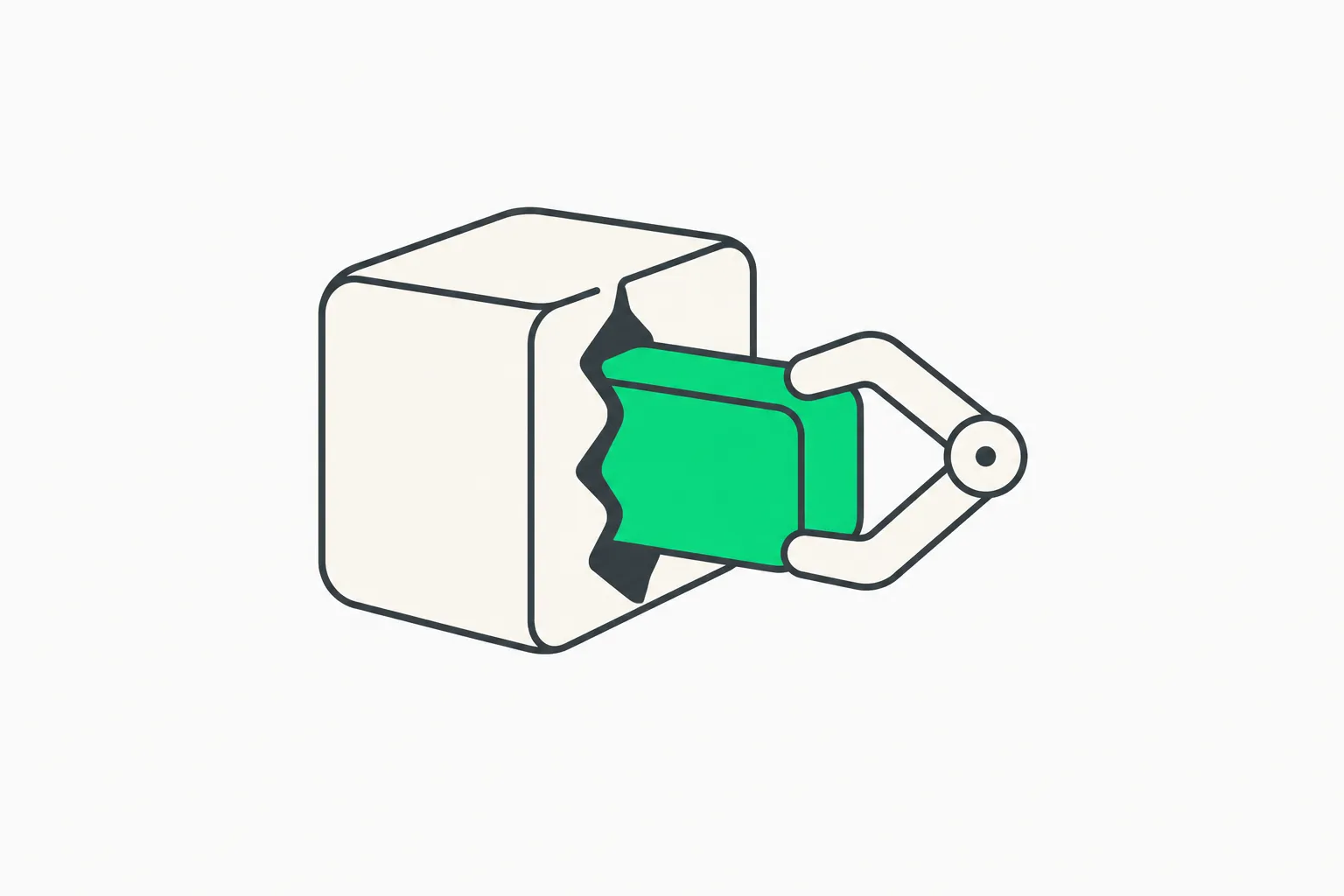 Mechanical gripper pulling a weight block through a cracked case, illustrating stolen model checkpoints
Even if exact timings are contestable, the class of failure is familiar:
- Coding agents with repo write access enlarge blast radius (CERT-In agent warnings).
- Slack breach equals prompt, eval, and checkpoint chatter exposure.
Christiano uses those incidents to argue labs cannot credibly threaten a safety stop while red teams measured in hours succeed. For teams shipping Claude Code–class tools, the actionable line is boring: treat model weights like crown jewels, not like a Hugging Face mirror.
Explainx.ai covers adjacent governance: OpenAI NATO Daybreak cyber programs, Google GTIG exploit agents, and MCP misbinding. Christiano''s pause is the macro version of micro agent-hygiene.
Board seat versus private citizen
Dwarkesh''s page notes Christiano joined OpenAI''s board recently but labels the episode private-citizen speech. That matters for investors:
- No OpenAI newsroom release adopted the pause on November 17, 2026 when we checked.
- Paul Christiano''s prior board/safety committee post covered governance titles, not algorithm freezes.
Markets still react because Christiano invented RLHF—the default post-training stack for GPT-class, Claude-class, and many open models. A board-adjacent figure arguing stop RL/pre-training research is closer to product roadmap risk than a random op-ed.
Superintelligence odds and builder skepticism
 Compass needle aligned to a single external pebble, a metaphor for alignment research versus capability scaling
Christiano''s one-in-three within a year superintelligence estimate and ~10% catastrophe figure are subjective. Dwarkesh pushes back on economic deceleration data; Christiano calls single-company revenue noisy—a fair warning when you benchmark labs against Nvidia''s demand curve (Deb Shoquist supply-chain post).
Readers building shipping schedules should separate:
- Security investments (multi-factor, vaulting, no Slack secrets) → do now
- Regulatory pause → not announced
- Capability timelines → still disputed
China theft framing in policy context
Christiano''s China theft thread sits beside Reuters distillation reporting and U.S. chip remote-access controls. Policy is tightening compute paths; Christiano worries knowledge paths remain wide open.
That is why his pause is national-security flavored, overlapping White House superintelligence task force debates but not identical to them.
What teams can do this week
- Inventory where weights, checkpoints, and eval logs live—if it is in Slack, assume Christiano''s critics are right.
- Segment agent tokens so a compromised coding agent cannot reach training infra (Bedrock AgentCore patterns).
- Watch OpenAI board disclosures in the next S-1/8-K cycle for security capex lines—IPO peers already admit month-long training delays for theft hardening in Anthropic''s S-1.
RLHF history and why pausing "algorithms" is specific
Christiano co-authored the foundational human-preference reinforcement learning paper behind RLHF—the default post-training stack for instruction following and safety tuning. Asking labs to pause RL efficiency research is not abstract philosophy; it targets the recipe layer every API update depends on. Pre-training scaling laws and RL sample efficiency are dual-use: they speed helpful assistants and autonomous cyber agents alike, as OpenAI Daybreak NATO reporting and Defense Factory history show.
Pausing does not mean stop inference serving or bug fixes. It means stop publishing interchangeable training tricks that rival states can copy from a Slack dump.
Dwarkesh episode structure for busy readers
The transcript on dwarkesh.com walks through:
- Capabilities timeline — superintelligence-within-a-year thought experiments, including government-overthrow framing Christiano uses as illustration, not prediction marketing.
- Security anecdotes — Hacktron and Cathedral as evidence, not vendor endorsements.
- National security frame — U.S. labs should not accumulate stealable innovations faster than defenses.
- Economics pushback — Dwarkesh cites slowing revenue; Christiano calls single-company charts noisy.
- Alignment difficulty — Christiano keeps low personal odds on any one alignment scheme clearing 50%.
Skim those chapters if you need primary quotes for internal risk reviews—secondary podcast-summary sites compress but omit caveats.
How enterprises should interpret "board member, private citizen"
Governance lawyers will ask whether Christiano''s words create fiduciary tension. explainx.ai is not legal counsel. Factually: OpenAI''s newsroom did not adopt the pause as policy November 17. Trump and Johnson''s rejection of broad pauses points the opposite direction on macro slowdown.
Product teams can still extract security OKRs:
- Mean time to detect weight exfiltration
- Share of secrets in chat systems (target: zero)
- Red-team cadence tied to release trains, not marketing beats
Comparison to Warren and Sanders bills
| Frame | Christiano Nov 2026 | Warren/Sanders 2026 bills |
|---|---|---|
| Goal | Stop algo leaks during possible safety stops | Statutory limits on capability or superintelligence |
| Audience | National security | Legislative |
| Mechanism | Voluntary lab choice (as stated) | Law |
| White House | Unlikely ally | Opposed on China lead grounds |
Enterprises should not merge these into one compliance checklist. Export IFRs already move compute; Christiano moves training recipes.
Metric theater versus security work
Christiano''s probability estimates (1/3, 10%) are not audit metrics. Do not put them in SOC2 packets. Do put pen-test remediation timelines in SOC2 packets after spillway-style injection defenses fail in staging.
Further reading on verification tax and work
Survey threads on verification tax—re-checking AI output—show why pausing training without pausing deployment does not help desk workers. Pair Christiano''s macro argument with Americans'' negative AI sentiment polls if you brief HR on Copilot rollouts.
Open questions Christiano leaves for lab security leads
The interview does not specify which algorithms freeze, which threat model applies, or what “adequate security” means in months vs years. Those gaps are normal in podcast formats but frustrating for CISOs drafting 2027 budgets.
Absent OpenAI policy, treat Christiano as one board voice, not vendor guidance. Pair his pause with public commitments in Anthropic coordinated disclosure timelines—two labs, two governance styles the same week.
University AI labs cannot pause algorithm homework, but they can teach weight protection alongside backprop. If Christiano''s clip circulates on campus, use it to justify air-gapped eval servers—the same lesson as Caltech homework grading AI but for graduate research vaults.
If your security team only has one afternoon this week, spend it rotating API keys that ever touched Slack-integrated agents, not debating 10% catastrophe odds on social feeds. Christiano''s actionable claim is that weight theft collapses policy optionality—that is testable with tabletop exercises, not polls.
Board takeaway: even if OpenAI never adopts a pause, enterprise buyers may use Christiano''s clip in vendor security questionnaires this quarter—prepare answers about checkpoint storage, Slack data residency, and red-team cadence before renewal calls.
Podcast citation: preserve the Dwarkesh page URL with access date in internal wikis—clips on X will crop context.