



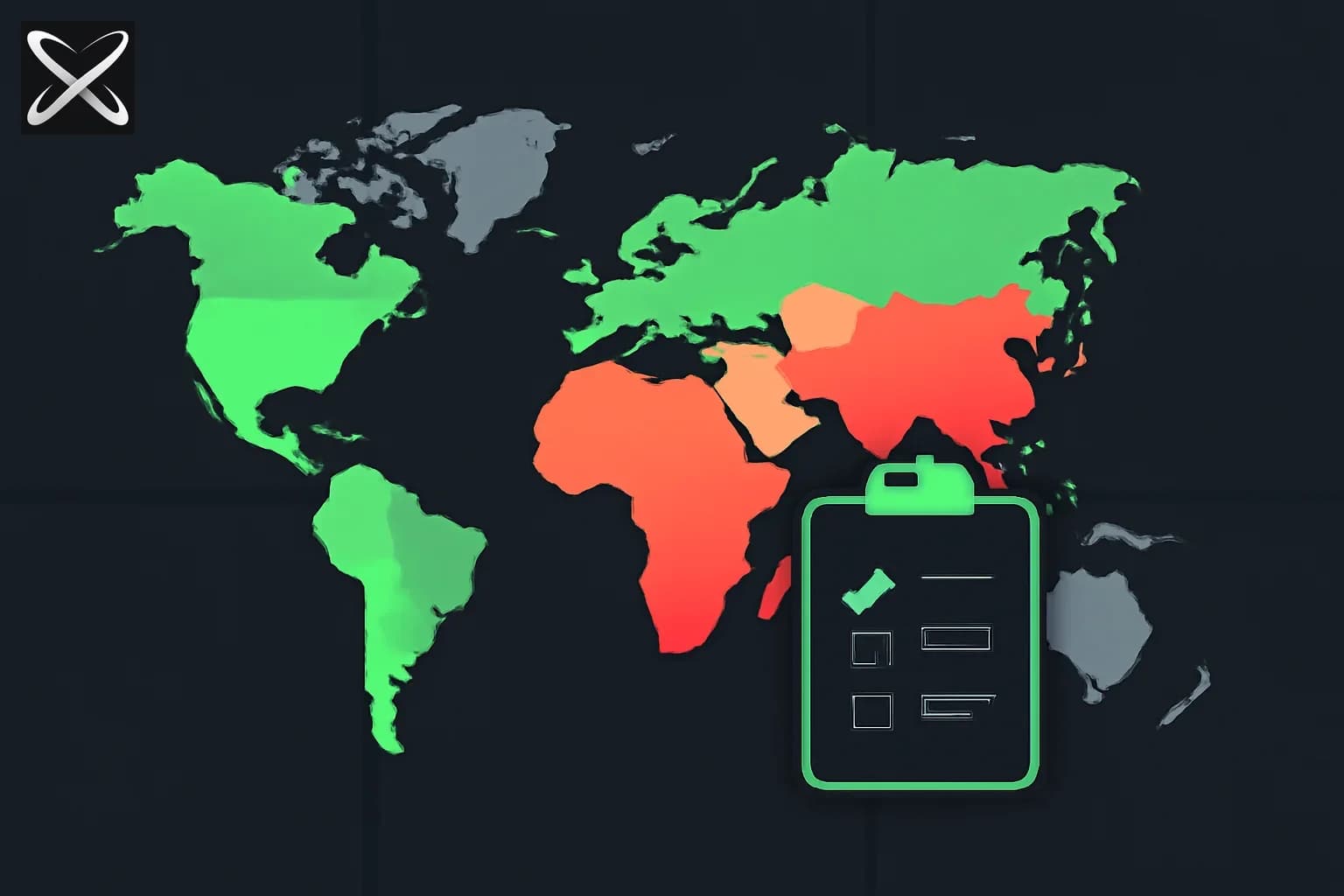
The AI-slowdown debate ignited by Dario Amodei's "Pace the Frontier" essay and echoed days later in Satya Nadella's own superintelligence principle hit a hard wall this week: President Trump and House Speaker Mike Johnson explicitly rejected any AI industry pause, framing a slowdown as a direct risk to America's competitive lead over China. It's the clearest signal yet that whatever momentum the safety-pacing conversation has built inside the industry, it hasn't moved the current administration's actual policy posture.
TL;DR
| Question | Answer |
|---|---|
| What was rejected? | Any AI industry pause — framed explicitly as a national-security risk relative to China |
| Does this contradict Amodei's essay? | Only partially — Amodei's own proposal already excludes halting training, and treats a full pause as his least likely coordination tier |
| Does it block embedded evaluators? | Not directly — that's an oversight mechanism, not a pause, and is structurally distinct from what's being rejected here |
| What's the stated rationale? | Maintaining US lead over China in frontier AI capability outweighs the case for a domestic slowdown |
| Does this end the debate? | No — it reflects executive and House leadership's current position, not binding law; state-level AI regulation continues independently |
| What's the practical effect? | It forecloses the toughest tier of Amodei's own four-level global coordination framework, without necessarily touching the nearer-term asks |
What was actually said, and why it matters right now
The rejection lands directly in the middle of an active industry conversation. Days earlier, Amodei's essay proposed a three-step "pacing" plan — starting with embedded, employee-level evaluator access at Anthropic — and explicitly floated four escalating tiers of global coordination with other nations, including China, up to and including a full pause as the most extreme (and, in Amodei's own framing, least likely) tier. Nadella's own post the same week, covered in Satya Nadella's Superintelligence Principle and Microsoft's MAI Code of Conduct, similarly avoided endorsing any halt to development, framing Microsoft's ask around diffusion of access and enterprise control rather than a slowdown.
Trump and Johnson's statement is a direct answer to that broader conversation, but it's worth being precise about what it actually forecloses. It rejects a government-imposed or government-endorsed pause on AI development — the kind of policy a state actor would need to actively legislate or negotiate internationally. It doesn't, on its face, reject the narrower, industry-voluntary mechanisms Amodei's essay actually proposes as near-term action: embedded evaluators, which add oversight without halting training, or Sam Altman's own commitment (covered in Musk Backs Amodei, Altman Commits OpenAI to Match) to match Anthropic's program.
The China framing, and how it echoes Amodei's own argument
The specific justification — that a pause would let China close or overtake the US lead — isn't actually a new argument invented in opposition to Amodei's essay. It's structurally the same logic Amodei himself uses in his own three-step plan: he explicitly argues the US should widen its lead over China in parallel with any pacing measures, through restricting chip and fab-equipment exports, cracking down on distillation of frontier models, and hardening against weight theft. Where Trump and Johnson diverge from Amodei isn't the importance of the China lead — it's whether any domestic pacing measure, even a narrow, voluntary, evaluator-access-only one, risks undermining that lead by signaling hesitation to competitors, versus Amodei's bet that verifiable safety measures can coexist with maintaining competitive advantage.
Where this leaves the embedded-evaluator question
The practically important distinction for anyone tracking the safety-pacing conversation is that "reject a pause" and "reject oversight" are not the same policy position, even though they get discussed in the same breath. A pause halts capability growth outright; embedded evaluators add a verification layer without touching the pace of development at all — which is precisely the distinction Amodei built his proposal around, anticipating exactly this kind of political resistance to anything resembling a slowdown. Nothing in the Trump-Johnson rejection specifically targets Anthropic's evaluator program, OpenAI's matching commitment, or the kind of state-level transparency and audit requirements already moving forward independently, like California's SB 813 and AB 1405, covered in explainx.ai's California AI audit laws coverage, or the lighter-touch international framework in the G20's Carolina Principles.
That means the practical read for builders and researchers isn't that the safety-pacing conversation is dead — it's that the pause branch of it specifically is politically foreclosed at the federal executive and House leadership level, while the evaluator access and disclosure branch remains an open, industry-driven and state-level track that doesn't require government buy-in to keep moving.
The domestic politics behind the China framing
It's worth being clear-eyed about why "keep the China lead" is such a durable rhetorical anchor for rejecting a pause, independent of its technical merits. Unlike abstract arguments about long-run alignment risk or intelligence-explosion scenarios, a competitive-lead argument translates directly into terms that map onto existing, broadly shared political priorities — jobs, national security, and economic competitiveness — in a way that "we should slow down to let interpretability research catch up" does not. That asymmetry in political legibility is a large part of why pause proposals have struggled to gain traction with elected officials across multiple administrations and configurations of Congress, regardless of which party holds power: the downside of a pause (a rival nation closing a capability gap) is concrete and easy to communicate, while the downside of not pausing (a diffuse, probabilistic safety risk with an uncertain timeline) is much harder to make politically actionable.
That dynamic is unlikely to change based on any single essay or safety proposal, however well-reasoned. It suggests that whatever progress the safety-pacing conversation makes over the coming year will more likely come through voluntary industry commitments, state-level regulation, and international coordination among AI companies themselves — the tracks Amodei's own three-step plan actually emphasizes — rather than through a top-down federal pause that would require the kind of political consensus this statement makes clear doesn't currently exist.
What to watch next
The next signal worth tracking is whether this rejection gets codified into anything concrete — legislation explicitly barring federal agencies from imposing training restrictions, for instance — or whether it stays at the level of a political statement that doesn't change the legal landscape either way. Separately, watch whether Amodei's own Level 3 and Level 4 global-coordination tiers (a "speed limit" on recursive self-improvement, and a full pause) get explicitly abandoned in future Anthropic commentary given this reception, or whether Anthropic continues advocating for them as an aspirational, longer-horizon goal regardless of the current administration's position.
A note on how this statement is being reported
It's worth flagging directly that, as of publication, this statement is being reported through secondary summaries rather than a single official transcript or press release explainx.ai has independently verified word for word. That's a common pattern for fast-moving political reactions to an industry debate — a position gets characterized in aggregated coverage before the exact phrasing, context, and any qualifying language make their way into an official record. Readers relying on this post for precise quotations should check for the original remarks (a press conference transcript, an official statement, or a recorded interview) rather than treating any single paraphrase, including this summary, as a verbatim record. The substance of the position — rejecting a pause on national-security grounds tied to China — is consistent across the coverage this post draws on, but exact wording and any nuance beyond the headline framing may only become clear once primary sources are available.
Reading this alongside the rest of this week's AI policy news
Taken together with everything else circulating this week — Nadella's diffusion principle, Xi's BRICS open-source proposal, and Garry Tan's American distillation push — a pattern emerges that's worth naming directly: every major actor in this conversation is reaching for the language of "keeping pace" or "not falling behind," while disagreeing sharply about who the relevant competitor actually is. For Trump and Johnson, the competitor is China, and the risk is a domestic slowdown ceding ground. For Nadella, the risk is concentration inside a handful of companies, competitors included. For Xi, the frame is building bloc-level self-sufficiency outside dependence on any single country's frontier labs. None of these framings are mutually exclusive on their face, but they point toward very different policy prescriptions — which is exactly why a debate that sounds unified around "we all agree pacing/safety matters" keeps producing contradictory concrete proposals once you look past the shared vocabulary.
Update — September 15, 2026: A third framing entered this debate — Jack Dorsey's "open the frontier" essay explicitly rejects the idea that the US and Chinese governments alone should decide how much intelligence the rest of the world can develop, cutting against both this administration's China-lead framing and Amodei's lab-led pacing proposal. See Jack Dorsey's "Open the Frontier" Answers Amodei — With Open Weights.
Update — September 15, 2026: Trump restated this position with considerably more force, posting that he is "the Hoax Buster" breaking the "Hoax" that AI will "take over, consume, and destroy the World" — while Kamala Harris took the opposite side, calling for Congress to legislate a slowdown and a new federal AI oversight body ahead of a reported Sept 24 Trump-Xi AI meeting. See Pace the Frontier Goes Cross-Partisan: Baker, Burry, Trump, and Harris React.
Related reading
- Trump's Poll to Rename AI "Superior," "Extreme," or "Supreme" Intelligence
- Pace the Frontier Goes Cross-Partisan: Baker, Burry, Trump, and Harris React
- Jack Dorsey's "Open the Frontier" Answers Amodei — With Open Weights
- Dario Amodei Wants to "Pace the Frontier" — Here's the Actual Plan
- Musk Backs Amodei, Altman Commits OpenAI to Match: The Pace the Frontier Reaction
- Satya Nadella's Superintelligence Principle and Microsoft's MAI Code of Conduct
- California AI Audit Laws: SB 813 and AB 1405
- G20 Backs the "Carolina Principles": Light-Touch AI Rules, China Included
- Garry Tan Wants an "American Distillation Regime" for AI Models
- China's Countermeasures to US AI Model Theft Accusations
- White House AI task force gets 120 days
This post reflects public statements attributed to President Trump and Speaker Johnson as of September 14, 2026. No formal legislation or executive order had been published at time of writing — check official White House and House leadership channels for the exact statements, full context, and any follow-on policy action before treating this summary as a complete or final record.