



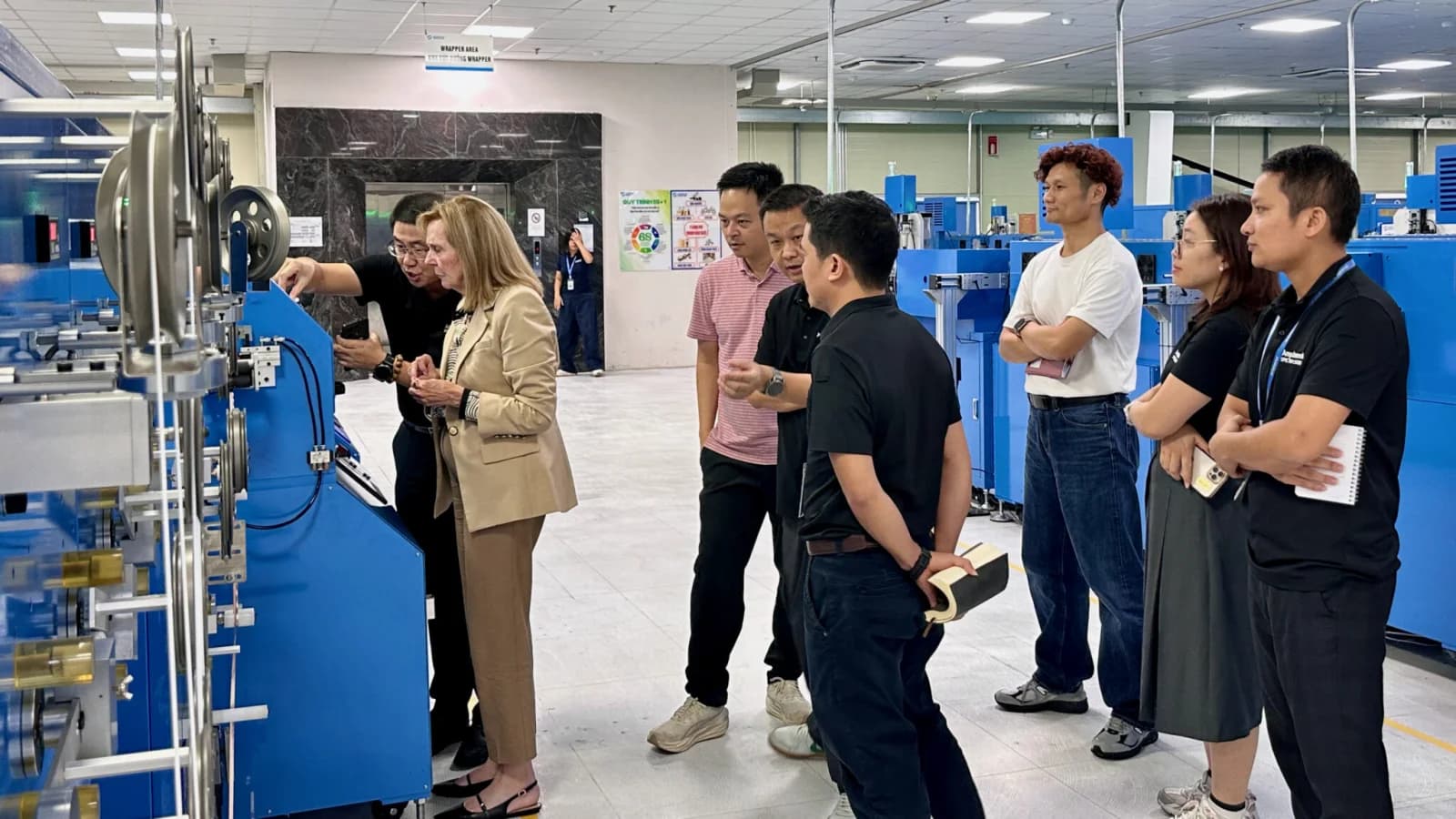
On November 16, 2026, NVIDIA operations chief Deb Shoquist published a rare floor-level view of how AI racks actually get built—from TSMC wafers through Foxconn and Wistron integration to the cable cartridges that must stay under one defect per million. The NVIDIA blog interview is not a earnings teaser. It is a map of why GPU shortages persist even when fabs run hot, and what breaks when a new platform like GB200 swaps test automation for manual fallbacks.
If you lease colocation or plan a cluster purchase, Shoquist’s framing matters: NVIDIA treats the supply chain as a closed-loop circulatory system where weekly yield scorecards decide which factory gets the next TSMC die. That is the same institutional muscle behind SK Hynix’s Trinity fab bet and the Pax Silica supply-chain diplomacy push—but here the narrator is the person who actually allocates chips.
TL;DR: what Shoquist says NVIDIA optimizes
| Topic | Shoquist’s claim | Builder takeaway |
|---|---|---|
| Partner fit | Suppliers need technical depth, capital, and appetite for never-done-before ramps | Small CM changes ripple into rack lead times |
| Traceability | Every die ID tracked from TSMC through invoice | Audit trails for regulated buyers start here |
| Weekly allocation | Low-yield factories lose chip shipments that week | CM performance is a capacity multiplier |
| Rack cycle | Five weeks → two weeks chip-to-system when urgent | Explains sudden delivery waves, not smooth queues |
| GB200 test | Automated handler failed throughput; manual fallback + engineering swarm recovered ramp | New platforms ship before test floor is mature |
| CPO optics | Invested in Coherent and Lumentum when fabs too small | Networking inside the package is now a gating item |
Who Deb Shoquist is in the NVIDIA machine
Shoquist leads operations, spanning manufacturing, supply chain, and the partner network behind DGX, HGX, and networking bundles. The post ties her work to the 2026 Dr. Lisa Su Woman of Innovation Award—a detail that signals how rare it is for a COO-style leader to speak publicly about factory-floor tradeoffs instead of benchmark slides.
NVIDIA’s story arc in the piece mirrors what hyperscalers feel in procurement: the company started as a chip vendor picking TSMC and OSAT partners (SPIL, KYEC, Amkor get shout-outs), then became a systems house that must synchronize Foxconn/Wistron lines with Amphenol copper, Lumentum/Coherent optics, and Sub-1 DPPM mechanical tolerances. That pivot is why Financing pullbacks on AI infrastructure and Southeast Asia data-center access fights land on the same calendar as manufacturing interviews: capital and geopolitics only matter if racks can ship.
Matchmaking fabs to ramps
Shoquist uses a blunt metaphor: she is a matchmaker. A supplier must bring (1) extreme technical skill, (2) financial strength to fund NVIDIA-scale ramps, and (3) willingness to build something that has never existed. Missing any leg means NVIDIA either walks away or invests to create the third leg—a pattern she repeats for optics.
The post names long relationships—TSMC since 1998, OSAT partners for two decades—and human color (a Taiwan supplier calling at 3 a.m. with a line fix). That is not nostalgia; it explains why sudden second-source fantasies fail in practice. Ramp knowledge lives in shift supervisors, not PDFs.
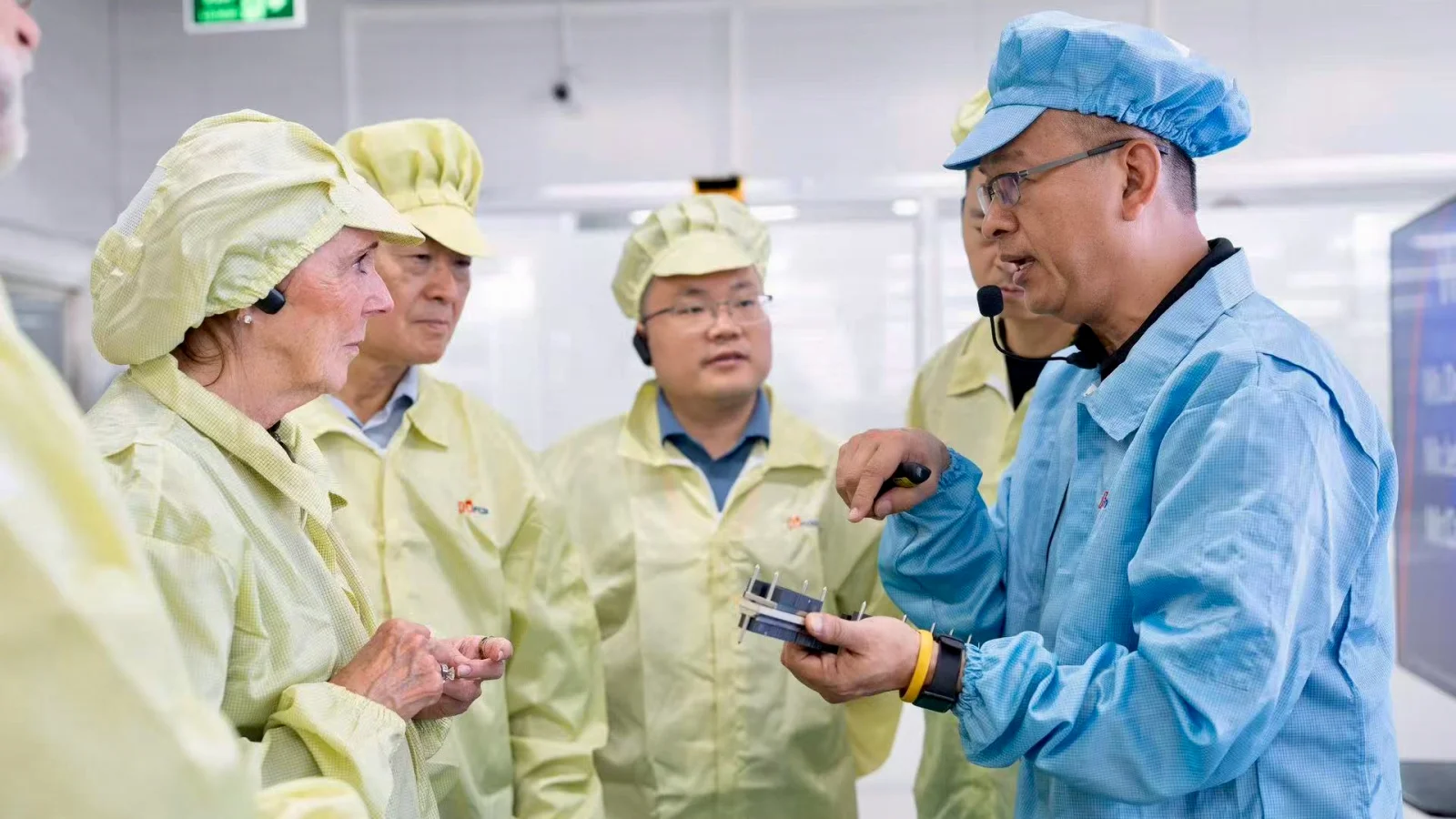 Foxconn factory floor in NVIDIA AI supply chain partner network
Image: NVIDIA
Traceability and the weekly chip court
Two operational details deserve more attention than product names:
-
Wafer priority. Shoquist says TSMC output is the air the system breathes. Each week, NVIDIA decides which integration factory receives which dies after reviewing yield and cycle time.
-
Factory probation. If a site’s yield or time-in-station slips, it does not get more chips that week. That is a hard SLA enforced with silicon, not slides.
She adds that every chip is tracked from die mark through customer invoice, and suppliers must support that traceability stack. For teams building sovereign clouds or export-controlled enclaves, that sentence is the closest thing to a compliance primitive in the post: it tells you where serial-level audits become possible—upstream of your own CMDB.
The five-week to two-week compression from TSMC out to Foxconn/Wistron ship is framed as a stress mode, not an everyday quote. Still, it shows why backlog charts can snap shorter when NVIDIA decides a branch of the circulatory system must accelerate—relevant when you compare lead times against Huawei Colossus build narratives or open-weight clusters on alternative silicon.
Amphenol and the 1,500-leg cable cartridge
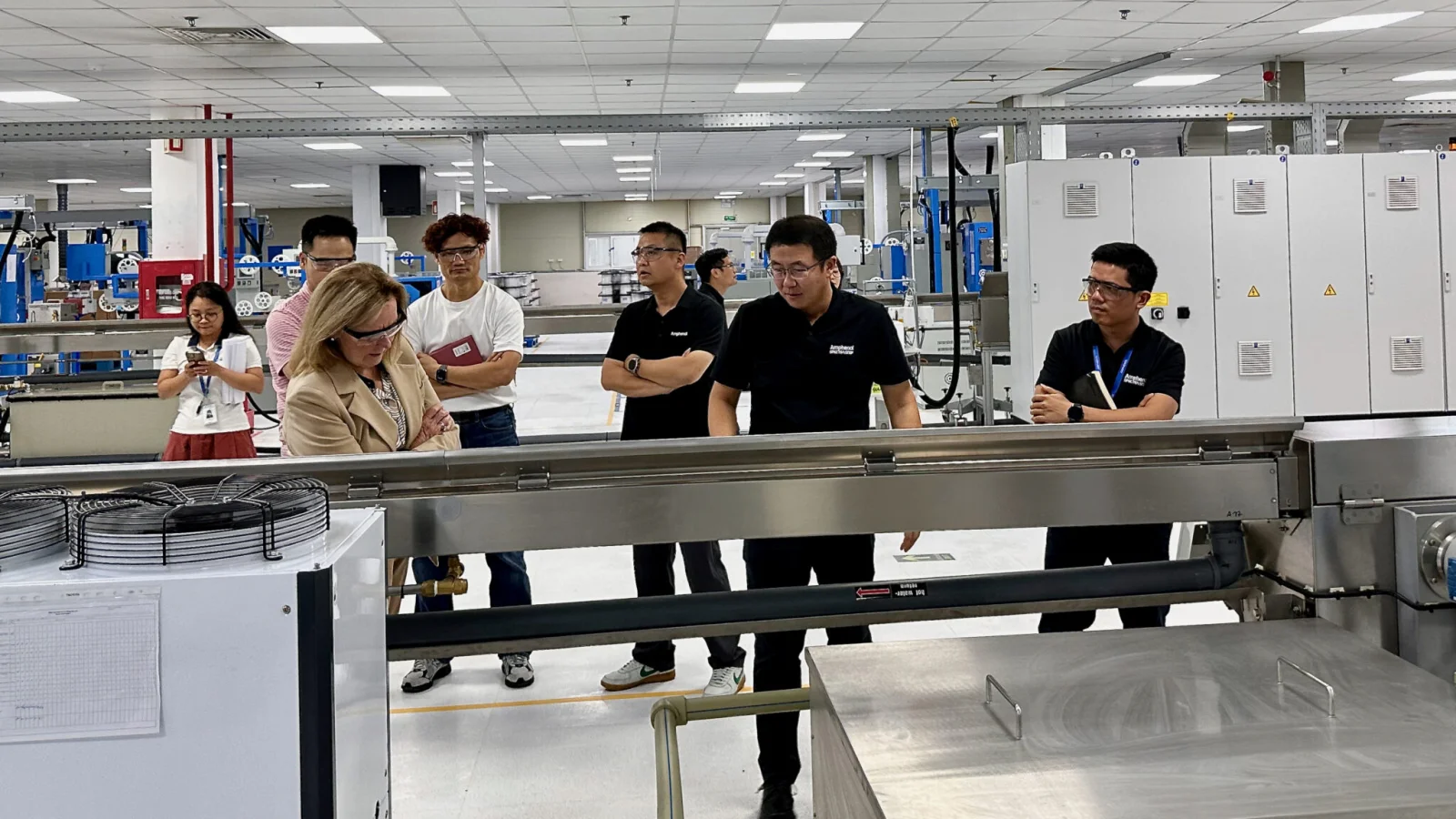 Amphenol cable cartridge assembly for NVIDIA AI racks
Image: NVIDIA
Mechanical supply chains rarely make AI blogs. Shoquist spends real words on Amphenol’s cable cartridge: ~1,500 small legs, each positioned to hit sub-1 DPPM, assembled across 100+ automated lines in Vietnam. She ties the product to trust forged through pain—partners who invested when NVIDIA was small still get first call on impossible builds.
For rack designers, the lesson is mechanical parallelism with silicon parallelism: a GPU generation can be “available” while copper or optical harnesses gate full configuration counts. That interacts with co-packaged optics (CPO), where photonics moves closer to the GPU die and new vendors enter a world historically dominated by switch ASICs.
Co-packaged optics and why NVIDIA buys into suppliers
When NVIDIA pivoted toward CPO, Shoquist says optical partners had technology and willingness but not fabs at NVIDIA volume. NVIDIA supported and invested—explicitly naming Coherent and Lumentum—and now leads cross-supply-chain integration because many scale partners are new to optics.
Read that alongside NVIDIA SkillEvaluator agent tooling and memory-supply reporting: the bottleneck migrates from HBM stacks to on-package photonics and the training clusters that need them. Shoquist does not quote lane counts or dollars; the strategic move is vertical patience—owning ramp risk when capital markets would not fund a greenfield photonics line fast enough.
GB200: when automation fails, the “NVIDIA swarm” wins
The most concrete war story is GB200 compute board production at Foxconn and Wistron. The final test step relied on a new automated handler aimed at high-volume throughput. Initial ramp throughput landed far below plan.
The Taiwan manufacturing director shut off automation, reverted to manual test loading, and staffed hundreds of operators to protect shipments—a expensive bridge, not a solution. Shoquist calls the recovery “the NVIDIA swarm”: design engineering, industrial ops, product test, and Foxconn automation jointly flooded the line, attacking tray design, control software, mechanical hardware, and yield until automation could return before full-scale ramp.
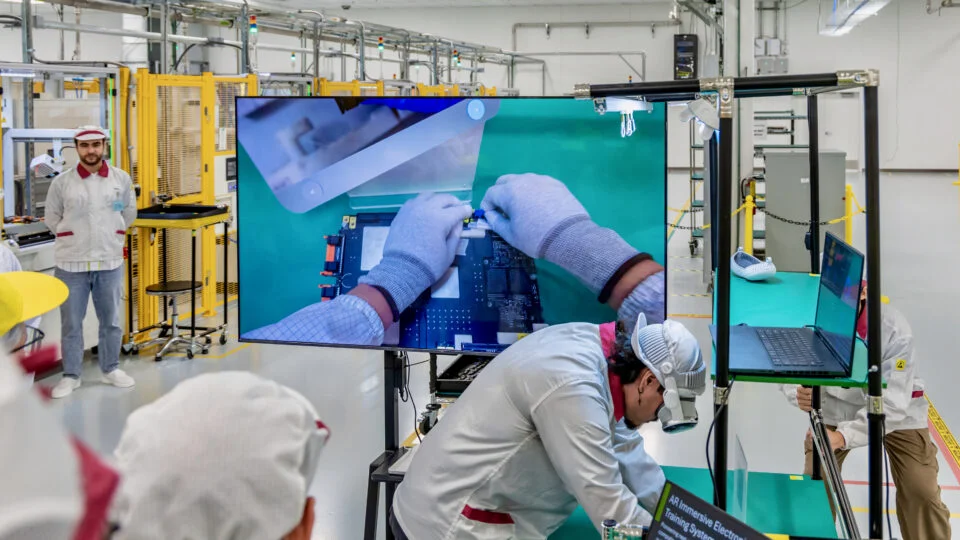 Wistron assembly workers on NVIDIA AI infrastructure supply chain lines
Image: NVIDIA
For ML engineers, the parable is not romantic. Handler automation is part of the product. When it lags, humans absorb variance—and server SKUs hit the market with immature test floors. That is one reason early GB200 clusters show heterogeneous stability in community reports even when benchmarks look fine.
Relationship capital versus policy shock
Shoquist’s travel schedule—quarterly supplier reviews, six weeks a year on factory floors across Taiwan, Korea, Vietnam, China, and the U.S.—sounds like 2010s OEM culture. In November 2026 it sits awkwardly next to export-control hearings and Megaspeed diversion probes. Policy can halt a shipment; only relationships restart a line after a handler failure.
She ends on morale: operations is “empowering” because the constraint is creativity, not budget—an easy line to doubt during financing volatility, but accurate inside fabs where yield gains are free capacity.
What builders should do with this post
If you are buying hardware: ask integrators not only GPU allocation dates but which test and cable subsystems are on the critical path. Shoquist’s narrative implies mechanical and optical SKUs can gate DGX ships even when TSMC is healthy.
If you are planning liquid-cooled sites: note Vietnam and Taiwan concentration for copper and optics. Diversification stories like Philippines Pax Silica protests are political mirrors of the single-region skill Shoquist praises.
If you train open models: supply-chain depth explains why GPU-hour spot prices decouple from fab “capacity solved” headlines. Your scheduler should assume discrete delivery waves, not continuous flow.
Partner map Shoquist names (and what each layer does)
The blog reads like a bill of materials for civilization-scale AI. Grouping suppliers by function helps procurement teams ask sharper questions:
| Layer | Partners mentioned | What Shoquist stresses |
|---|---|---|
| Silicon fab | TSMC | Wafer output is the pacing item; relationships date to 1998 |
| OSAT / test | SPIL, KYEC, Amkor | Assembly and test partners who stayed through small-volume eras |
| Systems integration | Foxconn, Wistron | GB200 boards, manual-test fallbacks, automation swarms |
| Copper / harness | Amphenol | 1,500-leg cartridges, sub-1 DPPM, Vietnam scale-up |
| Optics | Coherent, Lumentum | CPO fabs too small without NVIDIA capital support |
| Subsystems | Unimicron, King Yuan, others in passing | PCB and substrate depth implied in ramp talk |
None of these rows replace a purchase order status. They tell you which subsystem owner to ping when a quarter slips even though TSMC allocation looked fine on paper.
The Lisa Su innovation award as operations signal
Shoquist accepted the 2026 Dr. Lisa Su Woman of Innovation Award in the same window as the blog post—a reminder that supply-chain leadership is now public-facing, not back-office. Awards do not shorten lead times, but they show who NVIDIA puts on stage when Wall Street asks about capex execution versus chip design.
Compare that visibility with Jensen Huang’s November exit and interim CFO CEO Colette Kress: operations voices like Shoquist may carry more scripted public detail while succession politics dominate headlines. For rack buyers, Shoquist’s quarterly supplier cadence may be the steadiest signal that manufacturing culture (“mission is the boss”) persists through CEO churn.
Procurement questions worth stealing from Shoquist’s script
Use these verbatim in vendor calls:
- Show me die-level traceability from your integrator through invoice, not batch averages.
- What is your weekly yield scorecard, and when did you last lose allocation for missing targets?
- Which test steps are still manual on my SKU, and what is the automation recovery date?
- For liquid cooling, which copper or optical lead is longer than GPU silicon?
- If export rules change mid-ramp, what in-flight WIP is legally stoppable without scrapping harnesses?
Shoquist does not provide templates—she describes behaviors. Still, the five-question script separates integrators who live on factory floors from resellers repackaging someone else’s queue position.
How this interview fits November 2026 infrastructure news
The same week, explainx.ai covered memory fabs, export fights, and sovereign cloud builds. Shoquist’s piece is the complement: it explains why policy shocks and DRAM investments still hit mechanical reality—cable yields, optics fabs, handler software.
If you are modeling cluster TCO, pair this post with data-center pick-and-shovel selloff context and Trump national champions export programs. One describes equity sentiment; Shoquist describes tray redesign at 3 a.m.
Related reading
- SK Hynix Trinity and the AI memory supply chain
- Fed report on bank exposure to AI infrastructure
- Pax Silica and joint AI supply-chain lists
- NVIDIA financing and open-checkbook debates
- Indonesia Megaspeed raid and empty racks
- Baseten’s inference efficiency guide for stressed GPU budgets
Facts and quotes reflect NVIDIA’s November 16, 2026 blog post unless another source is named inline.