



Octop is a self-hosted AI workspace from Tencent Cloud, released as open source under the MIT license. The pitch: one install on your own machine, and each person in your family or team gets their own login, their own agents, and a separate workspace. Start it with one command, octop run.
This post covers what the repository says Octop does, how to start it, what the isolation claim really means, how it compares with other self-hosted agent platforms we have covered, and what to check before you put family or team data in it. The facts come from the TencentCloud/Octop repository README and the launch announcement. We have not run a full multi-user deployment, so where we are relying on the README we say so.
 Three cream grippers place different green shapes into one shallow round tray.
TL;DR: the questions people are asking
| Question | Short answer |
|---|---|
| What is it? | A self-hosted, multi-user, multi-agent AI assistant platform |
| Who makes it? | Tencent Cloud |
| License? | MIT |
| How do I start? | Install, then octop init and octop run; dashboard at http://127.0.0.1:8088 |
| What do I need? | Python 3.12 or newer, a multi-core CPU, 3 GB or more of RAM |
| Is data separated per user? | By design: JWT login, per-user workspaces, per-agent folders |
| Which models? | OpenAI-compatible APIs, DashScope (Qwen), Ollama and presets |
| Coding agents? | Claude Code, OpenCode, CodeBuddy, Codex per README; Cursor per the announcement |
| Chat apps? | Telegram, Discord, Feishu, DingTalk, QQ, WeChat, WeCom |
| Is it stable? | Version 1.0.2b6 is a beta; some features are marked beta or planned |
What Octop actually is
The README calls Octop an open-source, self-hosted assistant platform "for households and small teams." Under the hood it is a single Python process, built with FastAPI and uvicorn, that serves a web dashboard, a command-line interface, chat-app bridges and scheduled jobs from one place. State lives in a SQLite database by default, with PostgreSQL as an option, and the front end is React and TypeScript. Agent execution runs on what the project calls the Octop Harness, and scheduled tasks use APScheduler.
Three ideas organize the product.
Users. Accounts use JWT authentication with an admin role. Each user sees only their own agents, chats and files.
Agents, called experts. A user can create several, each with its own workspace, model provider, channels and persona. The project ships 16 MBTI personality templates as a starting point, plus an expert library where specialists can be shared within a deployment.
Tools per agent. Each agent can use a Chromium browser for automation, a terminal, and remote desktop control for Linux, Windows and macOS machines. There is also a knowledge base with retrieval over your documents and natural-language scheduling for recurring jobs.
How to start
The README gives three routes. Check the repo for the current commands before running any of them.
# Option A: pip
pip install octop
octop init
octop run

# Option B: Docker
docker compose -f docker/docker-compose.yml up -d
Then open http://127.0.0.1:8088, create the admin account, and add a model provider. The README also offers a one-line installer for macOS and Linux that pipes a script from a cloud storage URL into your shell. Piping a remote script into bash runs whatever that URL serves at that moment, so download it, read it, and run it yourself, or prefer the pip or Docker route. The same advice applies to any tool that asks for it.
Everything lives under ~/.octop/: a config file, the control-plane database, secrets such as the JWT key and channel tokens, one folder per agent, security rules, logs and a managed Python environment. Back up that folder, and protect the secrets directory like a password store.
How the privacy and isolation claim works
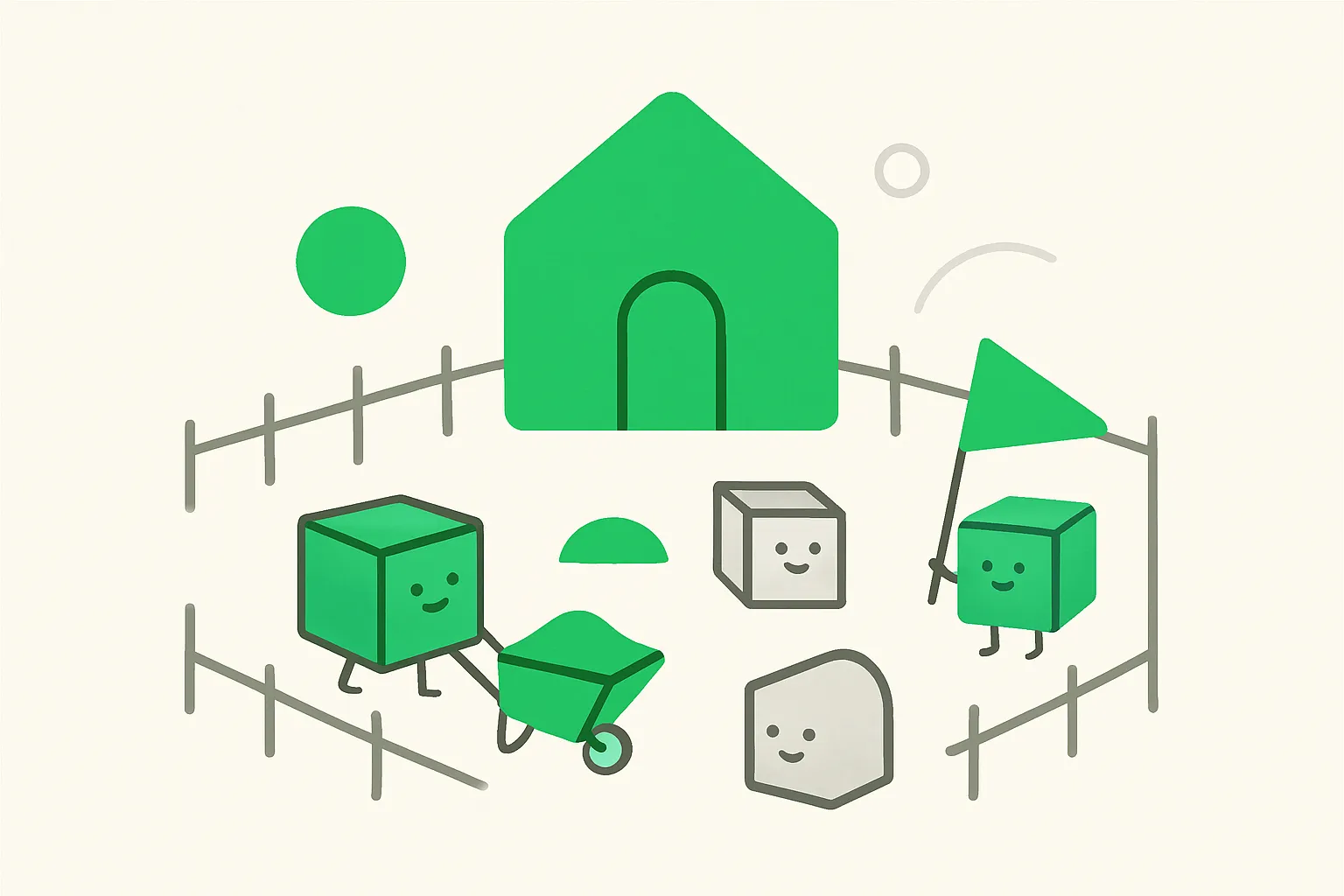 Octop self-hosted multi-user AI workspace with each agent working inside its own fenced yard
The announcement says "Nothing you say or save shows up in another account." The README describes how: login by JWT, a workspace per user, and a folder per agent. It also lists local-first storage, redaction of personal data before it leaves the workspace, and user-editable approval rules for shell commands.
What that does and does not guarantee:
- Application-level separation. One user cannot browse another's chats through the dashboard. That is the feature.
- Not machine-level separation. Everyone's data sits in one folder tree and one database owned by one operating-system user. Anyone with admin rights or shell access to the host can read it.
- Model providers see prompts. If a user connects a cloud model, their text goes to that provider. Local models through Ollama avoid that. Our guide on closed-source versus local open-source AI covers the trade.
- Agent tools are powerful. A browser, a terminal and a remote desktop can reach whatever the host account can reach. The guardrail rules and the Docker sandbox option matter here. Set them before inviting family or teammates.
If you plan to share an instance, test isolation yourself: create two users, store a distinctive note in one, and confirm the other cannot find it through chat, search or the knowledge base.
What can be swapped
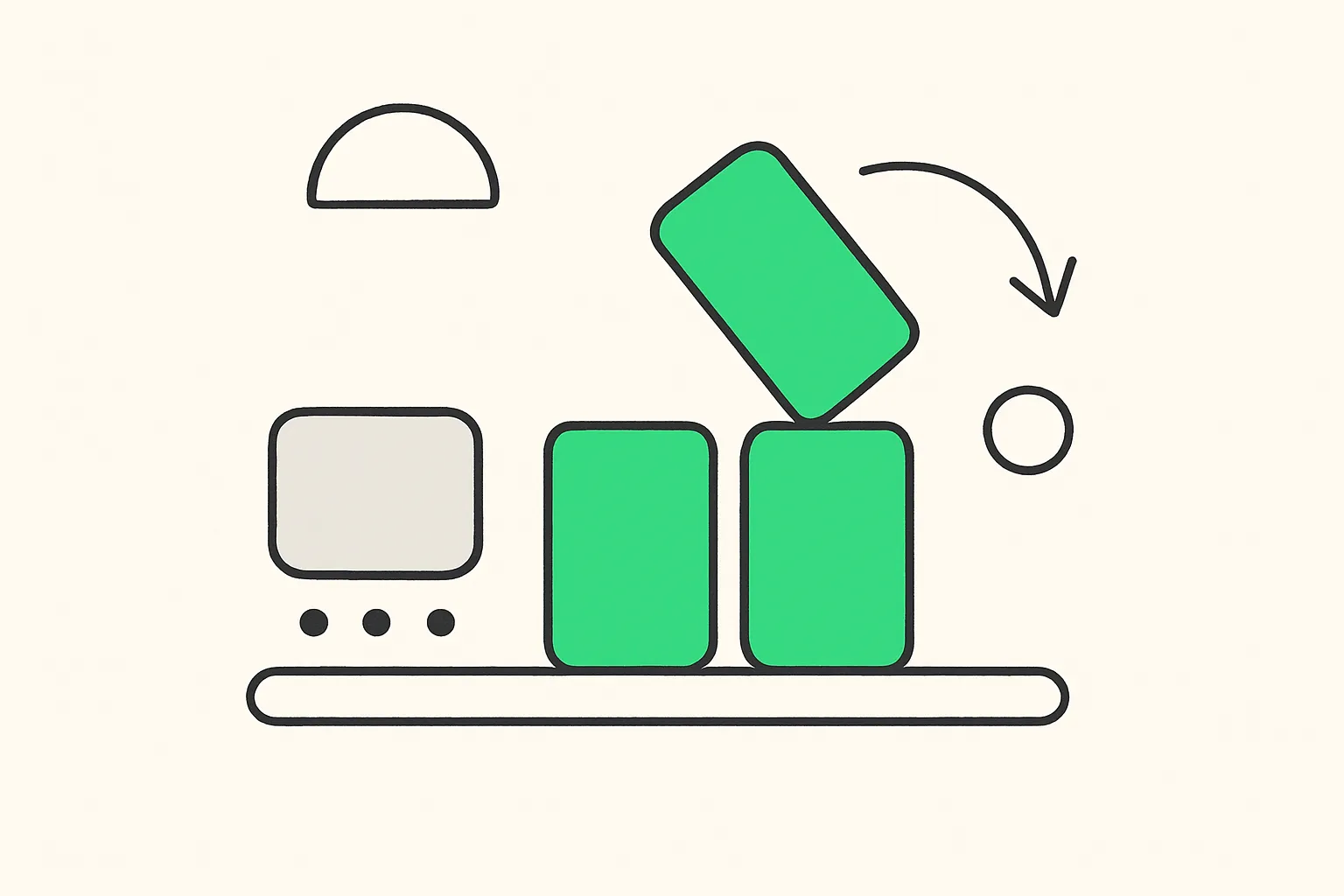 Octop multi-agent AI platform letting you swap model blocks on a shelf without changing the rest
The announcement says "almost everything can be swapped." From the README:
| Layer | Options listed |
|---|---|
| Models | OpenAI-compatible APIs, DashScope (Qwen), Ollama, presets |
| Storage | Local disk, Docker sandbox, PostgreSQL, COS or S3 |
| Memory | Octop Memory, with hierarchical recall and full-text search |
| Plugins | Plugin ecosystem; a marketplace is on the roadmap |
| Channels | Web, desktop clients, CLI, API, Telegram, Discord, Feishu, DingTalk, QQ, WeChat, WeCom |
Handing work to coding agents
A notable feature is outbound delegation to coding agents you already use. The README lists Claude Code, OpenCode, CodeBuddy and Codex through an agent-protocol bridge. The launch post also names Cursor; we could not confirm Cursor in the README summary, so check the repo.
The practical idea: you message an Octop agent from Telegram, and it passes a coding task to Claude Code or Codex running on the host, then reports back. That makes Octop a front door and scheduler around tools you already pay for. If you build that way, read our comparison of Codex and Claude Code and the Codex Auto-review coverage for how approvals work on the coding-agent side, since permissions you grant there still apply.
How does it compare with OpenClaw, Hermes and others?
Octop sits in the same family as other self-hosted agent platforms we have covered, with a different center of gravity.
| Question | Octop | Closest explainx.ai coverage |
|---|---|---|
| Built for many users on one install? | Yes, first-class | OpenClaw is centered on one person's assistant |
| Per-agent browser, terminal, remote desktop? | Yes | Varies by project |
| Delegates to coding agents? | Yes, via the agent bridge | See the Hermes vs OpenClaw comparison |
| Self-hosted workspace UI? | Yes, web and desktop | Odysseus and Hermes WebUI are related |
| Origin | Tencent Cloud, with strong China chat-app support | Differs by project |
If you want one assistant that follows you around, OpenClaw-style setups are simpler. If you want a shared household or team server with separate accounts, Octop is aimed at that case. For a wider view of the field, see our OpenClaw, Dots, Hermes and Meta comparison.
Limits and open questions
- Beta status. The version we saw was 1.0.2b6. The roadmap lists AgentTeams as beta, a mobile client in closed beta, and browser workflow recording, self-evolving skills, managed agents, project workspaces and a plugin marketplace as planned.
- Not a first release. Aggregator coverage dated September 20, 2026 already described the repository, so the open-source announcement is a promotion of a project that was already public. We did not trace the first commit.
- Security is mostly your job. Tool guardrails exist, but a multi-user host with a terminal and a browser per agent is a large surface. Use the Docker sandbox, a dedicated machine or VM, and strong passwords.
- Data residency. If you enable cloud storage or cloud models, data leaves your machine. Decide that per agent.
- Documentation is thin in English. The project emerged from a Chinese-language ecosystem, so expect uneven English docs and chat-app integrations aimed at China first.
- Unverified claims. The star count (about 7,100 when we looked), the "digital life form" framing and the performance claims are the project's own.
What this means for what you build
If you build agent products, Octop is a reference for how to package multi-tenant agents: separate workspaces per user and agent, a swappable model and storage layer, and a bridge out to specialist coding agents instead of reimplementing them. The idea of one process hosting the dashboard, chat channels and scheduler keeps deployment simple, at the price of a single failure domain.
If you run a family or small team, try it on a spare machine or a cheap VM before moving real data. Start with local models through Ollama if privacy matters, and add a cloud provider only for tasks that need it. A good first test is to create two users, one chat channel and one scheduled job, then try to break the separation. For ideas on what to automate, see our guide to building a personal AI system with a local workflow and top things you can do with OpenClaw, which transfer to any agent platform.
Related reading on explainx.ai
- What is OpenClaw? Personal AI assistant guide
- Hermes Agent vs OpenClaw comparison
- Odysseus: a self-hosted AI workspace
- Hermes WebUI: self-hosted AI agent interface
- Build a personal AI system with a local workflow
- Closed-source AI vs local open-source alternatives
- Codex vs Claude Code agent comparison
- OpenClaw 2.0 release
Details come from the Octop repository README and launch announcement as of October 6, 2026. Version numbers, supported integrations and install commands change quickly; check the repository before installing. We have not security-audited the project.