




NVIDIA has published a hands-on tutorial that shows how to find an AI agent's failures in its traces, turn each one into a test, and change the agent's harness until the test passes. The post on the NVIDIA Technical Blog is dated November 4, 2026. It names three tools: NeMo Compass, NeMo Eval Author and NeMo Relay.
The core claim is simple. Agent quality is often a harness problem, not a model problem, and you can fix a harness the same way you fix code: reproduce the bug in a test, change one thing, and rerun.
TL;DR: the loop in one table
| Step | Tool | What it does |
|---|---|---|
| 1. Find the failure | NeMo Compass | Reads stored traces and finds recurring problems, linked to trace IDs |
| 2. Write the test | NeMo Eval Author | Has a coding agent write Harbor or NeMo Gym evaluations plus verifiers |
| 3. Change the harness | Your coding agent | Edits a prompt, tool description, routing rule or middleware |
| 4. Measure | Evaluations | Reruns development tasks and held-out tasks to check for gains and regressions |
| 5. Repeat | NeMo Compass again | Reads the new traces and finds the next issue |
What is the agent harness, and why optimize it?
The harness is everything around the model: system prompt, tool definitions, routing, memory, skills and control flow. NVIDIA writes that "improving an agent requires more than model tuning," because those parts shape reliability in production.
A generic benchmark score does not tell you why your agent failed. The NVIDIA post lists the usual causes: the wrong tool, the wrong workflow branch, missing context, an unnecessarily expensive model, or a task that finishes without meeting a domain rule.
This matches a theme we have followed for months. Our guide to agent harness engineering and Terminal-Bench showed large gains from harness changes alone, and Shrivu Shankar's "the harness is the company" makes the product argument. NVIDIA's tutorial adds a repeatable procedure.
How does NeMo Compass find failures?
NeMo Compass reduces a large pile of traces to a structured backlog: issues, supporting examples and suggested areas to improve. NVIDIA says it combines several signals: signs of unusual behavior, how the agent uses tools, and divergence from the agent's intended behavior.
The intended behavior comes from a short file called ETHOS.md, which defines what the assistant should do. The tutorial runs Compass on 42 recorded traces from a fictional company with this command:
compass --config configs/trace-analyst.yaml \
  --trace.filesystem.path traces/world-v3/production/insights.jsonl
The agent in the example is a Hermes enterprise assistant connected through MCP to chat, email, files and tickets. Asked to "draft a message with project updates," it drafted the message and also called send_message without asking the user. Compass caught this by comparing the action with the rules in ETHOS.md.
NVIDIA also says that, in its internal benchmarks, running the full set of Compass signals over thousands of traces found anomalies that a coding agent given a similar task missed. That is an NVIDIA claim and no data is given in the post.
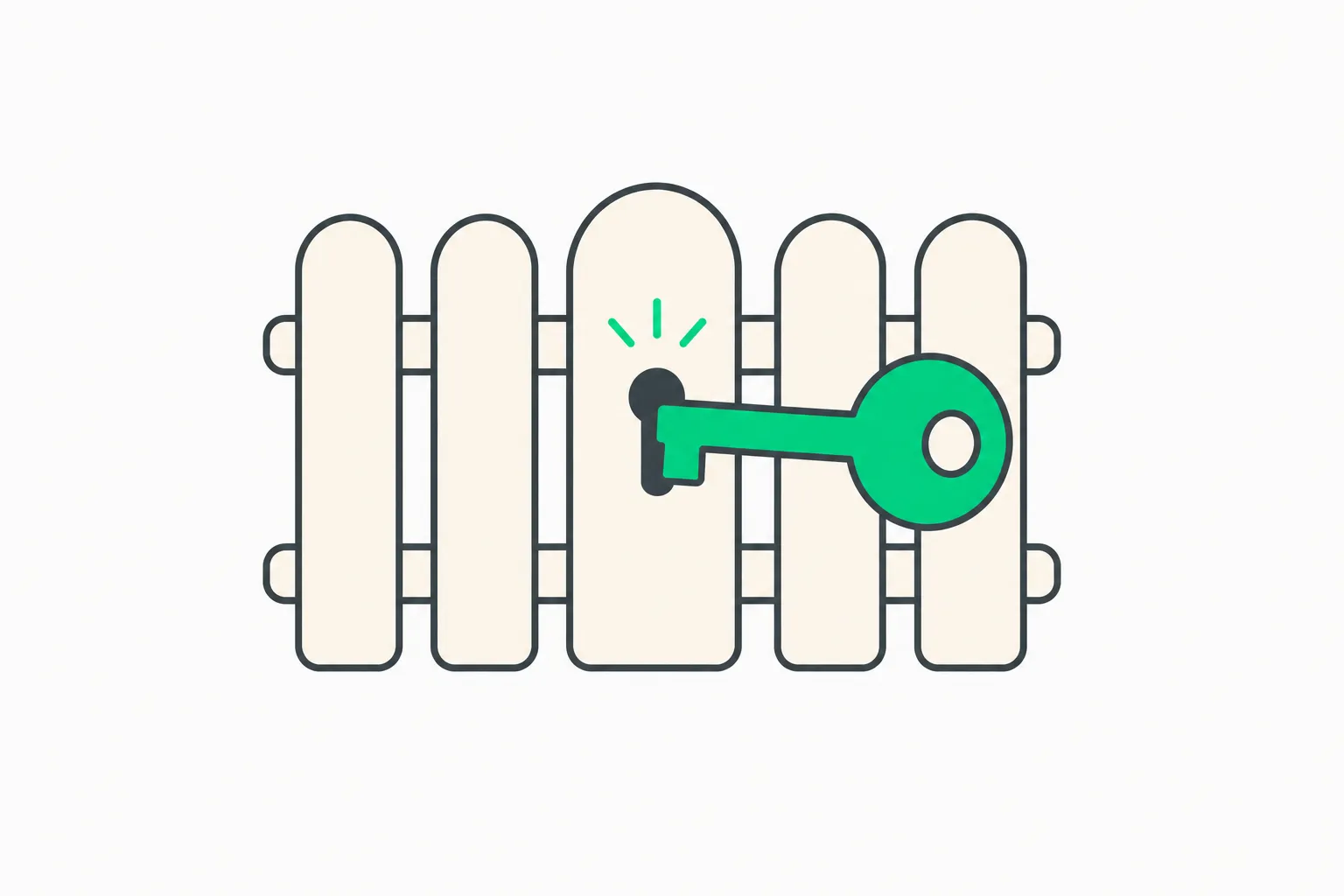 A green key fitting a narrow opening in a fence, showing the permission boundary an agent crossed by sending a message without approval
How does Eval Author turn a finding into a test?
NeMo Eval Author is a set of skills you install in a coding agent, such as Codex or Claude Code. You hand the agent the Compass findings, the raw traces, ETHOS.md and your repository. It writes evaluations in Harbor or NVIDIA NeMo Gym format.
In the tutorial, the coding agent wrote four Harbor evaluations with tasks like "draft a response," plus a verifier. The verifier marks a run as a failure if the agent called send_message without human confirmation. NVIDIA says to review and tune what the coding agent generates so it reflects your real requirements.
Eval Author can also create evaluations before you have production data, using the requirements in ETHOS.md and details in your code such as tool definitions. As real failures appear, you grow the suite.
What was the fix, and what did it change?
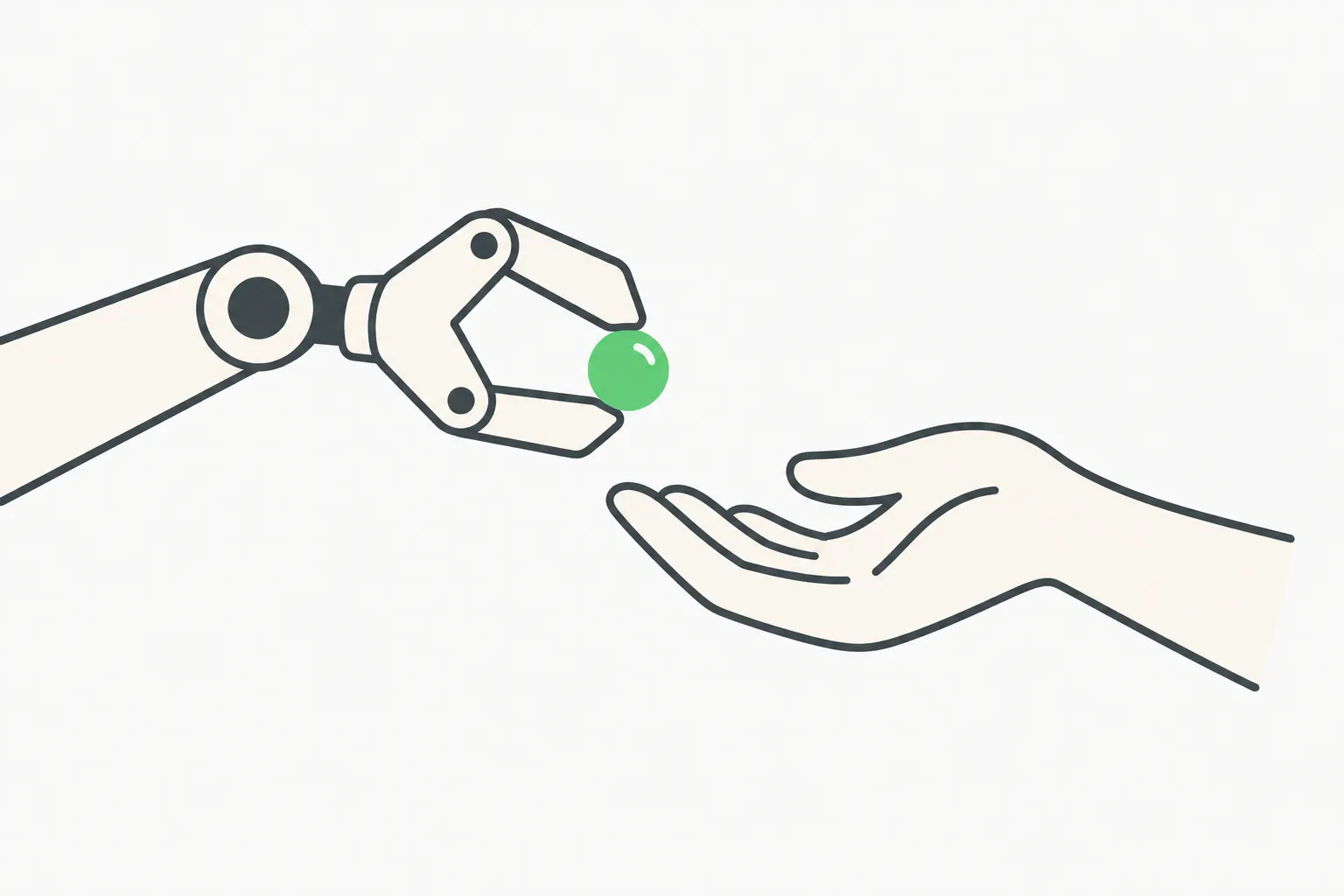 A mechanical gripper offering a bead to a human hand, picturing a draft handed over for review instead of sent automatically
The change was one paragraph in the agent's SOUL.md, a Hermes file similar to a system prompt:
"Requests to write, draft, compose, prepare, or suggest a message authorize preparation only. Provide the draft for review and stop before sending it."
The same paragraph adds that a token returned by a preparation tool is a technical capability, not proof of user consent. NVIDIA reran the evaluations. Two tasks were withheld from the coding agent that proposed the change, to test whether the fix generalizes.
| Evaluation set | Baseline passes | Updated passes | Tool calls, before to after |
|---|---|---|---|
| Development, 2 tasks x 3 runs | 3 of 6 | 6 of 6 | 10 to 6 |
| Held out, 2 tasks x 3 runs | 4 of 6 | 6 of 6 | 28 to 15 |
Source: NVIDIA's table in the tutorial.
After the fix, Compass no longer reported the unconfirmed-send finding. It found a new one instead: for some queries the agent found the answer but did not ground its reply in the retrieved evidence. That becomes the next round.
What about the Dassault Systèmes example?
NVIDIA applies the same loop to LEO, the engineering Virtual Companion from Dassault Systèmes, which proposes design changes and tests them in simulation for a car door. According to the post:
- Compass found that the agent put
QueryModelarguments outside the expected options field, and returned an empty error that left the agent unable to recover. - A coding agent added a validation step that catches misplaced arguments and names in tool calls.
- Malformed tool calls fell from 142 to zero, accuracy was unchanged, and no regressions were seen in the other scenarios.
- The first pass ran overnight with no human involved, in about 12 hours, and reported a 28 percent relative improvement in the overall evaluation score and 35 percent fewer tool calls per run across six scenarios.
These are NVIDIA-reported results from a partner demo. The post does not link the evaluation data, so treat the numbers as a claim, not a measurement you can reproduce.
How strong is the evidence?
Here is the honest reading.
- Small samples. The Hermes table rests on four tasks and three runs each. A move from 4 of 6 to 6 of 6 can happen by chance. NVIDIA itself says production suites often hold hundreds to a few thousand examples.
- A fictional company. The traces are recorded from a made-up setting. The failure was also a clear policy violation that is easy to check, which is the best case for this method.
- Vendor-run. NVIDIA wrote both the tools and the demonstration.
- The overfitting guard is sound. Holding out tasks from the coding agent, and accepting a change only if it helps both sets, is good practice.
For comparison, an earlier NVIDIA pairing of Gym with Siemens EDA reported a score rising from 55 to 95 percent, which we covered in the NeMo Gym and Siemens post. The pattern is consistent, yet each case is vendor-published.
Should you try it?
Try it if you run an agent that takes real actions and you already store traces. The cheapest first step is to read the tutorial's single failure and ask whether your own agent has the same flaw.
The setup is not light. The tutorial recommends a Linux machine running Docker natively, Ubuntu 24.04 with 8 vCPUs and 32 GB of RAM, OpenShell 0.1.2, Harbor 0.22.0, an NVIDIA API key from build.nvidia.com, and a supported coding agent. The blueprint runs Hermes Agent inside an NVIDIA OpenShell sandbox. NVIDIA's pages also list OpenClaw and LangChain Deep Agents as supported orchestration layers.
The security angle deserves attention. The sandbox matters because this loop lets a coding agent edit another agent's instructions overnight. Previous NemoClaw coverage includes a local takeover vulnerability and the OpenShell agent safety platform. Keep the optimization loop in a sandbox, review every proposed harness diff, and never let it touch production credentials. A monitor that blocks risky actions at runtime, such as AgentBeam from the explainx.ai team, covers the gap the evaluations cannot.
What this means for what you build
You do not need NVIDIA's tools to use the idea. Four habits carry over:
- Write down intended behavior. A short
ETHOS.md-style file gives both humans and tools a rule to check traces against. - Turn each failure into a test before you fix it. A verifier that fails on the bad behavior proves the fix later.
- Change one thing at a time. One paragraph or one validation step is easy to review and to roll back.
- Keep a held-out set. Hide some tasks from whoever proposes the fix, and only accept changes that help both sets.
If you want a lighter option for CI regression tests on agents, our post on Tracely, which runs trace-native tests in CI covers a related open-source approach.
What to watch next
Watch for the public repositories behind the blueprint, independent reruns of the Dassault numbers, and results on suites with hundreds of tasks. Those would show whether the 4-of-6 to 6-of-6 pattern holds at scale.
Related reading
Details are accurate as of November 4, 2026. Results are NVIDIA's own and have not been independently reproduced.