



Eleven people, four federal cases, and about $974 million in diverted Nvidia chips and servers—that is the tally Ai Lately published on November 29, 2026 after tracing Justice Department releases from November 2025 through October 2026. The story is not one rogue truck. Prosecutors describe the same three-step playbook in Tampa, Houston, New York, and Los Angeles: a shell buyer in the United States, forged or misleading paperwork, and transshipment through Southeast Asia before restricted Nvidia GPUs and AI servers reach China.
TL;DR: the four cases
| Announced | Case focal point | DOJ-cited scale | Primary DOJ release |
|---|---|---|---|
| Nov. 20, 2025 | Janford Realtor LLC (Tampa) | $3.89M wires; 400 A100s plus 50 H200s stopped | Nov. 20, 2025 OPA |
| Dec. 8, 2025 | Hao Global (Houston), Operation Gatekeeper | $160M in H100/H200 exports | SDTX Dec. 8, 2025 |
| Mar. 19, 2026 | Supermicro-linked brokers (SDNY) | $510M servers with banned chips to China | SDNY Mar. 19, 2026 |
| Oct. 1, 2026 | Earthmade Computer (California) | $300M scheme; $176M in wires | Oct. 1, 2026 OPA |
Ai Lately aggregates those primary filings; explainx.ai cites DOJ URLs as the authoritative numbers, not the chart alone.
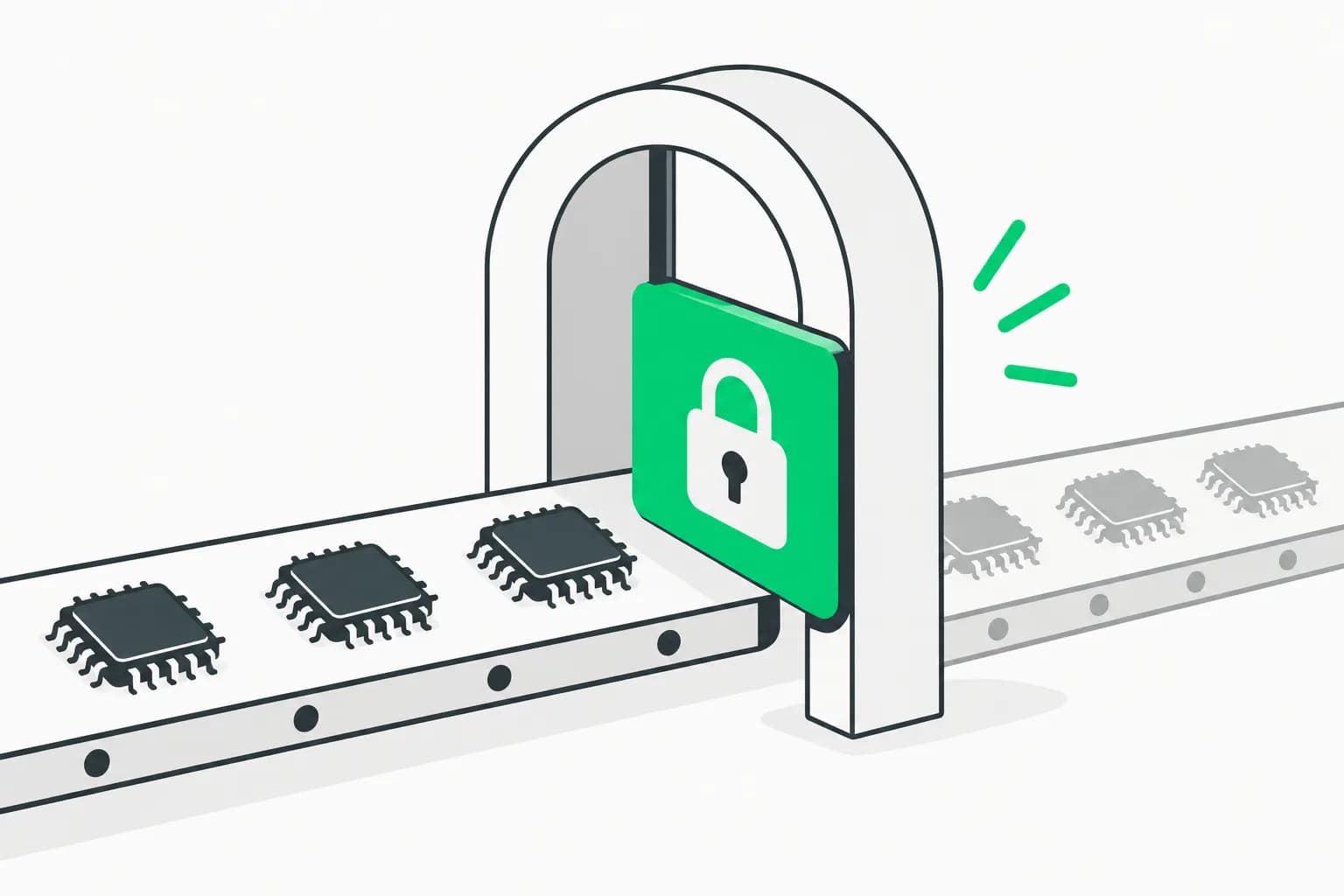
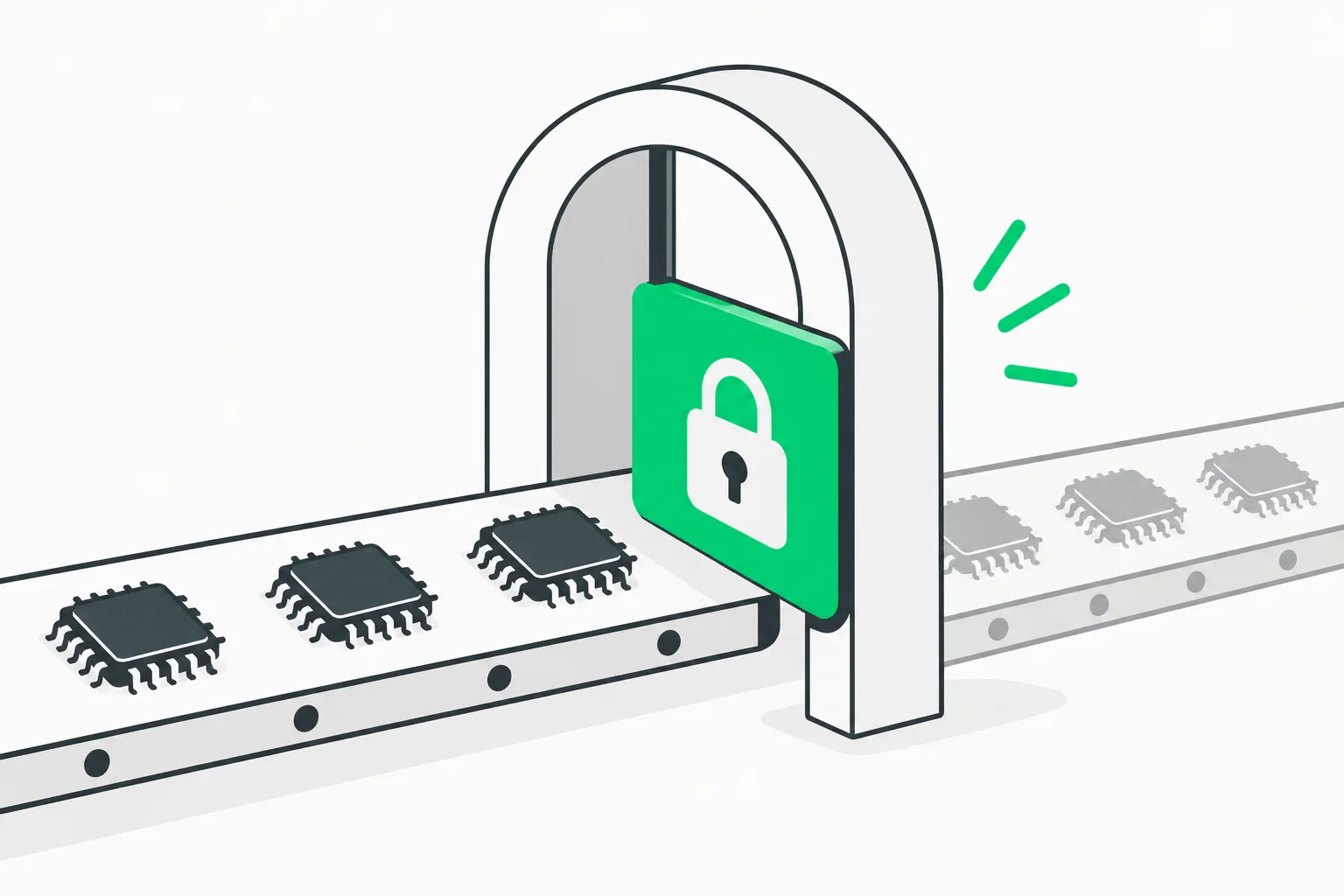 A gate with a half-closed green lock over a stream of chips, illustrating export controls on Nvidia AI hardware in smuggling cases
Step one: front companies with plausible names
Janford Realtor LLC sounded like a property shop in Tampa, but prosecutors say Hon Ning Ho and Cham Li moved Nvidia A100 chips instead of listings, collecting $3.89 million in wire transfers from China, per the November 2025 release. National Security Division leader John A. Eisenberg called it a deliberate effort to transship controlled GPUs with fake contracts.
Hao Global LLC in Missouri City, Texas, operated as another hollow buyer, according to the Southern District of Texas. Alan Hao Hsu allegedly bought H100 and H200 parts from a North Carolina supplier and labeled shipments as adapter modules or generic servers until agents shut the ring in Operation Gatekeeper.
U.S. Attorney Nicholas J. Ganjei said Hao Global had virtually no assets—a pattern buyers should treat as a bright red flag when a new reseller offers spot H100 allocations.
 A cream chip behind a closed green shipping gate in an Nvidia chip smuggling enforcement diagram
Step two: paperwork that hides the real destination
Across cases, indictments repeat the same lies: mislabeled harmonized codes, fake end users, and contracts that name buyers who never touch the hardware. SDNY’s Jay Clayton quote in the Supermicro-adjacent case calls it a tangled web of lies to drive sales in violation of U.S. law.
The Export Control Reform Act conspiracy counts carry up to 20 years in prison in each filing Ai Lately cites—separate from smuggling and money laundering charges.
Step three: Malaysia and Thailand as the hinge
Geography is the thread prosecutors want juries to see. Port Klang, Malaysia appears in multiple narratives as the port boxes pass through before China delivery. Tampa’s ring exported through Malaysia and Thailand; Earthmade shipped from Los Angeles to Kuala Lumpur onward, per the October 2026 release.
That matters for legitimate buyers: a Malaysia stop on paperwork is no longer a boring routing detail. It is a repeat courtroom fact in 2025–2026 AI diversion cases, alongside our earlier Malaysia customs server seizures and Singapore routing reporting.
Supermicro and Earthmade: scale cases
The March 2026 SDNY matter is the largest public slice: Wally Liaw, Steven Chang, and Willy Sun allegedly sold $2.5 billion in servers to a Southeast Asia pass-through, with $510 million carrying restricted B200 and H200 silicon into China, according to DOJ and NBC News. Willy Sun pleaded guilty in October 2026; Steven Chang remained a fugitive in reporting Ai Lately cites.
Greg Lui’s Earthmade Computer case closes the one-year window: $300 million in controlled servers, $176 million in wires, October 1, 2026 arrest in California.
Nvidia and Supermicro issued distance statements relayed in the piece—policies violated, enforcement rigorous—without admitting corporate liability.
Enforcement dollars versus diversion dollars
Policy analysts quoted in CyberScoop argue Washington is underfunded on export policing: Ai Lately cites roughly $122 million in federal export-control enforcement spending in 2025 against a single $2.5 billion server thread in the Supermicro case. The point is not precise budget accounting in this post; it is that diversion economics swamp inspector headcount.
Meanwhile, political debate continues on licensed H200 sales to China while DOJ prosecutes black-market parallel routes—CyberScoop’s December 2025 piece quotes analysts saying prosecution obligations persist even when policy loosens.
What the Hacker News thread did not add
The November 29 Ai Lately synthesis drew modest Hacker News attention and little technical debate—normal for legal roundup stories. The value is the linked DOJ releases, not benchmark scores. Treat justice.gov URLs as the record.
What developers and founders should do
- Know your reseller chain. If a broker cannot show continuous custody from an authorized distributor, pause.
- Treat Southeast Asia transshipment as a trigger for enhanced diligence, not automation.
- Separate policy news from criminal exposure. Licensed sales debates do not immunize fake end-user certificates.
- Track Congress. Huang’s December 3, 2026 Banking Committee hearing sits in the same news cycle as Megaspeed and Bonta subpoena threads.
Timeline: how the four cases line up with Washington policy
Ai Lately’s November 29 chart is a prosecutorial calendar, not a price chart. Understanding order matters for readers who follow export-control politics separately from criminal diversion:
| Date | Prosecutorial action | Policy backdrop (reported) |
|---|---|---|
| Nov. 20, 2025 | Tampa Janford Realtor charges | Tightened public attention on Southeast Asia routing |
| Dec. 8, 2025 | Houston Operation Gatekeeper | Same day Trump posted about licensed H200 paths to China, per CyberScoop |
| Mar. 19, 2026 | SDNY Supermicro-affiliated indictment | NBC broke $510M figure as indictment unsealed |
| Oct. 1, 2026 | Earthmade Los Angeles–Kuala Lumpur path | Newest public case in the synthesis |
| Dec. 3, 2026 (scheduled) | Huang Senate Banking testimony | Export oversight hearing on calendar |
None of those rows proves causation. They do show enforcement did not pause while licensed-sales debate continued—a point Elly Rostoum made to CyberScoop in December 2025 coverage Ai Lately cites.
How this connects to Megaspeed and investor probes
These smuggling cases are criminal, distinct from Megaspeed civil and intelligence threads and from California Attorney General Rob Bonta’s Nvidia subpoena. They share vocabulary—Malaysia, shell buyers, restricted Blackwell generations—but different dockets.
For investors, the Supermicro-linked indictment is the headline link: server integrators sit between chip OEMs and end users. Procurement teams auditing AI racks should ask whether their vendor appears in any SDNY or SDTX filing, not only whether spot H100 prices look attractive.
Tom Cotton, Lutnick, and the enforcement gap narrative
Senator Tom Cotton warned in WSJ reporting we covered that smuggling warnings may have been ignored at senior levels. Jack Burnham’s CyberScoop op-ed, echoed in Ai Lately, argues federal export-control enforcement spending (~$122 million in 2025 in that piece) is orders of magnitude below diversion values in a single case.
Whether you agree with Burnham’s exact budget math, the structural claim is what builders should remember: compliance is underpriced relative to hardware value, so private diligence remains the last line when paperwork lies.
Corporate statements versus individual charges
Nvidia’s quoted response—that diversion is a losing proposition with rigorous enforcement—is a corporate distance statement, not a warranty for buyers. Supermicro’s statement that charged conduct contravened company policies likewise does not erase supply-chain risk for customers downstream.
When Semiconductor Industry Association members debate servicing rules and Taiwan criminalizes server exports, U.S. criminal cases are one jurisdiction’s lever. Multinationals still need global export screening.
What founders should ask resellers before wire transfers
Use this checklist before you send six-figure GPU wires:
- Beneficial ownership: Who signs DOJ-referenced “virtually no assets” shells? Demand UBO disclosure.
- Port narrative: Why Malaysia or Thailand? Legitimate logistics exist; these cases make unexplained transshipment a negative signal.
- End-user certificates: Ask for government-issued end-user statements, not PDFs the reseller wrote.
- Integrator chain: If Supermicro or similar appears, map who touched the rack after factory config.
- Parallel news: Read House Foreign Affairs license request stats alongside criminal cases; licenses and black-market routes coexist.
Document the answers in your vendor file. If a reseller refuses UBO or port questions, that refusal is cheaper than explaining a compliance failure after BIS or DOJ letters arrive. Keep the paperwork for your auditor.
Why the four cases read as one pattern
Read side by side, the four releases differ in scale but not in structure. The smallest, Tampa, involved a few million dollars in wires and a few hundred chips. The largest, the Supermicro-linked matter, involved billions in server sales passing through a Southeast Asia intermediary. In every case the U.S. entity looked ordinary on paper, and the paperwork named an end user who never received the goods.
That consistency is useful for compliance teams. A control that catches the Tampa pattern, such as checking whether a buyer has real assets, staff, and a history of IT sales, also catches the Houston pattern. A control that questions unexplained Malaysian or Thai routing also applies to the Earthmade and Tampa shipments. The cases give buyers concrete fact patterns instead of abstract guidance.
The cases also show different measures of harm. Some releases cite wire transfers, some cite server values, and some cite chips seized before export. This is why the $974 million total should be read as an approximate sum of prosecutors' own figures, not as one audited number.
What is still open
Trials continue for defendants who have not pleaded guilty. Sentencing for Alan Hao Hsu is scheduled February 18, 2026. Engadget and other outlets tie parallel reporting on restricted Blackwell hardware in Shanghai to entities under separate investigation—related in narrative, not part of these four indictments’ judgments.