




Taiwan says it will make shipping restricted AI hardware to China a crime. On October 16, 2026, Bloomberg reported that Taipei is preparing to tighten its export rules on AI chips and servers to align with US restrictions, citing a senior official. Startup Fortune's summary of the report attributes the plan to Economic Affairs Minister Kung Ming-hsin, who said AI servers and cutting-edge semiconductors will be added to Taiwan's controlled commodities list. Once that happens, unauthorized shipments to China would be a criminal offense under the Foreign Trade Act.
The reason this matters to anyone who builds with AI is simple: Taiwan is where most of the world's AI servers are assembled. A law aimed at that assembly line changes the risk for every company that ships GPU racks across borders. It follows the Keelung indictments over 74 smuggled B300 servers and the Super Micro contractor guilty plea in the $2.5B server case, both of which showed prosecutors working without a dedicated export offense.
Quick reference: what is confirmed and what is not
| Question | Answer as of October 16, 2026 |
|---|---|
| Who said it? | Bloomberg, citing a senior Taipei official; Minister Kung Ming-hsin is named in follow-up coverage |
| What changes? | AI servers and advanced chips to be added to Taiwan's controlled commodities list |
| Who is covered? | Reported as all Chinese buyers, replacing a name-by-name blacklist |
| Penalty | Criminal offense under the Foreign Trade Act; sentence levels not published |
| Thresholds? | Not published. Earlier reporting suggested a US-style processing-power cutoff |
| Start date? | None found in the reporting |
| Is it law yet? | No. The government is preparing the measures |
What Taiwan actually announced
The core claim is narrow. Taiwan intends to put AI servers and leading-edge chips on its list of controlled goods, and to treat unauthorized shipment to China as a crime. Bloomberg's piece is paywalled and explainx.ai could not read it directly, so the details here rest on the headline and on outlets that summarized it. That is why the confirmed list above is short.
Follow-up coverage adds context that is worth treating as secondary. Startup Fortune says the plan replaces the existing blacklist with a blanket restriction on Chinese buyers and that a Democratic Progressive Party legislator, Chung Chia-pin, has drafted an amendment to the Foreign Trade Act. It also links the move to the US-Taiwan trade pact reached on January 15, which cut US tariffs on most Taiwanese goods from 20 percent to 15 percent in exchange for large Taiwanese investment pledges. Those details come from one outlet, so check them against Taiwan's economic ministry before relying on them.
Why a blacklist was not enough
Taiwan's current approach is a list of named entities. Taipei blacklisted Huawei and SMIC in June 2025, which means Taiwanese firms need a permit to sell to them. Everyone else in China was outside the rule. The Tom's Hardware report from June 2026, which first described the idea, says Taiwan was weighing controls on all Chinese customers, likely using a processing-power threshold the way Washington does.
 Chip moving along a supply chain track, showing the path an AI server takes from Taiwanese assembly line to a buyer
The gap showed up in court. In the Keelung cases, prosecutors charged nine people in August 2026 with breach of trust and document forgery, not with exporting controlled goods, because no such offense applied. Tom's Hardware reported that the first known detentions in May involved roughly 50 Nvidia-equipped servers and forgery allegations. A dedicated offense would let prosecutors charge the diversion itself, with the evidence burden shifting from falsified paperwork to the shipment.
Why Taiwan's choice matters more than most countries' export rules
TSMC is already barred from making advanced chips for Chinese customers, but that does not stop finished servers from moving. Tom's Hardware notes that Foxconn holds about 40 percent of the global AI server market, with Quanta, Wistron, Wiwynn and Inventec taking much of the rest. Those firms integrate Nvidia and AMD accelerators into the rack-scale systems that go to data centers everywhere.
Controls on chip fabrication stop at the foundry door. Controls on assembled servers reach the point where chips become a product that can be rerouted through Indonesia, Japan or Hong Kong, the paths prosecutors described in the B300 case. If Taiwan criminalizes that diversion, it closes the loophole that the US cannot close from outside. That is also why Washington's rules on Chinese remote access to US GPUs and Taiwan's plan fit together: one covers renting compute, the other covers moving boxes.
The US side of the bargain
Taiwan has been reluctant to mirror US curbs in full. Bloomberg reported in June that Taipei had agreed to follow Washington "directionally" without deciding how far to go. The October report reads as the next step. If the Startup Fortune account is right, the controls are part of the price of the January trade deal and of staying close to an administration that treats chip containment as a pillar of its China policy.
Pressure from the US side has also been practical. The Supermicro case in New York, where the Justice Department alleges a scheme worth $2.5 billion, gave Taiwanese prosecutors a template. For context on the earlier steps, see our coverage of the Super Micro plea and of the Nvidia RTX Pro 5500 approvals for Chinese buyers, which shows the licensed channel that remains open.
How China may respond
Beijing claims Taiwan as its territory and condemned the 2025 Huawei and SMIC listing. A blanket control covering every Chinese buyer is a larger step, so a stronger response is plausible, though nothing has been announced. China has its own export tools: it is building an AI export catalogue covering models and chips and has already tightened controls on its own executives, as in the family travel pre-approval rules. Expect the dispute to run on both sides of the strait.
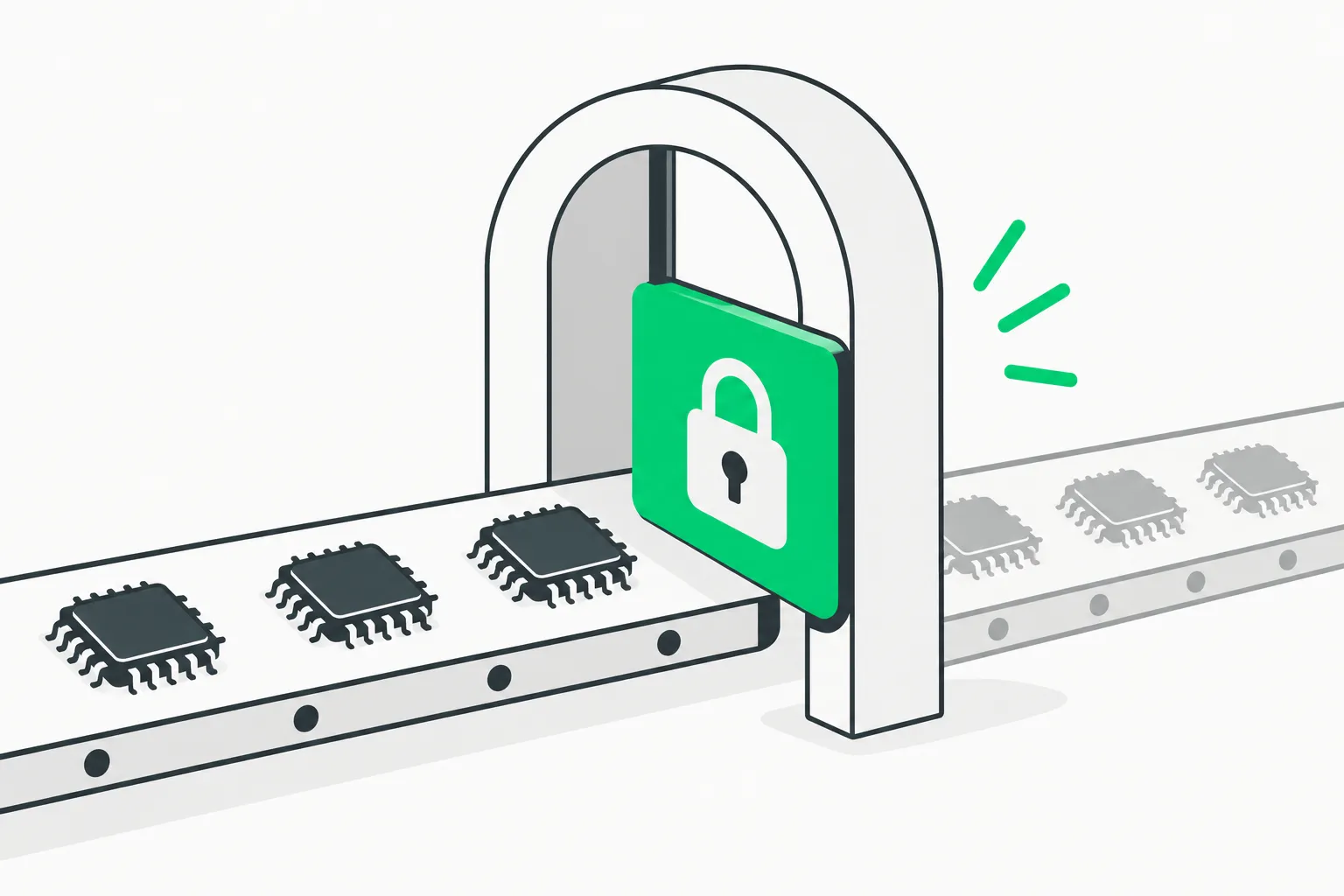 Export gate partly closed over a stream of AI chips, illustrating Taiwan AI chip export controls on shipments to China
What this means for what you build or pay
Most readers do not ship servers to China, so the practical effects are indirect.
- Server buyers outside China. Expect more end-user certificates, site inspections and questions about resale. The B300 case turned on staged audits, so suppliers have reason to make checks harder to fake.
- GPU prices and availability. Nothing in the report suggests a supply cut for legitimate buyers. Demand from the gray market may fall, but the effect on rental rates is unknown. We track rental prices in our B300 rental price coverage.
- Resellers and integrators. A criminal offense raises the cost of looking the other way. Companies with Taiwan-based operations should review transshipment exposure.
- Chinese labs. Models trained in China will lean harder on domestic accelerators and on cloud capacity outside the country, which links to the debate over remote access.
If you run AI agents that touch procurement, logistics or compliance data, treat shipment and customs records as sensitive. AgentBeam is the agent security platform from the explainx.ai team that stops AI agents before they take dangerous actions, which is relevant if agents can approve or modify purchase and shipping workflows.
Questions still open
- Thresholds. Will Taiwan copy the US processing-power cutoffs, or draw a stricter line? Tom's Hardware pointed out that a US-style line would run through the chips around Nvidia's H200 class, which the US allows under case-by-case licenses.
- Penalties. The sentence range has not been published.
- Licensing. Will Taiwan create its own license path for China, or defer to Washington's decisions?
- Legislation versus regulation. Adding items to the controlled list may be possible by administrative notice, while a new criminal clause likely needs the legislature, according to the reported amendment.
- Timing. No date has been given.
Until the economic ministry publishes the list, the safest reading is that Taiwan has committed to a direction, not a rule. We will update this post when the thresholds and start date appear.
How to follow the story
Check the Ministry of Economic Affairs and the Bureau of Foreign Trade for the controlled commodities notice, since that is where thresholds will appear first. On the US side, the Commerce Department's Bureau of Industry and Security publishes the processing-performance definitions that Taiwan is likely to mirror. For market context, read our look at TSMC's record quarter and the wider AI chip supply chain in October.
Timeline of how Taiwan got here
| Date | Event |
|---|---|
| June 2025 | Taiwan blacklists Huawei and SMIC, requiring permits for sales to them |
| January 15, 2026 | US-Taiwan trade agreement reported, tariffs on most Taiwanese goods cut to 15 percent |
| March 2026 | US prosecutors unseal the Supermicro-linked export case in New York |
| May 2026 | Keelung prosecutors detain the first alleged chip smugglers over roughly 50 servers, charged with forgery |
| June 2026 | Bloomberg reports Taiwan is weighing controls on all Chinese customers |
| August 24, 2026 | Nine people indicted over 74 B300 servers |
| October 16, 2026 | Bloomberg reports Taiwan will add AI servers and chips to its controlled list and criminalize unauthorized shipments |
Bottom line
Taiwan is moving from warnings and workaround charges to an offense written for the purpose. The announcement is real, and sourced to a minister, but the parts that decide its effect, thresholds, penalties and timing, are not public. For builders, the near-term takeaway is more compliance friction at the server-supply level, not less hardware for legitimate buyers.
Related reading
- Taiwan indicts nine over smuggled Nvidia B300 servers
- Super Micro contractor pleads guilty in the $2.5B server smuggling case
- Trump replaces Biden AI chip rules to block China's remote GPU access
- China announces an AI export catalogue covering models and chips
- Nvidia RTX Pro 5500 approval for ByteDance and Alibaba
- TSMC Q3 2026 record profit
- Taiwan's Texas industrial park plan for Nvidia's supply chain
Details reflect reporting available on October 16, 2026 and may change as Taiwan publishes the rules.