



Washington may attach the MATCH Act to the Fiscal Year 2027 defense bill in mid-December 2026, banning new deep-ultraviolet immersion lithography sales to China and restricting spare parts and field service at major Chinese fabs. Asia Times reported on November 27, 2026 that Dutch leaders are fighting the move while ASML CEO Christophe Fouquet warns a total cut could backfire. The same week, lithography analyst @lithos_graphein argued in LithoWar that stranding roughly 350 immersion scanners already in China could hand Beijing machine data and parts access ASML normally guards.
What changed in late November 2026
The Multilateral Alignment of Technology Controls on Hardware (MATCH) Act is not new legislation, but NDAA season made it urgent again:
| Source | What it adds |
|---|---|
| Asia Times, Nov 27 | Dutch Trade Minister Sjoerd Sjoerdsma pledges to block the bill with EU, Germany, and France; Prime Minister Rob Jetten to raise it at G20 with Trump |
| LithoWar, Nov 23 | Technical thesis: service bans on installed immersion fleet are worse than sales bans for Western security |
| Prior explainx.ai posts | Bill names appear in Congress NDAA briefings and Speaker Johnson consensus pieces |
Asia Times summarizes bill effects already debated in Washington:
- Countrywide ban on DUV immersion lithography exports to China.
- Covered facility list including SMIC, Huawei, Hua Hong, CXMT, YMTC and affiliates, cutting foreign exports and technical support.
- Licensing for on-site repairs and servicing.
- 150-day ally alignment window or US controls on foreign-made tools.
That goes beyond earlier Commerce rules that mostly blocked new advanced tools. It targets the installed base.
Why lithography gates AI chip supply
 Wafer tower beside a fab block, where immersion DUV tools set AI chip ceilings
If you train models, you may never touch a scanner. You still depend on them: immersion DUV tools print the finest layers in logic and memory that feed HBM stacks and Blackwell-class supply chains.
ASML dominates projection lithography. Asia Times cites CTS estimates: Chinese plants had imported about 343 ASML immersion DUV systems by early 2026, including ~270 NXT:1980i machines that can print 7 nm class layers with multi-patterning. Chinese buyers bought ~90 NXT:1980i units in 2024 and ~89 in 2025, spending more than $13 billion in CTS’s tally.
Dutch rules since January 2024 already require licenses for NXT:2000i and newer immersion systems. The 1980 series remained the practical ceiling for Chinese fabs. MATCH would try to shut that door retroactively on service, not only new sales.
Our ASML Q3 demand post explained why EUV backlogs already stretch AI buildouts. A service fight on 343 DUV tools adds a second choke point on mature-but-critical layers.
LithoWar’s backfire thesis
Techmeme highlighted LithoWar’s November 23 essay. The author, a 30-year lithography engineer, frames MATCH as risking a “50-ton elephant”:
- Washington assumes urgency because Chinese domestic lithography may mature later this decade.
- MATCH’s Senate text would ban sales and, critically, cut vendor servicing on immersion tools already in China.
- ~350 machines worth $25B+ would keep running with local staff, stockpiled parts, and telemetry streams that ASML normally parses to tune optics.
The author’s blunt analogy: flying 350 B-21 Raiders into China and walking away from maintenance contracts. The claimed damage is not only yield loss but IP leakage through routine machine data used to iterate next-generation tools.
LithoWar also argues time favors the West if immersion exports stay controlled but serviced, because obsolete nodes eventually cap what those fabs can print without EUV-class replacements. MATCH, in that view, accelerates indigenous repair ecosystems faster than sales bans alone.
This is one expert’s policy essay, not ASML or Commerce testimony. It still names mechanisms Asia Times echoes when Chinese columnists compare MATCH to cutting fuel and mechanics on cars already in the garage.
Netherlands and ASML pushback
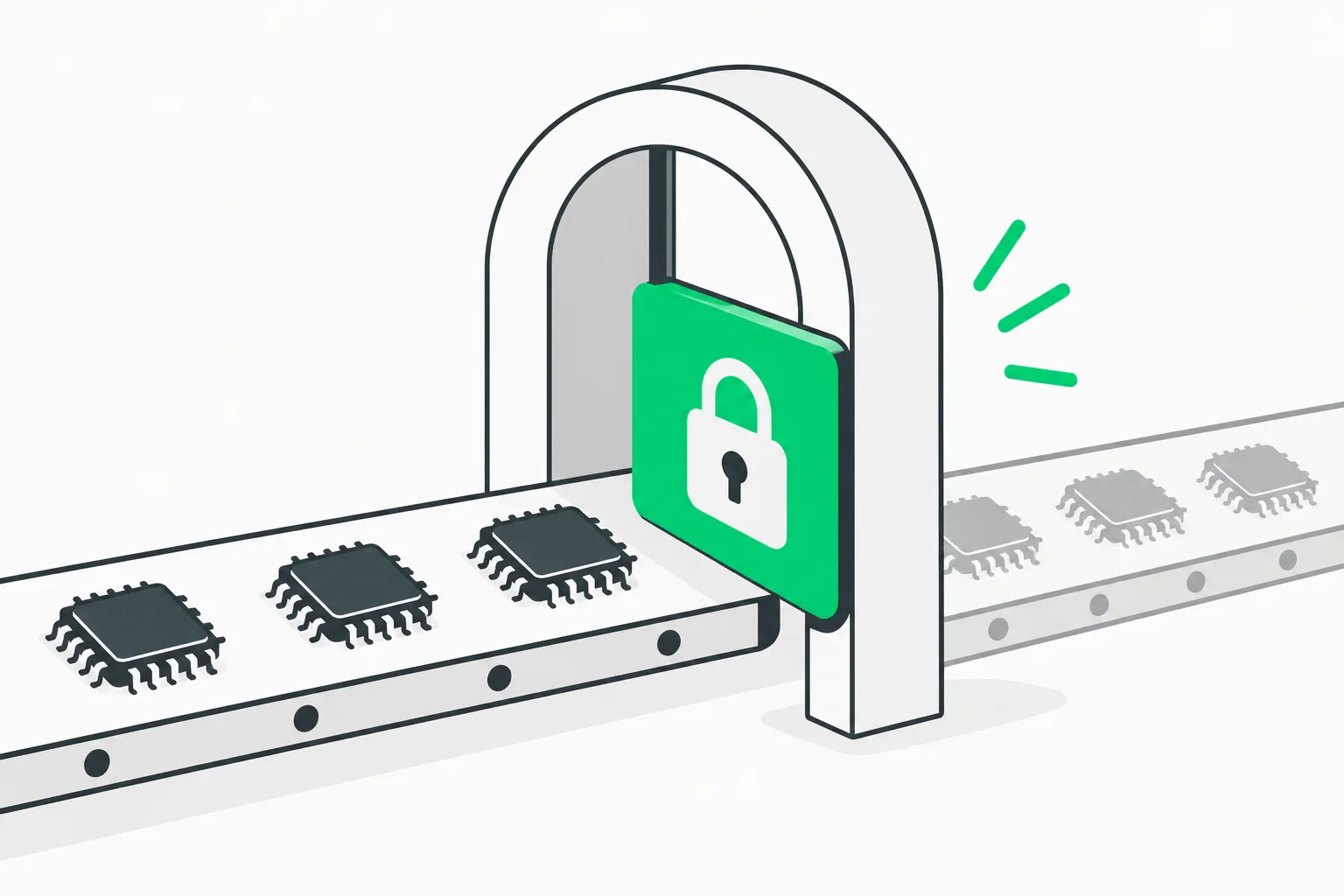 Export control gate over chip shipments in NDAA tooling debates
Asia Times quotes Sjoerdsma: “We will not simply be told what to do.” He promised to explore bilateral and EU instruments if Washington adopts the bill. Foreign Minister Tom Berendsen met Beijing counterparts on export-control talks the same week.
Jetten called the bill disproportionate and planned a G20 conversation with Trump, framing ASML’s commercial strength as a US interest too.
ASML declined comment to Asia Times. Fouquet’s on-record warning—that over-broad cuts push China to double down on domestic tools—matches ASML earnings themes we already cover.
Chinese commentary in Asia Times
Asia Times also summarizes PRC commentary, not official law:
- Columnists describe MATCH as attacking machines already installed, not only new imports.
- Some writers argue Chinese equipment engineers and third-party repair firms could keep tools running at degraded specs without ASML field staff.
- Others speculate Washington might still license selective service to avoid global inflation or to trade for critical minerals.
Treat those passages as regional analysis, not confirmed policy.
How MATCH relates to other 2026 chip bills
explainx.ai has tracked the bill bundle moving with NDAA talks:
- AI Overwatch Act — cloud and remote GPU access.
- Chip Security Act — location verification on controlled AI chips, cited in Congress briefing coverage.
- MATCH Act — tooling alignment and, in current summaries, servicing.
OpenAI privately told congressional offices it supports key export bills, per POLITICO summaries relayed in our Congress post. Nvidia CEO reinstatement politics and Huang testimony dates sit in the same news cycle, but MATCH is equipment law, not board governance.
What builders and buyers should watch
 Chip supply chain trays illustrating how lithography outages reach GPU buyers
Chip designers and ML infra leads
- NDAA manager’s amendments in mid-December 2026 for servicing language, not only sales bans.
- Dutch enforcement statements after any US adoption—Asia Times already flags non-enforcement threats.
- CTS or customs updates on 1980i import pace; a drop in new installs with rising local repair PR would signal MATCH-like effects even before a vote.
Foundry and procurement teams
- Ask distributors whether spares contracts cover China-fab tools you indirectly depend on through OSAT partners.
- Map dual sourcing at 28 nm and 7 nm class layers tied to AI PMIC, NIC, and HBM base die supply.
Policy readers
- Compare LithoWar’s servicing argument with YMTC domestic tool reporting and Reuters on Chinese immersion DUV production threads already on explainx.ai.
What is still unconfirmed
| Claim | Verification gap |
|---|---|
| MATCH attaches to FY2027 NDAA | Asia Times says negotiations; no enrolled bill text in this pass |
| Exact covered fab list in final law | Committee summaries name five firms; NDAA text may differ |
| US would withhold all service licenses | Asia Times speculates selective licenses; not policy yet |
| LithoWar’s telemetry reverse-engineering path | Expert argument; no public Commerce assessment cited |
Related reading
- Congress bipartisan Nvidia China curbs and NDAA briefing
- AI Overwatch Act and foreign cloud GPU access
- Speaker Johnson on MATCH Act and chip export consensus
- ASML Q3 AI demand exceeds EUV supply
- About 600,000 H200 chips in Hong Kong
- Commerce final rule on Chinese AI firms and remote Nvidia chips
- YMTC fourth Wuhan fab and domestic tools
If Dutch or US officials publish new MATCH enforcement guidance during NDAA markup, we will add a dated update section here.
NDAA clock and diplomatic meetings
Asia Times ties MATCH timing to mid-December 2026 NDAA negotiations and G20 meetings where Jetten planned to press Trump. Xi and Trump may meet December 14–15 with chip controls on the agenda, while a US–China trade truce faces a January 10 deadline and gallium/germanium/antimony suspensions end January 27.
For ML infra buyers, those dates matter more than single-day GPU quotes. A servicing license freeze during lunar new year fab maintenance could ripple into HBM lead times weeks later.
LithoWar part two and three promises
LithoWar’s author says parts two and three will map alternate export strategies and why Chinese domestic lithography efforts stalled historically. explainx.ai will cover those essays if they ship with new primary citations; this post stops at part one’s servicing thesis so we do not duplicate future installments.
Training note for chip policy readers
If your team briefs executives on China supply, pair this story with our corporate AI training track on geopolitics and procurement. Technical staff need scanner basics; finance staff need NDAA calendar literacy.
Glossary for non-fab readers
DUV immersion uses a water layer between lens and wafer so patterns shrink below the raw laser wavelength. NXT:1980i is ASML’s workhorse for advanced-node layers in China today. Servicing covers alignments, laser swaps, and software patches—without them, tools drift and yields collapse. MATCH does not ban dry DUV or EUV in the summaries we read; it targets immersion where China still imports Western machines at scale.
Watch Tom Cotton and Andy Kim releases if committee text changes covered entity lists before floor votes.
When you read Huang reinstatement headlines beside MATCH stories, keep the lanes separate: CEO governance does not change immersion license rules, but Congressional attention does cluster in the same lame-duck window. Procurement teams should assign one owner to GPU export politics and another to tooling NDAA text so Slack threads do not merge unrelated risks.