



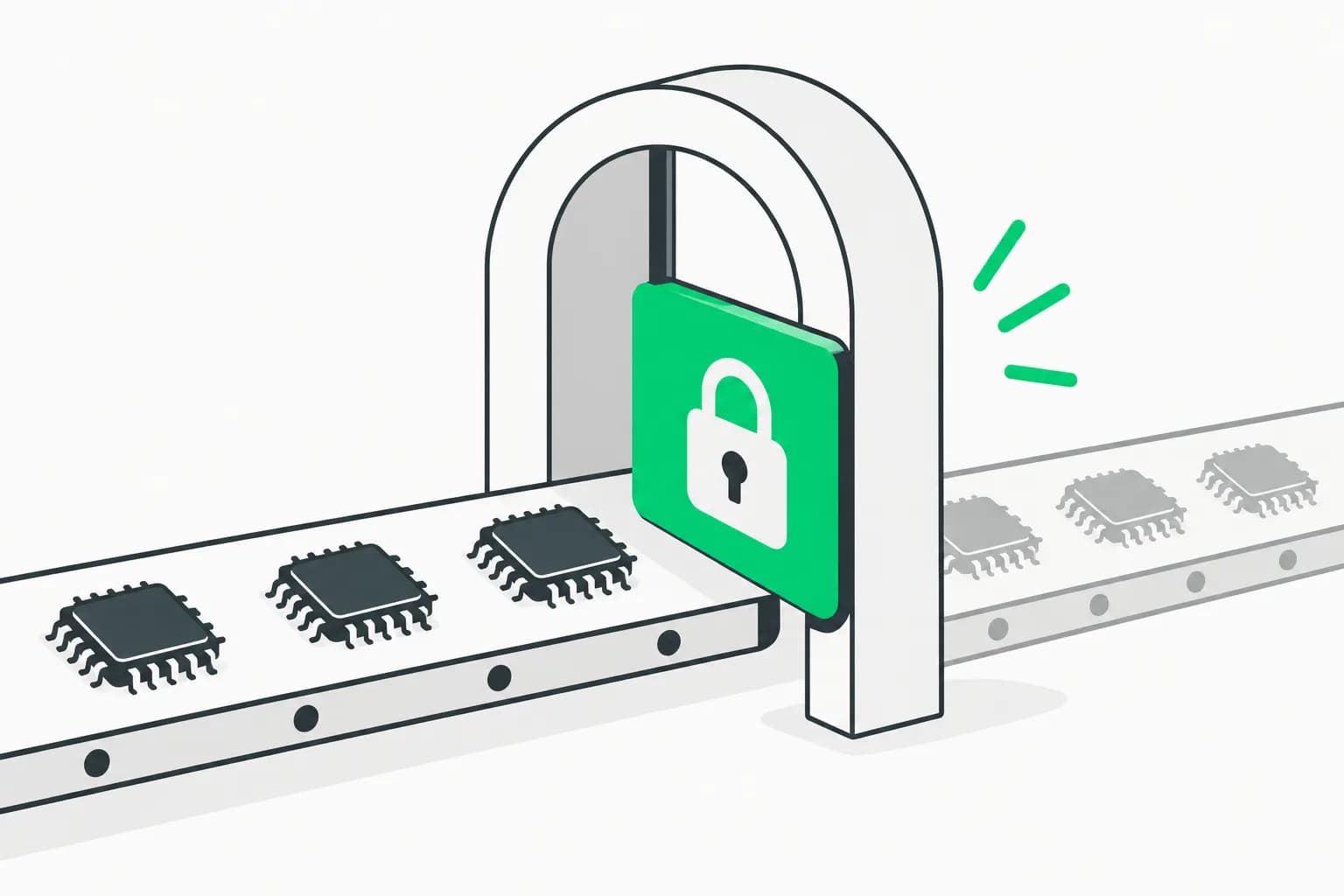
Neocloud brokers say a wave of sellers is trying to flip long-term Nvidia B300 contracts toward US and Western European buyers after US remote-access export rules landed in mid-November 2026. Ronit Jain, CEO of compute marketplace Liquid Compute, wrote on November 19, 2026 that "a staggering number" of neoclouds asked to remarket B300 capacity originally committed to Chinese-affiliated offtakers, citing fear of stricter legislation on compute servicing to China. He expects B300 pricing to keep declining as that supply hits Western markets.
TL;DR
| Layer | What is confirmed | What is still reported |
|---|---|---|
| Regulation | BIS November 16, 2026 IFR on remote access to advanced semiconductors (BIS press release) | Full Federal Register thresholds; ongoing comments |
| Market signal | Jain's Nov 19 remarketing post; TechNews Taiwan relay | Exact megawatts or contract counts |
| Demand side | Reuters Nov 12 on Chinese labs pre-booking overseas leases | Unnamed cloud provider in that piece |
| Vendor pressure | CNBC Nov 17 on 51% non-Chinese rental guidance | Nvidia written policy |
This is the supply-chain reaction to a demand rush explainx.ai already covered when Chinese AI firms rushed overseas Nvidia capacity on November 12.
What changed in US remote-access policy?
 Export gate blocking outbound advanced chip shipments
The Bureau of Industry and Security published a consequential rule on November 16, 2026. A CSIS analysis dated November 18 explains the shift:
- Remote GPU access to Chinese or arms-embargoed end users above compute thresholds now requires licensing, treating cloud end use like a controlled export.
- Indonesia, Malaysia, Singapore, Thailand, and Brazil join higher-scrutiny shipment lists for advanced chips, not because every sale is banned, but because diversion risk rose.
- Data centers already serving restricted users get 90 days to cease or license those arrangements.
explainx.ai summarized the same IFR in Samsung foundry and BIS context and in Commerce remote-access reporting. The neocloud remarketing wave is what happens when signed multi-year leases collide with that rule faster than legal teams can renegotiate.
Why B300 contracts are stuck in the middle
 Stack of boxed AI accelerators rising toward a highlighted top chip
B300 sits at the top of Nvidia's datacenter stack for many 2026 training plans. US law already blocks direct B300 sales to China, so Chinese-linked labs relied on offshore rental through Southeast Asian and other neoclouds. explainx.ai's Reuters summary post described that pre-booking rush after Megaspeed reporting.
When Washington moves from "gray-area rental" to licensed remote access, neoclouds holding China-committed offtake face two bad outcomes:
- Idle racks if Chinese customers must unplug within 90 days without a license.
- Balance-sheet debt on hardware they financed for multi-year Chinese revenue that may not arrive.
Jain's post describes option three: remarket the same megawatts to US and EU buyers before legislation hardens further. TechNews quotes the same thread in Traditional Chinese, emphasizing fear of US legislation on servicing China and fear of Chinese customers canceling while hardware loans remain.
Nvidia customer-mix pressure adds a second squeeze
Parallel to BIS, CNBC reported on November 17 that Nvidia messaged chip buyers about legal risks if Remote Access Security Act (RASA) passes, and that Nvidia would not sell to customers who rent more than 50% of GPUs to Chinese companies. The Financial Times separately reported 51% non-Chinese steering on future contracts.
Nvidia has not published one canonical policy PDF explainx.ai could quote as law. Treat 51% guidance as reported commercial pressure layered on top of BIS text, as we did in Nvidia 51 percent neocloud reporting.
For a neocloud that pre-sold 70% of a B300 hall to Chinese labs, both export end-use rules and Nvidia allocation push the same outcome: find Western tenants fast.
What Ronit Jain said about B300 pricing
Jain's November 19 post on X states, in part:
I would expect B300 pricing to continue declining. A staggering number of neoclouds have approached us @liquidcompute looking to remarket long-term B300 capacity originally committed to Chinese-affiliated offtakers into the US and Western Europe due to concerns of stricter legislation regarding compute servicing to China.
That is a broker's demand forecast, not a spot-price chart. It still matters because Liquid Compute sits where buyers compare long contracts. If remarketed supply is real, US startups might see shorter lead times on B300 even as policy risk rises.
Do not confuse this with black-market rack anecdotes. Tom's Hardware cited unverified $2.8M China pricing for contrast. Jain's story is about legal remarketing west, not smuggling.
How this fits the November GPU politics stack
Several threads now interlock:
| Date | Thread |
|---|---|
| Nov 12 | Reuters: Chinese labs rush overseas leases |
| Nov 16–18 | BIS remote-access IFR + CSIS explainer |
| Nov 17 | CNBC: Nvidia warnings on China cloud access |
| Nov 19 | Jain: neocloud B300 remarketing wave |
| Nov 20 | Bessent says remote access curtailed (Treasury interview context) |
Congressional pressure continues in Wyden–Neal Nvidia investigation reporting and Tim Scott banking hearing framing. Policy headlines move faster than lease paperwork.
What builders and founders should watch
If you rent GPUs
- Read end-user fields on contracts. A Singapore entity with Chinese ultimate parent may trigger remote-access licensing under the IFR analysis CSIS published.
- Prefer shorter terms or explicit renegotiation clauses tied to export-rule changes until BIS publishes clearer know-your-customer examples.
- Track spot markets (Liquid Compute, other brokers) for B300, but benchmark against your workload's tokens per dollar, not rack list price alone. See vLLM Rubin throughput claimed vs verified for how viral multiples distort comparisons.
If you sell inference platforms
- Diversify customer geography on paper and in traffic; neoclouds under 51% pressure may deprioritize Chinese logos even before RASA passes.
- Document routing if you resell neocloud capacity; Chainalysis stablecoin export-control reporting shows how payments + compute now get audited together.
If you train in China on domestic silicon
- Ascend and domestic stacks gain when offshore B300 becomes legally expensive. explainx.ai tracks Ascend agent papers separately; this post is about Nvidia lease markets.
What is not confirmed
- How many megawatts are remarketing; Jain gives no inventory table.
- Whether every named neocloud actually holds B300 versus H200 or Blackwell mixes.
- Final BIS license approval rates for continued Chinese remote access above thresholds.
- Nvidia's 51% rule in a single signed customer letter.
Forecast vs fact
Jain's declining B300 price call is plausible if Western supply jumps, but power, networking, and debt service still set floors. A glut of remarketed contracts does not automatically mean cheaper tokens if sellers idle racks instead of discounting.
Watch broker posts, BIS FAQ updates, and Nvidia earnings Q&A for hard numbers. Our IEA data-center spend tracker shows macro capex still rising even when spot rents wobble.
RASA and the legislative backdrop
The Remote Access Security Act (RASA) did not pass the Senate as of the reporting explainx.ai tracked in November 2026, but it already shapes contracts. CNBC said Nvidia warned buyers that RASA could treat cloud access like hardware exports, exposing both parties to legal risk.
Neocloud remarketing posts cite "stricter legislation" even before new statutes land because interim final rules already moved the compliance window. Builders should read Federal Register text and CSIS summaries, not only headline bills.
Our AI Overwatch Act post tracks congressional NDAA language on foreign cloud GPU access, a parallel track to BIS licensing.
Moonshot, Megaspeed, and why timing matters
The November 12 Reuters piece tied Chinese procurement urgency to Jensen Huang scandal headlines. explainx.ai's Megaspeed timeline shows why Singapore routing became a policy flashpoint.
Moonshot Europe Blackwell lease reporting illustrates how one lab's lease talk became proxy evidence for whole-market behavior. Neocloud remarketing is the mirror image: many small hosts unwinding the same bet at once.
If you are a US frontier lab negotiating 2027 capacity, ask whether offered B300 is fresh silicon or remarketed China offtake. The hardware is the same; the contract counterparty and compliance packet may not be.
Energy and siting still constrain "cheap B300"
Even falling lease rates do not erase 702 MW gas data-center fights or grid queues. Google's Wyoming data-center reporting and India's protests over new AI sites show power politics moving on a slower clock than export rules.
A neocloud dumping B300 into Virginia or Oregon still needs interconnect and permitting. Remarketing solves customer mix, not megawatt delivery.
Workshop note for infra buyers
Founders who learned GPUs through cloud consoles may need a compliance primer before signing multi-year neocloud deals. explainx.ai's live AI workshop guide separates hands-on builder training from legal review, but teams should still pair technical workshops with counsel on EAR obligations. Save every end-user attestation your lessor sends; auditors will ask for it if BIS asks questions later. Treat remarketed capacity like any secondary market: verify counterparty and compliance packet before you pay.
Related reading
- Chinese labs rush overseas Nvidia leases (Reuters)
- Commerce remote-access rule thread
- Samsung foundry and BIS November rule
- Nvidia 51% non-Chinese customer reporting
- California AG Nvidia subpoena context
Sources: BIS press release, CSIS analysis, Reuters Nov 12, CNBC Nov 17, TechNews Nov 20.