




Moonshot AI, the Beijing lab behind the Kimi models, has reportedly looked to rent Nvidia's most advanced chips in Europe. CNBC reported on November 5, 2026, citing four people familiar with the matter, that Moonshot discussed leasing capacity from neoclouds that host Nvidia GPUs at European facilities, and that one source described talks about clusters of 8,000 or more Blackwell GPUs. Nobody on record has confirmed it. This article sets out what the report says, what it does not, and which follow-up claims we cannot yet verify.
TL;DR
| Question | Answer |
|---|---|
| Who reported it? | CNBC, November 5, 2026, four anonymous sources |
| What is claimed? | Moonshot sought Blackwell capacity from European neoclouds; talks included 8,000+ GPU clusters |
| Why Europe? | US controls cover shipments to China, not broadly remote access to chips hosted abroad |
| Confirmed on record? | No. Moonshot, Nvidia, White House and Commerce did not respond to CNBC |
| Nvidia's stated line | Spokesperson: "America cannot win the AI race unless America's AI infrastructure wins worldwide" |
| Congress angle | Relayed by an aggregator from Bloomberg; not confirmed by us |
What does the CNBC report say?
Per CNBC, Moonshot AI "has sought access to the chips through data centers in Europe." The key details:
- Who: four people familiar with the matter, speaking anonymously because the information is private.
- What: deals were discussed this year for Moonshot to rent capacity from neoclouds hosting Nvidia GPUs in Europe. Three sources said the lab wanted Blackwell systems.
- Use: two sources said interest was in clusters for inference, serving models to users. One was aware of interest in training clusters too.
- Scale: one source said talks took place for arrangements covering clusters of 8,000 or more Blackwell GPUs. That source called Moonshot "very aggressive" in pursuing compute.
- Timing: one source said the European talks happened after the White House said, in July, that Moonshot had accessed Blackwell chips through a facility in Thailand.
- Price: one source said it was proposed that Moonshot pay 30% to 50% more upfront than a non-Chinese customer. CNBC adds that neoclouds and financing firms may favor such deals to hedge against a future ban on remote access.
Two caveats matter. The 8,000 figure comes from one source, and discussions are not contracts. CNBC does not say a deal was signed or that any GPU was used.
Why is renting abroad a loophole?
CNBC explains that US export controls "restrict the shipment of Nvidia's most advanced chips to China, but remote access via overseas data centers offers a loophole. Current law does not give regulators broad authority to control companies' access to those chips through cloud services hosted overseas."
To lease in Europe, a Chinese company would typically rent from a non-Chinese neocloud or data center operator that can buy advanced chips. The chips never cross into China. The model weights and queries do.
In Washington, lawmakers proposed the Remote Access Security Act (RASA) to extend export controls to cloud-based access to critical hardware and software. CNBC says it passed the House of Representatives in January and has not passed the Senate. For the earlier chapter, see our posts on the White House allegation about Moonshot, the AI policy timeline on export controls, and the Taiwan Nvidia B300 smuggling case.
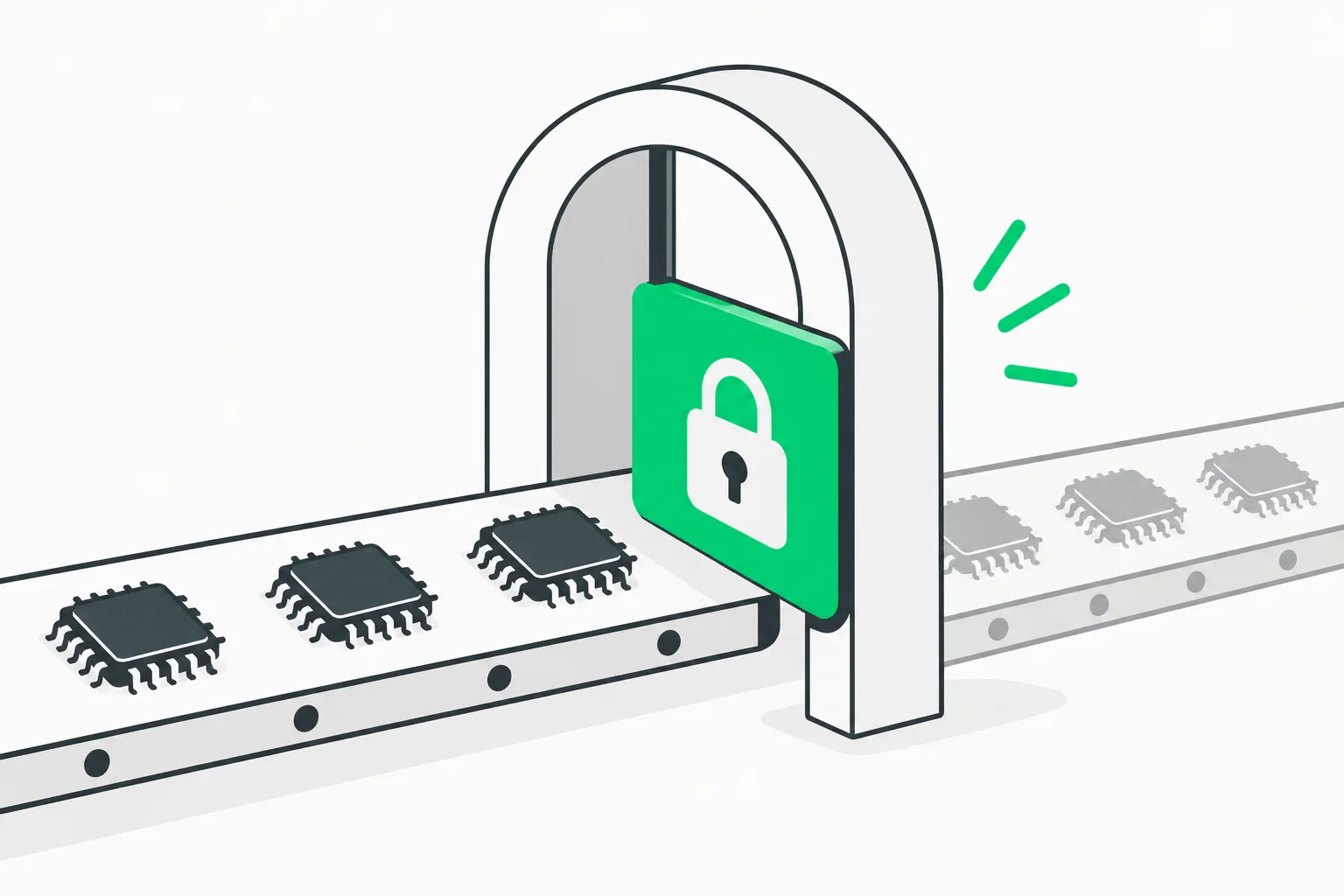 A gate with a half-closed green lock over a stream of chips, showing the cloud access loophole in Nvidia export controls
What did Nvidia say, and what is the 51% rule?
CNBC quotes an Nvidia spokesperson, asked about reports earlier in the week: "America cannot win the AI race unless America's AI infrastructure wins worldwide — if the world's clouds rely on foreign-made chips, the model and application layers will be foreign-built as well." Nvidia did not respond to CNBC about Moonshot specifically.
CNBC also relays a Financial Times report from Tuesday that Nvidia told cloud providers selling access to its chips they must sell at least 51% of services to non-Chinese customers. We could not open the FT article, so the rule rests on that relay. It would limit, not ban, Chinese use of a given cluster, and the text we read does not say how it is enforced.
CNBC also notes that Nvidia said in August that Washington had licensed some sales of its older H200 chips, but that "such sales were restricted" by the Chinese government.
Why does Moonshot need the compute?
Moonshot released Kimi K3 in July. CNBC says the company claimed it closed the gap with leading systems from Anthropic and OpenAI and that demand was strong. Around the launch, Moonshot said demand had stretched its capacity and it paused new subscriptions to prioritize existing members. Our coverage: Kimi K3 subscription pause and GPU capacity and Kimi K3 open weights.
CNBC adds that Chinese developers "have made notable capability gains in the past six months" and that Chinese models surged in global adoption in 2026 as cheaper alternatives. More chips could add pressure on US rivals. That is CNBC's framing, and we have not tested it.
What about the Congress angle?
An aggregator summary dated November 5 says lawmakers from the "newly formed Democratic majority" plan to press Jensen Huang on whether Nvidia does enough to keep chips from China, with Senator Elizabeth Warren among those leading, and that the push covers export compliance and Nvidia's financing arrangements. It attributes the claim to Bloomberg. We could not find or open the Bloomberg article.
What we can confirm from earlier coverage is background: Warren invited Huang to a Senate Banking hearing in June 2026, and Huang declined to testify, as CNBC and NBC News reported then. We did not find a November 2026 formal summons, letter or hearing date. Treat any "Congress will demand answers" headline as a stated intention, not an action.
| Claim | Source | Status |
|---|---|---|
| Moonshot discussed European Blackwell leases | CNBC, four anonymous sources | Sourced, unconfirmed on record |
| 8,000+ GPU clusters | One CNBC source | Single source |
| 30% to 50% higher upfront | One CNBC source | Single source |
| Nvidia 51% rule | FT, relayed by CNBC | Not read directly |
| RASA passed House, not Senate | CNBC | Stated by CNBC |
| Congress to question Huang | Aggregator relaying Bloomberg | Unconfirmed by us |
How would a remote-access rule actually work?
The pending bill is the part with real consequences, so it helps to see the mechanics. Today the rule is about the thing that moves: a box of GPUs crossing a border needs a license. A rental moves nothing physical. A user in Beijing sends tokens to a data center in Europe and gets tokens back.
To close that gap, a law has to control a different object: the access. That means the cloud operator, not the shipper, becomes the party that must check who is on the other end. Operators would need customer screening, contract terms and logging that show where a workload comes from. CNBC says RASA would expand controls to cloud-based access of critical hardware and software, which is what that implies. We have not read the bill text, so we cannot state its exact thresholds, exemptions or penalties.
The 51% rule reported by the FT works differently. It is a commercial condition from the chip seller on its customers, not a law. It caps the share of a cluster that Chinese customers can use. Such a cap is easy to state and hard to audit, because an operator would need to report usage by customer nationality, and a shell company can blur that line. That is a reason to treat it as a signal of intent, not proof of enforcement.
Neither measure touches the other route CNBC mentions, buying chips outright. That is a separate smuggling problem, such as the case in our Taiwan B300 post.
What does this mean for builders?
If you use Kimi models, nothing changes today. The report concerns Moonshot's compute, not its API terms. But three things follow.
- Supply risk. If remote-access rules tighten, Chinese labs that rely on offshore clusters may lose capacity, which could affect pricing and availability of their models.
- Compliance risk for neoclouds. A provider that leases to Chinese customers faces a possible future ban. That is why, per CNBC, deals reportedly carry higher upfront payments.
- Policy to watch. RASA in the Senate is the specific bill. Its passage would turn a loophole into a rule.
For context on Nvidia's China exposure from a different angle, see our post on Nvidia and Huawei's China AI chip share.
How can you check this yourself?
- Read the CNBC article in full and note which statements are single-source.
- Look for a Moonshot, Nvidia or neocloud statement. None had appeared in what we read.
- Track the Senate calendar for RASA.
- Search for the Bloomberg original and the FT report on the 51% rule, then compare their wording with the relays.
Bottom line
CNBC's report is specific and well-sourced for an anonymous-source story, but it describes talks, not deals, and nobody has confirmed it. The 51% rule and the Congress scrutiny arrive through relays we could not verify. The durable fact is the policy gap: US controls stop shipments, not rentals, until the Senate acts.
Based on CNBC's November 5, 2026 report and related coverage; details may change as the companies and agencies respond.