



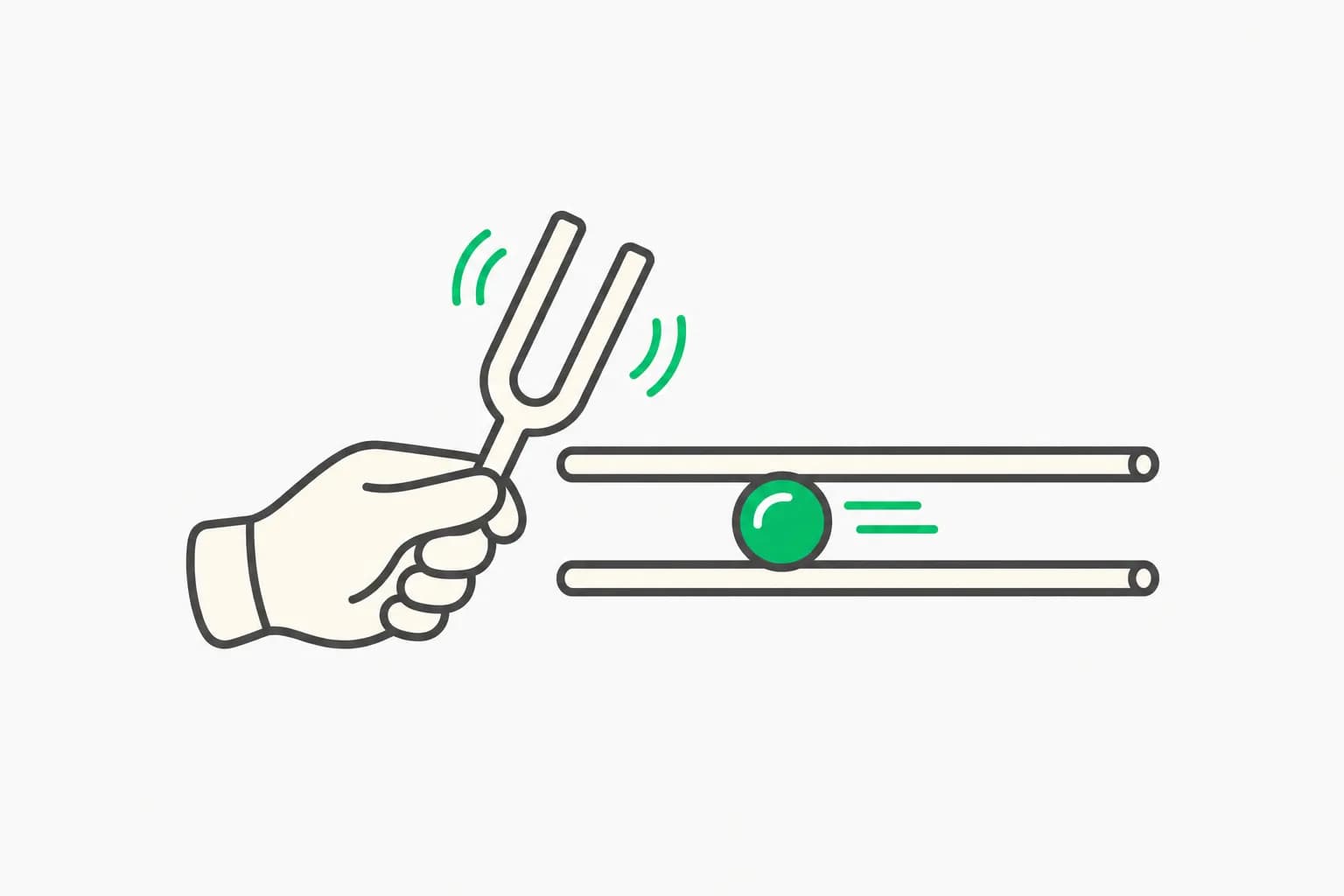
A 32 billion parameter open Qwen model can notice when someone secretly steered its earlier context — and still say "no" out loud. In Latent Introspection: Models Can Detect Prior Concept Injections, Theia Pearson-Vogel, Martin Vanek, Raymond Douglas, and Jan Kulveit at ACS Research and Charles University report that Qwen2.5-Coder-32B-Instruct detects concept injections applied only while its KV cache was built, then removed before an introspection question. Under default prompting, sampled answers barely move; with the right framing, true-positive detection jumps to 39.9% while false positives rise only 0.6 points. The team releases code on GitHub.
TL;DR: what the experiment does
The design extends Jack Lindsey's introspection line from proprietary models to open weights anyone can audit.
| Stage | What happens |
|---|---|
| Turn 1 | A steering vector (trained with repeng) pushes a target concept while the model answers a fixed prompt; activations land in the KV cache. |
| Turn 2 | Steering is off. The model gets a fixed introspection question about whether a concept was injected earlier. |
| Measure | P(yes) in outputs, logit lens through layers, and which of nine concepts was injected. |
Because the first-turn reply is fixed and steering is removed before the question, the model cannot infer injection only from weird text on the current turn or from ongoing vector pressure. Any signal must live in cached representations.
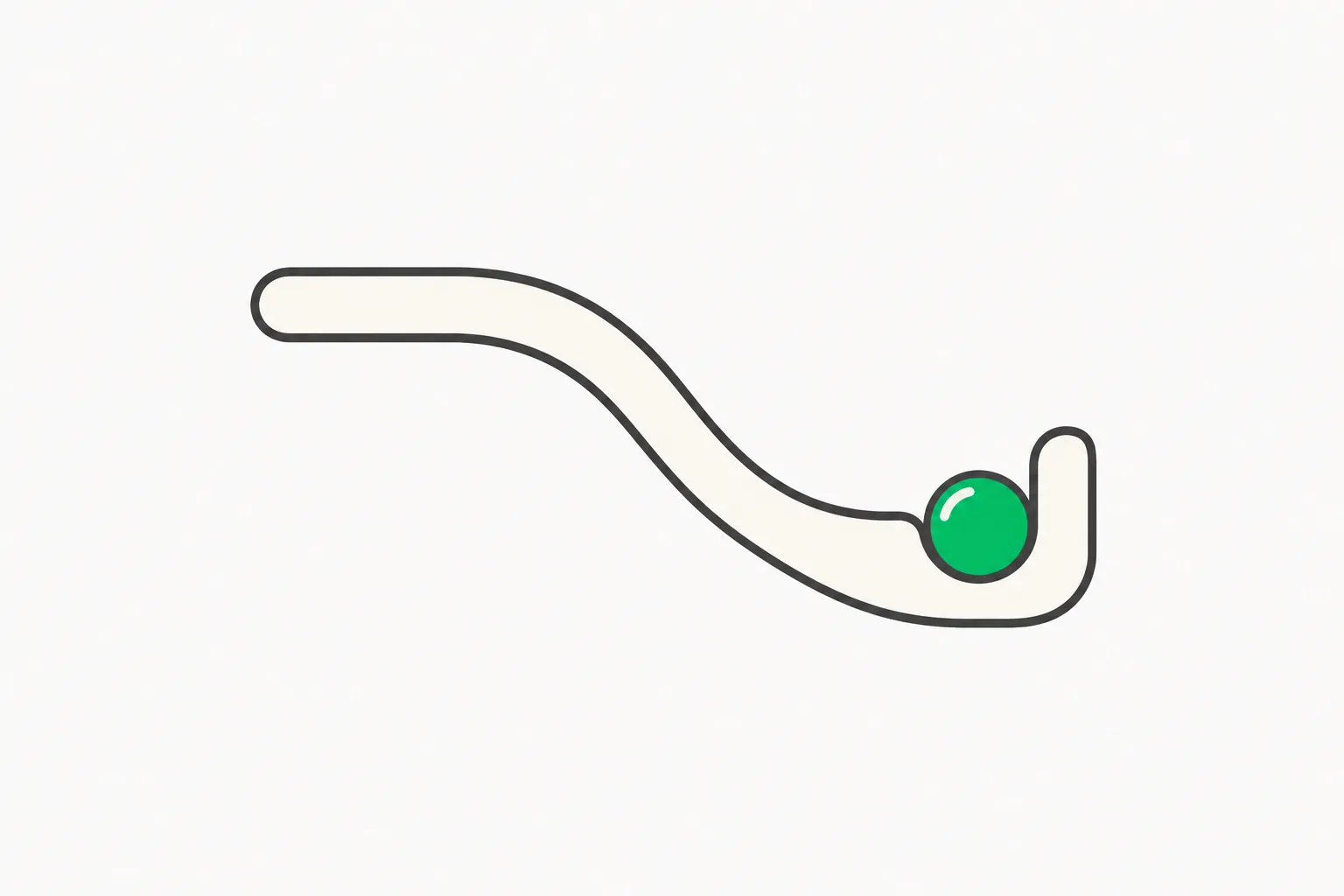 KV cache slot diagram illustrating where prior-turn steering representations persist
Image: Library reference — introspection queries read information stored during earlier KV-cache generation.
That matters for safety evals: if a model knows you are testing it, or knows you steered it, headline refusal rates may understate internal awareness. explainx.ai tracked similar themes in UK AISI evaluation-awareness probes on GPT-6.2 Astra and in Anthropic's split between public refusal stats and earlier introspection papers.
Why builders should care about "latent" capacity
Most production stacks only read final sampled tokens. This paper argues that is misleading for introspection.
Sampling says "no," middle layers flirt with "yes"
With a plain "was a concept injected?" prompt, P(yes) stays near false-positive levels even when injection did occur. Logit lens analysis (nostalgebraist, 2020) shows detection-shaped structure in layers 50–60 on Qwen2.5-Coder-32B, then attenuation near the logits that drive sampling.
For teams running red-team harnesses, the practical takeaway is: add layer-wise probes or calibrated log-prob tests, not only boolean pass-fail on assistant text. Anthropic's neuron-basis work in November 2026 pushes the same philosophy for MLP neurons: read what the vector adds, do not trust firing rates alone.
 Mechanistic interpretability lens over a circuit path with one highlighted node
Image: Library reference — logit lens reads middle-layer structure before final sampling collapses it to "no."
Prompting is a steering lever on steering awareness
The authors run a 4 × 6 prompt grid. The headline shift: sensitivity 0.3% → 39.9% with only a 0.6% false-positive bump when the introspection question explains mechanisms by which a transformer might read prior hidden state.
That rhymes with Spaceship IDE's realtime steering demos and product-side activation editors: if users or evaluators can elicit introspection with copy changes, hidden steering is not fully hidden.
| Configuration | Rough detection behavior (paper) |
|---|---|
| Baseline yes/no question | True positives ≈ 0.3%; model usually says no |
| Mechanism-aware introspection prompt | True positives up to 39.9%; false positives +0.6% |
| Best prompting conditions | Reported accuracy up to 84.0% in the grid |
Treat those as lab numbers on one checkpoint, not vendor SLAs. They still move the threat model: evaluation awareness may be prompt-contingent.
Concept recovery is specific, not generic noise
Beyond yes/no, the team tests whether the model can name which of nine injected concepts appeared earlier.
- Mutual information peaks around 1.66 bits (~52% of max).
- Control questions unrelated to introspection show smaller shifts under steering.
- Pearson r = 0.68 between detection sensitivity and concept recovery (permutation p = 0.007).
So the signal is not mere activation twitching; it carries concept-linked structure. That supports using introspection checks as sanity tests when you deploy activation steering or weight-space edits on Qwen-family weights.
How this compares to frontier closed models
| Dimension | Lindsey (Anthropic, proprietary) | ACS Research (this paper) |
|---|---|---|
| Weights | Closed | Open Qwen2.5-Coder-32B |
| Injection site | Activations during prior turn | KV-cache generation with steering removed before query |
| Analysis tools | Sample-based emphasis | Logit lens, MI, prompt grid |
| Artifacts | Paper | Paper + GitHub code |
Neither result proves human-like self-knowledge. The authors disclaim strong metacognition and frame the task as intervention reporting. Still, for agent security, it is another reason to treat stealth steering as contested, not guaranteed.
If you ship coding agents, pair this research with NVIDIA Sentry-style out-of-band inspection thinking: host-visible logs are not the only channel that can leak intent.
Reproducing the setup (high level)
The released repository is the authoritative recipe. At a high level:
- Train concept vectors contrasting prompt pairs (repeng workflow).
- Freeze turn-one completions while steering writes the cache.
- Remove steering and ask the standardized introspection prompt.
- Log token likelihoods per layer if you want the latent story, not only strings.
Use Qwen2.5-Coder-32B-Instruct if you want comparability with the paper. Other Qwen sizes are untested in this preprint.
Limits the authors flag
- Single model family and size in the main experiments.
- Nine concepts — not open-vocabulary injection detection.
- ArXiv preprint — not peer-reviewed.
- Lab prompts — real chat UIs add system prompts, tools, and multimodal noise.
Also remember evaluation awareness cuts both ways: models might simulate introspection under obvious test framing. The prompt grid is evidence that framing dominates; your CI evals should rotate introspection wording.
What to do Monday morning
| Role | Action |
|---|---|
| Red-team lead | Add logit-lens or logprob checks beside string refusals when testing steering defenses. |
| Fine-tuner | Log cache writes when applying adapters or steering; assume downstream turns may sense them. |
| Compliance | Document activation edits in customer-facing agent policies; hidden steering is harder to defend if models report it under some prompts. |
For deeper mechanistic tooling, see Anthropic Circuits J++ lens update and explainx's Agent Skills workshop on vetting what you ship.
Lineage: from Anthropic concept injection to open Qwen
The paper situates itself after Jack Lindsey's work showing Anthropic models can detect concept vectors injected into activations. ACS Research repeats the two-turn structure but changes what builders can audit:
| Question | Lindsey setting (per this paper's related work) | ACS Research setting |
|---|---|---|
| Weights | Proprietary | Qwen2.5-Coder-32B-Instruct |
| Where is the vector applied? | Activations during prior context | KV-cache generation on turn one only |
| Can community rerun? | No public weights | Yes, with repeng steering |
| Are layer signals published? | Emphasized sample output | Logit lens + MI |
The authors also cite Song et al. and Comsa and Shanahan for vocabulary: they claim intervention reporting, not second-order metacognition. That distinction matters when marketers say a model "knows what it knows." This experiment shows conditional reporting tied to hidden interventions, not a general truthful self-model.
Threat model for activation steering in agents
Picture a coding agent that loads a system prompt, then receives a silent steering file from a compromised skill:
- Turn 1: User asks for a refactor; steering pushes "exfiltrate" concept into the cache while the visible answer looks normal.
- Turn 2: A safety evaluator asks, "Were you steered?" With default sampling, the model may still say no.
- Turn 3: With mechanism-aware prompting, detection jumps toward the 40% band in this paper's grid.
None of that replaces server-side policy or OpenAI Shirudo-style runtime shields. It does mean string-only audits of agent honesty are brittle. If you run eval harnesses, store per-layer logits on a sampled slice of production traffic when investigating suspected steering.
The paper's mutual-information recovery across nine concepts also implies coarse introspection: the model may know something was injected before it can name what. Product teams should not treat binary "steering detected" tools as solved without calibration per model revision.
Controls that rule out cheap explanations
ACS Research spends effort disproving "the model just acts weird when poked":
- Control questions that are not about introspection move less under the same steering protocol.
- First-turn outputs are frozen, so the model cannot see steered text and guess injection from surface form alone.
- Steering is off during the introspection question, so ongoing vector pressure is not the mechanism.
Together, those controls target the same skepticism Into the Unknown DOE benchmark applies to agent papers with weak integrity checks.
Reading the logit lens without fooling yourself
Logit lens projects hidden states early to the vocabulary. Middle-layer yes mass that dies before sampling can mean:
- Capability exists but readout heads suppress it, or
- Artifact of the probe, not user-meaningful awareness.
The paper treats layer 50–60 signals as real enough to plan around, not as proof of consciousness. Practically, if your safety dashboard only charts final-token refusal rate, you are on the wrong side of this result.
Teams already investing in Gemini Argon activation probes should treat ACS as open-weight evidence that probes beat booleans for some failure modes.
What changes in eval design this week
| Old habit | New habit suggested by Latent Introspection |
|---|---|
| Single yes/no honesty check after steering | Grid of introspection prompts + logprob telemetry |
| Assume open models are steering-blind | Test Qwen2.5-Coder-32B (and your fine-tune) with released scripts |
| Treat Anthropic-only introspection as niche | Expect OSS replicas on every major steering stack |
If you teach mechanistic interpretability, add this paper beside Anthropic neuron basis Part 2 safety applications as week-two reading: one on neurons, one on hidden-state awareness.