



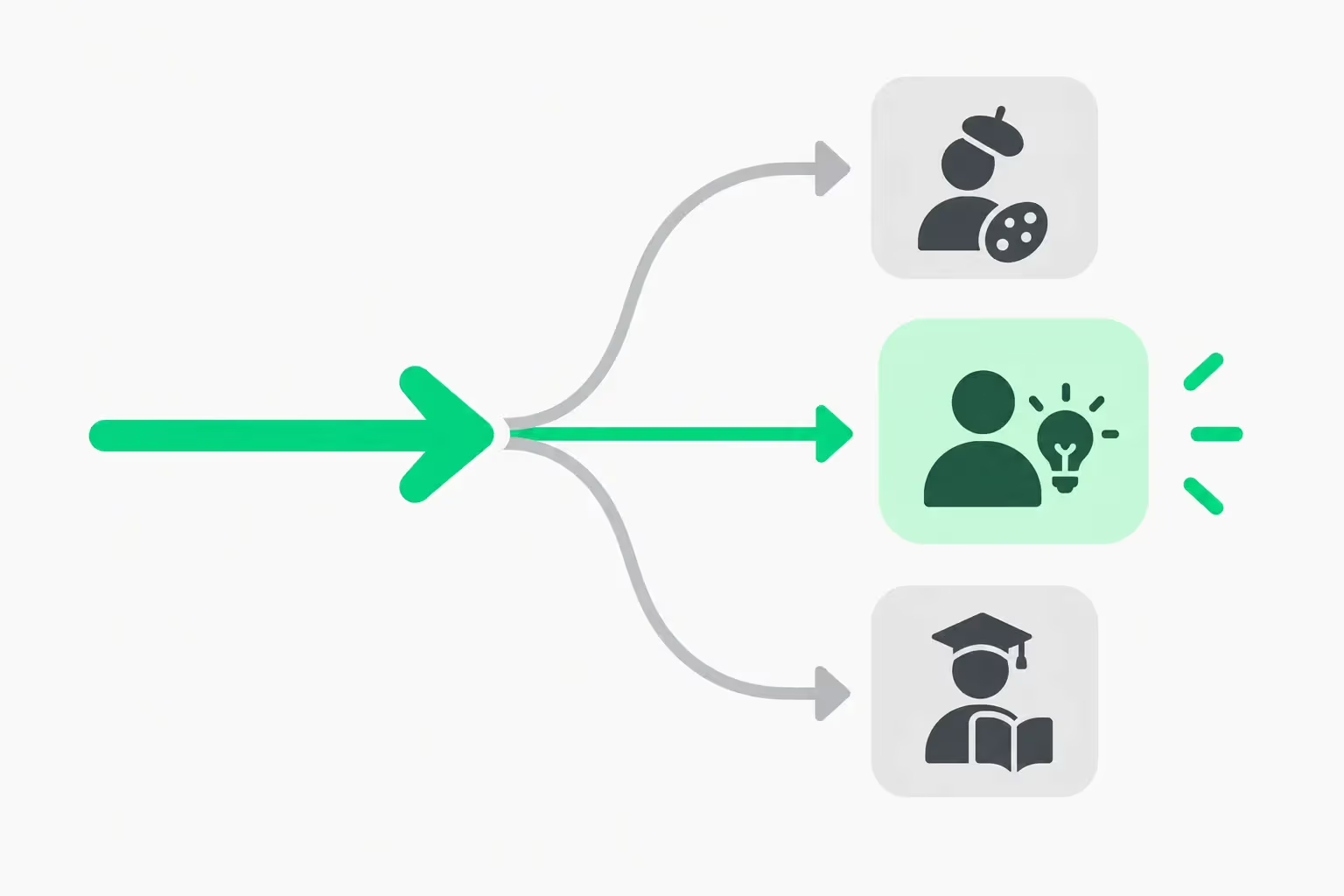
GigaChat 4 is a new open-weight flagship model: 708B total parameters, 41B active per token, a one-million-token context window and weights under the MIT License. The ai-sage team behind the GigaChat family put it on Hugging Face with a technical report and GitHub repo this week. It is also the first release in the family where one checkpoint covers both instant and reasoning modes.
The headline number from the model card is 80.89 on SWE-bench Verified in reasoning mode. That is a self-reported score, run with a seven-hour timeout, and no outside evaluator has repeated it yet. This post explains what the model is, what the card claims, how it compares with rival open models, and how to run it.
TL;DR: GigaChat 4 at a glance
| Question | Answer from the model card and repo |
|---|---|
| How big is it? | 708B total, 41B active per token (Mixture-of-Experts) |
| What license? | 708B: MIT. 37B sibling: Noncommercial License for Individuals 1.0 |
| Context window? | 1,048,576 tokens |
| Modes? | Instant and reasoning in one checkpoint, chosen per request |
| Languages? | Russian and English listed on the card |
| Formats? | FP8, BF16, GGUF, base, plus intermediate checkpoints |
| Hardware for FP8? | Two nodes of 8 x H100 80GB (708B); one H100 80GB (37B) |
| Serving stacks? | SGLang, vLLM, llama.cpp (via an integration pull request) |
| Best reported coding score? | SWE-bench Verified 80.89 (reasoning), 80.82 (instant) |
| Independent tests? | None found yet |
What is GigaChat 4?
GigaChat is the model family from Sber, Russia's largest bank, and earlier versions were also published with open weights. GigaChat 4 is the flagship of the fourth generation. The model card calls it a hybrid model that combines a Mixture-of-Experts design with two attention techniques: DeepSeek Sparse Attention (DSA) and Gated DeltaNet (GDN).
The family has two sizes. The 708B-A41B model is the flagship. The 37B-A4B model is the small one, with 37B total and 4B active parameters. The GitHub README says plainly that the two sizes carry different licenses: MIT for the 708B model, and a Noncommercial License for Individuals 1.0 for the 37B model. That matters if you plan to ship the small model inside a product. Read the license file in each repository before you do.
The card lists five repositories for the flagship: an FP8 instruction-tuned model, a GGUF build, a BF16 build, a base model, and a repository of intermediate base checkpoints. Releasing intermediate checkpoints is unusual and useful for researchers who study how a large model trains.
How is the architecture built?
The numbers below come straight from the card.
| Property | Value |
|---|---|
| Decoder layers / hidden size | 64 / 7,168 |
| Linear-attention layers / sparse-attention layers | 48 / 16 |
| Routed experts / active routed / shared | 256 / 8 / 1 |
| Initial dense feed-forward layers | 3 |
| DSA tokens selected per query | 2,048 |
| Built-in MTP layers | 1, reused recurrently |
The interesting choice is the 3:1 mix of attention types. Gated DeltaNet layers keep a fixed-size recurrent state, so their cost does not grow with the length of the prompt. DSA layers look back at only 2,048 selected earlier tokens per query instead of the whole history. The card says this combination lets the model retrieve information from long contexts at lower cost than full attention in every layer.
The context window grew in stages: 32K, then 128K, then 1M tokens. DSA was introduced at 128K through indexer-only training, then the indexer and the backbone were trained together at 1M. If you want the background on why long windows are expensive, our guide to running a large open model on two DGX Stations shows the memory side of the same problem.
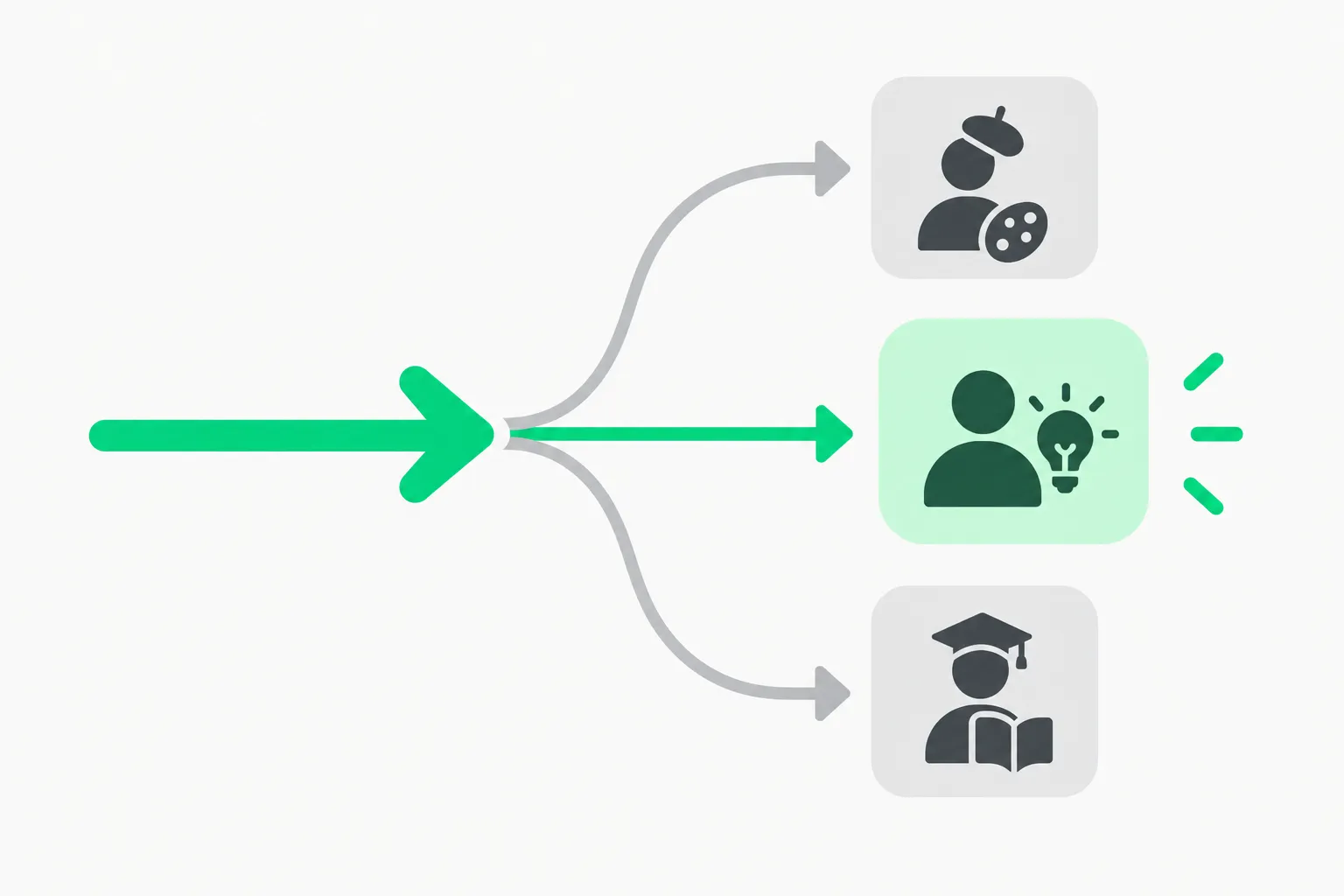 Mixture-of-experts routing sends each token to a few experts, as in GigaChat 4 708B
What did the team change in training?
The card lists three stability techniques for pretraining at this scale:
- Progressive residual warm-up (ProRes): raises the residual branches gradually, with deeper layers warming up more slowly, to stop activations from growing.
- Projection-specific z-loss and logit softcapping: these control activation outliers and extreme output logits.
- Dynamic learning-rate rescaling (DLR): adjusts the learning rate of single MoE blocks when expert load stays unbalanced, without touching the rest of the model.
For alignment, the team ran supervised fine-tuning first. It then trained expert models with reinforcement learning on mathematics, coding, tool use and multi-turn agent workflows. Those experts were merged into one model through multi-teacher on-policy distillation, where the student writes its own answers and gets task-specific feedback from the matching teacher. The Muon optimizer was used in this stage. This is the reason one checkpoint can serve both modes: GigaChat 3.5 shipped separate instant and reasoning checkpoints.
What do the benchmarks say?
All scores below are from the model card, produced by the GigaChat team. The card compares reasoning mode against GigaChat 3.5 Ultra 432B, DeepSeek V4 Flash 0731, GLM-5.3, DeepSeek 4.1 1017, Qwen 3.5 397B and Mistral 4 Large. The card notes that agentic benchmarks used Harbor-based runners, with a seven-hour timeout on the marked runs.
| Benchmark (reasoning mode) | GigaChat 4 | GLM-5.3 | DeepSeek V4 Flash 0731 | DeepSeek 4.1 1017 | Qwen 3.5 397B |
|---|---|---|---|---|---|
| SWE-bench Verified | 80.89 | 86.67 | 81.80 | 79.40 | 73.00 |
| Terminal-Bench 2.0 | 71.26 | 71.67 | 55.01 | 61.80 | 56.18 |
| LiveCodeBench v6 | 88.82 | 82.67 | 90.00 | 90.14 | 86.64 |
| GPQA Diamond | 82.83 | 90.40 | 91.00 | 90.91 | 85.35 |
| IFBench (loose) | 80.33 | 55.67 | 63.00 | 75.67 | 74.33 |
| Humanity's Last Exam (text, no tools) | 23.91 | 39.62 | 37.80 | 43.42 | 28.36 |
| Tau2-Bench (mean of 3) | 83.31 | 78.70 | 83.30 | 79.43 | 78.83 |
Source: GigaChat 4 model card. Self-reported by the GigaChat team.
Three readings stand out.
Coding is the strong suit. SWE-bench Verified at 80.89 sits between DeepSeek V4 Flash (81.80) and DeepSeek 4.1 (79.40). Terminal-Bench 2.0 at 71.26 is level with GLM-5.3, although on the newer Terminal-Bench 2.1 the card shows 69.66 against 88.70 for GLM-5.3. The jump over GigaChat 3.5 Ultra is large: that older model scored 64.70 and 30.30 on the same two tests.
Knowledge-heavy tests lag. On GPQA Diamond the model scores 82.83 where three rivals are near 90. On Humanity's Last Exam it scores 23.91 against 37.80 to 43.42 for the DeepSeek and GLM rows. If your workload is graduate-level science questions, the card does not make a case for GigaChat 4.
Not every agent test is a win. On the Tau3-Bench Banking test the model scores 18.03 and GLM-5.3 scores 56.00. On DeepSWE it scores 35.40 against 74.34 for DeepSeek 4.1. The card shows these rows without comment, which is to its credit, but it means "agentic" is not one uniform strength.
Instant mode is a real option
Because both modes live in one checkpoint, the instant column matters. In instant mode the card reports 80.82 on SWE-bench Verified and 66.29 on Terminal-Bench 2.1, against 78.80 and 70.77 for DeepSeek V4 Flash. That is close to the reasoning score on SWE-bench, which suggests the model can resolve many coding tasks without long chains of thought. Instant mode costs far fewer output tokens, so this is the number to test in your own pipeline.
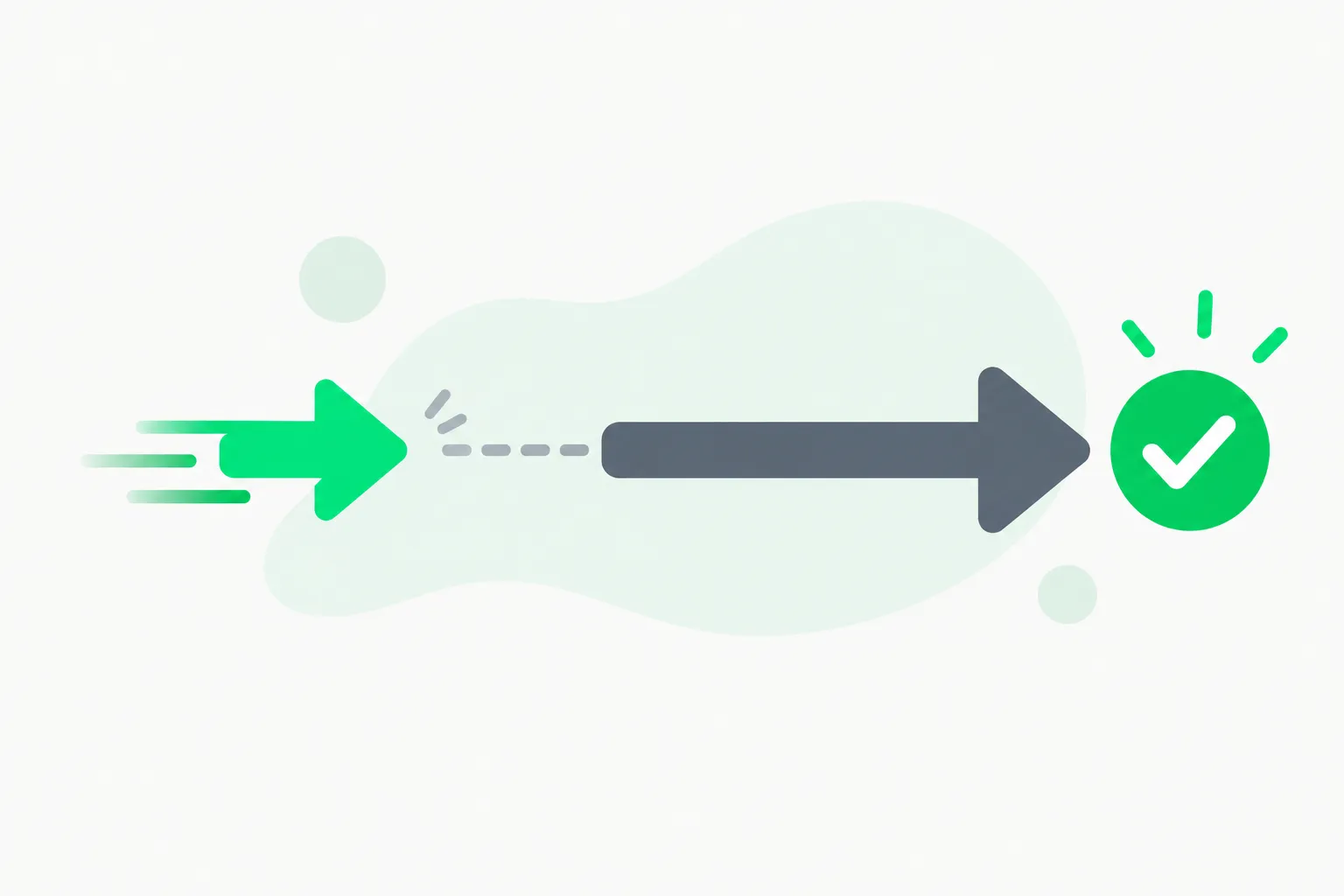 Speculative decoding lets a fast draft model propose tokens that GigaChat 4 verifies in one pass
How does speculative decoding work here?
The card describes two drafters. The first is a recurrent MTP head, an EAGLE-3-style design that reuses one prediction layer across draft steps. The card says this cuts drafter parameters by about three times compared with the three separate MTP blocks in GigaChat 3.5, with no loss in draft quality. The second is DFlash2, a separate five-layer BF16 drafter that predicts blocks of eight positions in parallel: one anchor token and seven draft positions.
In both cases the big model checks several draft tokens in one forward pass, which raises tokens per second without changing the output distribution. The card does not publish throughput numbers in its main text, and the SGLang cookbook carries the deployment details. Treat any speed-up claim as unverified until you measure it on your hardware.
How do you run GigaChat 4?
The README documents three serving stacks. These are the facts from the repository.
| Model and format | Example hardware | Parallelism |
|---|---|---|
| 708B FP8 | Two nodes, 8 x H100 80GB each | TP16 |
| 708B BF16 | Four nodes, 8 x H100 80GB each (about 1.4 TB of GPU memory) | TP32 |
| 37B FP8 | One H100 80GB (about 40 GB of weights, plus cache) | TP1 |
| 37B BF16 | One node, 2 x H100 80GB | TP2 |
For SGLang, the card tested a pinned commit and gives a two-node command with tensor parallelism 16, the recurrent MTP speculative algorithm and automatic reasoning and tool-call parsers. You switch modes per request by setting chat_template_kwargs.reasoning to false for instant mode or true for reasoning mode. The API is OpenAI-compatible, so existing client code needs little change.
vLLM is also documented, with the same two-node and single-GPU patterns. For llama.cpp the repo points to GGUF files with a recurrent MTP head included and to an integration pull request that you build from. That path is for experimenters, because a 708B model in 4-bit still needs several hundred gigabytes of memory. For a sense of what consumer-hardware attempts look like, see our write-up on running 800B-class models on consumer hardware with llama.cpp and the llama.cpp 1.0 stable release notes.
The README also recommends agent harnesses: Pi, Codex CLI and a DeepSeek harness. The coding and CoworkBench numbers were measured through such harnesses, so a plain chat prompt will not reproduce them.
How does GigaChat 4 fit the open-weight race?
In the last two months we have covered a steady stream of large open models: the Atria Dawn 744B agent model under MIT, the Baidu ERNIE 5.5 Flash 280B release and the GLM-5.3 family. GigaChat 4 joins them at the 700B scale, and the active parameter count of 41B is in the same band as its peers.
Three points set it apart. First, the license on the flagship is plain MIT, which the README and the model card both state. Second, it ships intermediate checkpoints and a base model, which most labs hold back. Third, it comes from a Russian bank, and its card lists Russian and English, so teams that need strong Russian-language output now have a large open option with commercial terms.
There is also a policy backdrop. Our coverage of the Washington debate on open-weight AI and of forensics on Chinese open-weight checkpoints shows that where a model comes from now affects procurement. A model from a Russian bank may face its own sanctions and compliance questions in some jurisdictions. Check with your legal team before you build a product on it. The model card says nothing on this point, and neither do we have a source that settles it.
What should you check before you adopt it?
- Reproduce the number that matters to you. The 80.89 SWE-bench score used a seven-hour timeout. Your budget will be smaller. Run your own task set in both modes.
- Check the hardware math. Two nodes of eight H100s is serious infrastructure. The FP8 build needs about 710 GB for weights alone, matching the roughly 710 billion parameters reported in the repository metadata.
- Read each license file. MIT for 708B, noncommercial for individuals on 37B. Do not mix them up.
- Test long context yourself. The card reports NIH Complex at 100.00 and AA-LCR at 70.33, but a 1M-token window is not the same as 1M tokens of reliable recall in your documents.
- Wait for independent evaluations. Third-party leaderboards often shift lab-reported numbers. Our claimed-versus-verified checks on open-model claims show why.
If you want hands-on practice with self-hosted models and agent harnesses, see the explainx.ai workshops.
What is claimed and what is verified
| Claim | Status |
|---|---|
| 708B total, 41B active, MIT license | Stated on the model card and README; the Hugging Face listing shows the MIT tag and about 710B parameters in the safetensors metadata |
| 1,048,576-token context | Stated on the card; no independent long-context test found |
| SWE-bench Verified 80.89 | Self-reported with a seven-hour timeout; not reproduced elsewhere |
| Beats rivals on instruction following | Self-reported (IFBench 80.33); rivals' rows come from the same card |
| Faster serving with MTP and DFlash2 | Supported in the docs; no throughput table in the main card |
Bottom line
GigaChat 4 is a serious, permissively licensed 708B open model with strong coding numbers on its own table, weaker science and agentic-banking numbers, and a full set of checkpoints. If you need a large open model with MIT terms and good Russian-language support, it belongs on your test list. If you need the best science reasoning, the card's own table points elsewhere. Measure on your tasks before you commit.
Related reading
- Atria Dawn: 744B open-weight agent model under MIT
- Baidu ERNIE 5.5 Flash: 280B open weights, 1M context
- GLM-5.3 on two DGX Stations with vLLM
- Running an 800B model on consumer hardware
- llama.cpp 1.0 stable
- Open-weight AI in the Washington debate
- Official: model card, GitHub repo, SGLang cookbook
Specifications and scores are accurate as of November 27, 2026, taken from the model card and repository at that date. Repositories and tables can change.