



Google DeepMind has published a detailed walkthrough of using Google Antigravity, its agentic development platform, as a "science workbench" to hunt for a new antimicrobial peptide. The outcome is a single candidate: a 97-amino-acid bacteriocin from Streptococcus pseudopneumoniae, a bacterium involved in respiratory tract infections. According to DeepMind's post (October 15, 2026, by Pengfei Tian, Maxwell L. Bileschi, Zoi Tsangalidou, Sukhdeep Singh and Lucy J. Colwell), the candidate "represents a biologically plausible lead." That wording is deliberate: nothing here has been shown to kill bacteria yet.
This guide explains the workflow step by step, separates what the agent computed from what is merely inferred, and says what readers should and should not take from it.
TL;DR: what is claimed and what is verified
| Question | Answer |
|---|---|
| What was found? | A 97-amino-acid bacteriocin candidate (UniProt A0A0U0D591), Lactococcin 972 family |
| Is it proven to kill bacteria? | No. Activity is predicted; wet-lab validation is pending |
| Is it novel? | Per DeepMind, a BLAST search against reviewed Swiss-Prot proteins found no meaningful homolog |
| Who did the work? | Biologists steering Antigravity, with the agent doing database and analysis steps |
| Any numbers on accuracy? | None. The post gives no false-positive rate or benchmark comparison |
| How many candidates are in the lab? | "Several" from the same pipeline; the exact count is not stated |
Why bacteriocins, and why now?
Antimicrobial resistance (AMR) is the backdrop. DeepMind's post cites an estimate of about 10 million deaths per year by 2050. Bacteriocins, small proteins that bacteria make to kill competing bacteria, are a candidate alternative to conventional antibiotics. The challenge is finding them. Many sit in the unannotated "dark matter" of protein databases, where nobody has labeled their function.
That is where protein language models help. DeepMind points to ProtNLM, which predicts function from sequence and has been used to name millions of previously unnamed UniProt entries. The new piece is the agent that strings the lookups together.
How did the Antigravity agent find the candidate?
The walkthrough reads like a lab notebook. In order:
- Filter. The agent narrowed UniProt entries from S. pseudopneumoniae down to bacteriocin-like candidates, including the 97-residue protein.
- Novelty check. It ran BLAST against manually reviewed Swiss-Prot sequences and found no meaningful homolog, which supports the idea the sequence is new.
- Structure. It retrieved an AlphaFold model, searched with Foldseek for remote structural relatives, and superimposed structures. The fold closely matched an experimentally determined bacteriocin.
- Genomic context. The candidate sits at the upstream end of a tightly coupled operon next to an ABC transporter permease, a potential ATP-binding partner, another annotated bacteriocin and an XRE-family transcriptional regulator. DeepMind reads that as evidence of a working bacteriocin system.
- Mechanism and spectrum. From literature review, the agent proposed a mechanism targeting bacterial cell division and a predicted activity spectrum across several drug-resistant pathogens.
- Plan. It drafted a wet-lab plan: protein expression, antimicrobial susceptibility testing, target engagement and in vitro toxicity.
The appeal is replacing fragmented database lookups with one agent-driven session, but the post gives no timing comparison to quantify any speedup.
The Biomolecular Structure Viewer
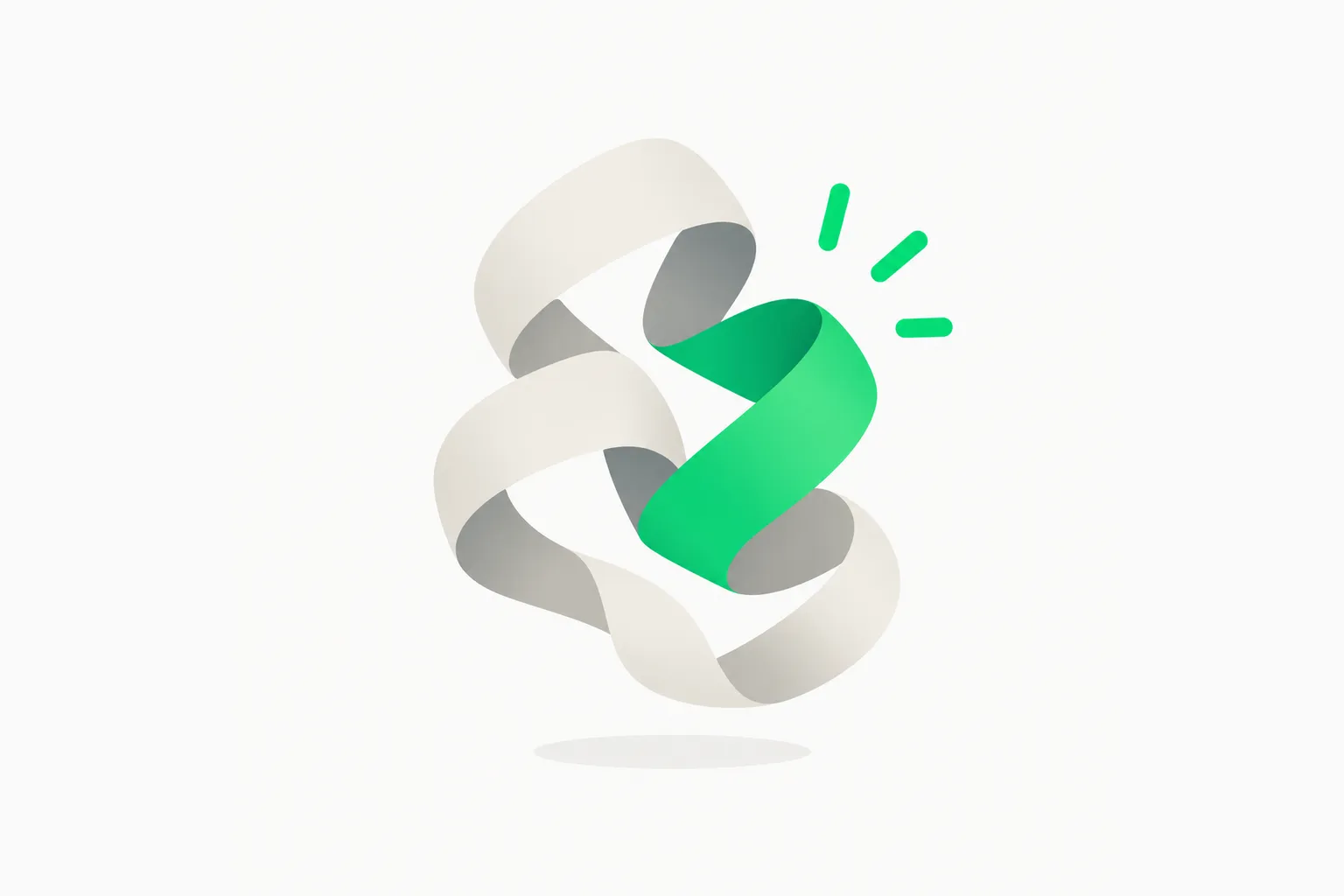 A folded ribbon shape standing in for the 3D bacteriocin structure viewed in Antigravity's antimicrobial peptide workflow
The post also introduces the Biomolecular Structure Viewer, a 3D viewer built into Antigravity. What is distinctive is shared state. The agent can highlight a region and the researcher can pin a note to a residue or a binding pocket, which the agent can then reason over. It is a small feature, but it addresses a real problem with chat-only agents: scientists think spatially, and a text description of a pocket is a poor substitute.
If you use Antigravity for other work, our guides on Antigravity model changes and the earlier AlphaGenome skill for genomics show the same platform pointed at other science tasks.
What is solid, and what is inference?
Be careful here. The post is candid about limits, and so should readers be.
Computed and checkable: the sequence search results, the AlphaFold model retrieval, the Foldseek structural match and the genomic neighborhood layout. These are database lookups anyone with the UniProt ID could repeat.
Inference: that the operon means a working bacteriocin system; the proposed mechanism (cell division); the predicted spectrum against resistant pathogens. These come from the agent's reasoning and literature review. They are hypotheses.
Not shown: any measured antimicrobial activity, toxicity data, benchmark of how often this pipeline finds real bacteriocins, or a false-positive rate. The analysis also covered a narrow window of amino acids in one species.
A lead like this is the start of a long road. Most computational leads fail in the lab, and nothing in the post says otherwise.
What developers are asking
Is this "AI discovered an antibiotic"? Not yet. A fair headline is "AI agent assembled the evidence for a candidate." The distinction matters because past AI-antibiotic headlines (computational hits later tested in vitro) varied widely in follow-through.
What is the agent's actual contribution? Orchestration. The tools (UniProt, BLAST, AlphaFold, Foldseek) already existed. The agent chains them, reads results and writes the next query. That is useful, but it also means errors can compound across steps, and a reviewer should check the key joins by hand.
Can I reproduce it? The ingredients are public: UniProt, the AlphaFold database, EMBL-EBI BLAST and Foldseek. Antigravity itself is Google's product. DeepMind's post does not publish a repository or the agent's full transcript, so exact replication is not possible from the post alone.
How this fits DeepMind's wider science push
DeepMind has been pairing its Antigravity platform with life-science tools for weeks. See the AlphaFold organoid work on autism protein interactions, the open Gemma-based Botanic-1 plant DNA ranking model, and the company's offer of compute credits to European researchers. The flagship model behind much of this is covered in our Gemini 4 Argon launch guide.
The pattern: AI labs are moving from "model answers questions about biology" to "agent runs the investigation and hands a human a shortlist." Whether that holds up depends on lab results that have not arrived yet.
What this means if you build with agents
- Pattern worth copying: the agent does retrieval and cross-checking against named, public databases, and every claim in the post can be traced to one. That is a better design than an agent that "knows" biology.
- Keep a human gate: DeepMind says the researcher steers strategy. Do the same for any high-stakes domain.
- Report limits up front. The strongest line in the post is the admission that the candidate "still requires wet lab validation."
- Security note: agents with database and tool access are a prime place for prompt-injection and over-permissioning problems. If you run agents against sensitive research data, the AgentBeam platform from the explainx.ai team is built to stop agents before dangerous actions.
For a broader catalog of research-oriented agent tooling, see our guide to 177 scientific agent skills.
Why a respiratory bacterium, and why a Lactococcin 972 relative?
S. pseudopneumoniae is a close relative of the pneumococcus and is associated with respiratory tract infections, which is the context DeepMind gives for the target. The Lactococcin 972 family is a group of bacteriocins first characterized in lactic acid bacteria. Finding a distant cousin in a respiratory species is plausible biologically, because bacteria that share an ecological niche compete with each other using exactly these small secreted proteins.
The structural match is the most persuasive piece of evidence in the post. Sequence similarity can vanish while a fold survives, which is why Foldseek is useful for remote homology: if an AlphaFold model of the unknown protein superimposes well on a bacteriocin with an experimentally solved structure, the function guess becomes more credible. It is still a guess about function, not a measurement of it. AlphaFold models of small, flexible peptides are also among the less reliable predictions, so a reviewer would want the confidence scores for this specific model, which the walkthrough summary does not foreground.
How would the wet-lab validation work?
DeepMind lists four stages in the agent-drafted plan, and each one can fail independently:
| Stage | Question it answers | Typical way it fails |
|---|---|---|
| Protein expression | Can the peptide be made at all? | Poor yield, misfolding, toxicity to the host |
| Susceptibility testing | Does it inhibit target bacteria? | No activity, or activity only at impractical doses |
| Target engagement | Does it hit the proposed cell-division mechanism? | Activity through a different mechanism, or none |
| In vitro toxicity | Is it safe for human cells? | Damage to host cells at active concentrations |
The post says several candidates from the same pipeline are already in validation. The most informative future disclosure would be how many of them pass the second row, because that sets the pipeline's real hit rate.
What to watch next
Three things would turn this from a demo into a result. First, wet-lab data: expression, susceptibility testing against named strains, and toxicity. Second, hit rates: how many of the "several" candidates in validation show activity. Third, transparency: a released transcript or code so others can audit the agent's choices. Until then, the responsible reading is "interesting workflow, unproven molecule."
Details are as published by Google DeepMind on October 15, 2026 and may be updated as validation results arrive.