



Apple CEO John Ternus says the memory chip shortage is "absolutely a crisis," and that "all options should be on the table" when it comes to supply. He made both comments to Andrew R. Chow of TIME in an interview tied to the magazine's Best Inventions of 2026 issue, which puts Apple's first foldable iPhone, the iPhone Duo, on its cover. The second line was his answer to questions about the Financial Times' July report that Apple had begun testing memory chips from a Chinese company.
Secondary summaries include iClarified and MacRumors. The interview matters for readers of AI news for two reasons: AI demand is a major driver of the memory squeeze that Ternus is describing, and Apple's AI strategy now leans on a rival's model. This post separates what Ternus said from what is only reported.
TL;DR: what was said and what is confirmed
| Question | Answer |
|---|---|
| Who said it? | Apple CEO John Ternus, in a TIME interview (second of two September interviews) |
| Memory shortage | "The constraints in memory are absolutely a crisis," per TIME |
| Chinese chips | Asked about reports of testing a Chinese supplier, he said "our fundamental belief is that all options should be on the table" |
| Confirmed that Apple uses Chinese memory? | No. The July report is the Financial Times'; Ternus did not confirm a supplier |
| Siri and Gemini | New Siri runs on an Apple model that uses Google Gemini technology, per TIME; Ternus defended it |
| iPhone Duo | 1,999 dollars, pre-orders October 16, in stores October 23, per iClarified's summary |
What did Ternus say about the memory crisis?
TIME describes a global memory-chip shortage that has raised costs and delayed production timelines. Ternus called the constraints in memory "absolutely a crisis." The article does not give Apple-specific cost figures, and we did not find any in the coverage we reviewed.
For context, the squeeze connects to AI. Data-center AI accelerators consume large amounts of high-bandwidth memory, which competes with the phone and PC memory that Apple buys. We have covered the supply side in several posts: ASML saying AI demand exceeds EUV supply, the Taiwan strike threat around Micron's HBM plant, mobile DRAM price surges and RAM prices and local inference costs.
The Chinese chips question
In July, the Financial Times reported that Apple had begun testing memory chips from a Chinese company to expand supply. A bipartisan group of US senators then wrote to Apple, arguing the move would endanger national security, according to TIME.
Ternus did not deny or confirm the testing. His answer, as quoted by TIME, was that "our fundamental belief is that all options should be on the table." iClarified's summary says he framed the answer around the broader shortage. The key point for readers: this is a statement of principle about supply flexibility, not an announcement that Apple has qualified or purchased Chinese memory. We could not find a named supplier in the coverage, and we are not naming one.
Why it is politically loaded
US export controls and national-security concerns have shaped chip trade with China for years. A Chinese memory supplier in an iPhone would draw scrutiny from Congress, which is why the senators wrote. It also shows how tight supply is: a company with Apple's purchasing power and its history of tight supplier control is saying publicly that it will consider alternatives. For the related picture on AI chips, see our post on Nvidia, Huawei and China AI chip share.
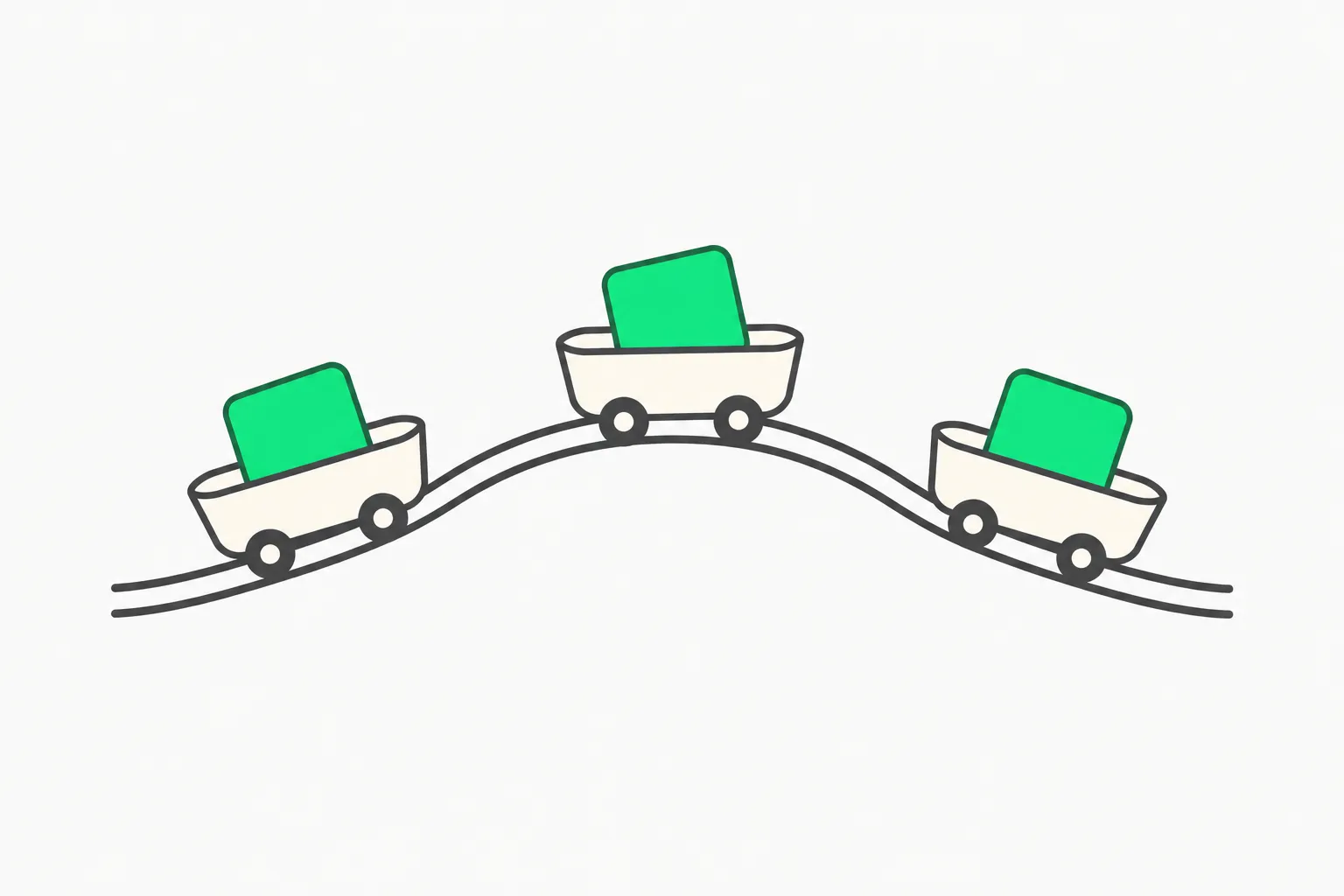 Chip moving along a supply chain track illustrating the Apple memory shortage
Apple's AI strategy: Siri on Gemini
The interview also covers Apple's AI position. TIME reports that Apple trains its own models but is not near the frontier, and that Apple was slower than rivals to enter generative AI, unveiling Apple Intelligence in June 2024, about 18 months after ChatGPT launched. Apple scrapped the existing Siri in 2025. The new Siri, launched in the US in September, runs on an Apple AI model that uses Google's Gemini technology, which TIME notes leaves Apple reliant on a rival.
Ternus pushed back on the idea that this cedes control. He said, "There's not really a goal that we have to make every single thing in a product," and, per iClarified, compared it to sourcing displays, memory and modems from suppliers: "We make the things where we can really bring differentiation."
Apple's pitch for Siri is personal context. With permission, it can connect information across messages, email, calendars and documents for tasks like meeting prep or finding flight confirmations. TIME notes it cannot code or write like OpenAI's or Anthropic's models. On privacy, Apple says Siri handles requests on-device where possible and sends heavier ones to Private Cloud Compute, which Apple says does not store queries. For earlier coverage of that strategy, see Tim Cook steps down, John Ternus is Apple CEO, and for how the AI story shifts abroad, Apple Intelligence in China.
How does AI demand squeeze phone memory?
The mechanism is straightforward even though the exact numbers are not public. Memory makers have limited fabrication capacity. High-bandwidth memory for AI accelerators is a higher-margin product that takes more wafer area per bit than ordinary mobile or PC memory. When data-center buyers order more of it, capacity that might have gone to phones is redirected, and contract prices for everything else rise.
That is the dynamic our earlier posts describe, and it is why a consumer-electronics company can call the situation a crisis even when its own AI products are modest. Apple does not train frontier models at the scale of the labs, but it competes with them for the same upstream supply. TIME's framing, that costs have risen and production timelines have slipped, fits that picture, though TIME does not attribute the shortage to a single cause and we are not claiming it does.
For a builder, the downstream effect shows up in three places: the price of high-memory laptops and desktops used for local inference, the memory options Apple chooses to offer in new devices, and how large an on-device model can be before it no longer fits. If a company will not give a supplier name, the safest reading is that it is keeping options open rather than that it has already switched.
Questions readers are asking
Did Apple say it will buy Chinese chips? No. The quote is a general statement about keeping options open. It is not a purchase announcement.
Is Apple falling behind in AI? TIME says Apple is not near the frontier and was slower to start. Ternus's counter is that Apple differentiates on personal context and privacy rather than raw model capability, and sources some parts from partners.
Does using Gemini mean Google sees my Siri requests? Apple says requests run on-device when possible, and heavier ones go to Private Cloud Compute, where it says queries are not stored. TIME describes Siri as running on an Apple model that uses Gemini technology. We have not seen a technical breakdown of exactly what Google receives, so check Apple's privacy documentation for specifics.
Should I wait to buy a new Mac or iPhone? Nothing in the interview gives pricing guidance. The reported crisis suggests memory-heavy configurations will stay expensive, but treat that as inference, not a forecast from Apple.
The iPhone Duo in brief
TIME calls the Duo Apple's first foldable iPhone and its most radical design change since 2007. According to TIME and iClarified: it folds into a passport-size phone that opens into a tablet-sized screen; the hinge has more than 100 precision components; a custom polymer surface and matte finish make the crease hard to see rather than removing it; and iOS moves key controls to the right side for thumb reach. Price is 1,999 dollars, with pre-orders on October 16 and store availability on October 23. TIME notes the price may deter buyers.
Ternus told TIME that earlier foldables "felt kind of cheap and crappy." We covered the launch in our iPhone Duo event post. An expensive new device with high-capacity memory is exactly the kind of product the shortage hits hardest.
Tim Cook's role
TIME reports that Cook announced in April he would step down after 15 years, Ternus became CEO on September 1, and Cook stays as executive chairman, continuing to represent Apple in government relations. Ternus said of Cook, "He has great relationships and loves Apple." That matters for the Chinese-chip question, since supply decisions with political weight are where an executive chairman with government relationships is most useful.
What this means for what you build or pay
- Device prices. A memory crisis at the world's most valuable device maker suggests higher or stickier prices for phones, laptops and RAM kits. If you plan a local-AI machine, buy memory sooner rather than later.
- Local AI on Apple hardware. Memory capacity is the main constraint for running models on-device. Expect configurations with more memory to stay expensive.
- Siri as a platform. Siri on Gemini technology, with Private Cloud Compute, will shape what Apple developers can build with on-device and cloud intelligence. Watch for developer-facing APIs rather than assuming parity with frontier coding models.
- Policy risk. If Apple does qualify a Chinese memory supplier, expect Congressional pushback, and possibly rules that affect which devices carry which parts.
What to watch next
Watch for an Apple statement on supplier testing, any reply to the senators, memory contract prices from the big three producers, and iPhone Duo pre-order demand on October 16. We will update this post if any of these resolve.
Related reading
- Tim Cook steps down: John Ternus is Apple CEO and what it means for AI
- iPhone Duo and 18 Pro event
- Apple Intelligence in China: claimed vs verified
- ASML: AI demand exceeds EUV supply
- Micron, Taiwan and the HBM supply threat
- Mobile DRAM price surge and the AI smartphone shortage
- RAM prices and local inference cost
Quotes and details are as reported by TIME and secondary summaries on October 15, 2026.