



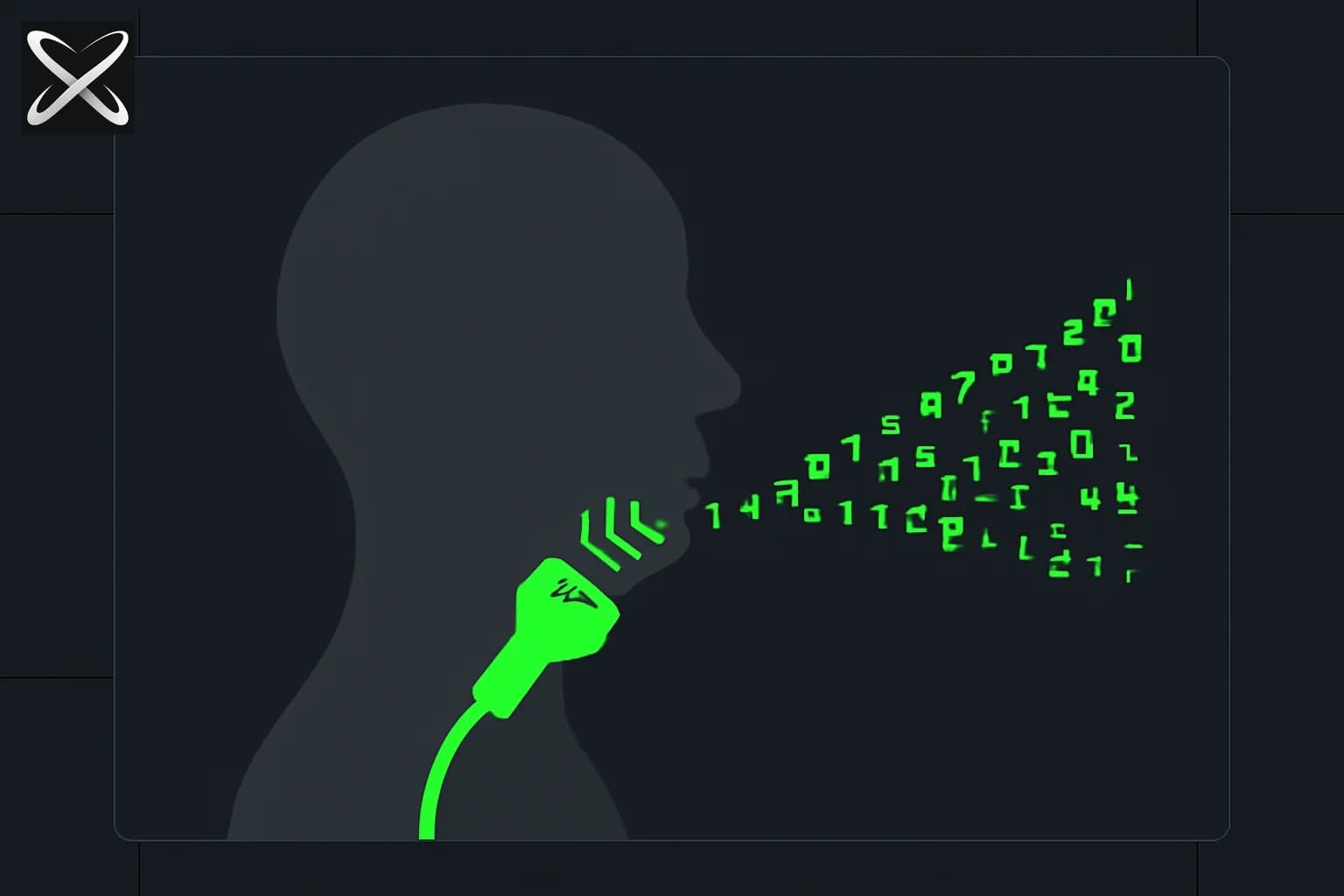
You cannot whisper prompts to ChatGPT on a crowded train without everyone hearing. That is the bottleneck voice AI still has not solved — and it is why a July 7, 2026 demo from Aleph Neuro drew attention on X.
Their system: place an ultrasound probe under your chin, mouth words without making sound, and a model transcribes open-vocabulary speech at 15.6% word error rate. Built in one month on 50 hours of data. Friends walked in, picked up the probe, and it worked — no per-user training.
The full writeup is on alephneuro.com/blog/silent-speech. This explainx.ai guide unpacks the architecture, the "a key stick" moment that proved it was learning phonetics, and how silent speech fits next to FluidVoice, GPT Realtime, and the multimodal AI stack.
TL;DR: What People Are Asking
| Question | Answer |
|---|---|
| What is it? | Ultrasound video of tongue → text, while you stay silent |
| Accuracy? | 15.6% WER open-vocabulary, cross-speaker (50h data) |
| Architecture? | Video ResNet encoder + Whisper Base decoder |
| Training time? | ~1 month; WER fell from 102% at 15k samples to 15.6% at 50k |
| Product ready? | No — research prototype; probe size and gel are blockers |
| Why ultrasound vs EMG/lips? | Direct tongue imaging; invisible to bystanders |
| X dream form factor? | Phone tape under mouth, choker wearable — not shipped |
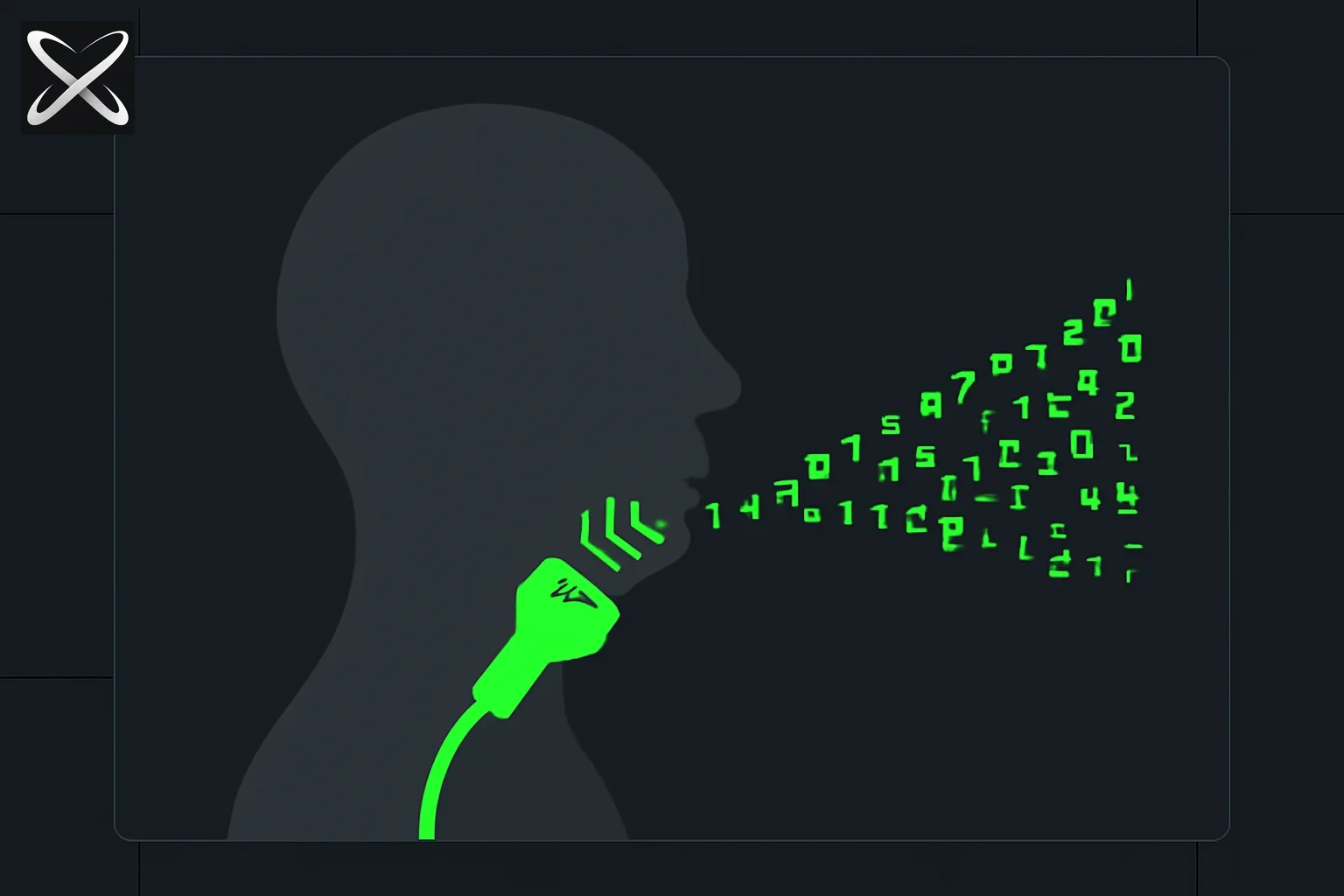 Aleph Neuro silent speech interface — an ultrasound probe under the chin converting silent mouth movement into streaming text
The Problem: Voice AI Is Public by Default
Aleph Neuro's framing is precise:
Speech is roughly four times faster than typing… But regular speech has one major limitation: most of the time, we're around other people.
Earphones privatized listening. Silent speech could privatize speaking — the same way you can read a Slack thread on a bus without reading aloud.
Commercial tools already prove demand:
- FluidVoice — local macOS dictation with Parakeet/Whisper, GPLv3, Wispr Flow alternative
- GPT Realtime 2 — low-latency speech-to-speech for agents
- HeyClicky + GPT Realtime — hands-free Mac control demos
- Grok Voice Agent Builder — no-code voice agents on X
All assume audible speech or typed input. Silent speech removes the social cost of using them in public.
How the Aleph Neuro System Works
Hardware: submental ultrasound
The probe sits behind the chin (submental), pulsing ultrasound upward through the floor of the mouth into the tongue. You get clean video of tongue shape — not lip inference, not throat EMG noise.
Why tongue? Aleph Neuro notes ~34 distinct phoneme classes visible in tongue posture vs. ~10–14 visually distinguishable lip shapes. More signal per silent syllable.
Data: 50 hours of read-aloud stories
Collection constraints:
- Ultrasound must actually show the tongue (probe position + gel coupling)
- Speaker must say the assigned text (quality control)
Design choice: collect vocalized speech even though the deployment target is silent speech. Tongue movements look similar in both modes — vocalized data enables audio transcription cross-checks.
They used synthetically generated short stories (not isolated phrases) for natural flow, broad vocabulary, articles, and contractions. Real-time ultrasound quality classifiers flagged bad probe coupling; supervisors watched a live dashboard.
Model: ResNet video → Whisper text
Two-phase training:
| Phase | What happens |
|---|---|
| 1 — Alignment | Train Video ResNet-18 (2+1d) embeddings to match Whisper encoder outputs on paired ultrasound + audio |
| 2 — Decoding | Freeze alignment; train smallest Whisper decoder to convert video embeddings → text |
Starting from pretrained Whisper matters: the decoder already knows language structure. Aleph only needed to translate tongue video into Whisper's embedding space.
The "a key stick" moment
Early training was unstable — collapse or language-prior hallucination. Around 20,000 samples, errors shifted:
- "acoustic" → "a key stick"
- "hard" → "heart"
Phonetically wrong but signal-driven — the model was reading tongue shape, not just predicting likely sentences. That is the same class of milestone you watch for in evaluating prompt quality: wrong answers that prove the system learned the right feature.
WER trajectory:
| Training examples | WER |
|---|---|
| 15k | 102% |
| 50k | 15.6% |
No sign of flattening — Aleph Neuro's central bet: more data + better models + smaller hardware moves this toward product.
Cross-Speaker Generalization (With a Caveat)
The surprise result: new people could use the system immediately without calibration — as long as they spoke with an American accent. Eastern European teammates in the lab were "less thrilled."
That is a familiar 2026 pattern: impressive zero-shot generalization within the training distribution, brittle outside it. Same lesson as bias in AI — representation in data becomes capability ceiling in deployment.
How It Compares to Other Silent Speech Approaches
| Method | Pros | Cons |
|---|---|---|
| Ultrasound (Aleph) | Direct tongue view; invisible silent speech | Hardware bulk; gel; probe skill |
| Lip reading | Camera-only | Visible; needs line of sight; huge data hunger |
| EMG / radar | Wearable potential | Noisy indirect signal |
| Implanted sensors | High fidelity | Invasive; not mass market |
Aleph cites ultrasound-only cross-speaker baselines around 83.8% WER on TaL in prior work. Their 15.6% on open vocabulary from 50 hours is the headline — with the usual caveat that silent-speech papers use incompatible task definitions.
What X Is Reacting To
Vadims Casecnikovs' thread (Aleph Neuro) hit the builder audience hard:
| Reply theme | Implication |
|---|---|
| "I've been waiting for this exact thing" | Demand for private voice interfaces is real |
| "Hopefully not too expensive as consumer product" | Price sensitivity — research demo ≠ $99 wearable |
| "Dream form factor is a choker" | Wearable industrial design is unsolved |
| "Call centres will be peaceful" | Silent speech enables phone use in open offices |
| "Long-term effects of constant ultrasound?" | Health questions before consumer scale |
| "Smartphone tape below the mouth" | Phone as compute + minimal hardware accessory |
Aleph's reply on ultrasound safety: "At this power, there are no" known long-term effects — a prototype claim, not FDA clearance.
Privacy and Safety Angles Builders Should Think About
Silent speech is not automatically secure speech:
- Shoulder surfing becomes lip/tongue surfing — harder to detect than audible talk
- Covert use — meetings, classrooms, secure facilities may need policy responses (like phone camera bans)
- Data sensitivity — tongue ultrasound video is biometrics-adjacent; storage and consent matter
- Accent and disability equity — American-accent bias must be engineered out before shipping
Pair with MCP security thinking: a silent speech interface feeding an agent with tool access is powerful and leak-prone — the microphone was never the only attack surface.
Roadmap: From Lab Probe to Daily Driver
Aleph Neuro's stated hardware blockers:
- Smaller, lighter probe — current clinical form factor is not pocketable
- Replace ultrasound gel with hydrogel or other practical coupling
- Wearable / adhesive patch — the choker X wants
Software blockers:
- More data (they speculate 1,000 hours unlocks major gains)
- Better decoders, beam search, LLM-as-judge post-processing
- Accent diversity beyond American English
If they solve hardware, silent speech slots into the same stack as GPT Realtime agents and local dictation tools — private prompting in public spaces.
Honest Limitations
We have not tested Aleph Neuro's system hands-on. Numbers are from their July 7, 2026 blog post and demo video. WER on internal validation ≠ real-world coffee-shop noise, walking motion, or all-day wear comfort.
Competitors like Wispr Flow optimize audible dictation with polished UX today. Silent speech is research with a product path, not a shipping alternative — yet.
The Bottom Line
Aleph Neuro showed that 50 hours of tongue ultrasound + Whisper gets you to 15.6% WER on open-vocabulary silent speech with cross-speaker generalization — in one month. The errors that proved learning ("a key stick") are more exciting than early lucky guesses.
For the AI interface wars, this is the missing privacy layer: voice speed without voice volume. Earphones solved half the problem in the 2010s; silent speech could solve the other half in the 2020s — if hardware shrinks and accent bias does not.
Watch Aleph Neuro for probe miniaturization. Watch FluidVoice and GPT Realtime for what you can use today out loud.
Related on explainx.ai
- Update — September 15, 2026: A viral brain-implant demo raised the "is this mind reading" question for speech decoding directly — see what the paralyzed-speech AI voice demo actually shows, which uses this same residual-muscle-signal framing.
- Update — September 9, 2026: A different kind of speech-AI research surfaced this week — Oruk Labs wired a neural network like a real fruit fly brain circuit to detect emotion in speech, then found scrambling that wiring performed about the same. See the fruit fly connectome emotion-recognition experiment, explained.
- Update — July 23, 2026: Another non-invasive hands-free interface shipped this week — Augmental's MouthPad, a tongue-controlled Bluetooth touchpad, went on public US sale at $1,400.
- FluidVoice: Open Source macOS Dictation — local Wispr Flow alternative shipping now
- GPT Realtime 2 Voice Models API — speech-to-speech agents
- GPT Realtime 2.1 Mini with Reasoning and Tool Use — July 2026 voice API updates
- What Is Multimodal AI? Complete Guide — vision, audio, and beyond text
- HeyClicky Voice Control + GPT Realtime Demo — hands-free Mac workflows
- Grok Voice Agent Builder — no-code voice agents
- Kokoro Local CPU TTS Guide — private speech output on CPU
- MCP Security Guide 2026 — when voice feeds agents with tools
Sources: Aleph Neuro silent speech blog (July 7, 2026); Vadims Casecnikovs on X.
WER figures, hardware claims, and safety statements reflect Aleph Neuro's publication as of July 8, 2026. This is not medical or product advice.